Readings: Proverbs 31:10-13,19-20,30-31; Psalm 127:1-5; 1 Thessalonians 5:1-6; Matthew 25:14-30
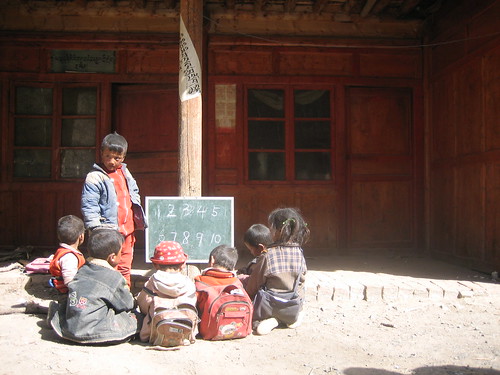
Picture: cc TheBigTouffe
Dear friends, as you know we’re nearing the end of the year. And this is traditionally the time for students to take their major exams. Many young people are studying hard. And that’s important. For most students, there’s no other way to get through the exams.
But good students will tell us that doing well in the exams doesn’t depend only on diligence. In addition to working hard, you also have to work smart. There’s often so much material to study that it’s very unlikely that you can cover everything with the same amount of rigour. So you have to focus on the more important things. How do you know what’s important? By recalling what has been highlighted in class. The tips that the teacher has given.
Also, to study smart, you should consider not just what has been taught, but also how you will be tested. Some exams require only that you memorise the text, and then regurgitate it onto the answer sheet. But other exams require more. You have to show that you understand the material in a way that allows you to apply it to new situations in creative ways.
Then, of course, in addition to the what and the how, a good student will also wish to find out when exactly the exam is going to take place. This is so you know how much time is available for preparation. So you can pace yourself. You can study in such a way that you will reach your peak on the day of the exam.
Knowing what has been given, how you will be tested, and when the exam will be held. These are among the key pieces of information that a student has to consider in order to study smart.
But we are not just approaching the end of the calendar year. In addition, we are also bringing our liturgical year to a close. Next Sunday we will celebrate the 34th and last Sunday of Ordinary Time with the solemn feast of Christ the King. And just as the academic year ends with students studying and sitting for examinations, so too does our liturgical year come to a close with readings that remind us of the need to prepare for that ultimate examination that we will have to take at the end of time: the Last Judgment. But how exactly should we prepare for this exam?
When we consider our Mass readings, it’s quite obvious that they encourage us to work hard. The last servant in the gospel parable is condemned not just for being wicked but also for being lazy. And in the first reading, we’re given a portrait of the perfect woman. Someone who is always hard at work with eager hands. We may be forgiven then if we think that all we need to do to prepare for the Lord’s coming is to work as hard as we can. But is this true? Is hard work really all that is required? Isn’t it also true that the Pharisees and Scribes were hard workers too. And didn’t they reject Jesus when he came the first time? Could it be, then, that preparing for the Last Judgment is not unlike studying for a final exam? It’s not enough just to work hard. You also have to work smart.
We get a hint that this is indeed the case, when we consider that the woman in the first reading is praised not just for her diligence, but above all for her wisdom. The woman who is wise is the one to praise. And the responsorial psalm tells us in what this wisdom consists: O blessed are those who fear the Lord and walk in his ways! It’s not just any kind of hard work that is praised. There are, after all, many kinds of work that a person can do. And for a variety of motivations. The kind of work that is praised is the kind that flows from the fear of the Lord, from the firm and ongoing commitment to put God first in one’s life. We begin to see, then, that it’s not just a matter of labouring diligently, but also wisely.
And in order to do this, we have to consider what exactly it is that we have received. In the gospel parable, what is entrusted to the servants are huge sums of money. Some commentators say that a talent was roughly equivalent to sixteen years’ wages. So even the last servant, who received only one talent, received a lot. But what does this money symbolise? What does God entrust to us that is of such great value? As we have been reflecting upon in this retreat, the greatest gift that God gives to us is nothing less than God’s presence itself, God’s friendship, extended to us in and through Christ the Son. And if what has been entrusted to us is Christ himself, then perhaps it’s not enough simply to work hard. What is even more important is that we try to get to know the Lord ever better with each passing day. That we try to enter ever more deeply into his friendship.
But it’s not enough just to consider what has been given. We need also to consider how the Lord will judge us, what he will expect from us, on the Last Day. Notice how the three servants in the parable are judged. The ones who are praised are those who do more than just regurgitate what had been entrusted to them. They are willing to take some risks. Risks calculated to bring a greater return. In contrast, it is the one who is afraid of loss–the one who prefers to anxiously protect what he has received–who ends up in the place of weeping and grinding of teeth. Isn’t there a crucially important lesson here for us today? Especially for those of us who may be so intent on insulating our faith from the challenges of the world, that we forget that Christ is present in the world as well. And that we cannot truly deepen our friendship with the Lord, if we refuse to take the risk of going out to meet him there.
Finally, in addition to helping us to consider what we have been given and how we will be judged, our readings also invite us to remember when this ultimate examination will take place. Here there is a crucial difference between the Last Judgment and the ordinary final exams that students take. School exams usually run on a predetermined schedule. There are no surprises as to date, time and location. The same cannot be said of the Last Judgment. As the second reading reminds us, the Day of the Lord is going to come like a thief in the night. So we have to stay awake. We have to continually nurture our relationship with the Lord. Only in this way can we remain sons of light and daughters of day.
And isn’t this precisely what our whole retreat has been about? Isn’t this what we have been doing? We have been getting to know the Lord better, and allowing him to draw us ever more deeply into his friendship.
Dear friends, as we leave this place today, perhaps the question we need to ask ourselves is how we might continue to do this. How might we continue to prepare for the Lord’s coming, not just by working hard, but also by working smart, by allowing ourselves to remain in the Lord’s friendship in the days ahead?