Thursday, December 24, 2015

Stargazing


The Nativity of the Lord (Mass@Night)


Sisters and brothers, have you ever seen the stars twinkling in the night sky? I mean really seen them in their full glory? The first time I saw it I was abroad. In a remote place. Out in the countryside somewhere. Night had fallen. And I remember looking up, and having my breath snatched away from me by the awesome sight. The whole of the night sky was carpeted with stars. Some larger. Some smaller. But all shining brightly like a mass of lighted lamps hanging from a huge ceiling. So many of them! An incredible sight!

After I got over my amazement, I began to wonder to myself why the night sky looked so different back in Singapore. Why did there seem to be so many more stars here than back home? Didn’t we live under the same sky? Shouldn’t it contain the same stars? Why then did I not see such an amazing sight when I looked up at the night sky in Singapore? My dear friends, I’m sure you already know the answer. I found out only later.

Apparently it has to do with artificial light. Singapore is a city. An urban area. Which is usually very brightly lit at night. And all that artificial light actually makes it difficult to see the starlight. In contrast, rural areas, like that place where I was, are usually much more dimly lit. So the stars are more easily seen. I imagine it’s sort of like how it’s easier to read from the screen on your smartphone when the surroundings are dark than in broad daylight. The glare of artificial light makes it more difficult to see the brilliance of starlight.

And perhaps this truth can help us to better understand what is happening in the gospel tonight. As we begin to celebrate Christ’s coming among us at Christmas, our prayers and readings describe His advent as a burst of light. In the opening prayer, we said that God has made this most sacred night radiant with the splendour of the true light. And, in the first reading, the prophet Isaiah speaks of how the people who walked in darkness has seen a great light; on those who live in a land of deep shadow a light has shone.

On those who live under the gloom of tyranny and oppression. On those who suffer the pain of conflict and division. Of loneliness and disconnection. Of aimlessness and the lack of direction. The light of Christ’s love shines tenderly. Bringing justice and integrity to all. And a peace that knows no end. With the dawning of the light of Christ, God makes their gladness greater, and their joy increase. This is the prophet’s promise.

And yet, when this promise is finally fulfilled on that very first Christmas night, something very curious happens. When the light of Christ finally dawns upon the world, not everyone notices it. Not everyone is able to see it. The gospel reading presents us with a sharp contrast between two different groups of people. Living in two different locations.

When Mary and Joseph go looking for a place to have their baby,  they first try their luck in the town of Bethlehem. But there is no room for them at the inn. Apparently, when the glory of God shines in the town, none of its people realises what is happening. The promised Saviour has come among them, and they simply ignore him. They continue to go about their usual business without interruption.

In contrast, it is the shepherds living in the fields. In the countryside. Who see and welcome the Light. Like the people of Bethlehem, they too are going about their usual business. But, unlike the townsfolk, when the glory of the Lord shines round them, they take notice. They pay attention. They’re willing even to break their routine. To stop what they’re doing. And to visit the newborn Saviour. As a result, their hearts are filled with joy.

What do you think accounts for the contrast? Why the difference between the townsfolk and the country-shepherds? Why is one group so attentive to the Light? And the other so indifferent? I’m not sure, my dear friends, but perhaps it’s the same reason why we see more stars in the country than in the city. Perhaps it has to do with the presence of artificial light. When you live in town, there are so many other lights competing for your attention. Lights that seem too impressive to refuse. Skyscrapers and shopping malls. Designer goods and high tech gadgets. Lights that dazzle and distract you from the gentle glow of Christ. Of a God who chooses to come among us as a helpless, innocent baby. Lying on a bed of straw. A scene of stark simplicity. Making it difficult for us to rest our eyes on it without being tempted to jazz it up a bit. As with the twinkling of the stars. So too with the coming of Christ. The harsh glare of artificial light makes it difficult to see.

What then does this mean for us, my dear friends? We who live in this ultra-modern metropolis of Singapore. Surrounded by bright lights of so many different shapes and sizes. Does this mean that, in order for us to receive and to welcome the Light of Christ, we all have to relocate to the countryside? Move to a remote jungle in some foreign land? Where the artificial light is less glaring? I imagine that few of us actually have the luxury, or the inclination, of doing that. What then can we to do to better receive and welcome the Light of Christ?

To find an solution to our predicament, it may be helpful to remember something else about starlight. It may be helpful to remember that, even in the city, it is still possible to see the stars. The sight may not be as dramatic as in the countryside. Nor the lights so many or so bright. But the stars are still there to be seen. We just have to look a little longer. To focus a little harder.

And perhaps the same can be said about seeing Christ. The key lies not so much in a change of location. But in a shifting of attention. Away from the dazzling but temporary. To the gentle yet enduring. Away from the sophisticated but superficial. To the simple yet profound. As simple and profound as a poor defenceless baby. Inviting you to carry it lovingly. To caress it tenderly. To commit your life to it generously and courageously.

Isn’t this what the second reading tells us to do? God’s grace has been revealed, and it has made salvation possible for the whole human race. For city-dwellers like us, as much as for countryfolk elsewhere. What we have to do is to give up everything that does not lead to God, and all our worldly ambitions. We need to shift our attention away from merely artificial light. So as to let Christ be our One True Light. We must be self-restrained and live good religious lives here in this present world. Here in this brightly-lit city that we call our home.

As with starlight so too with Christ-Light. We see more clearly, the more we turn from the artificial to the authentic. The superficial to the deeply enduring. This is what it takes to welcome Christ this Christmas. Into our hearts. Into our homes. Into lives…

My dear friends, what will you be doing to keep on stargazing? How will you be shifting your attention this Christmas?

Wednesday, December 23, 2015

Invisible to the Eye


Funeral Mass of Teo Ah Lim

Readings: Wisdom 4:7-15; Psalm 27; John 11:17-27
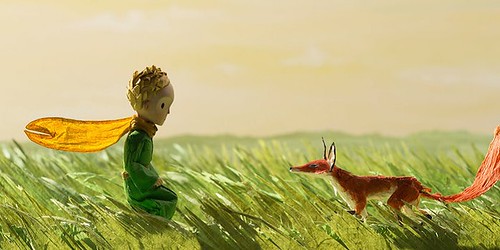
Picture: cc Prachatai

It is only with the heart that one can see rightly;
what is essential is invisible to the eye.
My dear friends, I’m sure many of us will recognise these words. They are taken from that delightful little book entitled The Little Prince. The words are spoken by a fox to a prince. After both fox and prince have become friends. And that is what the fox is really talking about. That is the invisible yet essential thing that cannot be seen with the eyes. But only with the heart. Friendship.

For when anybody else looks at the fox. All the person sees is an ordinary animal. A fox like any other. For the person looks at the fox only with the eyes. But, to the prince, this fox is unlike any other. It is special. It is his fox. Because he has taken the time and made the effort to befriend this fox, the prince has learned to look at it not just with the eyes, but also with the heart. And, with the heart, he sees something important. Something essential. Not just a fox. But also a friend.

Friendship, however, is not the only essential thing. There are others. Things that can be seen, recognised for what they really are, only with the heart. Today, my dear sisters and brothers, as we gather to bid farewell to our dearly beloved, Uncle Ah Lim, the scripture readings that you, his family and friends, have chosen, help to remind us of something else that we Christians believe to be essential. Something else that is invisible to the eye. Something else that can be seen only with the heart. Strange as it may sound to some, this something else is life itself.

Of course, many people would object. They would say that we can see life with our eyes. We can see whether a person is alive or dead. All we have to do is to determine whether the person is breathing. Or has a heartbeat. But, for us who are Christian, this isn’t really what it means to be alive. The first reading criticises those who think in a similar way. Those who believe that someone who dies young must be punished or cursed by God. The reading argues, instead, that such people have actually got it wrong. They look on, uncomprehending. Or, in the words of The Little Prince, they do not see rightly. They see only with their eyes. And their eyes see nothing beyond the length of a person’s days.

But the reading presents another view of life. It argues that the number of years is not the true measure of life. But rather understanding and an untarnished life. A morally upright life. This is the true indication of how alive we are. So that a morally upright person, who dies young, may actually have been much more alive than someone who lives a much longer but immoral life. And the death of such a good person should not be seen as a curse, but a blessing. He has sought to please God, so God has loved him. He has been carried off so that evil may not warp his understanding…

Of course, my dear sisters and brothers, by any standards, Uncle Ah Lim was blessed with a long life. He lived till the ripe old age of 84! So if you, his family and friends, have chosen this reading, it must be because you wish to remind us to look beyond what the eye can see. To look deeper than the obvious length of his years. To recall also, and more importantly, how he lived his life. How he touched your own lives. The precious place that he held and still holds in your hearts. And, in seeing with the heart, to once again recognise the true, the essential, meaning of his life. And to realise that his passing is no curse. But a blessing. God has taken him to Himself.

The gospel takes us even further. I am the resurrection and the life, Jesus tells Martha. If anyone believes in me, even though he dies he will live, and whoever lives and believes in me will never die. Again, as with the first reading, Jesus’ words help us to redefine our understanding of life. Not just earthly life. But eternal life. The fullness of life. Anyone who believes in Jesus. Who commits his life to Jesus. Who lives as Jesus lives. Laying down his life for others as Jesus did. Such a person enters into a relationship with the Lord. Becomes his friend. Enjoys the fullness of life even before he dies. As you know, in John’s gospel, eternal life does not begin only at the point of death. It begins already at the point of commitment to Christ.

And again, here we find a resonance between what the reading tells us, and the life of Uncle Ah Lim. For he too believed in Christ. He too committed himself to living as Christ lived. Isn’t this why we have placed those Christian symbols over his coffin? To remind ourselves that here lies a friend of the Lord. Someone who has passed beyond this world. And yet, someone who enjoys life in all its fullness.

So that our gathering here today, is not just an occasion for us to mourn our loss. It is, also primarily an occasion for us to celebrate the power of God. At work in the life of Uncle Ah Lim. A life that began not just when he was born from his mother’s womb. But when he was plunged into the waters of baptism. When he was washed in the blood of the Lamb. When he became a committed and loving friend of the Lord.

And it is when we see Uncle Ah Lim’s passing in this light. The light of faith. The light that shines in the hearts of all of us who share in the life of Christ. It is then that we recognise what is truly essential. That our dearly beloved is still very much alive. Alive in God. Alive for us. Spurring us on to remain united to him by remaining united to one another. And, most of all, united to Christ.


My dear sisters and brothers, truly it is only with the heart that one can see rightly; for what is essential is invisible to the eye. As we gather to bid our farewell to Uncle Ah Lim. As we gaze upon the reality of his passing. Exactly what and how do we see today?

Saturday, December 19, 2015

Empty & Full


4th Sunday of Advent (C)

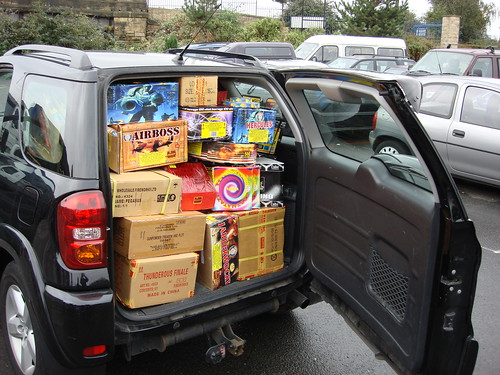
Picture: cc Epic Fireworks


Sisters and brothers, do you know what it feels like to be both empty and full at the same time? What do I mean? Well, imagine for a moment that you’re driving a car on the road. And you suddenly realise that the fuel tank is almost empty. The indicator light is flashing. You need to stop and fill up… Thankfully, you spot a petrol station along the way. But, unfortunately, when you drive into it, you find that it’s closed. No petrol to be bought here.

Which is bad enough. But then something even worse happens. You meet a few friends of yours, who beg you to give them a ride. And, before you can protest, they all pile into your car. So now your vehicle is both full and empty. Full of passengers. But empty of the fuel it needs to transport them. What are you to do?

I may be wrong, sisters and brothers, but isn’t this a good image of what daily life feels like for many of us? On the one hand, our lives are really very full. Full of work to do. Responsibilities to bear. Promises to keep. People to please. Goals to accomplish. Dreams to fulfil. At home. At work. In school. Even in church. And isn’t this true even of those of us who have already retired? Although we have plenty of time on our hands. Much more than before. Doesn’t all this free time feel strangely oppressive? Doesn’t it fill my life like a heavy burden. How to occupy my time? How to make myself useful? What am I to do?

And yet, full though our lives may be, when we stop to think about it, don’t many of us also often feel terribly empty? Empty of the energy and motivation, the courage and inspiration, that we need to bear the burden of life? Don’t we often feel tired and stressed? Frustrated and anxious? Short in temper and patience, but long on anger and resentment? And aren’t these feelings very much like that flashing indicator light on the car’s dashboard? Signalling frantically to us. Warning us that, even though the passenger compartment may be filled to overflowing, the gas tank is all but empty. The vehicle is at risk of stalling. What are we to do?

Sisters and brothers, if, like me, you’ve ever found yourself in a situation like this. If you ever feel as though your life is, at once, full of burdens to bear, and empty of the energy required to bear them. Then you need to pay close attention to our Mass readings for this 4th and final Sunday of Advent. For they show us a way out. God’s way out.

The first reading is addressed precisely to those whose lives are simultaneously full and empty. For some time now, for their own selfish reasons, the people of God have turned to the worship of foreign gods. Deities that they thought would enrich their lives. But these gods have proven to be nothing more than idols. False gods. Not only do they take up precious time and space in the people’s lives. But they also leave them painfully empty of spiritual nourishment. They make the people feel as though the Lord, the one true God, has abandoned them. Allowing them to be conquered by their enemies. Their sons and daughters carried off into exile in far distant lands.

But God has not forgotten his people. God promises to visit them again. To send them a new leader. A good shepherd. Someone who will stand and feed his flock with the power of the Lord, and the majesty of the name of his God. Someone who will finally fill the people in the way they need to be filled. The way they long to be filled. With true spiritual energy and inspiration. Enabling them to enjoy lasting security and peace in the land. Teaching them to be empty and full in a whole new way. Empty of oppressive idols. And full of the power of God. How will this leader do this? We find the answer in the other readings.

The second reading speaks to us of two contrasting ways of relating to God. Two different spiritualities, if you like. Each of them is, again, both full and empty. But in very different ways. The first is focused only on external observances. It is full of apparently pious religious practices. But these are actually empty and idolatrous. For they are centred not on God, but on those who perform them. They are full of self. And empty of God. Which is why God takes no pleasure in them.

In place of these external practices, Christ models for us a different form of worship. One that is also at once empty and full. But in the opposite way. Not full of self, and empty of God. But empty of self, and full of God. A worship that consists not in self-gratifying, ego-inflating external performance. But in a deep interior offering of self to God. Here I am! I am coming to obey your will. An interior offering that is then lived out in meaningful external actions in the world. Actions that draw strength from the selfless sacrifice of Christ on the Cross. Through which God makes everyone and everything holy.

But what does it look like when people actually allow themselves to worship God in this new Christ-like way? Which is at once empty of self and full of God? This is the question that the gospel helps us to answer. In the meeting between Mary and her cousin Elizabeth, we find a powerful picture of what the other readings describe only in theory. For although Mary is as young as Elizabeth is old. They both share something in common. Something very important. They are both empty of self, and full of God.

Isn’t this why they are both able to experience impossible pregnancies? One is still a virgin. And the other already beyond the age of childbearing. Yet they are both with child. One carries the Saviour-of-the-World. The other, his herald. Both women are generously and courageously participating in God’s plan to save the whole of creation. How does this come about? Through the power of the Spirit who fills them. And through their willingness to allow themselves to be emptied. Emptied of all traces of selfishness. And filled with the love of God. I am the handmaid of the Lord, let it be done to me according to your word.

So that Mary and Elizabeth are related not just by blood. But also, and more importantly, in the Spirit. It is the Spirit that brings them together. And notice what happens when they meet. Although they are both probably physically exhausted. One has travelled a long way through hill country. The other is old and already in the sixth month of her pregnancy. There is neither a sense of burden nor oppression. Neither anxiety nor complaint. Neither impatience nor irritation. The whole scene is saturated instead with joy. A joy so strong that it’s felt even by the unborn.

And isn’t this the same joy that God offers us at Christmastime? Isn’t this the joy that we have spent all these weeks of Advent preparing to receive? Isn’t this what we have been asking God to do for us? We who are often so full only of ourselves, and so empty of God? In these days of Advent, we have been doing whatever we can to beg and to allow God to reverse our painful condition. So that, like Mary and Elizabeth, and the babies in their wombs, we too can allow ourselves to be emptied and filled. Emptied of self. And filled with God.

My dear sisters and brothers, Christmas is just a few short days away. What must we do to continue allowing God to empty and to fill us today?

Sunday, December 13, 2015

Consoling Crybabies


3rd Sunday of Advent (C)

Readings: Zephaniah 3:14-18; Isaiah 12; Philippians 4:4-7; Luke 3:10-18

Sisters and brothers, have you ever watched someone trying to pacify a crying baby? Or maybe you’ve done it yourself. What does it feel like? Is it easy? Or difficult? What do you think? I don’t have any first-hand experience. But I have seen it being done. And it varies, doesn’t it? Sometimes it’s very hard. Everything you try just doesn’t seem to work. The baby refuses to stop crying. But, at other times, it’s easy. Like magic.

For example, I recently found myself in a crowded MRT train. Where I saw a young family. Separated by the crowd. The mommy and an older child were seated at one corner of the carriage. The daddy was standing at the other end. Accompanied by the baby in a stroller. The train stopped. And many of the people, who were standing between mommy and daddy, got off. Allowing the baby to catch sight of his mom. Immediately, he started crying very loudly. The daddy quickly pushed the stroller over to where his wife was. And, like magic, the crying stopped at once. In fact, not only did the baby stop crying, he even started to smile broadly. Happy, no doubt, to be reunited with mommy. That was all he wanted. To be close to his mother. It was quite an amusing and amazing sight. The transformation of a crybaby into a smile-baby. A noisy burden into a bundle of joy.

I’m reminded of this today, because I think our readings present us with something similar. On this 3rd Sunday of Advent. Which we call Gaudete–or Rejoice!–Sunday, our readings seek to transform us in the same way that the baby was transformed. And it’s important for us to consider carefully just how this is done. How God consoles God’s people. Transforming crybabies into smile-babies. Broken hearts into joyful spirits.

To do this, we need to consider what it is that prevents us from being truly happy. The obstacles to experiencing joy. The first of these obstacles is expressed in a word that keeps getting repeated in our readings. The word is fear. The first reading talks about the fear of enemies. And the fear of evil. The second reading mentions something similar to fear. Worry. Worry about not getting what we need to live well. And to this list we can probably add our own  fears. Fear of failure… Fear of not having enough… Fear of not being enough… Fear of remaining single… Fear of staying married… Fear of pain… Fear of death…

Fear and worry. Two obstacles to joy. And how do our readings console those of us who are fearful and worried? By encouraging us to trust. To trust in God. In the words of the responsorial psalm: Truly, God is my salvation, I trust, I shall not fear. For the Lord is my strength, my song, he became my saviour. Or the second reading: There is no need to worry, but if there is anything you need, pray for it… Trusting that God will provide.

And yet, my dear friends, isn’t all this much easier said than done? Surely, we know that we need to trust God. But knowing it in my head and putting it into practice in my life are two very different things, aren’t they? So how do I bridge the huge gap between theory and practice? Between trust in my head and trust in my life? To answer this question, we need to go further. We need to consider the deeper reasons for our fear. I’m not sure about you, sisters and brothers, but one of the deeper reasons for my fear is actually the thought, or suspicion, that I am all alone. Alone in my weakness and helplessness. Alone to face challenges that I simply do not have the power to overcome.

But is it really true? Am I really all alone? Well, no. For my faith tells me that God is always with me to save me. Which is why there is actually an even deeper reason why I find it difficult to be joyful. An even deeper reason why I so easily succumb to fear. Why I find it difficult to trust. And that reason is forgetfulness. The forgetfulness of unbelief. I forget my faith. I forget what the first reading insists on reminding me. The Lord, the king of Israel, is in your midst. I forget that I am not alone. That God is close. Ever by my side. Just like how that mother on the MRT was close to her baby. The reading goes even further. Not only is God by my side, God is also on my side. God takes great delight in me. In us. He will exult with joy over you, he will renew you by his love; he will dance with shouts of joy for you as on a day of festival. Can anything be more incredible, more consoling, than that?

Against the poison of fear born of forgetfulness, our readings offer us the powerful antidote of memory leading to trust. They invite us to remember the promises of God. And the different ways that God has fulfilled these promises in our lives. Most notably by sending Jesus to be the sacrifice that takes away our sins. And also through all the many particular blessings that we have enjoyed, and continue to enjoy, in our own lives. Blessings that I too easily forget. Take for granted. Blessings that speak to me of God’s immense love and care for me. God’s powerful presence and action in my life.

So this is what I need to do whenever I tend toward discouragement and despair. Whenever I find myself getting lost in forgetfulness. In faithlessness. I need to remember that I am not alone. And also that I am loved. Deeply loved by a God whose name is Emmanuel. God-with-us. God-for-us. And this remembering will then help me to experience what St. Paul promises the Philippians in the second reading: that the peace of God… will guard your hearts and your thoughts, in Christ Jesus.

But that’s not all, sisters and brothers. The gospel also helps us to overcome two other forms of forgetfulness. Two other obstacles that prevent us from experiencing joy. The first is found in the advice that John the Baptist gives to the people who ask him what they must do to repent. He tells them to share what they have with those who have not. And to be careful not to take more than their due. In other words, practice mercy and justice. Why? Because mercy and justice help me to remember something else that I also often forget. Not only that I am not alone. But also that I have a responsibility for others. For my brothers and sisters. And especially for those most in need.

Second, just when people were beginning to think that John might be the Christ, he responds by telling them, and in no uncertain terms, that he is not the Messiah. Now this may sound a little strange, sisters and brothers, but this is also something that I often forget. That I am not the Messiah. That even though I am responsible for others. To help them in some way. I cannot save them. I cannot even save myself. Like the Baptist, my role is only to prepare the way for the true Saviour. The One who is coming. The One who is far more powerful than I am.

So I am not alone, and I am deeply loved. I am responsible for others, but I am not the Messiah. These, my dear friends, are the things that I too easily forget. And these are also the things that our readings are helping me to remember. So that my heart can be better prepared to welcome the true Messiah. The One who comes to bring peace and joy. To me. To us. To the rest of the world.

Sisters and brothers, as we celebrate Gaudete Sunday, Rejoice Sunday, how is God consoling you? Consoling us? Transforming us from crybabies into smile-babies today?

Sunday, December 06, 2015

Preparing for the Ball


2nd Sunday of Advent (C)

Readings: Baruch 5:1-9; Psalm 125:1-6; Philippians 1:4-6,8-11; Luke 3:1-6

Sisters and brothers, earlier this year, Disney Pictures released a remake of the fairytale Cinderella. Did any of you catch it? Did you like it? I must confess that I was quite taken by the movie. Even found parts of it very moving. I’m reminded today of 3 scenes in particular. The first is when the fairy godmother prepares Cinderella for the Royal Ball. Magically transforming an ordinary pumpkin into a golden carriage. Common house mice into snow white horses. Lizards into pageboys. An inquisitive goose into a talkative coachman. A tired and torn dress into a breathtakingly beautiful blue evening gown. And, of course, glass slippers out of thin air.

But in this version of the story, Cinderella’s preparation for the Ball actually begins much earlier. Many years before the fairy godmother ever makes an appearance. And this is my second memorable scene. When Cinderella is still a little girl, her mother falls ill and dies. But before breathing her last, she shares a great secret with her daughter. Something that would see the poor girl through all the trials that life can offer. She makes her daughter promise always to have courage and to be kind.

And Cinderella never forgets this secret. Always keeps her promise to her beloved mother. Always chooses to be kind. Kind to people. Kind to animals. Kind even to the stepmother and step-sisters who so cruelly bully and abuse her. And, in the movie, it is actually this continual cultivation of kindness that accounts for Cinderella’s transformation. Her ongoing efforts at putting virtue into practice opens a space in Cinderella’s life. A space for the workings of magic. For where there is kindness, there is goodness, and where there is goodness, there is magic.

The third memorable scene takes place at the Royal Ball. Where Cinderella finally gets to dance with the Crown Prince. Unable to contain her amazement, she says to him, They’re all looking at you. To which he replies, Believe me, they’re all looking at you. And he’s right. The sight of the magically transformed Cinderella is so stunning that everyone can’t take their eyes off her. Such that the Royal Ball itself is transformed into her debut. Cinderella’s coming-out party. A showcase for her glorious beauty.

A magical transformation. Prepared for by a lifetime of virtue. Resulting in a beauty so glorious that all are transfixed by it. 

Transformation, virtue, and glory. Strange as it may sound, sisters and brothers, I believe our Mass readings for this 2nd Sunday of Advent contain these same three elements. In the gospel, John the Baptist makes his appearance. And he encourages everyone to repent. To be transformed. To prepare themselves for a great event. A royal event. A new day is dawning. A Crown Prince is coming to claim his throne. And John is his messenger. A voice cries in the wilderness: Prepare a way for the Lord… But what exactly does this preparation, this repentance, look like?

Curiously, the first reading describes it, first of all, as a change of one’s clothes. Not unlike the magical makeover that Cinderella receives from her fairy godmother. Jerusalem, take off your dress of sorrow and distress, put on the beauty of the glory of God for ever… And these clothes that Jerusalem is being asked to put on are made of no ordinary fabric. They are woven instead out of virtue. Of good behaviour. For Jerusalem is told that God will give her two names: Peace through integrity, and honour through devotedness. Integrity and devotedness. Virtues very similar to the courage and kindness that Cinderella promised her mother she would cultivate.

And it is this practice of virtue that then makes space for the workings of the magic of God’s grace. Slowly but surely transforming the people of God in the direction of perfection. Which is also what we find in the second reading. I am quite certain, St. Paul writes, that the One who began this good work in you will see that it is finished when the Day of Christ Jesus comes. For now, Paul can only pray that his beloved Philippians will continue cultivating virtue. Continue making space for the magical workings of the grace of God.

My prayer is that your love for each other may increase more and more and never stop improving your knowledge and deepening your perception so that you can always recognise what is best.  Increased love. Leading to improved knowledge. Resulting in deeper perception. And clearer recognition of what is best. As in the Cinderella story, what we have here is a magical transformation. Brought about by the continual cultivation of virtue.

But that’s not all. There’s something more. Something quite marvellous. Although all the readings speak in various ways about the need to prepare for the coming of the Lord. The first reading in particular describes this coming in a rather surprising way. The prophet encourages Jerusalem not just to change her dress. But also to stand on the heights, and to direct her gaze to the east. And what is she being asked to look at? We might assume that it is the glory of the coming of the Lord. And we would be right. But what does the glory of the coming of the Lord look like?

Surprise surprise! The coming of the Lord that Jerusalem is asked to witness actually consists in the approach of her own scattered children. Joyfully returning to her like royal princes carried back in glory. For God will make a way for them to come home. God will decree the flattening of hills and the filling of valleys. God will even provide shade. And will guide Israel in joy by the light of his glory. So that just as all eyes at the Royal Ball were fixed, not so much on the Prince, but on Cinderella herself. So too will God take pride in showing off Jerusalem’s splendour to every nation under heaven. 

A magical transformation. Made possible by the cultivation of virtue. Resulting in a showcase of breathtaking beauty.

This, my dear friends, is what we are doing in Advent. This is the promise we are striving to keep. Just as Cinderella had to promise to be kind instead of mean. So too are we invited to promise to be loving instead of selfish. To be forgiving instead of vengeful. To be merciful instead of indifferent. And to continue cultivating these and other virtues. For it is by doing this that we make room for the grace of God to transform us. And, through us, to transform our world. From rags to riches. Through grace to glory.

And truly, isn’t our world today crying out for transformation? Isn’t it covered in the rags of violence and hatred. Of greed and despair? In the midst of all this ugliness. When everyone is tempted to react by turning their faces. By closing their doors. By baring their teeth. By clenching their fists. We Christians are invited instead to continue committing ourselves to cultivating virtue. Especially the virtue of mercy. The same mercy that we celebrate at this Mass. The mercy shown to us in Christ Jesus our Lord.

Sisters and brothers, like Cinderella, the fairytale, Advent too is a time for transformation. Made possible through the cultivation of virtue. What must we do, you and I, to allow God to continue transforming us, through grace to glory, today?