Wednesday, June 20, 2018

Friend or Foe?


Tuesday of the 11th Week of Ordinary Time
Closing Mass @ MAS Retreat 2018

Picture: cc Lauras Eye

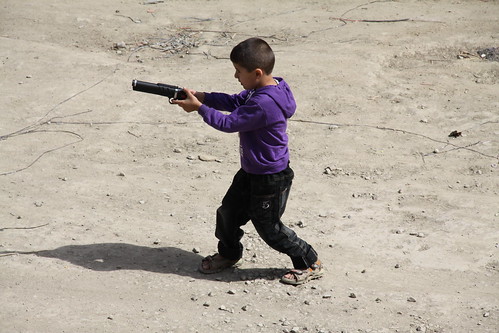
My dear brothers, you’ve probably heard about the social media storm that was triggered about a week or so ago by little Prince George, the four-year-old son of William and Kate. Pictures had surfaced of the young prince playing with a toy gun. Photos of him happily pointing the gun at another boy, and at his sister, and even at his mother. Very quickly, people criticised Kate for letting this happen. Others, however, defended her. Saying that there was nothing wrong with it.

I’m not sure how you feel about all this, brothers. But when I first heard about it, I couldn’t help but find it highly ridiculous. So much fuss over a boy playing with a toy gun?! But, on further reflection, I began to see a bit better how those photos could be so offensive to some. Especially given the painful reality of gun violence in the United States and elsewhere. Even so, a part of me still wishes that life could be simpler. That a boy could play with a toy gun without drawing criticism. Pointing it at whomever he wishes, without having to consider who the target might be.

If only life were that simple. If only love was that simple. If only I could love everyone in exactly the same way. Without having to first figure out whether that person was a friend or an enemy. Just point and shoot. Which, I have to confess, is how I tend to understand what Jesus is saying in the gospel today. Love your enemies… for your Father in heaven… causes his sun to rise on bad men as well as good, and his rain to fall on honest and dishonest men alike. Doesn’t this imply that God loves both God’s friends and enemies in the same way? But what does it really mean to be a friend or an enemy of God? And does God really love both exactly the same?

Pondering these questions, I’m reminded of how Father Ignatius begins his Rules for the Discernment of Spirits. As you know, he begins (SpEx 314 & 315) not with a description of consolation and desolation–that comes later–but rather by first drawing a sharp but crucial distinction between two kinds of people, moving in opposite directions. One going from good to better, and the other from bad to worse. Isn’t this how a friend of God is distinguished from an enemy? By the direction in which one’s life is moving. And isn’t it striking how Ignatius says that the good spirit acts on each of these kinds of people in opposite ways? Encouraging and consoling the friend. But discouraging and even depressing the enemy. Indeed, don’t we find something similar in the first reading?

As much as we may consider Elijah a friend of God, Ahab is quite clearly God’s enemy. The king himself confirms it, when he says to Elijah, So you have found me out, O my enemy! And it’s quite clear why Ahab considers himself God’s enemy. It’s because, when Elijah meets him at Naboth’s vineyard, the king is moving in a direction contrary to that of God. He is on a path of death and destruction. After having allowed his wife to commit murder on his behalf, the king is in the process of swallowing up the victim’s property. And there’s a reason why he is doing this. Ahab consumes another’s land, because he himself is being consumed by the flames of greed. What is God’s response to all this? How does God love this enemy?

God makes the sun of God’s mercy to shine, and the rain of God’s compassion to fall, upon the wicked king. God sends Elijah to do two things. First to disrupt the king’s chosen destructive path. By uncovering his hidden sin, and the terrible consequences they will have for him and his household. Then to douse, to extinguish, the flames of the king’s idolatry. And to ignite, in their place, the pangs of conscience. To disrupt and to douse. These are the actions that God’s friend is sent to perform for God’s enemy. As a result, the king repents. But he could just as easily have refused to do so. And persecuted Elijah instead. The prophet would then have had to do something more. The same thing that Jesus does for us. Elijah would have to suffer and perhaps even to die… To disrupt, to douse, and to die. This is how God loves God’s enemies through God’s friends. This is how Jesus loves us, when he comes not to call the righteous, but sinners to repentance (Lk 5:32).

Again, I’m not sure how you feel about all this, my dear brothers. But I must confess that these readings make me rather uncomfortable. Especially coming as they do at the end of our retreat. After 8 days praying together as friends in and of the Lord, why should we be drawn now to ponder how God treats enemies? What possible relevance might these reflections have for us? Perhaps their significance becomes clearer when we ask ourselves the question where? Where are God’s enemies to be found? Isn’t one likely place precisely where we will soon find ourselves returning ad dispersionem? In the world to which we are sent as servants of Christ’s saving mission. The same world that, in so many ways, remains stubbornly set on a course leading to destruction. Consumed by the flames of idolatry of various kinds, especially the worship of money. Like Elijah before us, are we not sent to proclaim a word that somehow disrupts this path? That douses this flame? And that may lead us to have to suffer and, in some way, to die? Doesn’t our ministry of consolation require us not just to comfort the afflicted, but also to afflict the comfortable?

But that’s not all. If we are truly honest with ourselves, shouldn’t we also acknowledge that God’s enemies are to be found not just ad extra, in our mission, but also ad intra, within our very lives as well? Both in our communal and personal lives. In those places where, like Ahab at Naboth’s vineyard, we may still be set on paths of self-destruction. So that even as we leave this retreat, do we not need to remain watchful for the ways in which God is inviting us to love one another, and to allow ourselves to be loved, not just as friends, but also as enemies? Needing to have our paths disrupted, our flames doused, else we cause suffering and death? 

My dear brothers, much as I wish that love were as simple as an innocent little boy shooting people with a harmless toy, the reality is far more complex. For isn’t it true that, all too often, before one can be loved as a friend, one must first be loved as an enemy? Before I can be loved as a saint, I must first learn to be loved as a sinner.

My brothers, if all this is indeed true, then what must we do–as individuals and communities, as apostolates and as a whole Region–what must we do, you and I, to keep growing, not just in the courage to love as friends in the Lord, but also, when necessary, in the humility to be loved as his enemies as well?

Sunday, June 10, 2018

Tactics for the Torn


Picture: cc Julia Manzerova

My dear friends, do any of you still remember this classic situation from those old Hong Kong drama serials of the past? The one where a happy bachelor finally gets married, only to find himself cruelly torn between his domineering mother on the one hand, and his equally stubborn wife on the other. Both of whom just can’t seem to get along. The poor guy doesn’t know what to do? Of course, this kind of thing never happens in real life, right? But still, do you know what it feels like to be pulled in different directions like that? To hear different voices, telling you to do opposite things?

For example, my friends may be inviting me out for a movie. But my parents are nagging me to stay home and study. Or lower COE prices signal me to buy a flashier car. But the sight of a feeble senior citizen, selling tissues at the hawker centre, may prompt me to think about setting aside more money for the poor instead. These are voices that come from the outside. There may also be voices from inside. Encouraging me to be patient and forgiving with an enemy, for example. Or pushing me to be angry and resentful. Even to seek revenge.

So what to do, sisters and brothers, when I find myself in a situation like that? Probably one of the first things I may need to do is, of course, to accept that I have to make a choice. Since the voices I hear are pulling me in opposite directions, I can’t follow them all. To try to do so is to be torn apart. The question, of course, is how to choose? What do I need to make the right choice? This is the question that our Mass readings invite us to ponder today. This is the kind of situation in which Jesus finds himself in the gospel.

His work of proclaiming the Good News of God’s love and mercy brings Jesus to his hometown. Where he hears various voices telling him different things. His relatives say he is crazy. The religious authorities accuse him of being possessed by the prince of devils. For their own respective reasons,  these voices want Jesus to stop his ministry. But, even though the voices are loud and insistent, the Lord resists them. And we know why. It’s because he is making a choice. He is choosing to listen to another voice. The voice of his heavenly Father, from whom he receives his mission. And it is also this divine voice that Jesus encourages his disciples, encourages you and me, to choose to follow. For this is how we become members of the Lord’s true family. Anyone who does the will of God, that person is my brother and sister and mother.

But isn’t it true, sisters and brothers, that it is not always easy to make this choice? How do I know, for example, which voice is God’s? Obviously, one thing I need is clarity. The same clarity that Jesus has. The ability to recognise the loving melody of the Father’s voice, amid the hostile or seductive clamour made by the voices of strangers. How does the Lord gain this clarity? Very likely in the same way that we often learn to recognise someone’s voice on the phone, even without looking at the caller ID. Simply by spending enough time talking to that person. Clarity often comes with close contact. With constant intimate communication with God. Something that we call prayer.

But clarity alone is not enough. For even if I am clear about what my parents or my children, my spouse or my God, want me to do, I may still choose to do the opposite instead. Isn’t this precisely the situation in the first reading? Where we’re told that the Lord God called to the man and the woman. But instead of responding at once, they get scared and hide themselves. I was afraid… so I hid. And the reason why they hide themselves is not because they have not recognised God’s voice. But because they are listening to other voices. Voices that tell them they are naked, unworthy of God’s regard. Voices that have earlier drawn them to disobey God. To suspect God’s instructions. To spurn God’s friendship.

For the man and the woman in the first reading, clarity alone is not enough for them to respond to God’s voice. They need something else. Something to help them overcome their fear. They need courage. The same courage with which Jesus resists his opponents. The same courage that we find also in St Paul in the second reading. The passage begins from verse 13 of chapter 4. Earlier, from verses 7 to 12, Paul writes about the many difficulties and problems that he has to encounter in his ministry. And yet, in today’s reading, he goes on to say that there is no weakening on his part. Despite all his trials, the apostle still chooses to persevere. The way Jesus perseveres in the gospel. Even unto death. From where does Paul get this courage? In the reading, he tells us that it is from faith. From his close relationship with Christ, his crucified and risen Lord. We… believe, Paul writes, and therefore we… speak.

Clarity and courage, giving us the ability to make a crucial choice. This is what we find in our readings today. The clarity and courage to choose, in our daily lives, always to follow no other voice than God’s alone. A voice continually calling us to walk the way of self-sacrificing service, instead of self-serving greed. The way of Christ’s humble Cross, instead of the devil’s prideful vanity. The way of downward mobility instead of upward ambition.

My dear sisters and brothers, if today you happen to find yourself hearing various voices pulling you in different directions, which one will you choose to follow?

Sunday, June 03, 2018

More Than Just A Place


Solemnity of the Most Holy Body & Blood of Christ (B)


My dear friends, do you still remember Uber? Well, before Uber was gobbled up by Grab, it actually produced a couple of pretty decent advertisements. Do you remember, for example, the one that focuses on Gillman Barracks?

A little boy dreams about becoming an artist, but gets discouraged and disillusioned when his friends tease and bully him. So, to help him find inspiration, his mother brings him to the art galleries at Gillman Barracks. At the same time, a retired soldier also travels to Gillman Barracks for a reunion with his army buddies. And it is at this former military base, now converted into a centre for contemporary art, that the novice searching for his dreams and the veteran reaching into his memories quite literally bump into each other. They meet in the present, even as one seeks to connect with his future, and the other with his past. And how do they get there? On Uber of course. It is Uber that brings them to where they need to be. As the narrator tells us near the end: where is more than just a place. Whether you’re going back to your best days, or starting your best ones, we’ll get you there.

It’s true, isn’t it, sisters and brothers? Whether or not we’ve ever used Uber. It’s true that where is more than just a place. More than a physical location. Where is also about making connections. About recalling our past and dreaming our future. The better to find new meaning and energy in the present.

Which is good to remember especially today, because as you may have noticed, the question where? appears twice in the gospel. Where, the disciples ask Jesus, do you want us to go and make the preparations for you to eat the passover? Where is my dining room…? The Lord instructs them to ask the owner of the house. And the reading gives us the obvious answer: a large upper room. And yet, if it is true that where is more than just a place, then perhaps the answer goes far deeper than the upper room. Perhaps pondering the question where? can lead us to the true significance of this marvellous feast that we celebrate today: the Solemnity of the Most Holy Body and Blood of Christ.

For what does the Eucharist do, if not enable us to make deep connections with our past and our future? The better to live more meaningfully and energetically in the present? Isn’t this what we find in our readings today? When Jesus gathers his friends to break the bread and share the wine, connections are made in different directions. The Lord’s actions hark back to those of Moses in the first reading. For just as Moses uses the blood of animals to seal an awesome connection between the people and their God, so too does Jesus allow his own blood to be used to do the same. But, this time, in an irreversible, indestructible, eternally enduring way.

And precisely because this new connection endures eternally, Jesus’ actions at the Last Supper, and at every celebration of the Eucharist, allow his friends–including you and me–to connect also with our promised future. As the second reading reminds us, The Lord brings a new covenant, as the mediator… so that the people who were called to an eternal inheritance may actually receive what was promised. Eternal life-giving connection with God. A promise the final fulfilment of which still awaits us in the kingdom to come. 

Also, even as the Eucharist draws us to recall our past renewed in the sacrifice of Christ, and to look forward to our marvellous future secured in the promise of God, it should also have a positive effect on our lives in the present. For the blood of Christ… can purify our inner self from dead actions so that we do our service to the living God. Here and now. So that, motivated by love and mercy, instead of selfishness and anxiety, our lives may be filled with deeper meaning, rather than superficial drudgery. Boundless energy, instead of constant discouragement and disillusionment.

Isn’t this the great wonder of the Eucharist? Perhaps similar in some ways to the wonder of a place like Gillman Barracks? Every time we gather to break the bread and raise the chalice, we proclaim the Lord’s death, the shedding of his blood for love of his friends and enemies alike. We connect deeply with a past and a future held securely and yet so tenderly in the reliable reassuring hands of our loving God. And it is in these connections, it is in these hands, that we find meaning and energy, clarity and courage, to face the challenges of each passing day.

Why then do some of us continue to find the Eucharist such a chore and such a bore? Perhaps it’s because presiders and preachers like me are just not competent or diligent enough. Something that we need to work harder to improve. But then again, perhaps it’s also because, just as the Uber driver cannot take us to Gillman Barracks unless we decide to board the vehicle, neither can the Eucharist take us to where we need to go, unless we make the necessary efforts to celebrate Mass with the attention and reverence it truly deserves.

My dear friends, where is, indeed, more than just a place. For us who are Christian, where is ultimately our deep connection with our loving life-giving God. An eternally enduring connection, sealed by the precious broken body and flowing blood of Christ. God is the destination, and the Eucharist is our means to get there. Not just the Eucharist as it is celebrated here in church. But also the Eucharist as it is meant to be lived out there in our daily lives.

Sisters and brothers, if it is true that God is our where, and the Eucharist is our how, then where are you going, and how are you getting there today?

Sunday, May 13, 2018

The Way Home


7th Sunday of Easter
(World Social Communications Sunday)

Readings: Acts 1:15-17,20-26; Psalm 102(103);1-2,11-12,19-20; 1 John 4:11-16; John 17:11-19
Picture: cc ebenette

My dear friends, do you know how parents decide when the time is right to allow their kids to go out on their own? I’m sure there are parents among us here this morning. How do you decide? Are there particular signs that you look out for? Well, I don’t have any children of my own, but if I did, I think one minimum requirement I might set, before allowing them to go out on their own, would be that they must first know the way back home. Which is reasonable to expect, right? Otherwise, they’ll just go out and get lost.

Before going out on one’s own, one should first know the way back home. It’s good to bear this in mind today, because it can help us understand what’s going on in the gospel. As you may recall, the story takes place at the Last Supper. After having washed his disciples’ feet in chapter 13, and then giving them a long farewell speech till the end of chapter 16, here in chapter 17, Jesus offers a prayer to his heavenly Father, for all his disciples, including us. What does Jesus ask for? Only one thing, really. But expressed in at least 3 different ways…

Holy Father, keep those you have given me true to your name… protect them from the evil one… Consecrate them in the truth… To be kept true to the Father’s name… To be protected from the evil one… To be consecrated in the truth… What does all this mean? What does it look like when disciples are consecrated in truth? When we are protected from the evil one? When we remain true to God’s name?

To answer this question, it may be helpful to remember again that Jesus offers this prayer just before he leaves his disciples to go to the Father. In a way, the Lord’s situation in the gospel is not unlike that of a parent about to let his children go out into the world on their own. Before doing this, the one thing the parent wants to ensure is that the kids know the way back home. Isn’t this what Jesus is asking for? Isn’t this what the word truth is meant to signify?

To be consecrated in the truth is to know the way back home. Indeed, it is to remain at home, to remain in the presence of God, even while we may be roaming about in the world. And Jesus has already indicated earlier, in chapters 13 and 14, just how this is done. By first washing his disciples’ feet, a symbol of his own loving sacrifice on the Cross, and asking them to follow his example. And then, by telling them that he, Jesus himself, is the way, the truth, and the life. To be on the Way home, to be consecrated in the Truth, is simply to follow Jesus, the fullness of Life. To first allow him to wash my feet, and to let that deeply intimate and personal experience move me to then go out and wash the feet of others. To lovingly lay down my life for them. Just as the Lord has laid down his life for me. To love as Jesus loves. This is the way for us to remain at home.

Isn’t this also what the second reading tells us, when it says that God is love and anyone who lives in love lives in God, and God lives in him? So that it doesn’t matter even if I may be wandering about in the world. After all, where else can I go? As long as I continue receiving and returning God’s love, by loving others, I am actually always already on the Way home.

Which may help us to understand what may be the deeper meaning in the first reading. When Peter asks the community to choose someone to replace Judas, he sets only one requirement. The candidate must have been with us the whole time that the Lord Jesus was travelling round with us… until the day when he was taken up from us… At one level, this may mean simply what it says. That the candidate must have been physically present the whole time that Jesus was with us. But, as you know, physical presence alone is not enough. What is more important is spiritual presence. Presence rooted in God’s love. The kind of presence that Jesus is asking the Father in the gospel to grant us. After all, Judas too was physically present. And yet, he became lost. He abandoned his post to go to his proper place. He was unable to make his way home.

Before going out on one’s own, it’s crucially important that we first know the way home. But that’s not all. As you may have noticed, our readings are not just about how we can go out into the world and return safely home. They also speak about something else. Both in the first and second readings a particular reason is given for us to know the way home. We ourselves saw & we testify that the Father sent his Son as saviour of the world… It’s not just for our own benefit. It’s not just for our own safety. But it is also so that we may bear witness, so that we may testify, before the whole world, to the love of God shown to us so powerfully, and yet so tenderly, in the Dying and Rising of Christ.

And isn’t this what should set Christian social communications apart from all other forms of publicity? For communications to be truly Christian, it’s not enough that we mention the name of Christ, or that we publicise Christian images. We can do all that and still bully people. The one requirement for truly Christian social communications is that it always remain rooted in the truth of God’s love shown to us in Christ. That it testify constantly to that love. Not just in what it contains, but also in how it is carried out. So that it always remains capable of showing others the Way home.

My dear sisters and brothers, whether we like it or not, we all live and communicate in the world. We cannot avoid that. The important question we need to keep asking ourselves is, do we, do I, really know, the way home?

Well, do you?

Sunday, April 08, 2018

Sign of the Swimmer


2nd Sunday of Easter (B)
Divine Mercy Sunday

Picture: cc USAG-Humphreys

My dear friends, do you know the difference between swimming and drowning? If you see someone in a pool of water, for example, can you tell if that person is in distress? Usually there are some obvious signs. Typically, the person can be seen struggling in the water. But the actual difference between swimming and drowning is less obvious, right? It has to do not so much with the external movements of the body, as with what happens to it internally. When a person is swimming, even though the body is surrounded by water, the lungs are still being filled with air. In contrast, we say a person is drowning when the water on the outside begins to seep inside. Invading the space that should be reserved for air. Causing the person to suffocate.

But how then to save a drowning person? Usually someone has to jump into the pool to pull the person out. And then the water has to be driven out of the lungs, and replaced with air. Only then will the drowning person survive. And hopefully be able to swim again. In any case, the difference between swimming and drowning may be described perhaps in terms of overcoming and being overcome. To swim is to overcome the water, by holding one’s breath. To drown is to be overcome by it.

This difference between swimming and drowning, between overcoming and being overcome, can be seen not just in a swimming pool, but also in the spiritual life as well. In today’s gospel reading, we’re told that the doors were closed in the room where the disciples were… A powerful image of people struggling desperately, but unsuccessfully, to keep out the dangerous waters of the world. For it’s quite clear that they are drowning. They are being overcome. First of all by fear. Fear of the Jews. Fear that whatever happened to Jesus will happen also to them. Then, in the case of Thomas, overcome also by doubt. The inability to trust without proof, to believe without sight.

So that when Jesus mysteriously appears in that enclosed room, it is to achieve a very specific purpose. To rescue people from drowning. And it’s helpful for us to notice how this done. To see that it involves four steps. We’re told that first Jesus came and stood among them. In other words, Jesus moves in the same dangerous waters in which the disciples are struggling. The Lord then drives out the fear and doubt from their hearts, by saying to them repeatedly, Peace be with you.

And it’s important for us to realise how Jesus is able to do this. He is able to enter hearts that are closed, hearts that have been overcome by fear and doubt, because he has previously plunged into the perilous pool of human existence. He was born into the insecurity of a homeless refugee. Lived the quiet life of a manual labourer. Served, ever so briefly, as Healer of the sick, Comforter of the afflicted, Shepherd to the lost and forsaken. Only to then die the cruel death of a condemned criminal. And he did all this with a heart continually filled, not with the water of fear, but with the Breath of the Spirit. Clearly, Jesus is able to rescue drowning people, because he himself has first learned to swim in the dangerous waters of human reality.

Isn’t this the reason why the Lord is able not just to drive out from the disciples’ hearts the waters of fear and doubt, but also to replace those same waters with the Breath of Love and Life? Receive the Holy Spirit. As the Father has sent me, so am I sending you… In uttering these words, Jesus doesn’t just revive the drowning. He also sends them on a mission of their own. Calling them to remain in the dangerous waters of human existence. No longer to drown, but to swim. And to work for the rescue of others, as they themselves have been rescued. To teach others how to hold their breath, to remain centred on God, even as they navigate the perilous waters of daily life.

A plunging in and a driving out. A breathing upon and a sending forth. These are the four steps by which the Crucified and Risen Lord rescues his disciples, rescues us, from the danger that threatens to overcome them. Turning drowning people into graceful swimmers. Isn’t this the same process described in the second reading? Which tells us that anyone who has been begotten by God has already overcome the world. To overcome the world, instead of being overcome by it.

What does this mean, if not to learn how to swim in the worldly waters of trial and temptation, by continually holding within us the Breath of the Spirit? Resisting the waters of fear and doubt, or selfishness and greed, or whatever else may threaten to take God’s rightful place at the centre of our hearts?

And what the second reading describes in theory, the first reading paints for us in practice. This is what it looks like, in the concrete, when Christians overcome the world. When they learn how to swim instead of drown. The first reading tells us that all those who owned land or houses would sell them, and bring the money from them, to present it to the apostles; it was then distributed to any members who might be in need. Whereas the world teaches only how to consume and to hoard, the Christians in the first reading learn how to care and to share.

Here we find the sign that clearly distinguishes the swimmer from the one who is drowning. The sign that we celebrate most especially on this 2nd Sunday of Easter. The sign of divine mercy. The same mercy that brought Jesus from heaven to earth, from cross to grave, and from grave to that room where the doors were closed for fear of the Jews. The same mercy that then leads the early Christians to share their possessions with those in need. Mercy, my dear friends, is what changes drowning people into grace-filled swimmers. And mercy is also what we need so very much today. When so many of us continue to find ourselves overcome by the world. Drowning as much in its seductive attractions, as in the heavy demands it makes on us.

My dear sisters and brothers, if mercy is indeed what makes the difference between swimming and drowning, then how good a swimmer are you today?