Sunday, September 25, 2022

Between the Fiddle & the Fire


26th Sunday in Ordinary Time (C)
(World Day of Migrants & Refugees)


Readings: Amos 6: 1, 4-7; Psalm 145 (146): 7-10; 1 Timothy 6: 11-16; Luke 16: 19-31

Picture: cc paurian on Flickr


My dear friends, what do you think? Is there anything wrong with playing the violin? Of course not, right? And yet, haven’t we heard the phrase, to fiddle while Rome burns? It means to do something relatively trivial or irresponsible in the midst of a crisis or an emergency. On its own, fiddling is not a sin. But to do it when I should really be helping to put out a raging fire must surely be wrong, if not possibly a sign of insanity.


To fiddle while Rome burns. This is also the sinful tendency highlighted in both the first reading and the gospel. And I have to confess that I say this with a certain tremor in my heart, because I find this tendency in myself as well. The tendency to be so absorbed in seeking, securing and savouring my own comfort, success and enjoyment – including that of my family, my community and country – that I become oblivious to the suffering of many others around me. The readings speak of sprawling on cosy beds, dressing in fine clothes, feasting on sumptuous foods, even inventing musical instruments, without caring about the ruin of Joseph, or the misery of poor Lazarus. Fiddling while Rome burns.


And isn’t it truly sobering to consider how easy it is to fall into this sin today? Continually, we receive news from around the world of people suffering terribly from the effects of climate-change, of economic disparity, of war and conflict. Effects which, I’m told, my own lifestyle somehow contributes to exacerbating, even if only in small ways. Surely, it can’t be right for me to focus only on enjoying my own life, without somehow attending to all this suffering.


What then am I to do? The scriptures offer not so much a prescription of solutions as a process of growth. A process that begins with what the rich man was hoping to do for his brothers, after his death. He wanted to help them repent. To turn their apathy into compassion. Beginning perhaps with a tremor in the heart. So that they might be more receptive to the voice of the Lord, and the cries of those who suffer, including the migrants and refugees we especially remember today. For the Lord protects the stranger… upholds the widow and orphan but thwarts the path of the wicked.


And that’s not all. Beyond repentance and receptivity, there is yet another step in the process. We find it in the second reading, where Paul reminds Timothy of his God-given duty. A duty we all share, by virtue of our baptism. The duty to fight the good fight of faith. To engage in an ongoing struggle, first against my own selfish and narcissistic tendencies, and then to bravely bear witness to the truth in the world, as Jesus did before Pontius Pilate. To share in the Cross of Christ, so as to share in his Resurrection, giving glory and praise to our God… Repentance, receptivity and struggle. This is the pilgrim journey that the scriptures mark out for us.


Sisters and brothers, amid the fires engulfing our world, what must we do to help one another focus less on our fiddles, so as to walk this path together more resolutely today?

Sunday, September 04, 2022

Letting Go

23rd Sunday in Ordinary Time (C)


Readings: Wisdom 9:13-18; Psalm 89 (90): 3-6,12-14,17; Philemon 9-10,12-17; Luke 14:25-33

Picture: Photo by Seth Doyle on Unsplash


My dear friends, do you remember when you first learned how to swim? What did you find most challenging? For me, it’s learning how to float. Using my arms and legs to propel myself through the water is easy enough, because I remain in control. But floating requires letting go, and there's something inside me that resists that. Yet, without knowing how to float, I move through the water only with much tension and anxiety.


I believe this anxiety, this need to be in control, is also what our scriptures help us to ponder today. The first reading talks about how difficult it is for us humans to know the intentions of God…. (For the) reasonings of mortals are unsure and our intentions unstable. Isn’t this instability of intention due, at least in part, to my own anxious need for control? Which affects not just how I relate with God, but also with things and people. At home, at work, and even at play. Whether I realise it or not, when I seek to control everything and everyone in my life–even those I may profess to love very much–I end up treating them like my personal property. As a result, I turn them into obstacles that keep me from drawing close to God.


Isn’t this is why Jesus says that I cannot become his disciple without first hating my father, mother, wife, children, brothers, sisters, and even my own life as well? Perhaps what needs to be hated, or set aside, is not the people themselves, but my need to control them, to treat them as mine. For none of us can be a disciple unless we give up all our possessions.


But if it is really so difficult, how does one learn to let go? The readings offer at least three insights. The first is that it’s helpful to have a companion and guide. Which is the role that Paul plays in the second reading. Someone who, whenever I may find myself stuck in my own anxiety, gently nudges me to contemplate a fresh perspective. Reminding me to consider that, in God’s eyes, a thousand years are like yesterday, come and gone, no more than a watch in the night. Inviting me to pray for the grace to know the shortness of my life, that I may gain wisdom of heart.


Also, in addition to companionship and contemplation, a third insight is the usefulness of a crisis, such as the one faced by Philemon in the second reading. He has been separated from his slave, Onesimus. And, like someone teaching another to float in deep water, Paul shrewdly makes use of this crisis to challenge Philemon to let go. To surrender his ownership of Onesimus, and to treat him as a brother-in-the Lord, instead of just another piece of property.


Companionship, contemplation and crisis. Aren’t these insights particularly relevant for us, who live in such anxiety-provoking times? They offer us a path by which we may be set free. The better to reach out and to connect with others, with our world, and with God, in humility, mercy, and love.


Sisters and brothers, even as we may find ourselves immersed in deep and troubled waters, how might we help one another float more freely in God’s tender embrace today?

Sunday, August 21, 2022

Passport Renewal


21st Sunday in Ordinary Time (C)


Readings: Isaiah 66:18-21; Psalm 116 (117); Hebrews 12:5-7, 11-13; Luke 13:22-30

Picture: Photo by ConvertKit on Unsplash


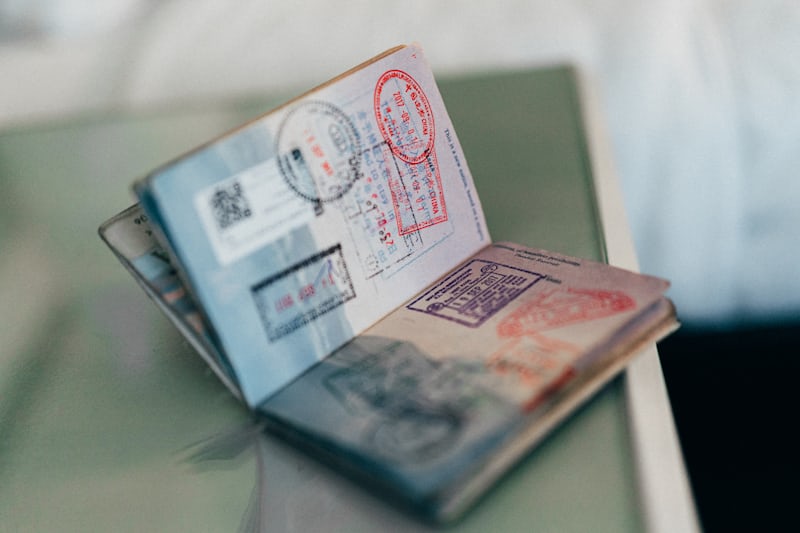
My dear friends, do you need to renew your passport? As you know, it was announced just a few days ago that those whose passports are valid for only six months or less should apply for a new one now, if they wish to travel in December… We all know that a valid passport is crucial, not only for travel abroad, but also in order to return home. For a passport is what gains us recognition and access.


And isn’t the failure to gain recognition and access precisely the problem in the gospel? Jesus tells us to enter by the narrow door. For once the door is locked, you may find yourself knocking, but the master of the house will say (and he says it twice), I do not know where you come from. It’s as though the Lord is reminding us to renew our passports, so that we may be recognised and granted entry into God’s kingdom. How do we do this? What does it mean to enter by the narrow door?


It’s important to remember that, if the door is narrow, it’s not because those wishing to enter are too many, or the master too stingy. In the first reading, the Lord is so generous that passports are granted freely and widely, not just to the people of Israel, but also to everyone else. I am coming, the Lord says, to gather the nations of every language…. I will give them a sign and send (them) to the nations.


We Christians believe that this sign, this door, this God-granted passport is none other than Jesus himself. Who tells us in John’s gospel, I am the gate. Whoever enters by me will be saved (10:9). Isn’t this why the door is narrow? It’s narrow because, to enter it, I have to walk the way Jesus walked, the way of humility and loving service, the Way of the Cross.


Unlike official travel documents, the passport that gains me entry into heaven is not printed on paper, nor can it be carried in my pocket or purse. No, the passport into heaven consists in a life moulded into the shape of Christ’s, and a heart made tender, like the one that was pierced through for our faults, and crushed for our sins.


And how is this moulding of life, this tenderising of the heart accomplished, if not by the method described in the second reading. Suffering, we’re told, is part of (our) training; God is treating you as his sons. Suffering, borne patiently, humbly and hopefully, in union with the crucified Christ, bears fruit in peace and goodness. Precious gifts that we can share with those around us who may be suffering even more. Such as those whom the pandemic has left much lonelier and more vulnerable, or those most affected by rising costs of living. 


Sisters and brothers, even as some of us may be rushing to obtain a new travel document, in order to enjoy a brief vacation overseas, what steps should we be taking to help one another ensure that our heavenly passports remain valid for entry into our eternal home?

Sunday, July 10, 2022

Between Profiles & Persons


15th Sunday in Ordinary Time (C)


Readings: Deuteronomy 30:10-14; Psalm 68 (69): 14, 17, 30-31, 33-34, 36-37; Colossians 1:15-20; Luke 10:25-37

Picture: Kenny Eliason on Unsplash


My dear friends, what is the difference between a profile and a person? Many of us use profiles to interact with others on social media. But we also know how dangerous it is to confuse an online profile with the actual person. Haven’t we all heard of love scams that rob victims of both their money and dignity? Also, beyond social media, haven’t we read about the injustice caused in some countries, by so-called racial profiling? When police target people simply for the colour of their skin, without any regard for the actual person.


This distinction between profile and person is what lies at the heart of our gospel reading today. When that cheeky lawyer asks Jesus, who is my neighbour?, he is asking for a profile of the kind of person he should love. In his mind, fellow Jews clearly fit the bill, but foreigners do not. What is not so clear is whether a Samaritan qualifies as a neighbour. As you know, although not exactly foreigners, Samaritans were still considered outsiders. But Jesus refuses to give the lawyer what he wants. Instead of providing a profile, the Lord tells a story, ending with a command: Go, and do the same yourself. Go and act like that Samaritan who, unlike the priest and the levite, chose to relate to the victim as a person, instead of a profile. Allowing himself to see the needy one’s plight, and be moved to show mercy…


I have to confess that I find this call to treat others as persons very challenging. Although I know, theoretically, that we are all called to love everyone equally, in practice, given the limited time and energy available to me, I have to choose those to whom I offer more care and concern. And how do I choose, except by using profiles? By favouring my family and friends, for example, or my community, or class… And I also often apply profiles of some kind even without me realising it. Such as when I relate to people according to society’s expectations of them, regardless of their actual situation? Or when I treat others according to what people may say (or gossip) about them, instead of relying on my own personal experience?


How then to obey the Lord’s command? How to reconcile the call to treat people as persons with the different profiles that I adopt? Perhaps I need to learn from the early Fathers of the Church, who heard the parable not first as an obligation to fulfil, but as a gift to receive. For who is that Samaritan, if not Jesus, who sees me as a person, and takes pity on me? Saving me from my sins, by laying down his life on the Cross. Listening to the parable in this way, allows me to experience what we believe happens at every Mass… The living Word of God no longer feels far away, but draws very near. Giving us a new vision of reality. Remaining in our mouths and hearts for our closer observance. For Christ is not just the image of the unseen God. He is also the first to be born from the dead. Able to free me from all the dead actions and interactions, the spiritual scams, to which I fall prey all too often.


Sisters and brothers, in Christ, God chooses to treat each and all of us as living persons rather than dead profiles. How shall we help one another to do the same for others today?

Sunday, June 26, 2022

Fences


13th Sunday in Ordinary Time (C)


Readings: 1 Kings 19: 16, 19-21; Psalm 15 (16): 1-2, 5, 7-11; Galatians 5: 1, 13-18; Luke 9: 51-62

Picture: by Benjamin Ibañez on Unsplash


My dear friends, have you ever heard of an invisible fence? Years ago, someone walked by a house, and saw a beautiful golden retriever sitting calmly in the front yard. And he wondered why the dog didn’t run away, since the yard didn’t seem to have a fence. Only later did he discover that there is such a thing as an invisible electric pet fence, consisting of wiring buried underground, which interacts with a gadget worn by the pet, keeping it from crossing a designated boundary. Some fences are less obvious than others.


Which is helpful to remember, while we ponder the scriptures today. As you know, in the letter to the Galatians, from which the second reading is taken, St Paul tries to persuade his gentile Christian readers not to allow themselves to be fenced in by the Jewish law of circumcision. For, by Dying and Rising, Christ has already set us free, apart from the Law. So that, for the Galatians, accepting circumcision would be the same as submitting again to a yoke of slavery.


But there are also less obvious forms of slavery. Which is why Paul warns his readers not to allow their freedom from the Law to provide an opening for self-indulgence. And in case we may wonder how self-indulgence can be a form of slavery, we have only to consider some of the addictions to which we can fall prey in modern society. Beyond the more obvious ones like narcotics, alcohol and gambling, aren’t there also less obvious drugs like pornography and sex, gadget-use and gaming, overwork and over-consumption in general? 


But if the ability to do whatever we want can lead to a less obvious form of slavery, then what does Christian freedom look like? And how do we become truly free? According to Paul, Christian freedom consists in simply being able to love. To love God and neighbour, by engaging in works of service, energised and guided by the Spirit.


And what Paul describes in theory, Elijah and Jesus illustrate in practice. After spending time communing with God on Horeb, the mountain of the Lord, the previously burnt-out prophet receives not just a fresh mission, but also renewed energy to carry it out. Selflessly, Elijah anoints Elisha to succeed him. Similarly, soon after having been transfigured on a mountain, Jesus resolutely takes the road to Jerusalem, despite knowing the difficult destiny that awaits him there.


So for both Elijah and Jesus, the freedom and energy to respond to God’s call, come from a prior encounter with God. Perhaps this is why, for a good number of us, our faith can feel less like being set free to love, and more like being fenced in by obligations. For aren’t our lives so packed that we don’t have the space even to catch our own breath, let alone to encounter and be energised by the Breath of God?


If this is true, sisters and brothers, then what can we do to let God remove the fences in our lives, visible or otherwise, so that we may continue being set free for love today?