Monday, April 07, 2008


Monday in the 3rd Week of Easter
Memorial of St. John Baptist de la Salle, Priest
Paschal Pattern and Person


Readings: Acts 6:8-15; Psalm 119:23-24, 26-27, 29-30; John 6:22-29
Picture: CC USRodeoSupply

Coincidentally, on a day when we celebrate the memory of the great educationist St. John Baptist de la Salle, our readings present us with what may be seen as a teacher’s problem. Consider first the situation of the psalmist. Faced with persecution, he asks the Lord to teach him to recognize and to remain faithful to the demands of God’s law. He asks to be taught to distinguish between two paths. Make me understand the way of your precepts, he begs. Remove from me the way of falsehood and favor me with your law. The way of truth I have chosen; I have set your ordinances before me. Learning to distinguish the way of truth from the way of falsehood, isn’t the concern of every Christian? How then does God go about answering such a prayer? How does God teach us to walk the way of truth?

Given the reference to the law, it is perhaps tempting to think immediately of a code, of a list of prescriptions or guidelines that seek to cover as many situations as it’s possible to conceive. It’s perhaps tempting to fall back on a model of education that emphasizes pure rote learning and regurgitation, whether of a set of prayers or scripture verses. Although there surely is a place for such forms of learning – we do at least need to know how to say our prayers, for example – God’s approach seems to have a different emphasis. Instead of focusing on the law as expressed in a code, God fulfills the law by embodying it in a person. As Jesus says in the gospel: Do not work for the food that perishes but for the food that endures for eternal life… This is the work of God, that you believe in the one he sent. To walk the way of truth has less to do with studying a code than with getting to know and to love a person.

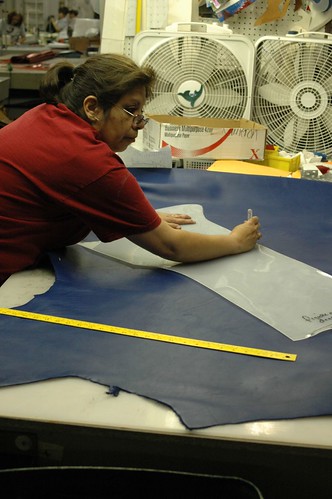
This, however, doesn’t quite take us out of the woods, for Jesus no longer walks the earth the way he did before his passion, death and resurrection. We can’t see and hear, touch and interact with him the way the people in the gospel could. How then are we to get to know and love him? Especially for Catholics, a ready answer should probably spring easily to mind. As source and summit of our faith, the Eucharist is the privileged place where, as a people assembled by God, we encounter and interact with our crucified and risen Lord. But caution is still necessary, isn’t it? For isn’t it possible to come to the Eucharist with dispositions similar to those of the people in the gospel, who sought Jesus only because he could solve their problems? Or what about Stephen’s opponents in the first reading? Isn’t it possible to approach the Eucharist with a kind of obsession over trivial minutiae, which parallels their clinging to the customs that Moses handed down? We are, of course, far from advocating that anything goes. Even so, something else seems to be primary. We find a distinguishing mark of the Eucharist in the gospel reading for Holy Thursday, at the Mass of the Lord’s Supper. After washing his disciples’ feet, Jesus tells them: I have given you a model to follow… Or, in another translation, I have given you an example so that you may copy… (John 13:15) Isn’t this model of the suffering servant the key distinguishing mark of the way of truth? Isn’t this also the paschal pattern that we see reproduced in the experience of Stephen in the first reading? And isn’t this the true challenge of Christian faith-formation? Like a tailor working with a dress stencil, or a blogger constructing a website with a blogskin or template, aren’t we called to learn to walk the way of truth by reproducing in our own lives the pattern and person of the One who suffered, died and was raised to life for us?

How are we being taught to do the same today?

Friday, April 04, 2008


Friday in the 2nd Week of Easter
Counterintuitive?


Readings: Acts 5:34-42; Psalm 27:1, 4, 13-14; John 6:1-15
Picture: CC valentinapowers

Counterintuitive. This is a word that I learnt not too long ago. According to the Merriam-Webster Online dictionary it refers to that which is contrary to what one would intuitively expect. Expectedly or otherwise, this is the word that springs to mind as we listen to the readings for today. Counterintuitive. Many of the things that we find people saying and doing in today’s readings are counterintuitive.

Probably the most obvious example is the reaction of the Apostles to the treatment meted out to them by the Sanhedrin. After having been flogged and ordered to stop speaking in the name of Jesus, they leave rejoicing that they had been found worthy to suffer dishonor for the sake of the name. Not only that, but we’re told that they did not stop teaching and proclaiming the Christ. And no less counterintuitive is the Sanhedrin’s chosen course of action. Here, before it, is a band of subversives, people whose words and actions will plainly undermine the stable order of the status quo. In another time and place, these people would be considered deserving of execution, as was Jesus. In our own local context, they at least cry out for detention without trial. And yet, Gamaliel counsels release. Have nothing to do with these men, he says, and let them go. A serious problem arises calling for urgent action. But the Sanhedrin accepts Gamaliel’s counsel and chooses to wait.

And what of the gospel? Don’t we find the counterintuitive here too? Five thousand hungry people are gathered. Yet, even before discovering what meager resources are available to meet their need, Jesus initiates preparations to feed them. And counterintuitive too is the reaction of the people. A hungry boy with a lunch-box of five loaves and two fish is willing to part with it, and for what? Did he really expect to feed a crowd so huge that two hundred days’ wages worth of food would not be enough for each… to have a little? One would expect too that, finding themselves far from the nearest restaurant or hawker-center, five thousand hungry people would leave hurriedly to search for food. Instead, calmly and obediently, they recline on the grass. Stomachs rumbling, with no reasonable source of satisfaction in sight, yet still they choose to wait.

Counterintuitive? Indeed! But, then again, much depends on one’s intuition doesn’t it? What might be considered counterintuitive for some may well be intuitive for others. Which is why our responsorial psalm is so important, especially today. Here we find the context out of which the apparently counterintuitive might be considered otherwise. For, as in the readings, we find here someone who chooses to wait. Wait for the Lord with courage; be stouthearted, and wait for the Lord. We know, of course, that waiting upon the Lord doesn't imply total passivity. In the gospel, for example, isn't it through Andrew's efforts that the boy with the loaves and fish is discovered? Nonetheless, waiting still seems counterintuitive, except that, for the psalmist, two things make it the appropriate thing to do: a profound desire and a heartfelt belief. The reason why waiting on the Lord is intuitive for the psalmist is because more than any craving for material things, he is conscious and lives out of that one yearning that characterizes every human heart: one thing I ask of the Lord; this I seek: to dwell in the house of the Lord all the days of my life… And he knows too that it is only God who can satisfy this hunger, and indeed God’s desire to satisfy it is greater even than the hunger itself. Which is why the psalmist is able to say: I believe that I shall see the bounty of the Lord in the land of the living… Which is why he asks for the courage to wait…

And what of us? In the daily problems that beset us, what do we want? What do we believe? How and for whom do we wait? …

Wednesday, April 02, 2008


Wednesday in the 2nd Week of Easter
Freedom!


Readings: Acts 5:17-26; Psalm 34:2-3, 4-5, 6-7, 8-9; John 3:16-21
Picture: CC bsamp

It’s quite plain to see that at the center of the prayers and readings for Mass today is an awesome miracle. But what is perhaps far less obvious is the true nature, the concrete implications, of this extraordinary event. It’s tempting to let our gaze rest and remain focused only on the surface, since the details that we find there are already so fascinating. At one moment, the apostles are locked up in the public jail, their message muzzled, their fate uncertain. But then, just as the darkness of night engulfs them, an angel ushers them out of captivity and commands them to take your place in the temple area, and tell the people about this life… Amazing!

And yet, there is something even more mind-blowing here, something that we begin to appreciate only when we probe beneath the surface. For the wonderful miracle experienced by the apostles actually points beyond itself to the marvelous mystery that we ourselves continue to celebrate, especially in this season of Easter. More than just an interesting historical account, the story in the first reading is really an invitation to us to penetrate more deeply into the effects of Jesus’ death and resurrection, and the difference it can make in our own lives. We might begin to respond to this invitation by pondering several key aspects of the miracle.

Consider first that public jail in which the Apostles are held. Is it only by accident that it is described as public? Or does this place not rather signify the many different dark dungeons into which we sometimes find ourselves thrown as helpless captives? The first reading shows us what one of these places looks like by speaking of the jealousy that fills the Sadducees, prompting them to reject the Good News and to place the Apostles under arrest. And we have probably only to look within our own experience to find other examples, other places of darkness, in which we tend to be imprisoned, jails such as greed or grief, anxiety or ambition.

But the Good News proclaimed by Jesus and the Apostles, both in word and in work, is that God has set us free. Through the death and resurrection of Jesus, the dark doors of our respective prisons are now thrown open and there is a possibility for us to step out into the light. The opening prayer speaks of this new freedom in terms of a restoration of humanity to its original dignity. If this sounds too abstract, Jesus helps us to understand better by speaking about stepping out of darkness into the light. But what is this light? What is this dignity? What is this new freedom? Here we reach what is perhaps the most mind-blowing aspect of all. The light into which Christ’s resurrection draws us is nothing less than that love by which God refused to condemn the world, but instead gave to it – to us – his only-begotten Son, so that everyone who believes in him might not perish but might have eternal life. This is the original dignity that is being restored to us: a share in the very nature of the God who is love.

And isn’t this what we see too in the actions of the Apostles after their release? Fearlessly they proclaim to all a message not of condemnation but of love and hope. They speak of what they themselves have experienced, that the Lord does indeed hear the cry of the poor, that he does indeed deliver us from all our fears. On our part, what we need to do is to believe in the miracle of the Lord's death and resurrection, to step out into the light.

How are we experiencing this same miracle in our own lives today?

Tuesday, April 01, 2008


Tuesday in the 2nd Week of Easter
Sailing


Readings: Acts 4:32-37; Psalm 93:1ab, 1cd-2, 5; John 3:7b-15
Picture: CC honigbrotpause

You must be born from above…

It’s not difficult to sympathize with Nicodemus. It’s not difficult to see how even a teacher of Israel like him could be perplexed by Jesus’ words. To be born again from above? What could that mean?

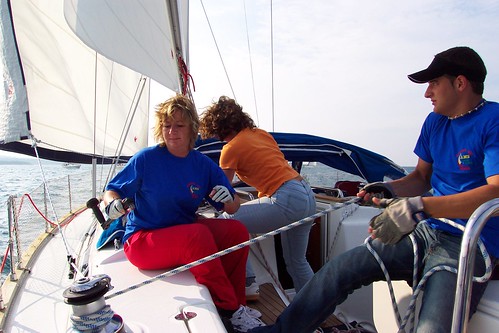
I used to belong to a canoeing or kayaking club in school and I really enjoyed it. The school also had a sailing club, but I somehow ended up with the kayakers instead. Sailing seemed so much more complicated and time-consuming. Kayaking had the advantage of being much easier to learn. It afforded a kind of freedom and independence that sailing didn’t seem to. You didn’t have to depend so much on the wind to get to where you wanted to go. Sure, you had to paddle hard, and sometimes even against the current, but that was part of the fun. Even though I haven’t been in a kayak for many years, I still cherish the memories of those days.

And sometimes, when I reflect on my own approach to life – even Christian life – I wonder whether there’s not still something of a kayaker in me, whether there’s not still the same craving for independence and self-reliance, for going places and getting things done on my own steam and in my own way. Even when working with others, I wonder if there isn’t still a tendency to seek to control the agenda, to steer things in my own desired direction. Which is all fine and good, except that life often proves far more unwieldy than a streamlined kayak. Getting to one’s desired destination can often prove to be a task that’s more than a match even for the accomplished kayaker.

Which is why it’s easy for someone like me to miss the true focus of our first reading today. What we heard was an inspiring description of an ideal Christian community. Several key characteristics stand out. There was no needy person among them. They had everything in common. And perhaps most striking of all, the community of believers was of one heart and one mind. Charity born of solidarity rooted in a profound union of minds and hearts. Listening to a description like this, the kayaker in me is moved to paddle off immediately and try to make that ideal a reality by sheer strength of will and muscular effort. I want to set a straight course and convince others to come along. I want to draw up plans and involve others in them, all in the name of teamwork, of course.

But a part of me cannot help wondering if this approach is not somehow contrary to that of which Jesus speaks in the gospel. By remaining very much the kayaker, am I not continuing to live as one born from below rather than one born from above? For isn’t it true that the ideal community described in the first reading is less a product of muscular effort than it is of the breath of the Holy Spirit, the same Spirit that blows where it wills and defies all attempts to contain it? Of course, this doesn't mean that it requires no effort at all. But could this be effort of a different sort than that to which I'm accustomed? If this is true, then perhaps it’s time that I learnt a different sport. Perhaps it’s time that, together with others, I learnt how to read the wind and to trim my sails, so as to truly arrive at the right destination. Perhaps it’s time I learnt I to sail...

Kayaker or sailor, born from below or from above, which are we?