Monday in the 4th Week of Easter
Two Faces of the Shepherd
Readings: Acts 11:1-18; Psalm 42:2-3; 43:3, 4; John 10:11-18
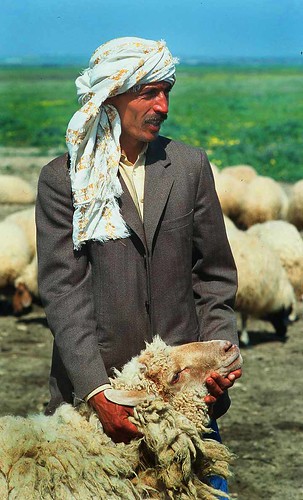
Picture: CC babasteve
It’s a very delicate situation that we find in the first reading today, one that could so easily have turned very ugly. We reach, at this point in the Acts of the Apostles, the beginnings of what was to become a major watershed in the life of the early church, the spread of the gospel beyond its original Jewish context. So much depends on this meeting, this dialogue, between Peter and the Jewish Christians of Jerusalem. And, at the same time, so many things could so easily have gone wrong. The conversation could so easily have been disrupted, or have veered off in a very different and far less desirable direction.
We notice, for example, how the exchange begins with what appears to be an argumentative confrontation: You entered the house of uncircumcised people and ate with them. To which, Peter could so easily have responded by saying something like: So what?! I am Peter. I know what I’m doing. You listen to me… Thankfully, he chooses instead to patiently explain the reasons for his actions.
On their part, after Peter’s sharing, the Jewish Christians could also have chosen to respond like this: So what?! What does it matter what vision you saw, what words you heard, what experience you had? According to the law we must not have anything to do with the uncircumcised… Instead, surprisingly perhaps, after listening carefully to Peter and finding his reasoning convincing they actually allow their minds to be changed. What was at first considered taboo, an unthinkable proposition, is seen as a precious God-given opportunity. And the result is a more generous collaboration in the ongoing project of sharing with the world the divine life in all its fullness. When they heard this, they stopped objecting and glorified God…
What is perhaps most striking about this story is how two equally legitimate, yet apparently opposite, tendencies come together in a most helpful way. If we see the faith as a fountain of living water, then the Jewish Christians represent the important task of defending that life-giving source from external contamination. And isn’t this a task that remains especially important today, faced as we are with so many different experiences just as, if not more, risky and challenging than the prospect of admitting uncircumcised pagans to the faith? Peter, on the other hand, represents that aspect of the faith that is not content simply to remain at home jealously guarding a familiar font. Rather does it thirstily continue to seek the face of God in ongoing engagement with the world: Athirst is my soul for the living God…
Defending and seeking: are these not two equally important and legitimate tendencies in the life of the church? And do they not constitute two faces, as it were, of the gospel’s image of the Good Shepherd, who both protects his flock from ravenous wolves, and also leaves the ninety-nine to go in search of the lost one (see Luke 15:4)? And isn't it striking and enlightening how these two tendencies come together in the life of the church? The process involves an open dialogue, a mutual laying down of one’s cards on the table of communal discernment. Even more important is the focus of the parties. More than merely clinging stubbornly to preconceived positions, the emphasis is instead on seeking together, in the apparently novel, the already familiar hand of God. In the reading, this is found in these words of Peter: ...the Holy Spirit fell upon them as it had upon us at the beginning, and I remembered the word of the Lord…
How are we being called to embody the two faces of the Good Shepherd in the world today?