Sunday, September 20, 2009


25th Sunday in Ordinary Time (B)
Receiving the Hands of the Child


Readings: Wisdom 2:12, 17-20; Psalm 54:3-4, 5, 6 and 8; James 3:16-4:3; Mark 9:30-37
Picture: cc po1yester

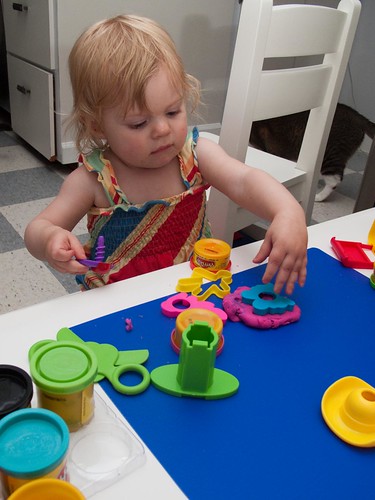
Sisters and brothers, have you ever visited a pre-school? Or maybe watched pre-school children at play? Today I’d like to invite us to imagine the scene at a pre-school, where a child is at play. What is the child playing? Two games that we probably know well. The first has to do with fitting blocks of different shapes into their respective slots in a box. The blocks will only fit into the slots if they are of the same shape. The child has to match them. Can you picture it? The second game has to do with making shapes out of play-doh or modeling clay. The child is free to make whatever shape it likes because the clay yields to its touch. The clay submits to the hands of the child. The child is limited only by its own imagination. Can you picture the scene? Shouldn’t be too difficult, right? But then this child does something different, something creative. It decides to combine the two games. It shapes the play-doh from the second game so that it fits into one of the slots in the first. Can you imagine what the scene looks like? Do you think the child will succeed?

It may seem surprising, sisters and brothers, but perhaps this scene of a child at play can help us to appreciate the deeper meaning in our scripture readings today. Like our pre-school scene, our readings today also present us with slots and blocks and modeling clay. Can you find them? Can you see what they look like?

First, let’s look for the slots. The first reading gives us the names and descriptions of two different kinds of people, two slots of different shapes. The first has the shape of the wicked. The second that of the just. And these two differently shaped slots, these two different kinds of people, are contrasted in terms of what they do and what motivates them. In the first reading, the wicked are threatened and offended by the words and way of life of the just. So upset are they that they even go to the extent of plotting to mistreat and to murder the just. With revilement and torture let us put the just one to the test, they say. Let us condemn him to a shameful death. Conflict and cruelty, hostility and homicide: these are what characterize the conduct of the wicked. And the second reading tells us something of what motivates such horrible behavior. Where jealousy and selfish ambition exist, there is every disorder and every foul practice. Jealousy and selfish ambition, leading to conflict, violence and even death: such is the shape of the wicked.

Contrast that with the shape of the just. Whereas the wicked act defensively, out of anxious self-assertion, the just rely ultimately on God to defend them. As we heard in our responsorial psalm: Behold, God is my helper; the Lord sustains my life. The just are able to do this because they are moved by the very thing we prayed for earlier in our opening prayer when we said that the perfection of justice is to be found in God’s love. The just are moved by the love of God. Such that whereas the foolish actions of the wicked lead to disorder and violence, the just act according to the wisdom from above, which is pure… peaceable, gentle, compliant, full of mercy and good fruits and is sown and cultivated in peace. Whereas the selfish ambition of the wicked leads ultimately to the taking of innocent life, the love of the just allows them to lay down their life for others.

These then are the two different slots in our readings, the wicked and the just. And, in the gospel, we find two blocks that match them. Jesus is, of course, the Just One, moved by the Wisdom and Love of God to lay down his life for others, both friends and enemies alike. In his life we find the block that fits into the slot of the just. In contrast, in their jealousy and hardness of heart, the religious authorities who plot to have Jesus condemned and crucified fit the slot of the wicked.

And don’t we find these same slots and blocks in our own experience today? Don’t we find them in our world, in our communities, in our families, perhaps even in our own hearts? In our parish communities, for example, do we not find, on the one hand, people who serve selflessly in different ministries, people who help in proclaiming the word of God, in leading the singing, in preparing the coffee and donuts, or in putting out the chairs? But, on the other hand, in some parishes, perhaps not in this one, we may also find jealousy and selfish ambition at work, such that various ministries come to be monopolized by the same people, to the exclusion of others. Where else in your experience, sisters and brothers, do you encounter the slots of the wicked and the just?

But that’s not all. More than just slots and blocks, in our readings today, we also find something that looks like a child working with play-doh. Isn’t this what Jesus is doing with the disciples in the gospel? We are told that as they began a journey through Galilee, Jesus was teaching his disciples. In telling them about his impending Passion and Death, Jesus was trying to make them understand that the Cross is central to the path they have chosen, the path of love that leads to life. He was trying to shape them to fit into the slot of the just. But the teaching is too much for the disciples. They demonstrate their lack of understanding by arguing among themselves about who is the greatest. They show that their shape still tends to fit more easily into the slot of the wicked than the slot of just. But all is not lost. For we are also told that the disciples remain silent when questioned by Jesus. They are embarrassed, a sign that perhaps there is still hope for them. In the days ahead, they might yet be molded into the right shape by Jesus, if not before his Crucifixion, then perhaps after his Resurrection. But for this to happen, they must remain pliable as play-doh. In contrast to the hardness of Jesus’ enemies, the disciples need to learn to submit to the healing hands of the Lord. Will they succeed?

And what about us? Does the Lord not continue to mold us too, shaping us to fit the slot of the just? And does not this molding often bear the shape of the Cross? Think, for example, of the parent who loses a child to cancer. How will s/he respond to such a tragic experience? Some might end up hardening themselves, remaining trapped in their grief and their anger at God and the world. But then, there may also be others who gradually allow their pain to lead them to reach out to others who have experienced a similar loss, or who contribute towards the work of finding a cure for this dreaded disease. Remaining pliable, these parents submit themselves to the hands of the Lord, as he shapes them to fit into the slot of the just. They learn to lay down their lives for others. They learn the deeper meaning of Jesus' words to the disciples in the gospel: Whoever receives one child such as this in my name receives me; and whoever receives me, receives not me but the One who sent me?

Sisters and brothers, in various ways, like the pre-schooler and the play-doh, Jesus wants to shape us to better fit the slot of the just. How receptive are we to his touch? Will this child succeed?

Monday, August 31, 2009


22nd Sunday in Ordinary Time (B)
The Goose is for the Golden Egg

Readings: Deuteronomy 4:1-2, 6-8; Psalm 15:2-3, 3-4, 4-5; James 1:17-18, 21b-22, 27; Mark 7:1-8, 14-15, 21-23
Picture: cc kjarrett

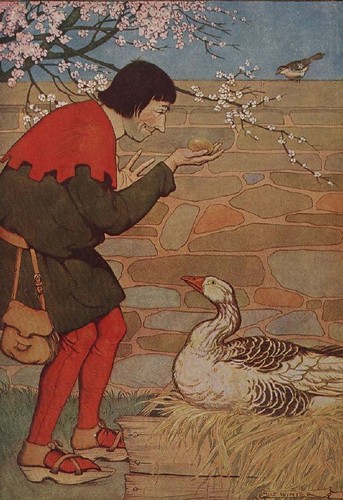
Sisters and brothers, I think most of us have heard the story about the farmer who had the tremendous good fortune of owning a goose that laid a golden egg each day? Eager to get rich quick, and thinking that all the eggs are stored in the belly of the bird, the farmer kills it and, of course, loses everything. No more goose. No more eggs. The moral of the story: greed will get you nowhere, especially when it’s coupled with stupidity.

But here’s another story about two other farmers each of whom has also been given a goose that lays golden eggs. The first farmer is unlucky. His goose is a nuisance and a troublemaker. Not only does it refuse to be toilet trained, it is also highly aggressive. It often intimidates the other animals and sometimes even attacks the farmer and his family. Finally, unable to tolerate all the nonsense any longer, the disillusioned farmer kills his goose, thus terminating his precious supply of golden eggs.

The second farmer is very different. As bizarre as it may sound, this one actually falls in love with his goose and pampers it to no end. Not only does he feed it with rich gourmet food – food that is really quite unsuitable for geese – he also refuses to let it do any work. He even goes to the extent of dressing up the poor animal in all sorts of designer clothes and jewelry. As you might expect, because of this kind of treatment, the goose soon becomes overweight and sickly. Eventually, its health issues became so serious that it can no longer lay eggs, golden or otherwise. But the farmer is so distracted by the tasks of feeding and dressing up the goose that he doesn’t even notice.

Sisters and brothers, I know you’ve not heard this story before (since I made it up). But what do you think might be its moral? What possible connection might it have to our Mass readings today? What is its relevance for us?

Notice, first, that each of the geese is received as a gift. Likewise, in our readings today, mention is also made of gifts given and received. In the first reading, Moses presents the people of Israel with a gift from God, a set of statutes and decrees, a code of dos and don’ts that will help them to prosper in the Promised Land. Also, in the second reading, after telling us that every perfect gift is from above, the author goes on to speak about what pure and undefiled religion looks like. It is here in our readings that we find a God-given goose. This is God’s gift to the people, a code of religious practices and institutions, including the Ten Commandments, for example, as well as the institution of the priesthood and the various guidelines concerning feast days and how they are to be celebrated.

But just as the goose is precious only because it lays golden eggs, so too do these laws and institutions embody a more precious gift, namely the close covenantal commitment between God and the people, God’s promise to be continually present and active among them. As Moses reminds his listeners in the first reading: what great nation is there that has gods so close to it as the Lord, our God, is to us whenever we call upon him? Similarly, the second reading reminds the early Christians to welcome the word – the presence of God – that has been planted in them. And can we not also say the same about ourselves? Although our religious practices and institutions may differ from those of the Israelites in the first reading, as well as from the early Christians of the second, do we not continue to receive God’s word through the various aspects of our Catholic religion? Isn’t this what we are doing here today, for example? Here, in this place, are we not attending to the goose of religious practice as it miraculously lays for us the golden egg of God’s presence and action in our lives?

But if this is so, if we are indeed recipients of a goose that lays golden eggs, then the experience of the two farmers in our story reminds us that there are at least two dangers that we need to guard against. The first is the danger faced by the first farmer. It is that of disillusionment. For even though the goose is a gift from God, and even though it miraculously lays golden eggs, it is still a goose, prone to the silliness of geese. There will be times when it will try our patience to breaking point. For instance, do we not hear stories of how an unreasonable minister (cleric or lay) in one church might be the cause of people defecting to another? Or, more serious, can we even begin to imagine how those who have suffered from clerical child abuse must struggle with their ambivalent feelings towards the church. Then, of course, there are those who decide to do away with the goose altogether and to undertake the arduous task of searching for gold on their own, those who prefer to describe themselves as spiritual but not religious. As understandable as this latter response may be, we might be forgiven for wondering if it may not be a case of someone throwing the baby out with the bath water, or even of cutting off one’s nose to spite one’s face.

Then there is the danger faced by the second farmer, the same danger to which the Pharisees and scribes in the gospel succumb, the danger of distraction. Again, as bizarre as it sounds, isn’t it really easy to become so distracted with the goose as to forget about the golden eggs? Isn’t it easy to be so concerned about every minute detail of our own performance as to neglect to open our hearts to the God who stands at the door knocking? This people honors me with their lips, says Jesus, quoting Isaiah, but their hearts are far from me. And I myself have to confess, for example, that I live and worship at a church quite literally surrounded by homeless people. Some of them camp on our very doorstep. But as much as I pay careful attention to our liturgical performance within the church, I also tend to ignore the presence of these people without. And yet, more likely than not, their bodies – unkempt and unwashed though they may be – are where that pure religion that the second reading speaks about is to be found. Religion that is pure and undefiled before God and the Father is this: to care for the orphans and widows in their affliction and to keep oneself unstained by the world. Could my attention to worship to the neglect of charity and justice be one way in which I am pampering the goose at the expense of the golden eggs?

Sisters and brothers, truly it is not easy. It is not easy to safeguard this precious gift that God has entrusted to us, to continue to discipline the goose of religion, even as we focus our attention on the golden eggs of God’s presence. It is not easy to guard against the twin dangers of disillusionment and distraction. Yet it is on this that the vitality of our faith and the purity of our religion depend. Isn’t this why our opening prayer today is so important? In it, we asked almighty God to help us to do what needs to be done: fill our hearts with love for you, increase our faith, and by your constant care protect the good you have given us. As it turns out, even the preservation of our God-given treasures requires a further gift from God. For as it is written in 2 Corinthians 4:7: we hold this treasure in earthen vessels, that the surpassing power may be of God and not from us.

Sisters and brothers, how open are we to experience this power, to receive this gift of God today?

Monday, August 17, 2009


Twentieth Sunday in Ordinary Time (B)
The Magic of Gillyweed


Readings: Proverbs 9:1-6; Psalm 34:2-3, 4-5, 6-7; Ephesians 5:15-20; John 6:51-58

Dear sisters and brothers, do you know what gillyweed is, what it’s used for? My guess is that many of you know better than I do. You know that gillyweed is a plant from the Harry Potter stories. In Harry Potter and the Goblet of Fire, gillyweed helps Harry to complete the second of three perilous tasks that he has to perform as part of the Triwizard Tournament. The second task requires that Harry and each of the other three contestants go underwater to rescue a loved one. And Harry is able to do this only after eating gillyweed. The plant makes him grow gills for breathing underwater. It also turns his feet into flippers and makes his hands webbed, so that he can swim better. That’s what gillyweed is for: it helps you to survive underwater.

Which makes me wonder what would happen if gillyweed was given to people who lived in the desert, people who neither liked to swim nor knew how. Would these people also grow gills and webbed hands and feet? And if they did, would they even know what to do with these things? Or perhaps they wouldn’t even want to eat gillyweed in the first place, since we’re told that it’s not very appetizing. It’s green and looks like a bunch of rats’ tails. It’s also rubbery and tasteless. Our desert-dwelling friends might, of course, try to find ways to jazz up the taste a bit – add mustard, or ketchup to it, maybe, or slap on a generous coating of barbecue sauce and then grill it. But whatever they did, as long as they did not dive into the water after eating it, they’d be missing the point, right?

I mention gillyweed today, because I think that maybe it’s not much different from how the Eucharist can look and taste like sometimes. For some of us, and I should confess, sometimes also for me too, the Eucharist can seem quite bland and boring. Why am I sitting here, listening to the priest drone on and on, when I could be catching up on sleep, or maybe even watching that new Harry Potter movie? At times, this is how the Eucharist tastes like to us – tough and tasteless. Of course, this may be due to any number of reasons: the priest may be having a bad day, or the cantor may be recovering from a head cold… And we could respond by trying to jazz things up in various ways. But more than anything else, the Eucharist can seem most tasteless when we lose touch with its deeper meaning, when we forget that the Eucharist has an intimate connection with life. As Jesus tells us: whoever eats my flesh and drinks my blood has eternal life… Just as eating gillyweed might seem a silly thing to do if one doesn’t dive into the water immediately after, so does the Eucharist become tough and tasteless when separated from the tasks of daily living.

How then might we make our participation in the Eucharist more meaningful? How might we better relate the liturgy to life? Our readings offer us some important hints. The first reading paints for us a picture of a banquet laid out by Lady Wisdom to which we are invited. We are told that Wisdom calls from the heights out over the city… Come, eat of my food, and drink of the wine I have mixed! Forsake foolishness that you may live… And in this call, we find three important steps towards making our participation in the Eucharist more meaningful: COME, EAT and LIVE...

The first of these steps might perhaps seem too obvious to require further explanation. Of course we have to come to the Eucharist to experience its effects. Aren’t we here now? But are we really here? Sure, we may all be here physically. But where are we mentally and emotionally? Isn’t it possible that even as we might be sitting in our chairs, we are really someplace and even sometime else – replaying in our minds that difficult conversation we had with someone the other night, for instance, or worrying about something we have to do tomorrow, or maybe even wondering about that cool place we’ll be visiting after Mass? But is it really possible to keep all our distractions at bay? Probably not. Still, maybe it isn’t necessary to do that in order to be fully present. Maybe what we need instead is simply to acknowledge our distractions and make them a part of our prayer. Isn’t this also what coming to the Eucharist involves? Like the patient who uncovers his/her symptoms before the doctor instead of trying to hide them, we come to the Eucharist as we are, allowing our preoccupations and distractions to be laid bare. We come acknowledging that we don’t have it all together. Because that’s precisely why we are here. As the first reading tells us, Wisdom’s invitation is issued not so much to the wise as to whoever is simple… to the one who lacks understanding. And I am that person. I am the one who often doesn’t understand what life requires of me. I am the person who often remembers only my own needs and interests even as I forget the depth of God’s love for me. That’s me. I come as I am. We come as we are. And we say Lord have mercy.

Even so, we don’t remain as we are. We come only to be transformed. And for this to happen, we need to eat. At one level, this refers, of course, to Holy Communion, to our sharing in the one Bread and the one Cup at the one Table of the Lord. But just as there’s more to coming to the Eucharist than being physically present, so does eating involve more than the juices in our digestive system. For, as we are told in our readings today, what we are sharing is not just a feast for the taste buds. It is also a banquet for the understanding. It’s meant not just to strengthen our bodies, but also to help us to make wise, God-centered decisions. Do not continue in ignorance, the second reading tells us, but try to understand what is the will of the Lord. Which means, more than just our stomachs and intestines, the food we share in the Eucharist has to pass through our hearts, that deep place within us where our decisions are made. This is what it means to eat. This is what we are trying to do through our singing of the hymns, our attention to the readings, our responses to the prayers, our interaction with one another and everything else at the Eucharist. We are allowing Jesus, the Bread of Life to enter into our hearts and to transform us – to turn us from foolishness to wisdom.

And all this happens not only in this confined space, and not only for this limited time. We come and eat so that we might live. And living extends beyond what we are doing here. Living means continually striving to forsake the foolishness of a self-centered existence, in order to embrace the wisdom of a Christ-centered one. Living means allowing ourselves to be bread broken for others, just as Christ was broken for us. Living the Eucharist means being willing to dive into the cold and choppy waters of life, because Christ first plunged into the messiness of our human existence. In this, we see again the similarity between the Eucharist and gillyweed. Just as eating gillyweed was a cool thing for Harry Potter to do only because he then plunged into the water to rescue his friends, so too is the Eucharist meaningful, only if our coming and our eating leads us also to live out its implications in our daily lives.

There’s one other thing. Harry Potter came to know about the magic of gillyweed only because someone else shared it with him. Sisters and brothers, do you know of anyone with whom you might share the wisdom of the Eucharist today?

Sunday, August 02, 2009


18th Sunday in Ordinary Time (B)
Gorging on Appetizers


Readings: Exodus 16:2-4, 12-15; Psalm 78:3-4, 23-24, 25, 54; Ephesians 4:17, 20-24; John 6:24-35
Picture: cc avixyz

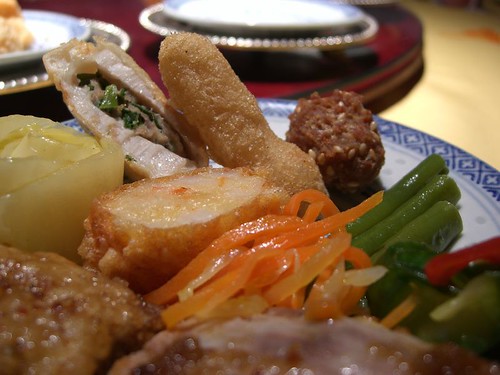
Sisters and brothers, some years ago, together with a couple of traveling companions, I spent several weeks in a foreign country. This being our first time there, we weren’t too familiar with the local customs. On one occasion we were invited by some friends to share a simple home-cooked meal at their modest apartment. As we sat around a small table, beer was served, followed very quickly by several dishes of food. Our hosts encouraged us repeatedly to eat and to drink, even as they engaged us in friendly conversation, continually refilling our glasses and replenishing the food on the table. As I recall, I was quite happy to do as I was told, since I was hungry, and the food was very tasty. After some time, however, my companions and I were stuffed. Perhaps noticing that we had stopped eating, our hosts began to clear the table, and we thought that the meal was over. We were wrong. It had only just begun. From out of the kitchen came even more substantial and mouth-watering dishes of food. To our regret and embarrassment, however, neither my companions nor I were able to eat much more than a few mouthfuls of these delicacies. Having earlier gorged ourselves on the appetizers, we no longer had any room in our bellies for the main course. If only we hadn’t mistaken one for the other.

If only we hadn’t mistaken the appetizers for the main course. Which is something that can be said too about the people in today’s gospel reading. As you know, earlier in John’s gospel, Jesus had fed five thousand by miraculously multiplying five barley loaves and two fish. Suitably impressed, the people now come looking for Jesus, so that he can keep on feeding them in the same way. Are they wrong to do this? Are they wrong to look to Jesus to fill their stomachs? Are the Israelites in the first reading wrong to expect God to provide them with bread in the wilderness? Are we wrong, when we pray to God to find us a good and steady job so that we can feed our hungry children? Probably not. After all, didn’t Jesus teach us to ask our heavenly Father to give us today our daily bread?

The problem then lies somewhere else. The people’s mistake is similar to the one my traveling companions and I made. In their search for material food, the people treat Jesus merely as a miraculous bread-making machine. But Jesus wants to be much more than that for them. More than simply filling their empty bellies with the food that perishes, Jesus wishes to satisfy their hungry hearts with the food that endures for eternal life. The bread Jesus multiplies miraculously is meant only as an appetizer, something to increase the people's yearning for the main course, the Bread of Life himself. But the people are unable to appreciate this. Having gorged themselves on the appetizers, like I did, the people have no room in their hearts for Jesus. All they are looking for is more of what they have already received. As the Lord tells them, you are looking for me not because you saw the signs but because you ate the loaves and were filled.

Here, even as they present us with the people’s mistake, our readings also invite us to reflect upon two of the factors that tend to lead the people astray. What is it that makes the people more susceptible to mistaking the appetizer for the main course? The most obvious factor is, of course, hunger. We see this especially in the experience of the Israelites in the first reading. Wandering in the wilderness, the people are so hungry that they find themselves dreaming even of the miserable food that they had eaten as slaves in Egypt. Their hunger is so great that they find it difficult to trust in the promises of God. They are unable to imagine the rich delicacies that await them in the Promised Land. But, as powerful as it is, hunger is not the only factor. As we noted earlier, in the gospel, Jesus had already provided the people with all the bread they could eat, with much left over. Yet they continue to look for him. They continue to want even more. What do we see at work in them, if not the power of greed? Hunger and greed. Are these not the insidious forces that remain very much in evidence in the world in which we live, especially in these times of deep recession and yawning budget deficits? Today, could these same forces be rendering us more susceptible to mistaking the appetizers for the main course?

And if they are, what can we do about it? What ought we to do about it? How might we better follow Jesus’ advice and work for the food that endures instead of the food that perishes? The way to correct our mistake is perhaps a matter of commonsense. If we have filled our lives with too many of the wrong things, then we need to empty them to make room for the right ones. The second reading describes this process in terms of a taking off and a putting on: you should put away the old self of your former way of life, corrupted through deceitful desires, and be renewed in the spirit of your minds, and put on the new self, created in God’s way in righteousness and holiness of truth.

The imagery that is evoked here is, of course, that of baptism. It is said that, in the early days, candidates for baptism were stripped of their garments, before being plunged into the baptismal waters. And, after their immersion, a white garment was quickly draped over them to symbolize their new life in Christ. Even if we who were baptized at a later time may not have had the experience of being stripped naked, we nonetheless still share the same calling. It is our task continually to strive to put away the old self so as to put on the new, to expend our energies in doing the works of God. This will involve different things at different times and for different people. But perhaps especially in these days, it will involve as much the work of feeding of the hungry as that of challenging the greedy.

Sisters and brothers, there’s actually an important addendum to the story with which we began this reflection. From what I told you, I might have perhaps given you the impression that the main course in that meal at our friends’ apartment consisted in the dishes of food that were served later. But that’s not really accurate. Even though the food and drink had a crucial role to play on that occasion, if we had been focused solely on eating and drinking, we would have missed the whole point. For the crux of the meal consisted less in the food and drink than in the conversations that were being shared and the relationships that were being built among those of us at table.

Sisters and brothers, how is Jesus the Bread of Life, inviting us to pay greater attention to the main course today?

Sunday, July 12, 2009


Fifteenth Sunday in Ordinary Time (B)
Upright and Mobile


Readings: Amos 7:12-15; Psalm 85:9-10, 11-12, 13-14; Ephesians 1:3-14 or Eph 1:3-10; Mark 6:7-13
Picture: cc Stecky

Dear sisters and brothers, I think you’re probably familiar with that series of pictures depicting how humans evolved from the apes, right? They begin, usually on the far left, with what looks like a chimpanzee walking on all fours, then progress to a couple of stooped figures who are already walking on two legs, and finally end with a human figure standing erect and holding a spear. Seen from left to right, these pictures portray profiles that progress upward. They seem to highlight, in rather striking fashion, one feature that sets humans apart from the apes: the ability to stand tall, to walk on two feet, to manipulate tools with one’s hands.

Some time ago, I came across a similar set of pictures that some bright spark had modified by adding several other images to the right of the original ones. You’re probably familiar with them too. After the erect figure with the spear, there is one who is a little bent carrying a rake. Next, we find a figure that’s even more stooped, burdened by the weight of a large pneumatic drill in his hand. And, finally, the series ends with someone crouched in front of a computer screen. In striking contrast to the figures on the left, the profiles of the ones on the right move ever downward. They seem to reverse the evolutionary process that went on earlier. And there’s even a caption at the bottom that reads: something, somewhere went terribly wrong.

Don’t worry, sisters and brothers. I’m not going to address the questions of human evolution today. It’s probably wise to leave those to the scientists. I’m not even sure how true it is that the ability to stand erect is a distinctive human characteristic. The quality that these pictures bring to my mind has more of a moral and spiritual nature. I’m thinking, for example, of how we typically refer to someone we consider a good human being, an honorable and virtuous person, as being upright. A Chinese phrase for such a person is ding tian li di (顶天立地), which, roughly translated, means one whose head reaches the heavens and whose feet are firmly planted on the earth. An upright person. And not only are the upright also often praised in the bible, but no less than God is described as being upright. Good and upright is the Lord, says the psalmist, who shows sinners the way (Ps. 25:8). Indeed, we may even say that to be human is somehow to share in the very uprightness of God.

But probably most, if not all of us, will agree that it’s not easy to be and to remain upright, especially not in the world in which we live. There are too many temptations, too many things that burden us and drag us down, including the ordinary anxieties of daily living, as well as the constant cravings of our hungry hearts. Even as we may shake our heads in stunned disbelief when we read about how Bernie Madoff could have gotten to the point of swindling billions of dollars from thousands of people, we are not totally unfamiliar with the process. As those evolution pictures show us, the decline can be quite gradual. One begins by cutting little corners, making minor compromises. One stoops lower and lower until, almost imperceptibly, one ends up so bent over as to be no longer recognizably human.

Which is why it is helpful to pay close attention to our readings today. Here we find the reassuring news that the Lord offers various gifts to help the faithful Christian, struggling to remain upright in a crooked generation. It is perhaps often the case, that when we listen to the gospel story of how Jesus sends out the Twelve, our attention is focused first on the things that they are told not to bring: no food, no sack, no money in their belts. But perhaps just as, if not more, important are the things that the Lord does allow. As we are told in the second reading, in Christ, God the Father has blessed us with every spiritual blessing in the heavens. What are these blessings? How do they help us? How might we make better use of them?

Jesus’ first gift to the Twelve is already announced in the first sentence of the gospel, where we are told that he began to send them out two by two. Not one by one but two by two. The better to support and care for each other. To help each other to remain upright. Isn’t this also why we take the time to gather here every week, even though we could probably pray to God at home on our own? Isn’t this why many of us invest even more of our time in some form of communal religious activity, whether it be serving as a deacon or a lector, or singing in the choir, or doing a bible study? We do this because we realize that we are called and sent not just as individuals but also as a community. We know that each of us is a gift of the Lord to all the others. We help one another remain upright.

But that’s not all. If it were, the church would be nothing more than a club, a group of people who come together only to pursue a shared interest for their own recreation. Jesus’ second gift to the apostles helps us to guard against such potentially selfish and exclusive tendencies. Jesus advises them to wear sandals. Neither bare feet nor shoes, but sandals. Bare feet are OK for staying home. Sandals are needed for going out. Sandals also have an advantage over shoes. If you get sand in them, as you’re likely to when walking in the desert, they allow you to do precisely what Jesus asks the apostles to do when they are rejected: shake the dust off your feet and move on. Isn’t this an invaluable help to us in our struggle to be good human beings and faithful Christians? What better way to remain upright than to keep on moving? To remain engaged in the Lord’s mission of preaching repentance and healing to others. To be focused not so much on ourselves, not so much on the challenges that we may face, or even on the weakness and sinfulness that might continue to plague us from time to time, but rather on the mission that has been entrusted to us.

Even so, we are likely to encounter circumstances where these two gifts are insufficient. There may be times when our companions will fail us, when they will misunderstand and even hinder us in what are called to do. There may be times when the sands of rejection will accumulate so quickly as to make it all but too painful to soldier on. Isn’t this the experience of the prophet Amos in the first reading? Sent by God to preach an unwelcome message of repentance to a stubborn nation, Amos finds himself in a minority of one. Even Amaziah the priest rejects him. In such a situation, Amos has but one source of support. In a figurative sense, he leans on the one thing that Jesus advises the apostles to carry with them, a walking stick. Amos demonstrates to us the actual nature of this support and how it is to be used. Rejected by his own, Amos reminds himself of his own prophetic call. I was a shepherd and a dresser of sycamores. The LORD took me from following the flock, and said to me, Go, prophesy to my people Israel. By recalling the beginnings of his own vocation, Amos finds the strength to continue performing the ministry entrusted to him by God. Leaning on the walking stick of his own call experience, he remains upright in the sight of God and the whole nation.

Sisters and brothers, being an upright Christian is truly a challenging thing. But the Lord blesses us with gifts to help us along the way. How well are we using them? Where are we in the evolutionary process today?