Tuesday, August 16, 2011

 
Tuesday in the Twentieth Week of Ordinary Time
The Calling of Ducks and Sheep

Readings: Judges 2:11-19; 6:11-24; Psalm 84:9, 11-14; Matthew 19:16-30
Picture: cc Reinout van Rees


I once visited a small farm at feeding time and saw a woman feeding her ducks. Carrying a basin of food, she walked out into her yard and started calling in a loud voice. At the sound, all the ducks started waddling over to where she stood. And she fed them from the basin. All the ducks responded to one and the same sound, the very same call.

Sometimes I think that this must also be how God calls us as well. After all, in John 10, doesn’t Jesus refer to himself as the Good Shepherd, and to us as the sheep who listen to his call? I imagine that the calling of sheep would not be much different from that of ducks. One and the same call going out to the whole flock. But is this really true?

Our readings today tell us otherwise. Especially if we include the previous day’s readings, which we missed because we celebrated the Solemnity of the Assumption. When read together, the readings of yesterday and today present us with accounts of two people receiving calls from God. There is Gideon in the first reading, and the unnamed man in the gospel. Two people in very different circumstances, receiving very different calls.

Consider first the man in the gospel. We’re told that he was very wealthy in more ways than one. He was rich not just materially, but morally as well. For he claims to have kept all the commandments. In addition, he was also rich in self-confidence. He comes to Jesus, not to ask the Lord for help but only for instruction. He doesn’t ask the Lord to give me life, but only to tell me what I can do to gain life. He’s quite sure that he can do what is required.

To such a person, Jesus responds by issuing a call to poverty and self-emptying. Go and sell what you own... and come follow me. In other words, get rid not just of your material wealth, but also of your self-reliance. You cannot save yourself. Trust only in me. Follow me!
Contrast that with the call of Gideon. We’re not sure of Gideon’s material circumstances, but what we do know is that he was poor in power. Gideon was a member of an oppressed people. He was afraid of the Midianites, who were carrying away his people’s crops. In addition Gideon was also poor in self-esteem and in self-confidence. He claims that he is the least important member of his family, and his clan is the weakest in Manasseh. He feels helpless in the face of the marauding Midianites, and has long been waiting for God to save his people. But his hope is fast fading.

To such a poor person as Gideon, God responds in a strikingly different manner from the way Jesus deals with the man in the gospel. Instead of calling for greater humility and self-effacement, God calls Gideon to stop waiting for God to do something, but to take courage and to act on his people’s behalf. Not only that, God actually tells Gideon to tap into the righteous anger that he is feeling at his people’s plight. Go in the strength now upholding you, God says. I will be with you and you shall crush Midian. In contrast to the rich man, who is called to empty himself of his wealth, Gideon is asked to exploit the inner resources that God has already given him.

Two men experiencing God’s call in two very different ways. All of which brings us back to the call of the Good Shepherd to his sheep. Is the calling of sheep really similar to the calling of ducks? Do we all receive the same call, in exactly the same way? Not quite. For in John 10:3, Jesus says that the Good Shepherd calls his sheep one by one. In another translation, he calls his sheep by name. Each one experiences a unique call.

How is God calling you today?

Monday, August 15, 2011

Solemnity of the Assumption of the Blessed Virgin Mary
(Mass During The Day)
Lessons From A Gum Wrapper

Readings: Apocalypse 11:19,12:1-6,10; Psalm 44:10-12,16; 1 Corinthians 15:20-26; Luke 1:39-56
Picture: cc Save vs Death

Sisters and brothers, I’m not sure if there are any of you here who remember this. But, when I was growing up in the seventies, there was a particular brand of bubble-gum that was very popular with the kids. It was popular not really because of the gum itself–which was quite ordinary–but because of the wrapper. You see, printed on the inside of each gum wrapper was a picture. Sometimes, if you were lucky it was a superhero, like Spiderman or Ultraman, someone who possessed extra-ordinary powers. But that’s not all. What was so attractive about this picture was that it was transferable. All you had to do was to spill a few drops of water onto the image, and then press the wrapper onto your wrist, or somewhere else on your body, and after a few short seconds Ultraman would appear on your skin like a tattoo. And, of course, if you were a kid with a lively enough imagination, not only Ultraman’s image, but also his superpowers would be transferred onto you. And you could then go around like a true superhero looking for monsters to subdue, and innocent people to protect. Transferable superpowers, that was the real attraction. Not the gum.

I mention this because, strange as it may sound, there are close similarities between those bubblegum wrappers of my childhood and the solemn feast that we are so joyfully celebrating today. Consider what we just heard in our Mass readings. Notice how, as with those gum wrappers, we find in our readings a hero, someone with wonderful, extra-ordinary power. The first reading tells of how an evil monster–a huge red dragon–was threatening to devour a woman and her as yet unborn child. But, miraculously, not only did both woman and child escape, but the monster was defeated. The reading ends with a voice from heaven joyfully proclaiming that victory and power and empire for ever have been won by our God, and all authority for his Christ. As with those gum wrappers, here too we find someone with superpower. Through his life, death and resurrection, Christ has conquered not just the evil dragon, but even Death itself.

More importantly, we’re also told that Christ’s extra-ordinary power over death does not simply remain with Him alone. Rather, like the image on the gum wrappers, this superpower is actually transferable. As we’re told in the second reading, just as all die in Adam, so all will be brought to life in Christ. All will be able to share in Christ’s victory over death. Transferable superpower. That is what we are celebrating today. For who do you think was the first candidate for the transfer of Christ’s power over death? Who else but the Lord’s very own mother, his first and closest disciple, the Blessed Virgin Mary herself. Today we celebrate the effects of this transfer of Christ’s power onto Mary. We believe that when her time on earth was complete, Mary, like her son Jesus, did not suffer the decay of death, but was assumed body and soul into heaven.

What is more, the effects of this power transfer did not begin only at the end of Mary’s life on earth. They were already felt when she was still a young teenager. As we heard in the gospel, soon after the Holy Spirit had descended upon her at the Annunciation, as soon as the power transfer had taken place, Mary immediately set out to do good. She went as quickly as she could to help her cousin Elizabeth, who was elderly and with child. And notice the effects of Mary’s visit. As soon as Elizabeth heard Mary’s greeting, the older woman herself experienced a transfer of power. And not just her, but also the child in her womb. As a result of Mary’s presence, both the mother and her unborn child were filled with the joy of the Holy Spirit. The wondrous effects of transferable superpower. This is what we are celebrating today.

There is one final similarity between the gum wrappers and the Assumption. You will remember that, in order for Ultraman to become imprinted onto one’s wrist, in order for his powers to be transferred, something was needed. One had to apply water. Similarly, the power  transfer that Mary experienced took place because something else was present. We learn what this thing is from what Elizabeth says about Mary in the gospel. Blessed is she who believed that the promise made her by the Lord would be fulfilled. Mary believed. The power transfer that she experienced was brought about by her faith. The same faith that is symbolized by the waters of Baptism. Through her faith, Mary allowed the image of her as yet unborn Son to be imprinted onto her heart, just as she let his power move her to do good. The faith that enables a transfer of superpower. This is what we celebrate today.

And this transfer of power is not for Mary alone. She was but the first candidate. As we will hear later in the Preface to our Eucharistic Prayer, Mary is the beginning and the pattern of the Church in its perfection and a sign of hope and comfort for God’s people on their pilgrim way. The power of Christ is meant to be transferred not just to Mary, but, beyond her, to all of her children. To you and to me. All of us who have been immersed in the waters of Baptism. All of us who have had the image of Christ imprinted onto our hearts. All of us who are given a share in Christ’s awesome power over death, the same power that we are celebrating at this Eucharist.

If all this is indeed true, sisters and brothers, if we are indeed celebrating the transfer of superpower today, then the question we need to ask ourselves is, having received this power, what are we doing with it today?

Sunday, August 14, 2011

20th Sunday in Ordinary Time
Lay Apostolate Sunday
Location and Action

Readings: Isaiah 56:1, 6-7; Psalm 66:2-3, 5-6, 8; Romans 11:13-15,29-32; Matthew 15:21-28
Picture: cc whatjeanlikes

Sisters and brothers, have you ever noticed how so much of what we do depends on where we are? For example, I recently returned from a place where, even in the middle of summer, there were still some mornings and evenings when I needed to put on a sweater before leaving the house. But now that I’m back in tropical Singapore, I find myself trying to wear as little clothing as possible. Without being arrested for indecent exposure, of course. Anything to help me cope with the heat. When in a cooler place, you wear more. When in a hotter location less. Our surroundings have a big impact on the things we do. Very often, location determines action.

It is useful to keep this in mind as we begin our meditation on our Mass readings today. For the action in all three readings takes place in more or less the same kind of location. The nature of this space is brought to our attention at the beginning of the gospel, when we are told that Jesus left Gennesaret and withdrew to the region of Tyre and Sidon. Jesus changed his location. He moved into the borderlands between Jewish and Gentile territories. And having arrived at this in-between locality, Jesus can no longer mix only with his own people. Now he also has to deal with foreigners.

Similarly, each of the other two readings situates us in a location between the native and the alien. Although the first reading is addressed to the people of Israel, it speaks to them about foreigners. And although the second reading is addressed to Gentile Christians, it speaks to them about the Jews. All our three readings today locate us squarely in the borderlands, in an in-between place–between us and them, between ours and theirs.

But, if it is true that location determines action, then what does one do in such a place? What is the appropriate action to perform when you find yourself surrounded by people with customs and beliefs, perspectives and preferences that are very different from yours? People who may eat different foods, wear different clothes, worship different gods. People who may look and even smell different. What do you do?

The first line of our first reading provides an answer by telling us to act with integrity. When we find ourselves among foreigners, we should take care to remember who we are, and to whom we belong. We are to maintain our integrity as the chosen people of God, and not allow this sacred identity to be dis-integrated through bad influence. So, in the verses that have been left out of our first reading from Isaiah 56–our reading jumps from verse 1 to verse 6–the prophet tells the people to keep observing the sabbath, and to stay away from every evil deed. What do you do when you find yourself among foreigners? You remain constant in your faith.

Good advice. But that’s only half the story. There’s something more. Something very important. For our integrity as the people of God is not really our own. Our integrity is modelled upon the integrity of the God to whom we belong. And, as our readings remind us, the integrity of God is expressed in the mercy that God constantly shows to all people–Jews and Gentiles alike. In the first reading, we’re told that God wishes to bring even foreigners to God’s holy mountain. So that God’s house will be called a house of prayer (not just for Jews but) for all the peoples. And in the second reading, St. Paul expresses the firm belief that even though his fellow Jews have rejected Christ, they still enjoy God’s mercy, because God never takes back his gifts or revokes his choice.

The surprising and even shocking extent of God’s mercy is brought out most clearly in the gospel. Here Jesus presents us with an example of what a Christian is called to do when travelling in the borderlands. We can’t say for sure what his exact intentions were. Did Jesus actually mean to ignore the Canaanite woman? Or was he just testing her? This is unclear. But two other things are clear enough. First, Jesus’ apparent indifference to the woman had the effect of drawing out her faith, of making it more explicit. Notice how, at first, the woman calls out to Jesus while keeping her distance. She addresses him by the accurate but impersonal title Son of David. Then, having been ignored by the Lord, she comes right up to him, kneels at his feet, and acknowledges him as her Lord. And that’s not all. When Jesus rebuffs her, the woman responds by humiliating herself. She accepts the rude name that Jesus gives to her. Yes, she is a house-dog. But she also reminds Jesus that even house-dogs remain members of God’s household. And membership has its privileges. Jesus grants her request. He heals her daughter.

And this is the second important point. By changing his mind in this way, Jesus breaks the stereotype that some Jews had of foreigners. Jesus shows that even among those thought to be unclean, great faith can be found. For God’s mercy is broad and deep enough to accept all peoples–natives and foreigners alike. Through his willingness to change his mind, Jesus shows us the constancy of God. As followers of Christ we too are called to do the same. When we find ourselves in the borderlands between the native and the foreign, we are called not just to remain constant in our faith by keeping to ourselves and coming to church every Sunday. We need also to be channels of God’s mercy to others. We  need also to reach out to foreigners, and even to be willing to change our minds–to break our stereotypes–about them.

This is an important reminder for us especially today, as we celebrate Lay Apostolate Sunday. For, as you know, the word apostle, means one who is sent. And a lay apostle is one who is sent into the world. And what is the world, if not one big borderland–a place in between the brilliant brightness of Heaven and the deep darkness of Hell? In the world, we Christians are surrounded by many different kinds of people. And although it is true that we need to guard ourselves against bad influences, it also remains no less true that we cannot simply separate ourselves from others. What is more, foreigners can appear in many different disguises. We find them in many different places. In our offices and in our schools, even in our own homes and in our church. In all these places and more, there are foreigners waiting for the lay apostles of Christ to bear witness to them, to show them the constancy of God’s mercy, to draw them into God’s household, and to break the stereotypes that keep us apart.

Sisters and brothers, as lay apostles sent out into the world, how can you let your location determine your action today?

Monday, July 04, 2011


God of My Vocation

My dear sisters and brothers, on occasions such as this, one is led to consider how much of all that one is, and all that one has, one owes to others. I think not only of family and friends, teachers and formators, benefactors and parishioners, but also of people of different times and places. Many of whom I have never even met: People whose books have enriched me, whose lives have inspired me, whose achievements have benefited me, even those whose mistakes have been lessons for me. It is this sense that little about me is truly original that gives me the courage (some would say thick skin) to share with you the following words, which I have shamelessly stolen from a prayer written by the late Jesuit theologian, Karl Rahner. The prayer is entitled God of My Vocation.

O God of my calling.... Can I preach Your Gospel, if it has not struck deep roots in my own heart? Can I pass on Your life, if I am not alive with it myself? .... It’s unavoidable: Your official business and my private life cannot be separated.

And that is precisely the burden of my life. For look, Lord: even when I announce Your pure truth, I’m still preaching my own narrowness and mediocrity along with it. I’m still presenting myself, the “average man.” How can I bring my hearers to distinguish between You and me in the frightful mixture of You and me that I call my sermons? How can I teach them to take Your word to their hearts, and forget me, the preacher? ....

O God of my vocation, when I consider these things, I must confess that I don’t at all feel like taking my place in the proud ranks of Your confident and conquering apostles. I rather feel that I should be on my way, simply and humbly, walking in fear and trembling. I don’t mean to criticize those among my brethren who can be so happily sure of themselves, those of Your servants who so unmistakably reflect the inner confidence that they are coming in the name of the Lord God of Hosts, and who are quite amazed if anyone does not immediately recognize in them the ambassadors of the Almighty.

I cannot belong to that fortunate group, O Lord. Grant me rather the grace to belong to the number of Your lowly servants who are rather amazed when they are received by their fellow (human beings). Let my heart tremble again and again in grateful surprise at the miracles of Your grace, which is mighty in the midst of weakness. Let me continue to marvel that I meet so many (people) who allow me, poor sinner that I am, to enter into the secret chamber of their hearts, because they have been able to recognize You hidden in me....

O God of my vocation, I am only a poor mask, behind which You have chosen to approach (people) as the hidden God. Grant me the grace day by day to be ever more free from sin and self-seeking. Even then I shall remain what I can’t help being. Your disguise and Your unprofitable servant. But then at least I shall grow ever more like Your Son, who also had to envelop the eternal light of His divinity in the form of a servant, to be found in the garb and livery of a (human person).

When I bear the burden of Your calling, when Your mission weighs down heavily upon me, when Your Majesty humbles me, and my weakness is taken up into that of Your Son, then I may confidently trust that the hindrance which I have been to Your coming may still turn out to be a blessing to my (sisters and) brothers. Then perhaps You will transubstantiate my servitude... into a somehow sacramental form, under whose poverty You will be the bread of life for my brethren.

O God of my vocation, let my life be consumed as the Sacred Host, so that my brothers (and sisters) and I may live in You, and You in us, for all eternity. Amen.


My sisters and brothers, thank you all for coming. May your presence here tonight be an ongoing channel of grace, for you and all your loved ones, in the days to come...

Sunday, July 03, 2011

14th Sunday in Ordinary Time (A)
If You Don’t Use It, You Lose It

Readings: Zechariah 9:9-10; Psalm 145:1-2, 8-9, 10-11, 13-14; Romans 8:9, 11-13; Matthew 11:25-30
Picture: cc Alexander Savin

Sisters and brothers, do you exercise? What kind of exercise do you do? And why? As you know, if we were to go to East Coast Park after this Mass, we will probably see many people there walking or jogging, cycling or roller-blading. And it’s no secret why these people do these things. They know that the body needs exercise to remain in good condition. They know that unless they engage in some form of regular physical activity, their bodies will grow weak and become more prone to illness. As the saying goes: if you don’t use it, you lose it.

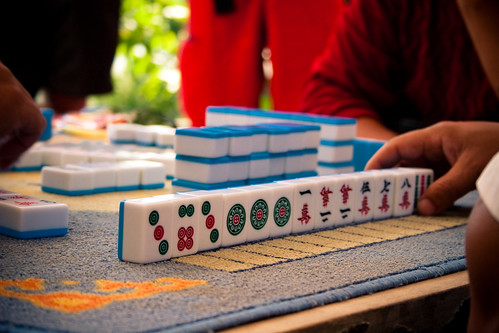
I’ve also heard of a community of religious sisters, all of whom have already retired from active ministry. In addition to saying their daily prayers, these nuns actually spend a good portion of their time playing mahjong. Don’t worry. They’re not gambling. The sisters are encouraged to play mahjong because those caring for them know that this game can help them to remain mentally alert. They know that, like the body, the mind too needs exercise. Otherwise, as we age, we become more prone to diseases like dementia. As with the body, so too with the mind: if you don’t use it, you lose it.

But, of course, there is a limit to what we can do. No matter how far or how often we may walk, no matter how many rounds of mahjong we may play, finally, if and when sickness decides to come knocking on our door, we will still be unable to escape its clutches. Death comes to us all. That is just the nature of things.

What’s more, it is actually possible to be in excellent physical and mental condition and still be deeply unhappy. We can think, for example, of the pair of Hong Kong celebrities who have been filling the news lately. So rich and famous. So talented and good-looking. Yet so very miserable. And what about us? Even if we may not be celebrities ourselves, don’t we have our fair share of problems too? Misunderstandings with family and friends, difficulties in school or the workplace, financial setbacks, loneliness, boredom, and the routine stresses and strains of daily living. These are just some of the many burdens that, from time to time, each of us has to bear.

Isn’t this why we find Jesus’ invitation to us in today’s gospel so very consoling? Come to me, all you who labour and are overburdened, and I will give you rest. When we hear these words, don’t we wish we could run immediately to the Lord and enjoy the rest that he offers us? And when we listen to the first reading speak about the king who comes to us riding on a donkey, and who will proclaim peace to the nations, don’t we wish we could welcome this king with open arms? Don’t we yearn to experience his peace?

And yet, it’s not always easy to come close to Jesus, is it? As much as we may want to enjoy his company, all too often we allow other things to come between us and the Prince of Peace. Sometimes it’s a matter of simple ignorance. We want to go to the Lord, but we just don’t know how. At other times, we are kept from drawing close to Jesus, because we are clinging to something else. A sinful habit, perhaps. Or a painful memory. Low self-esteem. Or an inadequate appreciation of God's love for me. An obsession with material concerns. Or just plain old-fashioned laziness.

And then, of course, there is that one obstacle that we all struggle with at some point or other. Even the great St. Peter and the rest of the first apostles stumbled over this obstruction. What is it? It is the realization that the way of peace, on which this donkey-riding king from the first reading wishes to lead us, is also the road to Calvary. And the easy yoke that Jesus wishes to lay upon our shoulders in the gospel is none other than the wood of the Cross. For, as we all know, in the mystery of Christ–the same mystery that we are celebrating in this Mass–Death and Resurrection are really two sides of the same coin. We only get to Easter Sunday by passing through Good Friday. To come close to Jesus is also to bear the life-giving burden of his holy Cross. When we realize this, will we still wish to come to the Lord?

What then are we to do? How can we overcome all the formidable obstacles that keep us from approaching Jesus? The solution lies neither in physical strength nor in mental ability. Neither solely in the body nor in the mind. It is to be found, instead, in the spirit. As St. Paul tells us in the second reading: (our) interests are not in the unspiritual, but in the spiritual. For unless (we) possessed the Spirit of Christ (we) would not belong to him. What all this means, sisters and brothers, is that, in order to live a full human life, as Jesus did, it is not enough just to engage in physical and mental activity. It is not enough simply to go jogging, or to play mahjong. In order to come to Jesus, and to enjoy his rest, in order to experience his peace, what we need above all, is to engage in  regular spiritual exercise. We need to deepen our prayer.

Which brings us to the reason why my companions–Fr. Ravi and Bros. Jerome, Stanley and Basil–and I are here today. We are Jesuits, followers of St. Ignatius of Loyola, a saint of 16th century Spain, who was blessed with a gift for guiding others in the ways of prayer. The five of us will be outside the church after Mass to share a little, with any of you who may be interested, about the Spiritual Exercises, a book that St. Ignatius wrote. It is a manual for helping people to grow closer to God. For, in the words of Ignatius himself: just as taking a walk, journeying on foot, and running are bodily exercises, so we call Spiritual Exercises every way of preparing and disposing the soul to rid itself of all (disordered) attachments, and, after their removal, of seeking and finding the will of God (SpEx. #1).

To rid ourselves of disordered attachments. To grow closer to Jesus. To find the courage to shoulder his yoke–the Cross of Compassion. And, in shouldering it, to enter into his rest, the rest that the Father’s will alone can provide. This is what it means to engage in spiritual exercise.

Sisters and brothers, even as we may struggle with our many problems, our Lord continues to invite each of us to come to him. But in order to be ready to answer his call we need to exercise regularly. For as it is with the body and the mind, so too with the spirit: if you don’t use it, you lose it.

Sisters and brothers, what forms of spiritual exercise are you doing today?