Sunday, March 11, 2012


3rd Sunday in Lent (B)
Between the Words & the Song

Readings: Exodus 20:1-3,7-8,12-17; Psalm 18:8-11; 1 Corinthians 1:22-25; John 2:13-25
Picture: cc xXxRawrKidRawrxXx

Sisters and brothers, I’m quite sure that you’ve heard stories about genies. Those spirits that grant wishes to people. But have you also heard stories where the genie somehow fails to give the master what he wants? Have you heard, for instance, of the man who tells his genie that he wants to become attractive to women everywhere? In response, the genie turns the guy into... a bar of chocolate. Or how about the middle-aged couple, who meet a genie while on vacation? When asked for their request, the husband looks at his ageing wife and proceeds to wish for a much younger travelling companion. Immediately, there’s a puff of smoke, after which the guy discovers that he himself has suddenly aged 20 years. These stories are not always funny, though. Sometimes they can also be very tragic. Like the one about the woman who tells her genie that she wants to strike it rich. She gets her wish. She receives a million dollars of insurance money when her parents are killed in a plane crash.

Quite obviously these stories contain a moral for those who make wishes. The moral being, be careful what you wish for. But could there also be a moral for those trying to fulfil the wishes of others? A moral for genies? I think there is. To discover this moral, we need to consider how the genies in those stories fall short. At one level, they do seem to fulfil their masters’ wishes. The first person becomes attractive to women. The second gets a much younger companion. And the third does indeed strike it rich. But, at another level, those genies do not actually give their masters what they want. The genies listen only to what their masters say, but not to what they mean. If we were to think of each wish as a song, we might say that the genies listen only to the words, but ignore the music. And, of course, a song without music is not a song. Hence the moral: if you truly desire to fulfil your master’s wishes, take care to listen, not just to the words that are said, but also to the music of the song the master is singing.

It’s good for us to be mindful of this moral today, because, on this 3rd Sunday of Lent, our Mass readings remind us of God’s wishes for us, what God wants of us. God’s wishes are heard quite plainly in the first reading, where God imparts the 10 Commandments to Moses: You shall have no gods except me. You shall not utter the name of the Lord to misuse it. Remember the sabbath day. Honour your father and mother. And so on. Sisters and brothers, we know all these commandments very well. Or at least we think we do. But do we really? Or could it be possible to keep the 10 Commandments literally, but still fail to fulfil God’s intentions for imparting them to us? Could it be possible that our performance is often like that of those genies? We heed the words, but neglect the music? We miss the song?

When God first imparts the 10 Commandments to Moses in the first reading, God states quite plainly the reason for doing so. I am the Lord your God who brought you out of the land of Egypt, out of the house of slavery. God’s intention, God’s wish, is that the people be free from all forms of slavery and oppression. And the way to attain this freedom is for them to surrender themselves to God alone. This is what the commandments are for. They provide the means by which people can submit themselves to God, and so become truly free. Such that, if we were to think of God’s wishes as a song, then the commandments are the words, and freedom the music. To fulfil God’s wish, to truly sing the song, it’s important to heed both music and words. We’re called to act as the commandments require. But in a way that makes us truly free. Otherwise, we may end up frustrating God, the way those genies frustrated their masters.

All of which should help us to understand a little better why Jesus gets so angry in today’s gospel. The Jewish religious authorities take pride in their own strict observance of the Law. And yet, throughout his public ministry, Jesus continually finds them falling short of fulfilling God’s wishes. Instead of leading people to freedom, these men burden others with all sorts of rules and regulations that serve only to defeat God’s intentions. They oppress people rather than make them truly free. And, in today’s gospel, instead of preserving the Temple as a sacred place for people to encounter God, these men condone the buying and selling of various apparently religious items there. They allow God’s house to be contaminated, and God’s people to be oppressed, by the attitudes and practices of the marketplace. Not unlike the genies in our stories, these leaders fall short of fulfilling their Master’s wishes, because they are familiar only with the words. They haven’t quite heard the music.

And their lack of familiarity with the music of God becomes even clearer to us, when we hear them demand that Jesus justify his actions by showing them a sign. Throughout his public ministry Jesus has been performing great signs. He has changed water into wine. He has multiplied bread for thousands to eat. He has even raised the dead. And yet, the leaders continue to ask for a sign. They do this because they are unable, or unwilling, to recognise Jesus himself as the ultimate Sign. Which is why Jesus tells them that there is really only one sign given by God: Jesus’ own Dying on the Cross, and Rising to life on the third day. Destroy this sanctuary–the sanctuary of my body–and in three days I will raise it up. In his own Dying and Rising, Jesus demonstrates for us what true freedom looks and feels like. The freedom of One who submits so humbly to the will of God, that He is willing to lay down His life so that others may be free.

But, of course, the Jewish leaders fail to understand what Jesus means. They continue to ignore the music of freedom that Jesus embodies. They cannot bring themselves to believe in him, to sing his song, because they remain too attached to the words. They are clinging too tightly to their need for signs. But we Christians are called to be different. As St. Paul tells us in the second reading, while the Jews demand miracles and the Greeks look for wisdom, we preach a crucified Christ, who is, for us, the power and the wisdom of God.

And isn’t this what Lent is really about? It’s not just about finding ever stricter ways to keep the Law. Not just about laying down ever more regulations to follow. Not just about dietary rules and dress codes. Rather, above all, it is about preparing ourselves to enter more deeply into the mystery of Christ’s Dying and Rising. The same mystery that we celebrate at this Eucharist. A mystery that requires us to recognise more clearly the different things in our lives and in our world today that may continue to oppress people. Things that hinder people from encountering God. And in recognising these things, to do what we can to remove them, so that we and others may truly be free. It is only in this way that we can begin to fulfil the wishes of God. Only in this way that we can begin to hear not just the words, but also the music.

Sisters and brothers, how might the Lord be inviting us to enter more deeply, to sing more wholeheartedly, God’s song of freedom today?

Saturday, March 03, 2012


2nd Sunday in Lent (B)
Piecing the Puzzle

Readings: Genesis 9:8-15; Psalm 24:4-6,7-9; 1 Peter 3:18-22; Mark 1:12-15
Picture: cc bgottsab

Sisters and brothers, do you remember the last time you tried to assemble a jigsaw puzzle? What was it like? To be honest, I myself sometimes find it helpful to work on jigsaw puzzles. Especially when I’m on retreat. There’s something comforting about starting out with a messy jumble of disconnected pieces, and then gradually coming to see how each piece joins with the others to form a single picture. It’s not just a pleasant diversion. I find that the process of assembling the puzzle actually mirrors what often happens in the retreat itself. You take the messy jumble of the different, apparently disconnected, pieces of your life to prayer, and the Lord gradually shows you how each piece joins with the others to form something meaningful.

But it’s not always easy. As you know, there’s a certain technique involved in assembling a puzzle. For example, to see if one piece matches another one, it’s usually not enough just to compare the pictures printed on them. Very often, pieces with pictures that look the same, don’t really match. And pieces that may at first look very different, actually do. In addition to comparing the pictures, you also have to look closely at the edges of each piece. You have to see if the edges of this particular piece line up with those of that other one.

I mention this because, today, our Mass readings present us with two pictures that may at first seem to have little connection with each other. They appear radically different. Completely unrelated. In the first reading, we find Abraham and Isaac on a mountain called Moriah. This is not an easy place to be. For it is on Moriah that God chooses to test Abraham. Here, Abraham is to sacrifice Isaac, his only legitimate son. Isaac, his beloved child, who was born only when Abraham was already a hundred years old. Isaac, the long-awaited heir, through whom God had promised to make Abraham’s family a great nation. It was Isaac, this precious treasure, that God was asking Abraham to sacrifice. This was what made Moriah such a terrible place.

And, of course, Moriah is not just a place in the life of Abraham. It is also a location in each of our lives as well. From time to time, things happen to us that make it necessary for us to sacrifice what we may hold most dear. Events transpire that force us to face the same difficult question with which Abraham had to struggle: Who or what do I value more? Who or what occupies the first place in my life? The precious gifts of God? Or God Himself, the Giver of all good gifts?

But, as terrible as it may be, Moriah is not the only mountain in our readings today. The gospel presents us with another. Tradition has given it the name Tabor. And Tabor appears to be a very different place from Moriah. If Moriah is the mountain of testing and struggle, Tabor is the place of consolation and glory. Here, Jesus is transfigured. His clothes become dazzlingly white. He takes on the appearance of pure light. And his heavenly Father draws near and bears witness to who he is, to Jesus’ true identity: This is my Son, the Beloved. Listen to him.

It’s very likely that we have been on this mountain before. We too have experienced something like what Jesus and the three disciples experienced. Whether it was at a group retreat, or during a quiet moment of personal prayer. While enjoying a peaceful evening at home, or while vacationing at an exotic foreign location. It’s likely that we too have experienced similar moments of joy and enthusiasm. Moments when not only did we receive assurance that we were on the right path, but also when we were blessed with the courage to persevere in walking along it. Moments that filled us with hope.

Moriah in the first reading. And Tabor in the gospel. Sacrifice and testing on the one hand. And hope and encouragement on the other. Sisters and brothers, could these two places appear any more different one from the other?

And yet, as disconnected from each other as Moriah and Tabor may seem to be, our readings offer them to us as two pieces of a single puzzle. How could this be? As with the pieces of any jigsaw, to see the connection between them, we need to consider more closely their respective edges. We need to see, for example, that although Moriah begins as a place of testing for Abraham, it ends as a location of deep consolation. Abraham’s obedience leads God to renew the promise to shower blessings upon him, and to make his descendants as many as the stars of heaven and the grains of sand on the seashore.

It is not just on Moriah that we find such a reversal. At the edges of Tabor too, we find something more than what at first meets the eye. As Jesus descends the mountain with his disciples, he warns them to tell no one what they had seen, until after the Son of Man had risen from the dead. As the Lord climbs down from Tabor, he speaks to his disciples about Calvary. Clearly, the Transfiguration is closely connected with the Cross. In glorifying his only begotten Son on Tabor, the Father prepares him to be given up for us on Calvary. Like the ram, in the first reading, which was sacrificed in place of Isaac, Jesus would be offered up in our place. As the second reading reminds us, God did not spare his own Son, but gave him up to benefit us all.

But the three disciples accompanying Jesus do not see this close connection. At this point in the story, they are able to see only one piece of the puzzle. They do not know what rising from the dead means. They fail to realise that the hope and encouragement they are given on Tabor is meant for a very particular purpose. The disciples are permitted to witness Jesus’ glory, and to hear the Father’s voice, so that they might be given the strength and courage to accompany their Master to Calvary. The Transfiguration is for the Cross. And, in failing to connect these two pieces of the puzzle, the disciples deprive themselves of the precious spiritual resources that they will need for the road ahead.

Unfortunately, sisters and brothers, what is true of the disciples is also often true of us as well. Even though we may all experience both moments of testing as well as moments of hope, we somehow neglect to connect the two. We fail to channel the energy gained in our times of Transfiguration towards addressing the needs we experience during our moments of trial. Times when we are most in need of encouragement and hope. Times when we may doubt God’s love for us. Or even God’s very existence. Times when we may be tempted to give up in despair.

If this is indeed true of us, then we have reason to be happy. For on this second Sunday of Lent, God is offering us a very significant gift. Today, we are offered the grace to recognise the deep connection between our trials on the one hand, and the encouragement that comes to us in Christ Jesus our Lord on the other. Today, we are being given the courage, even the audacity, to proclaim the words of St. Paul: with God on our side who can be against us?

Sisters and brothers, in the complex puzzle of our daily living, how is the Lord helping us to connect the pieces today?

Sunday, February 26, 2012


1st Sunday in Lent (B)
Uncovering the Face of Summer

Readings: Genesis 9:8-15; Psalm 24:4-6,7-9; 1 Peter 3:18-22; Mark 1:12-15
Picture: cc kevin dooley

Sisters and brothers, have you ever noticed how a single place can often present to us very different faces? Places can look and feel very different under different circumstances. When I was studying in the US, for example, I twice visited Chicago. The first time was when a housemate invited a few of us there over the Christmas break. Having only recently arrived in the country from sweltering Singapore, I wasn’t quite prepared for the harsh Chicagoan winter. The place seemed perpetually dark and gloomy and grey. Temperatures consistently remained far below freezing. Many a time, as we toured the city, we were hit by blasts of icy wind blowing across Lake Michigan. I wasn’t sure which would happen first: whether I would be frozen solid, or simply blown away. Never to be seen or heard from again. After that first visit, I said to myself, Never again!

But, as it happened, a couple of years later, I did go back. This time, in the summer. I could hardly recognise the place. The grey and gloom had given way to gorgeous greenery and brilliant sunshine. The same lake that, in the winter, had produced those shiver-inducing gusts of wind, now glistened, warm and inviting, in the summer sun. It was as though Chicago had two completely different faces. One that it wore in the winter, and another in the summer. A single place. Two very different faces.

We see something similar in our Mass readings today. On this 1st Sunday of Lent, we are presented with two closely connected places. The waters of the flood in the first reading, and the wilderness of temptation in the gospel. We see their close connection when we recall that Jesus entered the wilderness immediately after his baptism in the waters of the Jordan. And, in the second reading, we’re told that the waters of the flood point to the waters of baptism. In any case, whatever their connection, it is undeniable that both the waters and the wilderness are places of tribulation. Here people suffer. Far more than I thought I did on my first visit to Chicago. The flood waters destroy much of life on earth. Just as, in the wilderness, Jesus is made to feel the fragility of his human nature. Satan afflicts him with terrible temptations. Clearly, these are places of discomfort and desolation, of death and destruction. This is the face of winter.

And yet, in the experiences of Noah and Jesus, we see another side to these places. Our readings show us that the waters and the wilderness are not just places of tribulation. Unpleasant as they may be, these are also places of transition. We will recall that, prior to the flood, humanity had become so wicked that God had regretted His own creation. Originally intended for the fullness of life in the presence of our Creator, humanity had instead chosen to walk the path that leads to death. And so the flood was intended to wipe the slate clean. To allow God to recreate the earth. To begin again, with Noah and those in the ark. As terrible and destructive as they were, the flood waters were meant to be, not so much a dead end, as a passage from certain death to abundant life.

Much the same can be said for the wilderness too. This place, in which Jesus remained for forty days, recalls the wilderness in which the people of Israel wandered for forty years. Although difficult, their long journey was an important phase in God’s plan to free them from slavery in Egypt, and to lead them to new life in the Promised Land. For Jesus too, his experience of temptation in the wilderness, was meant to prepare him for his public ministry, in which he was to lead people out of darkness into the marvellous light of the Kingdom God. The time has come, and the kingdom of God is close at hand. Repent, and believe the Good News.

What we said earlier about Chicago can also be applied as much to the flood as to the desert. Like the American city, both of these biblical places have more than one face. There is a face of winter and one of summer. A face of suffering and death, and another of joy and fullness of life. But there is one important difference. In Chicago, summer follows winter as a matter of course. There’s nothing that we need to do to bring about the change. We have only to be there at the right time.

Things are different in our readings. Here, not many people are able to see beyond the suffering. Here, the face of summer is appreciated only by those who are willing and able to uncover it. As we said in our response to the psalm, the Lord’s ways are faithfulness and love for those who keep his covenant. For there is a third aspect to the waters and the wilderness. In addition to being characterised by tribulation and transition, they are also places of testing or training. In these places, what is tested is the one crucial quality that both Noah and Jesus shared. The one virtue that enabled these men to cooperate with God in bringing life to the world: their obedience.

In the story of the flood, God asked Noah to build and to populate the ark. And, in spite of being ridiculed by everyone else, Noah obeyed. He faithfully carried out God’s instructions. In the gospel, fresh from his baptism in the Jordan, Jesus submitted obediently when the Spirit drove him into the wilderness to be tempted.  And we know that this obedience is only a preview of what would be Jesus’ ultimate submission. The temptation in the desert is but a foretaste of the desolation of the Cross. As we heard in the second reading, Christ himself, innocent though he was, died once for sins, died for the guilty, to lead us to God.

Unlike the natural passage of the seasons, the way from death to life, from darkness to light, must pass through the discipline of obedience. It was so for Noah and for Jesus. It must be so for us as well. Which is why this season of Lent is so important. Here in this sacred time, we recreate for ourselves, in some small measure, the conditions of testing. By undertaking the rigours of prayer and fasting and almsgiving, we are allowing God to train us in the discipline of obedience. We submit to a kind of testing that will hopefully enable us, whenever we encounter places of tribulation–places where people suffer–not to retreat, but rather to remain. As Noah remained on the waters of the flood. And as Christ remained in the wilderness of temptation. For this is what we committed ourselves to through the vows of our baptism. The same vows that we are preparing to renew at Easter. And this too is what our world continues to require of us. In the many places in which we encounter human suffering, to persevere in bringing life out of death, light out of darkness, joy out of sorrow.

Sisters and brothers, in your own life, how is God inviting you to uncover the face of summer today?

Sunday, February 19, 2012

 
7th Sunday in Ordinary Time (B)
Freedom Through Dis-Location

Readings: Isaiah 43:18-19,21-22,24-25; Psalm 40:2-5,13-14; 2 Corinthians 1:18-22; Mark 2:1-12
Picture: cc publicinsomniac

Sisters and brothers, are you familiar with the name Harry Houdini? I think many of us have heard of him. He was a magician and escape artist who became famous in the early 1900s. Among his many talents was the extraordinary ability to free himself after being tied up with a rope, or a chain, or even a straitjacket. No matter how tightly he was bound, Houdini somehow managed to escape. How did he do it?

Of course, I myself would never try it. But, if I were tied up like that, my first response would probably be to try to find some way to cut the rope, or snap the chains, or tear the straitjacket. To break the fetters that were holding me fast. Houdini’s approach was rather different. I’m not sure how far this is true, but I’ve read somewhere that part of his secret was the ability to dislocate his shoulders at will. I know. It sounds painful, doesn’t it? But this was apparently what enabled him to slip his bonds. Instead of breaking the chains that bound him, he shifted his own shape. Instead of stretching his bonds, he found a way to shrink himself. By dislocating his shoulders, he made himself smaller, and was then able to slip through the gaps and get free.

To find freedom by first shifting my own shape. This is an approach that looks a bit like what our Mass readings are trying to teach us today. Both in the first reading and the gospel, we find people who are tied up in some way. In the first reading, the Israelites are a conquered people. A people in exile. But God promises to free them. They’re told that, for them, God is making a road in the wilderness, paths in the wilds. In the words of the worship song popularised by Don Moen, for them God will make a way where there seems to be no way. But, if God is making a path to freedom for the people, then the people must be willing to walk in it. To gain their freedom, they need to turn to God. And this is precisely the problem. The people are stubborn. They refuse to listen. Not only are they tied up by the chain of exile in a foreign land, they are also trapped in their own sinfulness. Which is why God complains: Jacob, you have not invoked me, you have not troubled yourself on my behalf. Instead you have burdened me with your sins, troubled me with your iniquities. In order for the people to be truly free, they must first change their own spiritual shape. They need to be willing to dis-locate their hearts. They need to be centred no longer on themselves, but on God. As with Harry Houdini, so too with the Israelites: freedom comes through dis-location.

It is when we keep this in mind, that we begin to make some sense of what is happening in the gospel. Here too, we find people who are tied up in some way. People who are not free. The paralytic is trapped by his disability. He cannot walk. He lies on a mat, and has to rely on his friends to carry him. But Jesus’ response to this man is striking. Instead of immediately healing his handicap, instead of breaking the bonds of his paralysis, Jesus’ first concern is to forgive the man’s sins. With this approach, Jesus reminds us of what we have already seen in the first reading: That even if, from time to time, we may find ourselves trapped by certain external chains–such as exile or illness–it is the interior spiritual straitjacket of selfishness and sin that is more deadly. So that the way to freedom begins not with a healing of the body, but with a dis-location of the heart. First one needs to be re-centred on God. The other things will follow.

Without the willingness to be dis-located in this way, even a miraculous healing will not help us. Isn’t this what we see in the scribes in the gospel? Although they are not physically disabled, the scribes are spiritually paralysed by their own strict interpretation of the Law. Even though Jesus heals the paralytic, they are unable to recognise Jesus as the One who is the Law’s fulfilment. As the second reading reminds us, in him is found the yes to all God’s promises. As with the Israelites in the first reading, so too with the scribes in the gospel, there is no true freedom without a prior dis-location.

In contrast, notice what happens when people turn to God. The most striking example in the gospel is, of course, the paralytic himself. After his physical and spiritual healing, we’re told that not only does he gain the ability to walk, but he also inspires other people to sing the praises of God. Through his willingness to obey what Jesus tells him to do–to get up, pick up his stretcher, and go off home–the healed man helps others to dis-locate their own hearts in the direction of God. After he himself is freed, the former paralytic helps others to gain their freedom.

But he is not the only one who does this. Remember how it was that the paralytic came to be healed in the first place. Remember the actions of his four friends. In order to bring their paralysed companion before the Lord, they took the trouble to climb up and to strip off a roof. Why did they do this? They must have been thinking only of the welfare of the one who could do nothing to help himself. But that’s not all. Not only did they wish to help their friend, they also put their trust in the power of Jesus to heal him. And, because of their faith, their friend was cured in body and in spirit. The paralytic gained his freedom because he had friends whose hearts were in the right place. Friends willing to dis-locate their hearts away from self towards the helpless. Friends who turned away from stubborn disbelief towards firm faith in God. Which is why I think that what these four friends did was far greater than any performance by the great Harry Houdini himself. Houdini was willing to dislocate his own shoulders to free himself, to make himself famous. These men dis-located their hearts to help a helpless person find freedom.

And it is perhaps a happy coincidence–if you believe in coincidences–that we are reminded of their example today. Even as our country continues to analyse and to discuss our latest national budget. As you know, the reviews received so far from the experts have, in general, been very positive. Quite clearly, through this budget, more is being done to help those who are most at risk. Especially those who are limited by the frailty of old age, or those constrained by some disability of one kind or another. As one academic puts it, whatever its limitations, this is a budget with heart. Now, sisters and brothers, I must tell you that I myself struggle just to understand the accounts of the tiny spirituality centre where I work, let alone evaluate the budget for a whole nation.

But, even so, I have a duty to ask myself how my Christian faith should inform my view of the budget. And this is where our readings can be helpful. For they remind me that, although a budget like this can go a long way towards helping those most in need, it cannot do everything. The government cannot do everything. For at least two reasons: First, the helpless will only truly find help, when others like me are willing to let our hearts be moved with compassion. Second, and perhaps more importantly, as Christians, we believe that true freedom involves far more than mere material well-being. True freedom comes about when hearts are centred no longer on the self, but on God. And how else will others learn about God, if we do not bear witness? How will they learn about Jesus, if we do not share our faith?

Sisters and brothers, as we begin the season of Lent this week, how are we being invited to dis-locate our hearts so that others might find freedom today?

Saturday, February 04, 2012


5th Sunday in Ordinary Time (B)
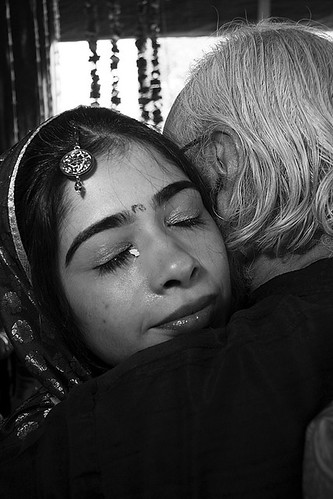
Hope in a Hug

Readings: Job 7:1-4,6-7; Psalm 146:1-6; 1 Corinthians 9:16-19,22-23; Mark 1:29-39
Picture: cc Roy Sinai

Sisters and brothers, I wonder if you’ve ever encountered the following situation. Someone has suffered some kind of setback in life. This someone is carrying a heavy burden. Maybe she has experienced failure in her career. Or in a relationship. Maybe someone else has betrayed her. Or a loved one has died. Whatever it is, she’s very upset. She’s experiencing a whole host of different feelings. Intense feelings. She’s angry at everyone. Perhaps even at herself. She goes to a friend and demands an explanation. Why has all this happened to her? Why?! She is a good person. What has she ever done to deserve all this?

Initially, with every good intention, the friend tries to address her questions. Tries to give her some answers. But, of course, nothing seems to work. In the face of all the hurt feelings, nothing appears to make sense. Finally, the friend decides just to keep quiet and to listen. She allows the other to ventilate. To pour out all the pain that’s inside. Then, at some point, the friend stretches her arms out toward the wounded one. And hugs her. No more words. Just a hug. At first, the other tries to wriggle free. But the friend persists. Gradually, the resistance is overcome. The storm of anger subsides. The person accepts the embrace. Tears are shed. By the one who is doing the comforting, as much as by the one being comforted. Of course, practically speaking, there really has been no change in the situation. Whatever it was that caused the setback–the failure, or death, or betrayal–has not been taken away. And none of the person’s questions has actually been answered in any satisfactory way. But, even so, something significant has happened. Somehow, there’s been a breakthrough. Although still suffering, the person is now no longer trapped in the past. For some mysterious reason, a light is seen at the end of the tunnel. Hope is born anew. And it all begins with flesh connecting with flesh. It all begins with a hug.

In the first reading too, we find someone bearing a heavy burden. We are familiar with Job’s story. He is a righteous man. Someone who faithfully keeps God’s laws. And God has blessed him with great wealth. But then, for some unknown reason, God decides to allow Job to be tested. In a series of disasters, Job loses first his property, and then his family, and finally, even his health. So that, when we meet him in today’s first reading, Job is filled with upset feelings. He complains to God. He speaks of the burdensome nature of human life. We work hard. But the money we earn, we cannot keep forever, even though we might delude ourselves into thinking that we can. Also, our lives often feel so empty and meaningless. Our riches do not satisfy us. Not only do we worry about safeguarding our possessions, but we’re also always looking forward to something else. In the day we wait for the night. And at night we long for the dawning of the sun. Never satisfied. Always restless.

For Job, these are not just casual observations. They are descriptions of his own experience of suffering. And they contain a whole series of difficult questions, which he addresses to God: Why do you let this happen? Why make us work so hard, only to allow us to suffer, and finally to die? Why? What is the meaning of it all?

These are deep questions. Painful and pressing questions. More importantly, these are also our questions. For we are like Job. We too are people of many burdens. Whether we are rich or poor, man or woman, foreigner or local, in different ways, and at various points in our lives, we all experience the tiring struggle, and the anxious restlessness, of everyday life. And there’s a part of us that wants to do what Job does. We wish to demand an explanation from God. In our uniquely Singaporean way, we want to ask why?! Why like that?! What is the meaning of it all?

And it may, at first, distress us that an answer is not to be found in our readings today. At least not the kind of answer that we think we are looking for. Nowhere in our readings does God answer the question why?. And yet, God does not ignore us completely. God does respond in some way. For we, who are Christian, believe that, to all our difficult questions, God really offers only one response. God sends us his Son. In our gospel today, we do not find Jesus telling us the reasons why we have to suffer. But what we do find is a summary of all that Jesus did and taught in the early days of his ministry. Tirelessly, Jesus goes about curing the sick, and casting out devils. But his concern is not so much with the healing and the exorcism, as it is with spreading the news that God is with the people. Such that, even though people beg him, Jesus will not allow himself to stay too long in any one place. Why does he do all this? And what possible connection might Jesus’ actions have to Job’s questions? To our questions? We begin to appreciate the connection only when we recall who Jesus is. Who we believe him to be. He is the Word of God that became flesh. Which means that, in him, God answers all our questions in the flesh. Much like the friend in our story, in Jesus, God responds to our painful queries by reaching out to us and giving us a hug. In the ministry of Jesus, God enters into and shares our pain. In him, flesh finally makes contact with flesh.

But that’s not all. Jesus is not just any other friend. And the hug he offers is no ordinary embrace. Jesus does more than just share our sufferings. He also shows us the way to live through them. While Jesus may not tell us the reason why we have to suffer, he does show us how to bear our sufferings in a way that leads to life. In the gospel, Jesus works as hard as anyone else, if not harder. But he does not experience his work as an empty, meaningless burden. Instead, Jesus is deeply conscious that he is fulfilling a mission given to him by his Father. He occupies himself only with his Father’s business. And, to do this, he prays regularly. He seeks his Father’s advice. He receives guidance and strength from his Source. We’re told that in the morning, long before dawn he went off to a lonely place and prayed there.

To receive God’s hug, then, is to model our lives after Jesus. This is what we find Paul doing in the second reading. Like Job, Paul describes his life in terms of slavery. But what is strikingly different is that Paul claims that this is a burden that he bears freely, for a particular purpose. Though I am not a slave of any man, I have made myself the slave of everyone so as to win as many as I could; and I still do this, for the sake of the gospel, to have a share in its blessings. Like Jesus, Paul does not think of his hard work as a meaningless imposition. Instead he sees himself as having been sent on a mission. A responsibility has been placed into his hands. But Paul was not always this way. There was a time, back when he was still named Saul, that he was a very angry man. It was only after his encounter with the Crucified and Risen Christ, on the road to Damascus, that he was transformed. Having received God’s embrace, he spent the rest of his life embracing others unto life.

And what of us, sisters and brothers? We who call ourselves Christian. We who live among many who suffer. Many who ask the same question that Job asked: Why?! Why do I suffer? We who gather here to celebrate God’s love for us in Christ. Aren’t we called to share this love with those who need it most?

Sisters and brothers, is there perhaps someone in your life who needs a hug today?