Wednesday, December 25, 2013

Beware of Short Circuits!


Christmas Day (Mass At Night)

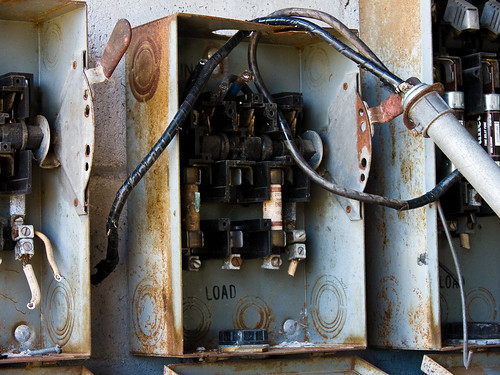
Picture: cc Michael

Sisters and brothers, have you ever experienced a short circuit? Even if you haven’t, I’m sure you know what a short circuit is. You know it’s what happens when the current in an electrical circuit is diverted in some way–takes a short cut so to speak–so that the full circuit cannot be completed. And then the lights, for example, won’t come on. The toaster or microwave won’t work. What’s worse, your appliances may actually get damaged. Sometimes even beyond repair. Which is why short circuits are a real nuisance. Something to be avoided. We all know that.

But perhaps what we don’t always remember is that electricity is not the only thing that can be short circuited. Can you think of anything else? How about relationships? Think, for example, of a classic love triangle. Handsome and eligible A falls in love with beautiful and equally eligible B. The feelings are mutual. The chemistry intense. The sparks fly. Well, at least at first. But then, along comes C. Who may or may not be handsome. Or beautiful. And maybe not all that eligible. But still, A or B end up falling for C. Upsetting the original relationship. Short circuiting the initial love connection between A and B. Possibly even causing hurt to one or both of them.

And, of course, if love can be short circuited, so can joy. We’re now, for example in the season for exchanging gifts. And it’s usually a joyful experience. But this joy can be short circuited too. For instance, people have given me some gift vouchers for Christmas. And receiving them is a joyful thing. But this joy isn’t quite complete until I buy something with those vouchers. And then actually make use of the things that I buy. What a waste it would be, if I were just to leave those vouchers in my drawer, and forget all about them. Until the expiry date has passed. In such a situation, the joy that the generous givers of those vouchers intended for me would be short circuited. And what a pity too. What a waste of a good gift!

Whether it’s electricity or love or joy, we need to beware of short circuits. We need to avoid them at all costs. I mention this only because I think our Mass readings on this Christmas Night are actually telling us the very same thing. Beware of short circuits!

As you’ve no doubt already noticed, both the first reading and the gospel announce the birth of a child. An extraordinary infant. A precious gift from God. A saviour sent to rescue God’s people from danger. To bring them justice and integrity. And peace that has no end. Scripture scholars don’t quite agree on the precise identity of the child mentioned in the first reading. But we Christians interpret both readings as referring to one and the same person. Jesus. Whose birth we celebrate tonight. He is the only One with the power to fulfill Isaiah’s prophecy completely. He is the greatest and most precious Gift from God to us. Which is why it’s fitting that, in the gospel, the news of his birth is proclaimed by the angels with great joy.

And yet, sisters brothers, we know far too well, that this Gift, this Peace, this Joy was not as well received as it should have been. This is true even as far back as the time of the prophet Isaiah. Our first reading tonight is taken from chapter 9. A little earlier, in chapter 7–the passage we heard on Sunday–Isaiah had proclaimed a similar prophecy to Ahaz, the king of Judah. Encouraging the king to ask God for a sign. But Ahaz had refused. Probably because he was afraid of losing his kingdom. Maybe even his own life. And, in choosing his own concerns over God’s gift, Ahaz failed to receive the joy that was being offered to him and his people. Out of fear and selfishness, the king short circuited God’s loving and merciful intentions for him.

In the gospel too, we see short circuits taking place. How else are we to understand the care taken by St. Luke to include, in his story, the little detail that when the time came for Jesus to be born, there was no room at the inn? The hotels were full. All available space had already been taken. Occupied by others who had arrived earlier. Or perhaps reserved by those deemed more important. And yet, who could have been earlier than the One who existed before Time ever began–the Eternal Word Made Flesh? And who could have been more important than the One who came to bring us life in all its fullness–the Saviour of the World? In any case, in the little town of Bethlehem, on Christmas night, hotels and hearts alike were simply too full to accommodate Christ the Lord. And, as a result, God’s precious Gift of Love could find no welcome there. The offer of heavenly peace and joy was short circuited by earthly pursuits.

Fortunately for us, even if the inns were full that night, the stables were not. Even if the town was too crowded, the countryside was still open. Room was found in a box where animals are fed. Space was made in the hearts of shepherds. And it was only in such lowly locations, among such humble folk, that God’s Gift of Love found a worthy reception. The circuit of peace and joy moved toward completion. Glory to God in the highest heaven, and peace to those who enjoy his favour.

All of which should lead us, sisters and brothers, to reflect on our own celebrations tonight. As you know, we gather here not just to commemorate an event that took place two thousand years ago. Not just to watch pageants. To sing carols. To exchange greetings. To admire pretty lights. And then to go home to open presents. Or to party the night away. We gather here to make space for the One who, even now, continues to look for room at the inn. We gather tonight to help each other to receive the One who is still knocking patiently and insistently on the doors of our hearts. Beckoning us first to experience for ourselves, and then to share with others, the deep joy and peace of his coming.

And yet, isn’t it true that it remains all too easy for us here in the city of Singapore, as it was for those in the town Bethlehem, to short circuit the process? To crowd our hearts and our lives with other concerns. Even concerns that may appear pious. But are actually self-serving. Isn’t it true, for example, that it’s possible to stress ourselves out perfecting our carols and arranging our decorations, and then fail to notice the Lord coming to us in the person(s) who may be most in need our care?

What then can we do to truly welcome Christ? To make room for him at the inn? To avoid short circuiting his loving intentions for us? The answer should be no surprise. To make room for Christ, the ego and its countless cravings must be set aside. As St. Paul tells us in the second reading, what we have to do is to give up everything that does not lead to God. All our worldly ambitions. Only then can we truly become God’s own people, having no other ambition except to do good. ... To have no other ambition except to do good. Not easy to accomplish, sisters and brothers. Which is why it’s perhaps consoling for us to remember that Christmas doesn’t end with Midnight Mass. No, our celebrations are only just beginning. The season of Christmas will continue till the 12th of January. The feast of the Baptism of the Lord.

Sisters and brothers, as we begin our joyful celebration of the Lord’s coming, what do you need to do to avoid a short circuit tonight?

Sunday, December 22, 2013

Through Doorways of Danger (Rerun)


4th Sunday in Advent (A)

Picture: cc Tristan Schmurr

Sisters and brothers, what do you do when you experience danger? What do you do, for example, if a riot suddenly erupts in your supposedly peaceful country. And on a scale not seen in the last fifty years. A riot where police cars are overturned and an ambulance set on fire. And what do you do when you notice an increase in the number of construction workers in your neighbourhood? People who appear to belong to the same ethnic group as those responsible for the recent riot? What do you do, sisters and brothers? How do you react, when danger comes knocking on your door?

Especially in this modern society of ours, it often seems that only one reaction is possible. That only one response is reasonable. Today, it often seems that, when danger threatens, all we can do is to turn it away. To keep it out. For our homes, we may buy and install stronger locks and more sophisticated alarms. For our country, we may tighten immigration policies. Beef up police patrols. Ban alcohol... Isn’t it true, sisters and brothers, that in our world today, it often seems that, when danger comes knocking, all we can do is to increase security?

Of course, in itself, security is not be a bad thing. If we were truly living in a dangerous neighborhood, we’d be silly not to lock our doors at night. But could it be that when we make the search for security our only response to danger, we may actually create more problems for ourselves? Could it be that, in our desperate attempts at keeping our doorways safe, we may actually end up keeping out other things as well? Things that may actually be very dear to us?

This is a useful question for us to ponder especially today, as the season of Advent approaches its climax. Throughout the past three weeks, we’ve been preparing ourselves to welcome the Lord. And yet, in the response to our psalm today, we hear a call that may sound puzzling to our ears. Let the Lord enter! We are told. Let the Lord enter! He is the king of glory. But why is it even necessary to tell us this? Haven’t we been watching and waiting for the Lord? Haven’t we gone to confession in preparation for his coming? Isn’t it reasonable to expect that we will surely open the door for him when he arrives? Of course we will! Or will we?

Before we answer this question, it’s helpful to first consider how God chooses to enter the lives of the people in our readings today. Both in the first reading and the gospel, we find someone standing at a doorway through which God wishes to enter. But not everyone is able to open the door to God.

In the first reading, the one at the door is Ahaz, the ruler of the southern kingdom of Judah. King Ahaz is facing a national emergency. The neighbouring kingdom of Israel has entered into a military alliance with Syria. Together, these two northern armies are threatening to invade Judah in the south. Ahaz and his people are in danger. Yet it is precisely at this moment that the angel of the Lord tells Ahaz to ask God for a sign. For some mysterious reason, God chooses to enter the lives of Ahaz and his people through a doorway of danger. But the king is reluctant to open the door. He refuses to ask for a sign. He claims that he doesn’t want to put God to the test. But perhaps he’s really just afraid of what the sign might say. What if it predicts his defeat and death? Better to opt for security. Better to keep the door locked. Even if it may mean shutting God out.

In the gospel too, God chooses to enter someone’s life through a doorway of danger. We know the story well. Joseph is betrothed to Mary. But before they live together, he discovers that she is with child. And he is not the father. We can imagine how Joseph must feel. In addition to the shame that comes from discovering his fiancee’s apparent infidelity, there is also the danger that his reputation will be ruined by scandal. Even worse, the Law provides that someone in Mary’s situation should be stoned to death. All of which places Joseph in a precarious position. Yet it is precisely through this risky doorway that God wishes to enter. It is exactly under such dangerous circumstances that God wishes to save God’s people. An angel is sent to reassure Joseph. Do not be afraid to take Mary home as your wife. In other words, do not be afraid to open the door of danger, for it is God who wishes to enter. Unlike Ahaz before him, Joseph obeys. He takes his wife to his home. And the prophecy is fulfilled. Emmanuel. God is with us.

Two people. Each standing at a doorway of danger. Two people. Each reacting very differently. One is paralyzed by fear. The other finds courage. One remains obsessed with security. The other opens his heart and his life to God. But how is it, we may wonder, that one can succeed where the other fails? Perhaps the way they conduct themselves at the door of danger is connected in some way to how they live their lives on either side of it. We know, for example, that both as a person and as a king, Ahaz lived a wicked life. He introduced and encouraged many idolatrous practices among his people. If such was his conduct in times of security, is it any surprise that he should find it difficult to trust God in times of danger?

In contrast, the gospel tells us that Joseph is a man of honour. A righteous man. Not only is he faithful to the Lord, he expresses that fidelity in the respect and care he has for his neighbor. Despite his shame and disappointment at Mary’s pregnancy, he tries to find a way to save her. Even if he’s afraid when God comes knocking–as anyone in his place would be–he is able to trust God enough to open the door.

The experiences of Ahaz and Joseph contain an important lesson for us. Although security is important, an obsession with it may lead us to shut the door in God’s face. Preventing God from entering more deeply into our lives and into our world? For, whether we like it or not, God has a habit of entering through doorways of danger. We see this not just in Ahaz and Joseph, but also, above all, in Jesus as well. As we’re told in the second reading, Jesus was proclaimed Son of God in no other way than through his resurrection from the dead. Which is why, it is fitting that, in our opening prayer just now, we prayed that we may by the Lord’s Passion and Cross be brought to the glory of his Resurrection. Our prayer is for the courage to allow God to lead us through the dangerous doorway of the Lord’s Cross to the safety and fullness of life in his Resurrection.

I’m reminded of these words from a hymn written by Miriam Therese Winter.
Christ come quickly, there’s danger at the door.
Poverty aplenty, hearts gone wild with war.
There’s hunger in the city and famine on the plain.
Come, Lord Jesus, the light is dying,
the night keeps crying: Come, Lord Jesus.
Sisters and brothers, danger comes to us in different forms. In difficult people. In challenging situations. In uncomfortable emotions. Through which doorways of danger does the Lord wish to enter your life? What are you doing to let him in today?

Sleeping Unto Life


Wedding Mass of Kenneth & Mandy

Readings Genesis 2:18-24; Psalm 103; 1 Peter 3:1-9; Matthew 19:3-6
Picture: cc Raelene Gutierrez

Kenneth and Mandy, my dear friends, do you like to sleep? We all know, of course, that sleep is something that none of us can do without. We’ve probably all experienced, at some time or other, what it feels like to suffer from a lack of sleep.  It feels terrible. Not to mention dangerous. Especially if we fall asleep while driving a car. If we don’t sleep, we can’t function properly.

But what if you had a choice? What if you could decide whether or not to go to sleep? Would you still do it? I’m not sure, But I think that, given a choice, many of us would prefer to stay awake all the time. I think many of us look at sleep as simply a necessary evil. Especially in a place like Singapore. Where everyone is always so busy. Rushing around doing one thing after another. Even if it’s just going shopping. Or meeting friends for coffee. Or surfing the internet. I may be wrong, but I suspect that if we all had a choice, we’d simply stop sleeping. Just so that we could have more time to do the other things we want to do.

And yet, sleep isn’t just a waste of time. It can also be a very creative activity. Have you ever experienced, for example, going to bed with a question you just couldn’t answer? Or a problem you just couldn’t solve? And then waking up with the solution? How does this happen? The experts tell us that this is possible because, although our conscious mind may shut down when we sleep, our unconscious mind remains active. Helping us to arrive at answers and solutions that don’t occur to us while we are awake, because we are distracted by so many other things. In other words, when we sleep, we let our conscious mind get out of the way, so that our unconscious mind can do its work.

It’s a little like what happens in certain medical procedures where, if the patient were awake, he would simply get in the surgeon’s way. So the patient is put to sleep to allow the surgeon to do her work. And, if the operation succeeds, then the patient awakes a changed person. Something new has happened. Sickness has been removed. Health has been restored. And it all happens in sleep.

But perhaps some of us may be starting to wonder what all this has to do with us. So what if sleep can be a very creative activity? What possible relevance might this have for us on this joyous occasion of the coming together of you, Kenneth, and you, Mandy, as husband and wife? The answer to this question is actually to be found in the scripture readings that you, Kenneth and Mandy, have chosen for this celebration.

Quite appropriately, you have chosen readings that help us to answer three key questions concerning marriage. First, what is marriage? Second, who makes marriage? And third, how can we participate? In the gospel reading, Jesus reminds us of something about Christian marriage that is sometimes all too easy to forget. Especially in our world today, where people may sometimes get married with the idea that they are just going to give it a try. The way we may try on a piece of clothing. Or a pair of shoes. Let’s just give it a try. See if it works out. If it does, fine and good. But if it doesn’t, then we can always call it quits.

This may be fine for others. But it is not what we Christians understand marriage to be. For us, marriage is not just a contract, which we can enter into and then break off whenever we feel like it. Rather, marriage is a deep union of two lives in a single love that binds them together as one till death. As Jesus reminds us in the gospel, in a Christian marriage, the husband and the wife are no longer two, but one body.

Which is why, as those here who are already married will be able to testify, although it may be quite a hassle to get married, (there's so much planning involved!), it’s far more difficult to remain married. To live married life the way it is meant to be lived. Not just as two separate people. Each doing his or her own thing. But as a truly married couple. United in a single love. Each person caring for the needs, and looking to the happiness, of the other. And to the children, when they arrive.

This is not easy to do. Thankfully, our readings also remind us of a second thing. Not just what married is, but also who it is that is ultimately responsible for making such a marriage work. Again, as Jesus reminds us in the gospel, it is the creator, who from the beginning made them male and female. So that what God has united, man must not divide. Although marriage requires much effort from the man and the woman, it is ultimately God who makes the marriage. It is God alone who has the power to ensure that the relationship survives and thrives.

Which brings us to the final question. If marriage is truly a deep union till death of two lives in a single love. And if marriage is ultimately the work of God. Then what do the rest of us have to do? How are we to contribute? How are you, Kenneth and Mandy, and the rest of us gathered here, to participate in this work of God that is your married life together? The answer is again to be found in the readings that you have chosen for today. And it is a rather surprising answer.

In the first reading, when God creates the first marriage between the first man and the first woman, notice how Adam makes his contribution. We’re told that the Lord God made the man fall into a deep sleep. And while he slept, he took one of his ribs, and built it into a woman. So, in order for the marriage to come about, Adam contributes a part of his very self. He donates his rib. But he doesn’t do this himself. He allows God to do it. And God does it by first putting Adam to sleep. Strange as it may sound, sisters and brothers, I think this is an important indication to us of how we can participate in God’s work of making a marriage. We need to allow ourselves to be put to sleep.

But don’t be mistaken, sisters and brothers. This sleep that we’re talking about is not any ordinary sleep. It is not the sleep of tiredness, or of indifference, or of neglect. It is not the sleep of laziness, or of boredom, or of depression. It is a very different, very special, kind of sleep. Indeed it is the kind of sleep that celebrate at this and at every Mass. The sleep that Jesus himself experienced. First, when he lay, a helpless and vulnerable baby, in a lowly manger. And then, many years later, when he hung, tortured and dying, on a cruel cross. It is the kind of sleep that we find in our second reading from the first letter of St. Peter. Which tells us how different people are supposed to behave. Wives, we’re told, should be obedient to their husbands. Husbands must always treat their wives with consideration. Respecting them as equals in the eyes of God. And everyone should be sympathetic and compassionate and self-effacing to everyone else.

Sisters and brothers, isn’t it true that we can only behave in this way, when we first allow a certain part of ourselves to be put to sleep? That stubborn part that is concerned only about our own comfort? Isn’t it true that in order for a marriage to work, we must first allow God to put to sleep our selfishness and our egotism. So that we can truly grow in love and care for one another? And this is true not just for you, Kenneth and Mandy, but also for the rest of us. Family and friends. In the days ahead, each one of us here, must be willing to somehow allow our selfishness to be put to sleep. So that we can participate in God’s work of making this marriage. Of joining this couple. Of building this relationship.

Sisters and brothers, even as we gather to celebrate this joyous occasion, how are we being invited to continue allowing God to put each of us to sleep, so that this new marriage may truly arise in all its glory today?

Sunday, December 08, 2013

From Rowdiness to Paradise


2nd Sunday in Advent

Picture: cc Michael 1952

Sisters and brothers, have you ever seen chaos being transformed into peace? What was it like? Imagine, for example, just for a moment, that you are now entering a rowdy secondary school classroom? Try to picture what it looks and feels like? … Probably the first thing that hits you as you go into the room is the noise. Everyone is talking at the same time. Some even shouting at the top of their voices. You see a group of students chasing one another around the room. Another bunch climbing over the desks and chairs. Throwing things at one another. A few others are sword-fighting. Using rulers and hockey sticks. Whatever they can get their hands on. Some are laughing. One person is crying, because s/he’s been bullied by classmates. But nobody takes any notice. Everyone is busy doing his/her own thing. Everything except the one thing these students are supposed to be doing. Studying.

Not too difficult to imagine the chaos, right? But then, suddenly, everything changes. The noise ceases. The restlessness subsides. The one being bullied is rescued. Order is restored. How does this happen? Typically, the change takes place when a teacher steps into the room. But not just any teacher. Especially not a timid, inexperienced one. No. It has to be someone able to command respect. Maybe the Form Teacher. Or the Discipline Mistress. Someone to whom each of the students is willing to listen. Someone credible. Someone with charisma. It’s only when such a person arrives that order is finally restored. The once rowdy classroom transformed into a peaceful place. The rebellious youngsters converted into obedient lambs. This transformation is possible only when each student is willing to recognise and to accept the teacher’s authority.

A recognition of authority. Leading to a radical transformation. Of chaos into order. Of rowdiness into peace. And it’s not only classrooms that undergo such transformations. Countries do as well. Isn’t this why South Africa is occupying such a prominent place in the news these days? Isn’t this why the whole world is mourning the passing of Nelson Mandela on Thursday night? Mr. Mandela did for South Africa what an effective teacher does for a rowdy classroom. He rescued those being bullied by an oppressive social system. He used his own considerable authority and charisma to help transform his beloved country. From the chaos of racial discrimination and oppression. Towards justice and equality. Towards reconciliation and peace.

And the good news for us, sisters and brothers, is that what is possible for classrooms and countries, can also happen to the whole of creation as well. Isn’t this what we are preparing to celebrate in this Season of Advent? Isn’t this what we find in our Mass readings today? In the first reading, the prophet Isaiah paints for us an incredible picture of a radical change in the whole of creation. An unbelievable transformation, in which natural enemies actually become intimate friends. The wolf lives with the lamb, the panther lies down with the kid, calf and lion feed together… They do no hurt, no harm… for the country is filled with the knowledge of the Lord.

The savage violence of Nature transformed into the blissful harmony of Paradise. How does this happen? In the first reading, this amazing change comes about with the arrival of a great leader. A charismatic king. Born of the royal House of Jesse, the father of King David. Someone upon whom the spirit of the Lord rests. A person who, not unlike Nelson Mandela, will be sought out, not just by his own people, but by the nations of the world as well. Sought out because this person rescues the poor and the oppressed. He cares for those whose eyes are constantly filled with tears, because they are being bullied by unjust social, political and economic systems. Structures that favour the rich and powerful, to the detriment of the poor and the vulnerable. As we heard in the responsorial psalm, he will have pity on the weak and save the lives of the poor. In his days justice shall flourish, and peace till the moon fails.

It is to proclaim the fulfilment of this great promise, made so long ago through the prophet Isaiah, that John appears in the gospel today. By preaching a message of repentance for the forgiveness of sins, the Baptist announces the coming of a charismatic leader. Christ Jesus himself. Who, through his life, death and resurrection, will transform chaos into justice. Rowdiness into peace. I baptise you in water for repentance, says John, but the one who follows me is more powerful than I am, and I am not fit to carry his sandals; he will baptise you with the Holy Spirit and fire.

But in order for people to enjoy the peace that Christ brings, they must first be willing to recognise and to receive him. To obey him. To entrust their lives into his hands. Isn’t this why John has such harsh words for the Pharisees and Sadducees? John tells them that they cannot hope to enjoy the peace of God simply by relying on their own status as descendants of Abraham. Or even just by going through the motions of water baptism. They need to do more. They need to show signs of true repentance. They need to produce the appropriate fruit. But what are these signs? What is this fruit?

We find the answer in the second reading. Here, St. Paul tells the Christian community in Rome that they should not give up. Instead, they should continue placing their hope in God. By continuing to treat one another in the same friendly way as Christ treated them. Be tolerant with each other, Paul writes, following the example of Christ Jesus, so that united in mind and voice you may give glory to the God and Father of our Lord Jesus Christ. Friendliness and mutual toleration. Unity of mind and heart. Living for the glory of God alone. These are the signs of true repentance. This is the appropriate fruit borne by those who are ready to recognise and to receive Christ. Those who are able to enjoy the peace that Christ brings when he comes.

Sisters and brothers, if this is true for the Pharisees and Sadducees. If this is true for the Israelites and the Romans. Must it not be just as true for us as well? Into the chaos of our world, into the rowdiness of our lives, Christ continues to want to enter. Bringing justice and equality. Reconciliation and peace. Are we not called to continue preparing ourselves to welcome him? By bearing appropriate fruit in our own lives? By treating others in the same way that Christ treats us. With understanding and toleration. With mercy and compassion. Taking care, especially to reach out to those who may be crying, because they are being bullied in some way. To rescue those who are helpless and oppressed. Even to treat the environment with greater respect and care.

Sisters and brothers, in this Season of Advent, we continue to await the arrival of Christ our charismatic Teacher. Who comes to transform the rowdy classroom of our lives into the justice and peace of Paradise. What can we do to better recognise and receive him today?

Sunday, December 01, 2013

Rising To The Advent Challenge


1st Sunday of Advent (A)


Sisters and brothers, do you recognise the name Yusman Wright? Those of you who do will know that it belongs to the 43-year-old real estate agent who won this year’s Mediacorp Subaru Challenge. You know, of course, what the Subaru Challenge is, right? It’s an annual endurance contest held in front of Ngee Ann City along Orchard Road. 400 contestants compete with one another to see which one of them can  keep the palm of one hand on a car for the longest period of time. The winner gets to keep the car. This year, the prize was a Subaru Forester 2.0i Premium, worth S$85,000 (less COE). And Yusman Wright beat all his fellow contestants with a winning time of 75 hours and 1 minute. Imagine that. Keeping your hand on a car for 75 hours. That’s more than 3 days! Quite a feat. Especially if you consider that the contest is held out in the open. Exposed to sun and rain. Not only that, but this was actually Yusman’s 5th attempt.

What do you think, sisters and brothers? What is it that drives someone like Yusman Wright to keep entering a contest like this, year after year? What is it that enables him to keep his hand glued to a car, without caring about anything else? Oblivious to pain and discomfort? Heedless of any other distraction? According to Yusman it’s all about focus. This is what he told the press after his win: if you join with the right focus in the mind… if you just go on what you want to achieve... win this car, then just focus on that. I think it's all in the mind…

Just focus… It’s all in the mind… Much easier said than done, right? And yet, this man was able to do it. He was able to focus only on winning the car. And if he was able to do this, it must have been because he wanted it really badly. His desire was strong. The car’s appeal irresistible. Such that he just could not bring himself to let it go. The strength of desire. And the power of attraction. Surely these must have been the things that enabled Yusman to rise to the Subaru Challenge.

The strength of desire and the power of attraction. These are also the  things that we find in our Mass readings, on this 1st Sunday of Advent. In the first reading, the prophet Isaiah speaks to us of a great prize that is waiting to be won. A prize far more precious than a brand new SUV parked in front of Ngee Ann City. The prize is the very presence of God Himself. Isaiah proclaims that a time is coming when the God of Israel, who lives in the Temple on Mount Zion, will make his Presence known to the whole world. God will wield authority over the nations, and God’s reign will bring true peace. Nation will not lift sword against nation, there will be no more training for war.

And it is because of this great prize, it is out of their desire for this precious gift, that people from all nations will be attracted to Mount Zion. They will be drawn to it irresistibly. They will leave their respective countries and go to where God is. Much like those 400 contestants in the Subaru Challenge detached themselves from the comfort of their own homes. But only so that they could attach themselves to their desired prize. I rejoiced when I heard them say: ‘Let us go to God’s house.’ Come, let us go up to the mountain of the Lord!

The strength of desire and the power of attraction. A desire that leads people to search relentlessly for God. An attraction that moves people to disregard all distractions, and to focus on God alone. A desire and an attraction that enables people to claim the prize of peace in the presence of God. Much like how Yusman Wright kept entering the Subaru Challenge, kept his hand stuck to the car, until he won it. But let’s face it. Not everyone is a Yusman Wright. Not everyone is able to do this. Not everyone can remain focused on the prize, focused on God, in this way. It’s not an easy thing to do.

As Jesus tells us in the gospel, on the day when the Son of Man comes of two men in the fields one is taken, one left; of two women at the millstone grinding, one is taken, one left. When God comes to visit us, bringing the prize of peace, not all will be able to receive it. Some of us will not meet the grade. Why? Not so much because God is stingy. But more because our desire may just not be strong enough. The attraction we feel for God not powerful enough. We may allow themselves to be distracted by many other things. By eating, drinking, taking wives, taking husbands… Also by buying condominiums, enrolling children in the best pre-schools and tuition centres, fretting over PSLEs and IB programmes, worrying about KPIs and other measures of productivity. Not that all these things are bad in themselves. In many cases, they are important and necessary. But we need to take care that we do not let our concern for all these things make us lose our focus on God. Make us lose touch with the concerns of God. By all means work in the field. Grind at the millstone. But always remain focused on God.

Isn’t this what Jesus means when he tells us to stay awake? To stand ready? Even as we may busy ourselves with many things, we need to somehow remain in contact with God. Remain in touch with our desire for God. Continue to feel the attractiveness of God. St. Paul speaks of the same thing in terms of light and darkness. The night is almost over, he writes, it will be daylight soon. The night of selfishness and loneliness. Of resentment and vengefulness. Of jealousy and greed. Of pain and sorrow. All this will soon be no more. On the day when the Lord comes. But to win this prize. To share in this light. To experience this peace. We must keep training our desire. We need to continue cultivating our attraction to the Light. This may be easier for those of us experiencing darkness of some kind. Those undergoing pain and suffering in some way. Our experience of darkness can help us to deepen our desire for God. To increase our attraction to the Light. We keep crying out to God, until God hears and answers us.

But, even if we may not be experiencing darkness in our own lives, we should not fail to notice that we live in a very dark world. A world where many continue to suffer terribly. People like the victims of a terrible typhoon in a distant land. But also people much closer to home. People who may be living as close to us as the room next door to our own. Or even in our own bed. People who need us to reach out to them in some way. In care and compassion. To make their concerns our own. Isn’t this how we can do what St. Paul tells us to do in the second reading? To let our armour be the Lord Jesus Christ. To put on Christ. To make his concerns our concerns. And his concerns are always for the poorest and most needy of all.

Sisters and brothers, Yusman Wright was able to rise to the Subaru Challenge by remaining focused on the prize. A brand new SUV. Advent is a time for us to sharpen our focus on God. To increase our desire for the things of God. To deepen our attraction to the concerns of God. So that we can claim the prize of God’s Coming.

What can you do to rise to our Advent Challenge today?