Sunday, October 05, 2014

Healing Steps

 
27th Sunday in Ordinary Time (A)


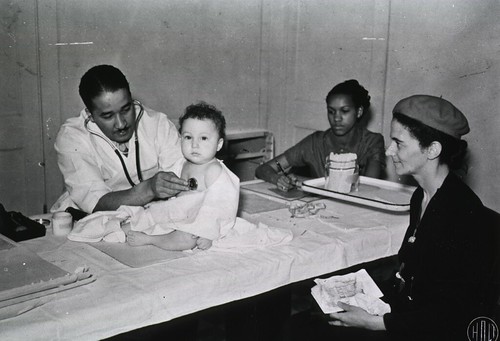
Sisters and brothers, imagine for a moment that you haven’t been feeling too well. You don’t know what exactly is the matter. But something just doesn’t feel right. You’re experiencing symptoms of some sort. Maybe it’s a headache. Or tiredness. Or insomnia. Something like that. Something that’s bearable. But also serious enough to make you worry. So, after suffering in silence for a while, you finally pluck up your courage and go to see a doctor. What can the doctor do for you?

I’m not a doctor. But speaking from a lay person’s perspective, three things come to mind. The first is, of course, diagnosis. The doctor figures out what, if anything, is wrong with you. Then, once this is determined, the doctor goes on to prescribe a course of treatment. And, if the treatment works, a good doctor may also offer you some advice for prevention. For avoiding such illnesses in the future.

Diagnosis, treatment, and prevention. Three important steps by which we are healed. Healed not just of physical ailments. But also spiritual ones as well. Isn’t this what’s happening in our readings today? Isn’t this what the stories of the vineyard are really about? As we’re told in the first reading and the response to the psalm, the vineyard of the Lord is the house of Israel. And something is wrong with the vineyard of the Lord. With God’s people. She’s experiencing certain worrying symptoms. Signs of an illness. What are these signs? And what is God’s diagnosis?

In the first reading, the problem is one of production. The vineyard is producing bad fruit. Despite all the owner’s efforts at cultivating good domesticated grapes, the vineyard produces sour wild grapes instead. In her life as a people, God expects Israel to produce the good domesticated fruit of justice and integrity. Of care and concern for the poor and the weak. The needy and the lonely. To be a society where everyone is adequately provided for. But Israel refuses to be domesticated. She prefers to grow wild. To live by the law of the wild. Survival of the fittest. Everyone looking only to his or her own interests. As a result, Israel produces the tragically sour fruit of bloodshed and distress. Of pain and suffering.

In the gospel, the problem is not just one of production. But also of management. If the vineyard is not producing the good fruit that’s expected of it, it’s because it’s being managed by greedy and dishonest tenants. People who live by the law of the wild. People unwilling to work for another. People who misappropriate the vineyard’s produce. People who scheme to snatch the vineyard itself away from its owner. People willing even to commit murder, just to satisfy their own selfish ambitions.

Sisters and brothers, I’m not sure how you feel when you listen to this diagnosis. But I can’t help wondering if it doesn’t also apply to me. To my life. Both as an individual and as part of a community. A church. A society. A world. Isn’t my life also meant to be a vineyard of the Lord? In everything that I do–at home or at work, in church or in the streets–am I not also supposed to be producing the good fruit of justice and integrity. Of care for the weak and the needy? Doesn’t my life also belong to God?

And yet, how willingly do I submit my life to God’s direction? How often do I prefer instead to run wild? To do only what I want to do? How often do I manage my own life as though it belonged only to me? And not to God? Consciously or unconsciously, how often do I misappropriate the glory and honour that is due to God? Just to puff up my own ego? To feed my own ambition? And doesn’t all this self-centredness cause suffering of some kind? Perhaps, at times, even bloodshed and distress? And isn’t this why, in my more lucid moments, I myself feel like something is wrong, or out of place? Like I need help, and healing?

Which makes it all the more important that we carefully consider the treatment that God prescribes for his problematic vineyard. His wayward people. In the first reading, because the vineyard resists God’s efforts at domesticating it, God decides to abandon it to the wilderness. To tear down the protective wall that God had built around it. To let it face the dangers of living in the wild. The aim is, of course, to lead the vineyard to a change of heart. To entice it to turn back to God. To finally submit itself to God’s management. Not unlike how the prodigal son (Lk 15:11-32) finally decides to return to his father. To live in his father’s house.

A new management is also what Jesus prescribes in the gospel. Since the religious leaders have proven themselves greedy and corrupt, God will replace them with new leaders. People who build their lives not on the ambition of the chief priests and Pharisees. But on the love of Christ. So that the stone rejected by the builders becomes the foundation stone of God’s people.

Sisters and brothers, isn’t this prescription also applicable to us? To me? Perhaps not all the time. But at least sometimes. Sometimes, when I experience trials and difficulties in my life, could it be that God is allowing me to experience the wilderness? But only with the aim of leading me to a change of heart? Could it be that God is inviting me to finally turn over the management of my life into God’s infinitely more capable hands? Into the hands of Christ? The same hands that loved me enough to be nailed to the wood of the Cross? Could it be that it is only when I do this–when I turn over the management of my life to Christ–that I will finally begin to bear the fruit I am meant to bear? Justice and integrity. Healing and wholeness.

But that’s not all, sisters and brothers. Beyond diagnosis and treatment, there is also prevention. Even after being healed, what can I do to avoid illness? To stay healthy? In the second reading, St. Paul suggests three things. The first is prayer. There is no need to worry, Paul writes, but if there is anything you need, pray for it. Much like how going for routine medical check-ups can give us peace of mind. Regular prayer can allow the peace of God to guard our hearts. The second thing is a healthy diet. Not so much what we put into our stomachs, but what we allow to enter our minds and hearts. Fill your minds with everything that is true, everything that is noble, everything that is good and pure… And, finally, the third thing is frequent exercise. Keep doing all the things that you learnt from me, Paul says, and have been taught by me and have heard or seen that I do… Regular prayer, a healthy diet, and frequent exercise. These are St. Paul’s suggestions for remaining in good spiritual shape.

Sisters and brothers, in the book of Exodus (15:26), the people of Israel are assured that God is the the Lord who heals them. What about us? How does God wish to heal us of our ailments? And to make us instruments of healing for others? What can we do to claim this precious healing for ourselves and for our families? For our church and for our world today?

Saturday, September 27, 2014

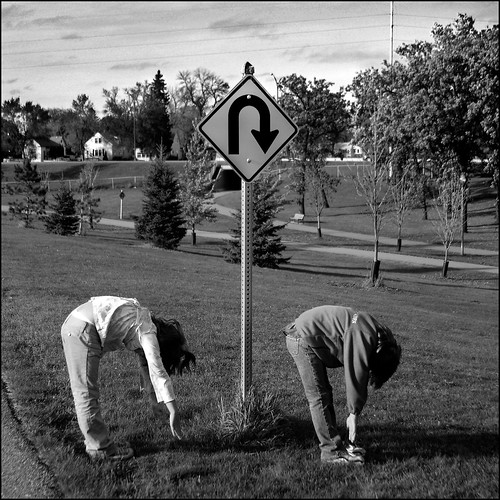
The Difference A U-Turn Makes


26th Sunday in Ordinary Time (A)
100th World Day of Migrants and Refugees

Picture: cc gfpeck

Sisters and brothers, have you ever experienced for yourself what a difference a U-turn can make? Have you ever, for example, found yourself in a car going in the wrong direction? Maybe you took a wrong turn. Or maybe you missed your exit on a highway. What to do? You need to turn around. But you can’t do that unless and until you find a U-turn. In a small city like Singapore, this is usually not too much of a problem. U-turns are relatively common. But imagine travelling in a strange country. And having to drive many kilometres going the wrong way. All because you can’t find a U-turn. It can be quite frustrating. Even scary. Especially if your car is running low on fuel. Or you’re facing an emergency of some sort. In such situations, a U-turn can make all the difference. Even the difference between life and death.

U-turns that make the difference between life and death. This is also what we find in our readings today. In the first reading, we find people making U-turns of two different types. The upright man renounces his integrity to commit sin and dies. The sinner renounces sin to become law-abiding and honest. And so finds life. The upright man makes a U-turn towards death. The sinner towards life. The first sabotages himself. The second wins salvation. In each case it is the direction of the U-turn that makes all the difference. The difference between death and life.

In the gospel too, U-turns are what make all the difference. A father asks two sons to work in his vineyard. One son refuses. But later changes his mind and goes. Another son does the opposite. He agrees. But then changes his mind and doesn’t show up. Both sons make U-turns. But in opposite directions. The first son toward obedience. The second disobedience. But the story is, of course, a parable. It’s not just about obeying an earthly father. But our Father in Heaven. It’s not just about working in an ordinary vineyard. But the Vineyard of Life Eternal. Here, as in the first reading, obedience leads to life. Disobedience results in death. And, again, it’s the direction of the U-turn that makes all the difference.

That much is clear. And yet, sisters and brothers, do we really know what it means to be obedient? Or disobedient? Do we really know what it looks like to be heading towards life? And what it looks like to be going in the opposite direction? Do we really know? Perhaps this may sound to us like a very silly question? After all, we’re respectable church-going people. Of course we know what it means to be obedient to God! Of course we know what it looks like to be on the way to life!

And yet, in the gospel, it is precisely the people who think they know who really don’t. That’s the reason why Jesus tells the parable in the first place. To show the chief priests and elders of the people that they don’t really know what it means to be obedient. That, even though they may pride themselves on their own knowledge and practice of the Law, they are actually heading in the wrong direction. Not towards life. But towards death.

So what does obedience look like? How do we know whether or not we are headed in the right direction? To find the answer to this question, we need to look more closely at our readings. In the first reading, God poses this question to the people: Is what I do unjust? Is it not what you do that is unjust? What is this distinction that God is making? In the eyes of God, what is the difference between the just and the unjust?

Again, the difference has to do with U-turns. The justice of God consists in God’s willingness to allow the sinner to repent. In contrast, God considers the people unjust because they refuse to let this happen. They refuse to give others the opportunity to turn their lives around. To make U-turns. And isn’t this true of the chief priests and elders in the gospel? Thinking that they themselves are already on the right path, they refuse to entertain the possibility that tax collectors and prostitutes could repent and find life. It never occurs to these self-righteous men that public sinners could actually be making their way into the kingdom of God before them.

Sisters and brothers, isn’t this what makes the difference between true justice and injustice? Between obedience and disobedience? Between life and death? The willingness to allow others to make U-turns. The readiness to give those heading in a wrong direction the opportunity to turn their lives around. The responsorial psalm summarises this in a single word. Mercy. Remember your mercy, Lord. The psalmist prays. Do not remember the sins of my youth. In your love remember me… In other words, Lord, be merciful to me. Give me the opportunity to turn my life around. Allow me the chance to make a U-turn unto life.

Remember your mercy, Lord. This poignant prayer of the psalmist, which we can so easily make our own, finds its answer in the second reading. Here St. Paul describes for us what God’s mercy looks like in the flesh. Again, it has to do with U-turns that make all the difference. Though his state was divine, Christ Jesus, in his mercy, chose to make a detour in the direction of our own sinful condition. He chose to empty himself. Even to the point of accepting death on a cross. But God worked a U-turn of his own. God raised him high. Turned around the scandal of his dying. And transformed it into the glory of unending life. Gave him the name which is above all other names. So that, through him and with him and in him, those of us headed in the wrong direction might be able to turn our lives around. If only we would praise his name. If only we would follow in his steps. If only we would immerse ourselves in his mercy. And share it with others.

To show mercy to others. To allow them the opportunity to change their lives for the better. To give them the chance to make a U-turn in the direction of new life. This is what obedience looks like. This is what God has done for us in Christ. This is also what we, in our turn, are called to do for others. And it’s fitting that we should be reminded of this especially today. As we celebrate the 100th World Day of Migrants and Refugees. A day when we consider the many people in the world whose lives have been turned upside down. People displaced from their homes for one reason or another. People crying out for the opportunity to turn their lives around again. People in need of mercy... Not just those living in faraway lands. But also those who have somehow found their way to our shores. Not just those suffering from the more obvious violence of war and natural disasters. But also those fleeing from the more subtle cruelty of  an oppressive global economy. Forced to sell their labour, and sometimes even their bodies, in exchange for poor wages and harsh treatment.

Sisters and brothers, could it be that if we were only to look carefully around us, we would find many still needing to turn their lives around? What can we do to show them mercy? To help them make a U-turn unto new life today?

Sunday, September 21, 2014

Between Pay & Passion


25th Sunday in Ordinary Time (A)

Picture: cc brett jordan

Sisters and brothers, have you ever heard people talk about the difference between a job and a passion? A job, as you know, is something that we do in exchange for a salary. We may or may not like the work itself. In fact, we may even find it very burdensome. But we still do it, because we need the money. A passion, on the other hand, is something that we are enthusiastic about. We may or may not receive any money for it. In fact, we may even have to spend our own money to get it done. But we do it anyway, because it’s important to us. It gives our lives meaning. The work energises us. Makes us happy. Even if we don’t get paid for it.

What makes the difference between a job and a passion is our motivation. What we are seeking. In one case, it’s the money. In the other, it’s the activity itself. There are, of course, some lucky people whose jobs are their passion. They are paid to do what they like to do. So a teacher, for example, may receive a salary for her work. And she may need it to survive. But the money may not be her primary motivation. It’s not what gets her out of bed in the morning. She may teach not so much for the money, but more because she really wants to share her knowledge and experience with others. To help the young learn new things. To make a difference in their lives. And in society as a whole.

People like that are truly fortunate. But, for the rest of us, our jobs are often something we do only because we need to make a living. Which is fine. There’s even a dignity in that. And it’s important that we receive a just wage for it. And yet, monetary rewards can only go so far to motivate us. Sometimes the work may become so burdensome that the money just doesn’t seem worth all the effort. All the stress. What to do? Some of us may quit. Look for another job. Or, if that’s not possible, we may be forced to stay on. Going through the motions of our daily routine in a more or less mechanical fashion. Beginning each workday already eagerly looking forward to its end. What a contrast between this kind of work and the kind done by the passionate teacher!

And it’s not just at work that we find this difference between an oppressive job and an energising passion. We find it in the spiritual life as well. Actually, I think this difference is also what our Mass readings are inviting us to ponder today. Why do you think, sisters and brothers, that the workers who were hired first, in the gospel, protested so strongly when they saw the latecomers receiving the same pay as they did?

The reason is found in the words they use. You have treated them the same as us, though we have done a heavy day’s work in all the heat. A heavy day’s work in all the heat. What do these words indicate to us, sisters and brothers, if not that those hired first saw their work as nothing more than a job? And a burdensome job at that. They found no joy in what they did. They had done it only for the pay. Which should be fine. Many of us do that. We need to. Except that this parable isn’t really about any ordinary employment situation. In telling it, Jesus is trying to show us what the kingdom of heaven is like. And it would appear that, in the kingdom of heaven, God expects people to work not just for pay. Not just to do a job. But to pursue a passion. To do what St. Paul is doing in the second reading.

Scripture scholars tell us that the letter to the Philippians was probably written from prison. Paul knew he might soon be executed. And yet, even in such dire straits, Paul has only one concern. Notice how, in five short verses, the word Christ appears no less than four times. And, quite amazingly, Paul can’t decide whether he wants to live or to die. Because, he says, Christ will be glorified in my body, whether by my life or by my death. Clearly, in everything that he does, both in life and in death, Paul seeks only one thing. To glorify Christ. What a contrast. What a great distance there is between Paul and the workers in the gospel!

Is this not unlike the distance mentioned in the first reading, which tells us that the heavens are as high above earth as God’s ways are above our ways? For, unlike us, God does things more for passion than for pay. Notice how, in the gospel, the landowner keeps going out to the market place to recruit more workers. And he insists on doing it himself. Instead of sending his foreman. He even goes out at the eleventh hour. Why? What difference could that last hour make to the profitability of his vineyard? Unless, of course, his concern is less with making more profits than with finding work for the unemployed. With caring for those who are standing idle in the market place. Isn’t this his passion? To seek out and to recruit all those who have yet to find a meaningful occupation. All those still lost and aimless. Lacking direction. So that it is not so much the salary that is the reward. The main attraction is the work itself. The joyful opportunity to labour in the Vineyard of Life.

Isn’t this what Jesus is sent into the world to do? To offer all of us a meaningful occupation. The joyful task of experiencing for ourselves, and of sharing with others, the Good News of God’s love for us all. A love that’s willing even to lay down its own life so that others might live. The same love that we celebrate at this Eucharist. And yet, isn’t it also true that, all too often, we see this work, of living and spreading the Good News, as a burden? If we even think of it at all. Perhaps because, in our minds, doing this work means having to spend more time in church. Joining this or that ministry. But could we be wrong? Could it be that the vineyard of the Lord is not just here in church? But out there in the world? In our workplaces and in our schools. In our homes and on the streets. Could it be that doing this work requires only that we have a passion for sharing God’s love with others? At times in words, and always in deeds?

But that’s the trouble, isn’t it, sisters and brothers? What is needed is a joyful passion. But what we experience is often only an oppressive burden. We are conditioned to think of the spiritual life only in terms of obligations and merits. Instead of generosity and joy. Even if we do pray the Prayer of Generosity every Sunday. Like the workers in the gospel, we tend to keep a careful count of every second we spend on the things of God. Every little prayer we say. Every Mass we attend. Every good deed we perform. And we expect to be rewarded for it all.

But if all this is true, then how can we change? How can we move away from seeing our faith as an oppressive job to letting it become our one energising passion? How do we bridge that great distance between our own calculative ways and God’s generous love? As the first reading tells us, in everything we do, we need to seek the Lord while he is still to be found. To call to him while he is still near. And we find the motivation to keep doing this when we remember that, like that landowner in the gospel, God is always already passionately searching for us. For you and for me...

Sisters and brothers, in the ordinary situations of your life, how passionately are you searching for God today?

Tuesday, September 16, 2014

What Makes the White House


Monday, 15th September, 2014
Day 6 of Church of Our Lady Star of the Sea Novena
Theme: The Dignity of the Human Person

Readings: Deuteronomy 10:12-13, 16-20; Psalm 144(145):1-2, 8-11; Ephesians 2:19-22; Luke 7:36-50
Picture: cc Shubert Ciencia

Sisters and brothers, have you heard of a place called the White House? Silly question, right? Of course, you have! It’s probably no exaggeration to say that it’s one of the most famous buildings in the world. And also one of the most important. But what makes it so famous and so important? Is it only because it’s painted white? Or because everyday many people take a tour to see it? If not at the location itself then at least on its website? Or maybe because of the beautiful decorations and works of art that can be found there? Or the fact that it’s guarded by the United States Secret Service? What do you think, sisters and brothers? What is it that really makes the White House the White House?

I think we all know the answer to that question, right? What makes the White House so famous and so important is, of course, the person who lives and works there. The President of the United States of America. He is what makes it the White House. If not for him and those who came before him, the place would be no different from any other big house covered with a coat of white paint. Nothing really special.

If this is true, then what is needed to keep the White House famous and important is to make sure that there is always a space in it reserved specially for the President. A space conducive enough for him to do his work. Comfortable and cosy enough for him to rest. To feel welcome and safe and at home. All the other things about the White House. The guests who visit it. The furnishings that decorate it. The guards who protect it. The paint that covers it. All these other things are important only to the extent that they help provide the President with a conducive and comfortable space in which to live and to do his work. For it is the President that makes the place famous. He is the one who gives the White House its dignity.

So much for the White House. What about the human person? What is it that gives the human person its dignity? What gives us our dignity? And how do we go about keeping it? As you know, the world offers various answers to these questions. We’re told, for example, that a person gets her dignity from the money she has. Or the house she owns. Or the car she drives. Or the clothes she wears. Or the company she keeps. Or the things she knows. Or the work she does or doesn’t do… But, sisters and brothers, whether we care to admit it or not, we all know that these answers are wrong. And they can cause serious problems. If a person’s dignity comes from the money she owns, then what happens when the money is gone? Have the poor no dignity? And if it comes from the work that she does, then what happens when she cannot work? Do the bedridden have no dignity? Or the mentally ill? Or the unborn children?

But if a person’s dignity does not derive from all these external things, then from where does it come? What does our Catholic Faith teach us? In the second reading, we are told something very important. We’re told that, not unlike the White House, the Christian community is supposed to be a special building. A holy temple. A dwelling-place of God. And, as you know, what the letter to the Ephesians says about the Christian community as a whole, the first letter to the Corinthians also says about each individual Christian. Your body, St. Paul writes, is the temple of the Holy Spirit, who is in you since you received him from God (1 Corinthians 6:19).

This, my dear friends, is what we Christians believe. That every human being is created for the special purpose of being a dwelling-place of God in this world. A space in which and from which God lives and works and blesses the world. And just as the White House derives its dignity from the President who occupies it. So too does the dignity of each human being derive not from what the person owns or wears or can or cannot do. But from God. The God who creates us in the image of himself (Genesis 1:27). And who chooses to live in and among us. For it is in him that we live and move and exist (Acts 17:28).

But if this is true. If our dignity does indeed derive from the fact that each of us is the temple of God. Then what must we do to maintain this dignity? The answer is really quite simple. We must do whatever we can to ensure that there is always a welcome space in our hearts and in our lives for God.

Which is why the gospel is so helpful. It presents us with a contrast between two forms of welcome. Jesus criticises one and praises the other. On the surface, it seems that Simon the Pharisee is very welcoming. He has invited the Lord to a meal in his home. But Simon’s actions show that he really has no space in his heart for Jesus. For he fails to offer the Lord the most basic expressions of hospitality. No water for the feet. No kiss for the cheek. No oil for the head. And yet, sisters and brothers, to be honest, I find myself a little shy and embarrassed to criticise Simon. For I know what it’s like to offer the Lord a half-hearted hospitality. To come to Mass, for example, or to say my prayers, but only reluctantly. To be here in body, but not in spirit. To fill my heart with so many other concerns that I leave no room for the Lord.

In contrast, even though she hasn’t invited Jesus to her home, through her actions, the woman shows how much she really loves him. How big a space she has made for him in her heart. For she must know that people will gossip about her. And yet, she dares to gatecrash the party. All for the sake of expressing, in a very public fashion, her love for the Lord. Why does she do this? From where does she find the courage? Jesus tells us. It comes from gratitude. From realising her own sinfulness. And experiencing the Lord’s mercy. Experiencing how God has made space for her. Her sins, as many as they are, have been forgiven her… Isn’t this also the way by which space is made in my heart as well? When I allow myself to ponder the mercy that God has shown me in my own life? The mercy shown to me in the Dying and Rising of Christ? The mercy we celebrate at this Mass?

By doing what she did at the banquet, the woman shows us what the first reading means when it tells us to circumcise our hearts. It is to make a space reserved specially for the Lord. To show him our gratitude and our love. Not just by coming to church. Or going to the adoration room. But also by doing what the first reading tells us God himself does. By reaching out to the poor and the lonely. Those most in need of our help. For the Lord is the one who sees justice done for the orphan and the widow, who loves the stranger and gives him food and clothing. When we do the same, we make a space for the Lord. Not just in our hearts and in our lives. But also in our world. When we reach out to the needy, we show the world the dignity of the human person.

Sisters and brothers, just as the White House derives its importance from the President, so too do we derive our dignity from God. What will you do to continue making a space for God in our hearts, in our lives, and in our world today?

Sunday, September 14, 2014

The Elevation of Objects & The Emptying of God


Feast of the Exaltation of the Holy Cross

Readings: Numbers 21:4-9; Psalm 77:1-2,34-38; Philippians 2:6-11; John 3:13-17

Sisters and brothers, there is an advertisement for a watch, which is sometimes screened in local movie theatres. Perhaps some of you have seen it before. It tells the moving story of a pair of lovers, who share a special favourite place. A forest. It is in this forest that he once presented her with the gift of a watch. Hidden, for her to find, in the knot of a tree. It is in this forest that he proposed. Here also was where they came for the last time, as a couple, when she was stricken by terminal illness. And then, after she had gone, it was back to this same forest that he returned alone. To the same tree. To deposit the watch he had given her.

Years later, a fire burns down the forest. Frantically, he returns once more. Desperately searching for what he had left behind. The tree is burnt. But, amazingly, not only does the watch remain, it still works. And, as he gazes upon that precious object, he remembers what she had told him when they were here last. He had been carrying her in his arms. You’re tired. She had said. Please put me down. It is then that he realises that she would be happy only if he allowed himself to be happy. Only if he was willing, finally, to let her go. Finally to begin living his life anew.

Sisters and brothers, I mention this advertisement, not because I want to sell you a watch. (I’ll leave that to Apple.) But because I think that it helps us to understand how an ordinary object is changed into something extraordinary. How it comes to be elevated. Filled with meaning and power. The power to change us. To transform our losses into hope. Our burdens into motivations. Our endings into beginnings. Our dyings into new life. Of course, in itself, however carefully it is made, and whoever its maker, a watch is... still a watch. It’s function is to tell time. But what elevates this watch is the story it recalls. The memory of the love between two people. A love stronger than sorrow. A love willing to forget itself. Willing even to die. Just so that the beloved might live anew.

Isn’t this, my dear friends, something like what we are celebrating today? On this Feast of the Exaltation of the Holy Cross, we celebrate the elevation of an object beyond the particular purpose for which it was made. Not a watch. But a cross. An instrument of torture and punishment. Of suffering and death. Something that should strike fear into the hearts of all who know the purpose for which it was made. And yet, we who call ourselves Christian dare to claim that we see this thing in a way different from how others see it. Our boast is that, for us, this terrible thing has been exalted. Elevated. Lifted up. Transformed into its opposite. How does this happen?

The first reading provides us with a clue. For here too we find an object being elevated. Not a watch. Or a cross. But the image of a fiery serpent. A statue of something whose bite brings certain death. But, when lifted up, it becomes a channel of life. What should be an object of fear is transformed into a symbol of hope. Deadly poison is changed into its own antidote. How does such a marvellous transformation come about? How does it happen that a simple look at a bronze serpent can have such saving effects? The reading doesn’t give us the details. All we are told is that Moses interceded for the people, and the Lord answered him. To deepen our reflection, we have to turn to the other readings.

In the gospel, Jesus tells Nicodemus the secret to why God answered Moses. The reason is none other than love. The love that God has for us. The same love that brought us Jesus. Yes, God loved the world so much that he gave his only Son... And God chose to give us his Son in a very particular way. The Son of Man must be lifted up, Jesus says, as Moses lifted up the serpent in the desert. As you know, sisters and brothers, the words lifted up have more than one meaning. Literally, they mean to be physically raised up. But, figuratively, they also mean to be exalted. To be given glory and honour and praise. And this is also what we believe happens to Jesus on the Cross.

This is precisely what St. Paul is describing in the second reading. Jesus was God. His state was divine. Yet he emptied himself. He chose to forget his own divine dignity. Lowering himself to become a human being like us. Humbling himself even to the extent of accepting death, death on a cross. So that, quite paradoxically, when Jesus is lifted up on the Cross, he is at his lowest point. And it is from this point that God exalts him. Raises him high. Gives him a name above every other name. Isn’t this how the Cross comes to be exalted? Elevated? Transformed? Only because Christ Jesus chose to lower himself. To sacrifice himself. To empty himself. To humble himself. To forget himself. And for our sakes. So that through him the world might live. So that we might live. You and I.

And this exaltation of the Cross is not just something for us to talk about in theory. It is a living power that can move and transform us. The way that watch in the advertisement transformed the one who gazed upon it. The Cross has this power, because when we look at it in faith, we are reminded of the story it represents. We are drawn into the memory that it recalls. The Mystery of Faith that we celebrate at this Mass. When we eat this Bread and Drink this cup, we proclaim your Death, O Lord, until you come again. When we gaze upon the Cross, we are reminded of a timeless Love. That is willing to lose itself for us. So that we might find new life.

But, in order for us to tap into this transforming power, we first need to do what that man in the advertisement did. We need to return to the burnt-out forests of our lives. To the places where we may be saddened and searching. Lost and confused. Anxious and afraid. Disappointed and disillusioned. Resentful and rebellious. Burdened and stressed out... Wherever it is we may be suffering. And there, from these places, to fix our gaze firmly upon the Cross of Christ. The Cross on which was hung the salvation of the world. For when we do this, perhaps we too will hear words of comfort and encouragement. Not put me down. Or let me go. But come to me. Come to me, all you who labour and are overburdened, and I will give you rest (Mt 11:28).

Sisters and brothers, whether it is a watch, or a statue, or a cross, an object is exalted, lifted up, when it calls to mind the memory of a lover who empties herself. Loses herself. So that the beloved might find new life. How willing are we to be reminded of this story of our salvation. To come to Christ, our Beloved. And to find new life, by losing ourselves in Him today?