Saturday, November 15, 2014

Asset or Liability?


33rd Sunday in Ordinary Time (A)

Picture: cc Rebecca Wilson

Sisters and brothers, do you know the difference between an asset and a liability? I’m sure you do. An asset is something useful and valuable. Something that’s advantageous for you to have. A liability, on the other hand, is just the opposite. It’s a burden. Something that adds trouble to your life. Puts you at a disadvantage. But have you ever considered how the way we classify something–either as an asset or as a liability–actually affects the way we relate to it?

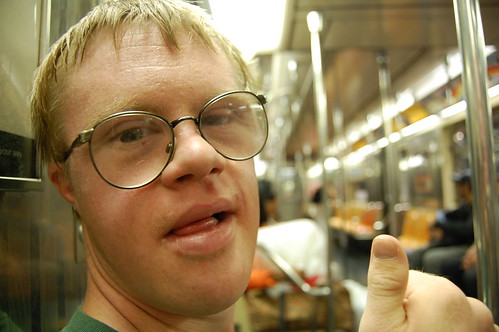
Just the other day, I heard someone talk about an experience she’d had trying to discourage a couple from having an abortion. The man she was talking to was very angry, because the child that he and his wife had conceived was stricken with Down’s Syndrome. So upset was he that he couldn’t even bring himself to name his own child. Preferring to refer to the unborn baby as it. Thankfully, however, he finally agreed to have the child put up for adoption. And, in the process, this man was amazed by how many couples were more than happy to welcome his unwanted child into their homes. Why should all these couples want a handicapped child like his?

What do you think, sisters and brothers? What accounts for the difference in attitude between that man and the people who were willing to adopt his child? The answer is not difficult to guess, right? The man saw his child as a liability. A burden. Something that would put him at a disadvantage. In contrast, the other couples were somehow able to see the child as an asset. A gift. Perhaps even a blessing. Something that would bring joy into their lives... A single unborn child. Yet classified in two very different ways. Leading to two contrasting attitudes and reactions.

Don’t we find something similar in the parable that Jesus tells in today’s gospel? What is the difference between the first two servants and the last? What makes the first two invest their master’s money, and the last one bury it? At first glance the difference is simply between two kinds of people. The hardworking and the idle. Those who are good and faithful, and the one who is wicked and lazy. But why the difference? What is it that helps the first two servants to be diligent? And what is it that causes the last one to be lazy?

I’m not sure, sisters and brothers, but I think the answer has to do with how each servant classifies the money handed to him by his master. The first two servants quite obviously see what is entrusted to them as an asset. An opportunity. Something valuable that they can invest. So as to make more money for their master. The last servant, however, sees the money as a liability. Something that could get him into trouble if he somehow happened to lose it. The first two were eager to make a profit for their master. The last one was afraid to get himself into trouble. The difference has to do with classifying something either as an asset or a liability.

Which should also account for why the the perfect wife in the first reading is so hardworking. Even though she doesn’t really have to be. Since the bible tells us that she actually has serving girls of her own. People who can do the work for her. Like the first two servants in the gospel parable, this wife sees her work, and the time that she has, as assets. Opportunities to make the life of her family even better than it already is.

But what has all this to do with us? To answer this question, we might perhaps begin by asking ourselves what are the things that God has entrusted to us? Each of us will probably answer this question differently. But I think that probably the biggest thing that God has entrusted to us is simply the relationship that God has established with us. The relationship that God began simply by creating us. The relationship that God renewed by sending Jesus to be the sacrifice that takes away our sins. The relationship that God continues to keep alive and nurture by showering countless blessings upon us everyday. Even if some of these blessings remain in disguise.

If this is true, then a further question we might want to ask ourselves is how we view our relationship with God. Do we see it more as an asset? Or more as a liability? How can we tell? Well, one way is to consider how we feel about the things that help us to build up this relationship. How do I feel, for example, about having to come to Mass every Sunday? Or about spending quality time everyday in prayer? Or about reaching out to people who may be in need of my help? How willing am I to do these things? Am I eager or reluctant? Diligent or lazy?

And what can I do, if I happen to find myself more reluctant than eager? More lazy than diligent? What can help me to begin to view my relationship with God more as an asset than as a liability? There are at least two things I might consider. The first is something that both the gospel and the second reading invite me to do. Which is to look ahead to the future. Just as Jesus speaks of a time when the master will return, so too does St. Paul write about the Day of the Lord. When this day arrives, it is those who have taken the trouble to cultivate their relationship with God who will be rewarded. The people that Paul calls sons of light and daughters of the day. People who have taken the trouble to stay wide awake and sober. So as to be ready to welcome the Lord even when he comes like a thief in the night.

But that’s not all. I do not have to wait till the Day of the Lord to enjoy the benefits of cultivating my relationship with God. For the the responsorial psalm reminds me that those who fear the Lord, those who put God first, will be happy and prosper. This doesn’t mean, of course, that I will surely be rich and famous. What it does mean is actually what we prayed for earlier in our opening prayer. Where we asked God to grant us the constant gladness of being devoted to you, for it is full and lasting happiness to serve with constancy the author of all that is good. In a very real way, to cultivate one’s relationship with God is really it’s own reward. For the closer we come to God, the more rooted and grounded we become in God’s steadfast love for us. As St. Paul writes in the letter to the Romans (8:31) if God is for us, who is against us?

Sisters and brothers, how we relate to something depends very much on how we classify it. How would you classify your relationship with God? Is it more of an asset or a liability? And what difference will it make in your life today?

Sunday, November 09, 2014

Making Life Liveable...


Feast of The Dedication Of The Lateran Basilica

Picture: cc Don Shrimpton

Sisters and brothers, what do you think are the minimum conditions you need to live in a particular place? The essential elements that make a place fit for human habitation? The things that make life liveable. What are they? A roof over your head, perhaps? Running water? Modern sanitation? Your own room? A bed? An aircon? Wifi connection? What do you think?

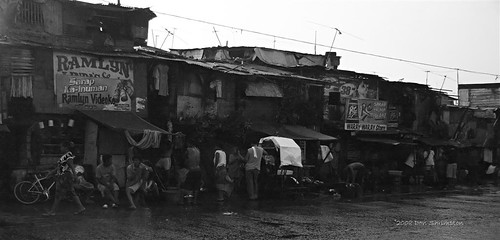
Some years ago, as part of the final stage of Jesuit training, I was sent to live for a week in a slum. Fortunately for me, the two families, who took turns to host me, lived in houses with some access to electricity and modern sanitation. But, even then, the living conditions were quite deplorable. One house was barely half the size of a one-room HDB unit. And that tiny space was shared by 8-10 people. I couldn’t be sure exactly how many, because some came home after I’d gone to bed. And left before I woke up. The other house was slightly larger. But the toilet-cum-bathroom was so small that, once inside, you barely had room to move. And since the space had neither natural nor artificial light, everything had to be done in the dark.

Even so, to my surprise, despite the poor living conditions, my days in the slum were happy ones. This was largely because of the way I was treated. As an honoured guest. Given the very best that each family could offer. Little though that was. In one house, I was given an old couch to sleep on. It was so narrow, I didn’t have room to turn. And so short, I could hardly stretch out my legs. But it was where the head of the household usually slept. Everyone else just squeezed together, side by side, on the hard floor. In the other house, I was given a bed that was infested with bugs. But it was the only bed they had. Again, reserved for the head of the household.

Sure, the conditions were terrible. Especially to my Singaporean sensibilities. But I was welcomed and accepted. Treated with respect and honour. Even with great affection. And, much to my surprise, this was enough to make me happy. Enough to make that slum fit for me to live in. At least in that short but memorable week that I spent there. So that when the time was up, I actually found myself sad to leave. In spite of the horrible physical conditions, my hosts had somehow managed to make my life among them liveable. Even happy. Simply by treating me well.

I mention this, because I think it may help us to understand the reason why Jesus is so angry in the gospel today. He is upset at what he finds in the Temple in Jerusalem. The conditions there have become so bad as to make the place unfit for God to live in. But why? Is it because the space has become too small? Or because the paint is peeling from the walls? Or the furniture is too old? Not quite. The reason goes beyond the physical conditions. Important though these may be.

You have turned my Father’s house into a market, Jesus exclaims. But what does he mean? How does one turn a temple–a house of God–into a market? Is it simply by using the space to buy and sell things? Don’t we ourselves buy and sell books and religious articles in this church? Don’t we raise funds and reserve columbarium niches here? So are we also turning this church into a market? A place unfit for God to live in? Well, it all depends, doesn’t it?

A market is a market because its primary purpose is the buying and selling of things. You may have seen markets where, for example, one or more altars have been set up inside them. But the presence of those altars do not make the market a place of worship. They are set up so that the stallholders can pray for good business. That is their main purpose. And that is what makes the place a market rather than a temple. The primary concern is business. Not worship. Money. Not God.

In contrast, a church is a church because its primary purpose is worship. Even if buying and selling is carried out, this is fine, as long as it is done to facilitate worship. Not the other way around. In other words, what makes a place fit for God to live in, is the way we treat God there. Even if the physical conditions may be poor, our God will still be happy to live in the place. As long as we treat God well. Much like how I was treated in the slum. Giving God glory and honour. And all the very best that we have to offer. Instead of using God for our own profit. Or using our worship as an excuse for making money. Isn’t this why Jesus is so upset? The people have turned God’s house into a market. A place where business is the primary concern. Not God.

But God doesn’t live only in physical structures. Not just in buildings like the Temple in Jerusalem. Or the Lateran Basilica in Rome. Whose feast we celebrate today. Or even this little church of ours. More than holy places, God wishes to live in a holy people. In us. The people whom God has claimed as his own. As St. Paul reminds the Corinthians in the second reading: Didn’t you realise that you were God’s temple and that the Spirit of God was living among you? If this is true, then we need to ensure that, not just our churches, but we ourselves are fit for God to live in. How to do this? Again, by trying our best to treat God well. To give God glory and honour. And all the very best that we have to offer. Instead of using God to turn a profit. Or manipulating God to get what we want. Or confining God to a tiny space. In church. For one hour a week. On a Sunday.

And how will we know that we are actually living in this way? What are the signs that our lives are fit for God to live in? The answer is found in the first reading. Which gives us a description of what it looks like when God’s Presence fills the Temple. When this happens, the life-giving stream of God’s Presence gushes out powerfully from that holy place. And wherever it goes, the stream makes its surroundings liveable. Not just for God, but for all manner of living things. Human and otherwise.

The same can be said for us. If we are indeed the Temple of God. Then the powerful stream of God’s Presence will continue to gush out from us to the rest of world. Bringing abundant life wherever it flows. To all the people and situations that we encounter in the enormous marketplace that is our world today. To those who may live in deplorable conditions. Victims of the market. People who live in slums. And also those who, though they may live more comfortably, still can’t quite find true happiness. Because they don’t know how to relate to others. Except according to the rules of the market.

Sisters and brothers, this is how we know that we are providing conditions fit for God to live in and among us. When we continue to do what Jesus does in the gospel today. Contribute, each in our own way, towards making our world a better place to live in. For God. For us. And for the rest of Creation.

Sisters and brothers, what are you doing to make life more liveable in your world today?

Sunday, October 26, 2014

Living Love & Telling Time


30th Sunday in Ordinary Time (A)

Picture: cc Robert Couse-Baker

Sisters and brothers, do you ever think about the importance of being able to tell the time? To know what time it is is also to know where I need to be. And what I need to do. Have you ever missed an important appointment, for example? Or a valuable career opportunity, perhaps? Or even an episode of your favourite Korean drama? Simply because you lost track of time? Doing the things we love often depends upon knowing what time it is. But what does it take to tell time? And to do it accurately?

Imagine, for a moment, the face of a clock. The kind that has moving hands. Rather than changing numbers. What do you think are the more important parts that make up this machine? The things that enable it to keep time? I’m no expert. But I think a clock has three main components. The first is the mechanism inside the clock. The moving internal parts that usually remain unseen. These are crucial. They have to move at just the right speed. Otherwise the clock will either run too fast or too slow.

And yet, as important as it is, the internal mechanism alone is not enough for us to tell the time. We also need the hands on the face of the clock. By pointing at the right numbers, the hour, the minute, and the second hands indicate to us the exact time at any given moment. But that’s not all. For the clock to keep accurate time, at least one more important component is needed. Something called the pivot. This is the slender rod at the centre of the clock, which joins the mechanism to the hands. Translating the regular internal movement into a reliable external reading. Without the pivot, the inner mechanism might continue to move, but the hands will not turn. The clock would be useless.

Internal mechanism. External hands. Connecting pivot. Three essential components to an accurate clock. Three things that help us to tell time. To know where we need to be and what we need to do at any given moment. To understand what life requires of us. And how we should respond. Sisters and brothers, as strange as it may sound, I believe that this is also what our Mass readings present to us. Today, our readings provide us with something like the face of a clock. Helping us to see for ourselves what time it is in our lives as Christians. And what God requires of us here and now.

Like any good clock, there are three main parts. First, the internal mechanism. In the gospel, the Pharisees try to disconcert Jesus–to trip him up– by asking him a complex legal question. Which is the greatest commandment of the Law? This is a difficult question, because the Law, as you know, consists of no less than 613 commandments. To single out one of these as the most important is no easy task. And yet, by trying to be difficult, the Pharisees actually help to uncover for us exactly what it is that makes Jesus tick. The inner mechanism that drives the Lord’s every thought and word and action. You must love the Lord your God with all your heart, with all your soul, and with all your mind. You must love your neighbour as yourself. Love of God and love of neighbour. This is what moves Jesus. What leads him to descend from heaven onto the earth and into the grave. And then, at the appointed time, to ascend again back into the sky. And if this is true of Jesus, our Master. Then it should also be true of us, his disciples, as well. Our interior lives should also be motivated by the same movement of love.

But that’s not all. The interior movement of love needs also to be translated into concrete external actions. Actions like those described in the first reading. Here, having freed the people of Israel from slavery in Egypt, God enters into a covenant with them. Teaching them how they are to live in the Promised Land. God’s instructions are very practical and detailed. They show the Israelites what love of God and of neighbour look like in the particular situation in which they find themselves. Specifically, the love commandment translates into caring for the foreigner, the widow, and the orphan. Three groups of people who are especially vulnerable at the time. Keeping the love commandment also means showing mercy to the poor. Refusing to charge them interest on a loan. Not depriving them of what they need to keep warm at night...

Like the hands of a clock, the first reading shows us what love requires of the people of Israel in their own particular situation. It indicates to us what love looks like in the concrete. And it should also move us to look at our own situation. To consider, for example, who are the most vulnerable in our midst. Who are the equivalent of the foreigner and the widow. The orphan and the poor. To identify the ways in which our society may be exploiting the needy. By abusing migrant workers for example. Those who arrive on our shores seeking a better life. By confiscating their passports. By making them pay exorbitant agency fees. By treating them more like commodities than human beings. Or even by neglecting or mistreating our very own children. By pressurising them to perform beyond their capabilities. Sisters and brothers, what do you think? To what forms of vulnerability and need might the turning hands of the clock of God’s love be pointing to us? And how are we being invited to respond?

To answer these questions honestly, there is something else that we need. Something that connects the internal movements to the external actions of love. We need a pivot. Which is what we find in both the responsorial psalm and the second reading. The psalm does this through the power of memory. It reminds us of how God is our rock, our fortress, our saviour. Our shield, our mighty help, our stronghold. It invites us to remember–as we do every time we gather to celebrate the Eucharist–how God has been and continues to be a safe refuge for us in all our trials and temptations. It also inspires us to make a return. Of love for love. To respond by saying–not just with our lips, but also with our lives–I love you, Lord, my strength.

We find a similar connection, a similar pivot, in the second reading. Here St. Paul congratulates the Thessalonians for successfully translating their faith into action. How do they achieve this? By doing two things. Observation and imitation. You observed the sort of life we lived, Paul tells them, and you were led to become imitators of us, and of the Lord. The Thessalonians are able to do what is required of them by remaining connected with the same love that moves and empowers Paul and the Lord Jesus himself. And, by doing this, they themselves, in their turn, become a great example for others everywhere to follow. An example even for us to follow. If only we are willing to observe and to imitate the love of the Lord and of his saints. Both those who have gone before us. As well as those who may still be walking among us. Sitting next us...

Sisters and brothers, as it is with a clock, so too with the love of God and of neighbour. To be able to tell the time accurately, we need three things: interior movement, external actions, and a connecting pivot. What are we doing to continue reading and responding to the signs of our time today?

Monday, October 20, 2014

Order By Attraction


29th Sunday in Ordinary Time (A)–Mission Sunday
Good Shepherd Lay Associates Day of Recollection

Picture: cc Windell Oskay

Sisters and brothers, what do you think is the best way to clear up a mess? Imagine, for example, that you’ve gone abroad for a holiday. Leaving your house in the care of some friends. And, upon your return, you find that your friends have left your house in a state of chaos. How would you go about putting things back in order? The answer is quite simple, right? To tidy things up you need to sort them out. Carefully separate one thing from the other. And then put each thing back in its own proper place. Separation. That’s how we usually bring order out of chaos.

Now that may be true of tidying up your house. But can you think of some other situation where another method might work just as well? Or maybe even better? I’m reminded of a science experiment that our teacher once performed for us when we were still in school. Onto a stiff piece of cardboard, the teacher poured a container-full of rusty iron filings. Which spilled out all over the cardboard. Making quite a mess. Then, the teacher took a magnet and put it under the cardboard. And, to our amazement, the chaotic pile of iron filings arranged themselves into an orderly pattern. How did this happen? How did a messy heap get tidied up so neatly and so quickly? You know the answer. It was achieved by the power of attraction. Attraction of the iron filings to the force field exerted by the magnet.

Separation is not the only way to bring order out of chaos. Sometimes attraction works much better. I think this is also the lesson that our Mass readings are trying to teach us today. The gospel presents us with a mess. A state of chaos. The mess comes in the form of a question posed to Jesus by the Pharisees and the Herodians. Is it permissible to pay taxes to Caesar or not? The question is asked with the intention of trapping Jesus. Of getting him into trouble. But even if it’s a dishonest question, a messy question, it’s still a valid one. An important one. Should a faithful Jew pay taxes to a foreign power that is occupying Jewish land by force? This is a difficult question. A messy question. A potentially dangerous question.

How does Jesus tidy up the mess? What answer does he offer? Give back to Caesar what belongs to Caesar–and to God what belongs to God. The answer is as elegant as it is simple. But what does Jesus mean? One possible interpretation is that Jesus is calling for a strict separation of religion and politics. Of church and state. According to this understanding, what Jesus is saying is that the question of whether or not one should pay taxes is a purely political or civil one. And so it should not be mixed up with the religious question of what God requires. To tidy up the mess, we must separate the questions into two boxes. Taxes in one. God in another. And neither should be allowed to affect the other.

But scripture scholars tell us that such a view is mistaken. Not least because, in the ancient world, religion and politics were not separate, but very much mixed. The first reading shows us just how mixed. Here, the Persian king, Cyrus, has conquered the Babylonians, and allowed the people of Israel to return from exile in Babylon to their own land. These actions of Cyrus are clearly political actions. And yet, in the reading, God tells Cyrus that, unknown to him, all his political achievements have actually been the result of God’s action. Though you do not know me, God says, I arm you that men may know from the rising to the setting of the sun that, apart from me, all is nothing. Clearly, in the eyes of God there is no separation between religion and politics. God sees and is concerned about everything and everyone. So that even if the coin used to pay taxes in Jesus’ day may belong to Caesar, Caesar himself belongs to God. Indeed, everything belongs to God. For apart from God, all is nothing.

So how then to tidy up the mess? How to bring order to the chaos? Surely we cannot continue to mix religion and politics in exactly the same way today? Surely we Christians cannot seek to impose all our religious beliefs on everyone else? Especially if we make up only a relatively small percentage of our country’s population? Surely we do not expect our Archbishop to tell the government exactly how to run the country? Or the government to tell us Christians how to worship? And what to believe? So how then are we Christians to conduct ourselves in civil society? When should we speak up? When should we remain silent? How shall we even go about making such decisions? To tidy up the apparent messiness of our political and religious lives? Our Mass readings don’t give us exact answers to all these questions. But they do point us in a helpful direction.

In the second reading, St. Paul praises the Thessalonian Christians for having shown their faith in action, worked for love and persevered through hope, in our Lord Jesus Christ. Even though they live in a largely pagan society, the Thessalonians have succeeded in properly ordering their lives in Christ. How did they manage to do this? For St. Paul, the power to do this comes to them from God. From the attractive force that God exerts upon them. We know that God loves you, Paul writes, and that you have been chosen, because when we brought the Good News to you, it came to you not only as words, but as power and as the Holy Spirit and as utter conviction. If the Thessalonians have succeeded in bringing order out of their chaotic lives, it is because they have allowed themselves to be attracted, above all else, by the power of God’s love for them in Christ Jesus. And, like iron filings arranged by a magnet, they have allowed this powerful attraction to permeate all of their lives. To affect everything that they think and say and do. They have managed to order their lives not so much through separation. But through attraction.

And isn’t this a helpful insight for us to ponder? Especially today, when we celebrate Mission Sunday. And when you Lay Associates and Lay Partners of the Good Shepherd congregation gather to renew your commitment to the mission. For whether we care to admit it or not, it is into a messy world that we are all sent on mission. A chaotic world that cries out for order. And we Christians can only be of some help to the extent that we first allow God to put order into our own individual lives. Arranging them around our primary attraction to God. And then sharing this attraction with others. Even magnetising them. So that they too may be drawn into the force field that is God’s enduring love for the world.

Sisters and brothers, life can often seem quite messy. And yet, God continues to attract us to himself in Christ. What can we do to continue allowing the powerful magnet of God’s love to bring order out of chaos? In hearts, in our lives, and in our world, today?

Sunday, October 05, 2014

Healing Steps

 
27th Sunday in Ordinary Time (A)


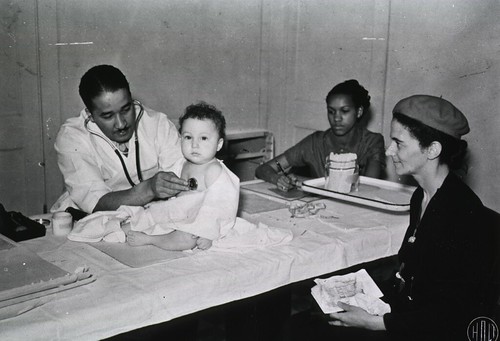
Sisters and brothers, imagine for a moment that you haven’t been feeling too well. You don’t know what exactly is the matter. But something just doesn’t feel right. You’re experiencing symptoms of some sort. Maybe it’s a headache. Or tiredness. Or insomnia. Something like that. Something that’s bearable. But also serious enough to make you worry. So, after suffering in silence for a while, you finally pluck up your courage and go to see a doctor. What can the doctor do for you?

I’m not a doctor. But speaking from a lay person’s perspective, three things come to mind. The first is, of course, diagnosis. The doctor figures out what, if anything, is wrong with you. Then, once this is determined, the doctor goes on to prescribe a course of treatment. And, if the treatment works, a good doctor may also offer you some advice for prevention. For avoiding such illnesses in the future.

Diagnosis, treatment, and prevention. Three important steps by which we are healed. Healed not just of physical ailments. But also spiritual ones as well. Isn’t this what’s happening in our readings today? Isn’t this what the stories of the vineyard are really about? As we’re told in the first reading and the response to the psalm, the vineyard of the Lord is the house of Israel. And something is wrong with the vineyard of the Lord. With God’s people. She’s experiencing certain worrying symptoms. Signs of an illness. What are these signs? And what is God’s diagnosis?

In the first reading, the problem is one of production. The vineyard is producing bad fruit. Despite all the owner’s efforts at cultivating good domesticated grapes, the vineyard produces sour wild grapes instead. In her life as a people, God expects Israel to produce the good domesticated fruit of justice and integrity. Of care and concern for the poor and the weak. The needy and the lonely. To be a society where everyone is adequately provided for. But Israel refuses to be domesticated. She prefers to grow wild. To live by the law of the wild. Survival of the fittest. Everyone looking only to his or her own interests. As a result, Israel produces the tragically sour fruit of bloodshed and distress. Of pain and suffering.

In the gospel, the problem is not just one of production. But also of management. If the vineyard is not producing the good fruit that’s expected of it, it’s because it’s being managed by greedy and dishonest tenants. People who live by the law of the wild. People unwilling to work for another. People who misappropriate the vineyard’s produce. People who scheme to snatch the vineyard itself away from its owner. People willing even to commit murder, just to satisfy their own selfish ambitions.

Sisters and brothers, I’m not sure how you feel when you listen to this diagnosis. But I can’t help wondering if it doesn’t also apply to me. To my life. Both as an individual and as part of a community. A church. A society. A world. Isn’t my life also meant to be a vineyard of the Lord? In everything that I do–at home or at work, in church or in the streets–am I not also supposed to be producing the good fruit of justice and integrity. Of care for the weak and the needy? Doesn’t my life also belong to God?

And yet, how willingly do I submit my life to God’s direction? How often do I prefer instead to run wild? To do only what I want to do? How often do I manage my own life as though it belonged only to me? And not to God? Consciously or unconsciously, how often do I misappropriate the glory and honour that is due to God? Just to puff up my own ego? To feed my own ambition? And doesn’t all this self-centredness cause suffering of some kind? Perhaps, at times, even bloodshed and distress? And isn’t this why, in my more lucid moments, I myself feel like something is wrong, or out of place? Like I need help, and healing?

Which makes it all the more important that we carefully consider the treatment that God prescribes for his problematic vineyard. His wayward people. In the first reading, because the vineyard resists God’s efforts at domesticating it, God decides to abandon it to the wilderness. To tear down the protective wall that God had built around it. To let it face the dangers of living in the wild. The aim is, of course, to lead the vineyard to a change of heart. To entice it to turn back to God. To finally submit itself to God’s management. Not unlike how the prodigal son (Lk 15:11-32) finally decides to return to his father. To live in his father’s house.

A new management is also what Jesus prescribes in the gospel. Since the religious leaders have proven themselves greedy and corrupt, God will replace them with new leaders. People who build their lives not on the ambition of the chief priests and Pharisees. But on the love of Christ. So that the stone rejected by the builders becomes the foundation stone of God’s people.

Sisters and brothers, isn’t this prescription also applicable to us? To me? Perhaps not all the time. But at least sometimes. Sometimes, when I experience trials and difficulties in my life, could it be that God is allowing me to experience the wilderness? But only with the aim of leading me to a change of heart? Could it be that God is inviting me to finally turn over the management of my life into God’s infinitely more capable hands? Into the hands of Christ? The same hands that loved me enough to be nailed to the wood of the Cross? Could it be that it is only when I do this–when I turn over the management of my life to Christ–that I will finally begin to bear the fruit I am meant to bear? Justice and integrity. Healing and wholeness.

But that’s not all, sisters and brothers. Beyond diagnosis and treatment, there is also prevention. Even after being healed, what can I do to avoid illness? To stay healthy? In the second reading, St. Paul suggests three things. The first is prayer. There is no need to worry, Paul writes, but if there is anything you need, pray for it. Much like how going for routine medical check-ups can give us peace of mind. Regular prayer can allow the peace of God to guard our hearts. The second thing is a healthy diet. Not so much what we put into our stomachs, but what we allow to enter our minds and hearts. Fill your minds with everything that is true, everything that is noble, everything that is good and pure… And, finally, the third thing is frequent exercise. Keep doing all the things that you learnt from me, Paul says, and have been taught by me and have heard or seen that I do… Regular prayer, a healthy diet, and frequent exercise. These are St. Paul’s suggestions for remaining in good spiritual shape.

Sisters and brothers, in the book of Exodus (15:26), the people of Israel are assured that God is the the Lord who heals them. What about us? How does God wish to heal us of our ailments? And to make us instruments of healing for others? What can we do to claim this precious healing for ourselves and for our families? For our church and for our world today?