Thursday, February 19, 2015

Beyond Backseat Driving


Chinese New Year

Readings: Numbers 6:22-27; Psalm 89(90) 2-6, 12-14, 26, R: 17(b); James 4:13-15; Matthew 6:31-34
Picture: cc janeyhenning

Sisters and brothers, have you ever been in a car with a backseat driver? You know what a backseat driver is, right? It’s a passenger who insists on telling the actual driver how to drive. Which route to use. How fast to go. Whether or not to overtake… And if the one who is actually driving the car fails to follow the instructions, or is slow to do so, this passenger is likely to scold the poor fellow. See lah! I told you already not to go by this way. But you wouldn’t listen. See, now caught in traffic jam. Next time better let me drive…

And, of course, it’s not just in cars and on the roads that we find backseat drivers. We can find them almost anywhere. In the office or in school. At home or on vacation. Even here in church. We find people who seem to delight in telling other people what to do. People who seem to have a desperate need to arrange every little detail. Not just in their own lives. But also in the lives of everyone else. We have another name for such people, don’t we? We call them control freaks. Actually, sisters and brothers, before you think that I am pointing fingers at others, I must confess that I sometimes find similar tendencies in myself as well. At some level, I too am a backseat driver. I too am a control freak. Which leads me to ask the question why? Why do some of us do this? Why do we feel the need to control everything?

I’m not sure. But I think backseat drivers like me are under a couple of illusions. First, the illusion that we are the ones actually in control of the car. Not the driver. That it is our responsibility to tell the driver what to do. And this first illusion arises from a second, more deeply-rooted, one. The illusion that we must be in control of the car for the journey to go smoothly. Otherwise everything will go haywire. I’m not sure, sisters and brothers. But I sometimes think that we backseat drivers and control freaks act the way we do, because we are deeply insecure. And we compensate for our insecurity by trying to control everything. By acting as though it were possible for us to control everything.

Which is why I think our Mass readings on this first day of the Lunar New Year are very appropriate. As we look forward to the uncertainties that lie ahead. It is tempting for us to fool ourselves into thinking that we are in control. To act as though we have to be in control. But our readings remind us otherwise. First, they tell us who we are. What it really means to be a human being. Notice the images that are used. In the psalm, we are told the same thing that we were reminded of yesterday. Ash Wednesday. That we are dust. And that the time will come when God will turn all of us back into dust. That we are like a dream. Which dissipates as soon as the sleeper awakes. Or like grass which springs up in the morning. But by evening it withers and fades. The second reading even compares us to the mist that is here for a little while and then disappears. Together, these images remind us not just how short our lives are on this earth. But also that we are not in control. No more than the dust and the dream, or the grass and the mist, are in control.

No, sisters and brothers, we are not in control. And we need to avoid acting as though we are. We need to resist two temptations that spring from the illusion of control. The first is arrogance. The tendency to think and to act as though, just because things are going well for me now, they will continue to do so. As long as I remain in control. In control of my career. Or of my family. Or even of my relationship with God. Pope Francis calls this practical relativism. Acting as if God did not exist, making decisions as if the poor did not exist, setting goals as if others did not exist, working as if people who have not received the Gospel did not exist (EG, 80). And yet, as the second reading reminds us, you never know what will happen tomorrow. The second temptation is anxiety. The tendency to worry about what is to come. Perhaps because our experiences of the past have shown us just how uncertain, just how fragile, the future is. And yet no amount of worrying on our part can actually make us more secure.

What are we to do then? If we are neither to be anxious nor arrogant? If we have to stop trying to take control? What we have to do is first to accept that our lives are in the hands of God. That it is God who is in the driver’s seat. That it is God’s love and care for us that keeps us in existence. And to trust that God will continue to care for us. Will never abandon us. Which is not to say that we should not work hard. Of course we should. We should work hard with our hands. But we should also keep our hearts fixed, not on ourselves, but on God. Set your hearts on God’s kingdom first, and on his righteousness, and all these other things will be given to you as well.

And it is precisely with our hearts set on God’s kingdom that we then beg for God’s blessing. Not just so that everything will go smoothly for us materially. Of course, we pray that it will. But, even more important, we also pray that, whatever may happen–in good times or in bad, in sickness or in health, in success or in failure, in poverty or in wealth, in life or in death–whatever may happen, God’s kingdom will come. God’s will may be done. In our lives. And in our world. Isn’t this what we mean–what we should mean–when we wish one another a Happy New Year?

Sisters and brothers, in this Year of the Goat, how shall we allow God to take firmer control of our lives? What must we do to stop being backseat drivers today?

Sunday, February 15, 2015

From Self-Preservation to Mercy


6th Sunday in Ordinary Time (B)


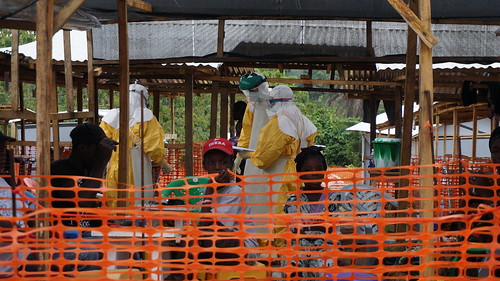
Sisters and brothers, just imagine for a moment that there is a sudden outbreak of a deadly highly contagious disease. A disease that we are still unable to cure. What do you think we should do? How to prevent the disease from spreading? The answer is quite simple, isn’t it? A single word. Quarantine. We quarantine all those who have been infected. We separate them from the rest of us. We isolate them. During the recent Ebola outbreak in west Africa, for example, hundreds of people at a time were quarantined. Cut off from the rest of society. Even as frantic efforts were made to find a cure.

Although it’s a terrible and painful thing to have to leave the infected ones to suffer and die, yet we know that we have little choice. Even if our own relatives and friends are among those infected, we know that we still need to isolate them. And we do this for two main reasons. The first is self-preservation. We have to quarantine the sick to protect the healthy from infection. Of course, we wouldn’t have to do it if we were able to cure the illness. So the second reason is really our own powerlessness. We are forced to quarantine the sick, because we are unable to heal them. Preservation and powerlessness. These are the two main reasons why we isolate the sick.

And these are also the same reasons for what we find in the first reading today. The reading contains advice for dealing with certain infectious skin diseases. Diseases for which the people have no cure. What to do? How to prevent the diseases from spreading? One solution. Quarantine the infected. Isolate them. Separate them from the rest of society. Not only must they live outside the camp. They must constantly warn people to stay away. We can only imagine how terribly painful it must have been to live like that. To suffer not just the physical effects of the illness. But also the emotional and psychological strain of being cut off from family and friends. Of being treated as an outcaste. It must have been a horribly lonely life. But we know the reasons for it. As we said earlier. Preservation and powerlessness. The healthy are powerless against the illness. So, to preserve themselves, they isolate the sick.

Quarantine. This is the usual human response. The response of the powerless. The response of those who wish to preserve themselves. All of which should help us to better appreciate what we find in the gospel. Something very surprising. Something beyond the usual human response. Something that goes against all the precautions prescribed in the first reading. Instead of keeping his distance, a leper dares to kneel before Jesus to beg him for healing. If you want to you can cure me. And, instead of protesting, or scolding the leper, Jesus does the unthinkable. He reaches out and touches him. Of course I want to! Be cured! Why does Jesus do this? What gives him the courage to break the leper’s quarantine? The reasons are exactly the opposite of those for putting the quarantine in place.

In contrast to the people’s helplessness, Jesus demonstrates his power. At his command, the man is cured instantly. In contrast to the people’s desire for self-preservation, Jesus demonstrates his great mercy. Not only does he feel sorry for the suffering leper. Not only does he reach out and touch the man. The gospel also tells us that, as a result of the healing, Jesus could no longer go openly into any town, but had to stay outside in places where nobody lived. In other words, Jesus traded places with the leper. To help the outcaste rejoin society, Jesus himself becomes an outcaste. And all because his concern is not to preserve himself but to show mercy. Like Paul, in the second reading, Jesus is not anxious for his own advantage but for the advantage of everybody else, so that they may be saved.

And it’s important for us to remember that what Jesus does for the leper, Jesus has also done for all of us. For, like the leper, we too are stricken with a disease that we are powerless to cure. The spiritual sickness of sin. Which cuts us off not just from one another. But also, ultimately, from God. From the Author of Life itself. Yet, God chooses not to isolate us. Not to quarantine us. Not to cut us off. But, instead, to show us mercy. By sending Jesus among us, God stretches out his hand of compassion to touch us. To become one like us. To bring us healing.

And as if this were not enough. Not only does Jesus touch us. He also takes the effects of our sins upon himself. He suffers and dies on a cruel cross. On an isolated little hill. Outside the city of Jerusalem. So that we might be saved. By becoming powerless in this way, Jesus actually demonstrates the wonder-working power of God. The healing power of the love and mercy of God. Which cures every incurable illness. Which breaks every painful quarantine. Which reconciles all outcastes to God.

Sisters and brothers, isn’t this the good news we celebrate? That we, who once were spiritual lepers, have now been healed by God? That we, who once were spiritual outcastes, have now been reconciled? And, having received such a great gift, we in our turn are called to do the same for others. Through our Baptism, we receive the mission of Christ. To do for others what has been done for us. To bring back the outcastes from their isolation. To free them from their quarantine.

But who are the lepers of our society today? Who are the people whom we quarantine? Whom we isolate? Whom we separate from ourselves? You may remember, sisters and brothers, what happened during the Pope’s recent visit to the Philippines. The Philippine government moved hundreds of homeless people from the streets of Manila to temporary housing at a luxury resort. Apparently to keep them out of sight. To isolate them. And Manila is not the first to do such a thing. Cities hosting the Olympic games have done it before. Moved the poor away from Olympic venues. So they won’t be seen. Why do we do this? Perhaps for the same reasons that lepers are quarantined. Powerlessness and preservation. Because we believe ourselves powerless to address the illness of poverty. Because we wish to preserve the status quo. To preserve our wealth. To preserve the economic system, in which, according to a recent Oxfam report, the richest 1% will soon own more than half of the world’s wealth.

Sisters and brothers, these days we don’t just quarantine the physically sick. These days, we isolate especially the economically ill. The poor and the homeless. But God calls us to make a different response. A response born not of the concern for self-preservation, but of the desire to show mercy. A response that focuses not on our own powerlessness. But that relies rather upon the power of God’s love for the poor and the sick, the suffering and the sinful. A power that we have experienced for ourselves. A power that we receive at this Eucharist. A power that we are called to exercise for the benefit of the outcastes among us.

Sisters and brothers, what are we doing to reach out to the poor? To break through their cruel quarantine today?

Sunday, February 08, 2015

Healing the Broken


5th Sunday in Ordinary Time (B)

Picture: cc Phil & Pam Gradwell

Sisters and brothers, are you interested in healing? I think many of us are. If I were to organise a talk, for example. Or a seminar. Or a Mass to celebrate a special occasion. What do you think I could do to get more people to come? From experience, one good way is simply to publicise the Mass as a healing Mass. Or to say that the talk or seminar is about healing of some kind. Healing of memories, maybe. Or inner healing… If I were to do that, then many more people will show up. Everyone is interested in healing. Perhaps it’s because we know that we are all sick in some way. We all need to be healed. Not just in body, but also in mind, and in spirit.

And yet, sometimes I can’t help wondering whether we really know what it means to be healed. And what it means to be sick. Haven’t we met people who are sick, but who do not know it? And, on the other hand, don’t we also know of people who think they are physically ill, when they’re actually perfectly fine? What does it really mean to be sick? And what does it mean to be well? What does a truly healthy person look and feel like?

Sisters and brothers, these are some of the important questions that our Mass readings help us to answer today. In the gospel, we’re told that Jesus cured many who were suffering from diseases of one kind or another. He healed them. But in what way were they sick? And in what way did Jesus heal them? Sisters and brothers, when a car stops running the way it’s supposed to, we say that it is broken-down. It needs to be repaired. In the same way, a human body can also break down. Isn’t this what happens to Simon's mother-in-law?

The gospel tells us that she had gone to bed with fever. Her body was broken-down. She couldn’t function as usual. She had to rest. Then we’re told that Jesus took her by the hand and helped her up. And the fever left her. But that’s not all. We’re also told that, after the fever left her, the mother-in-law immediately began to wait on them. She started serving the people around her. Isn’t this the difference between a healthy person and sick one? Not just the absence of fever. But the presence of the ability and willingness to serve others. A working car can run on the road. A broken-down one cannot. Similarly, a healthy person is one who serves. A sick person does not.

But there is more. A human being is more than a car. It can break down not just physically. But also spiritually. So, in the gospel, we’re told that Jesus cast out many devils. He didn’t just heal broken bodies. He mended broken hearts. Broken spirits. But what does it mean to be possessed by a devil? What does it look and feel like to have a broken spirit? The first reading gives us a good example. A helpful illustration.

We are probably all familiar with the story of Job. We know he was a good and righteous person. And yet, God allowed terrible tragedy to befall him. In a very short time, he lost his property, his family, and even his health as well. So that, when we meet him in the first reading, we find him terribly depressed. Possessed, as it were, by a spirit of sadness and despair. His heart is broken. He is unable to find meaning in life. Unable to be happy. Unable to serve others with a joyful heart. For him, life is nothing more than slavery. We are forced to work. For no other reason than to earn money. And we are constantly restless. Never really happy with our current situation. At night, we look forward to sunrise. In the day, we long for evening. Even if we go through the motions of serving others, we find no joy in doing so. Job’s example reminds us that sickness is not just about diseased bodies. It is also about broken spirits. Which prevent us from finding meaning in life. From experiencing joy in service.

In contrast, consider what we find in the second reading. Notice how St. Paul describes his ministry of preaching the gospel. Even though he says that he didn’t choose this work for himself. Even though he calls it a duty and a responsibility that has been placed upon him. Even though he says that he has made himself the slave of everyone. Yet Paul is filled not with a spirit of depression, but of enthusiasm. He speaks of his work as a reward. A sharing in the blessings of the gospel. He is happy to do it. He finds deep meaning in it. It gives him great joy. Isn’t this the difference between the healthy and the sick? Not just the ability to serve others. But also the capacity to find meaning in it. To derive joy from it. Even to be energised by it.

But, if all this is true, then how do we come to be healed in this way? Especially if, like Job, we ourselves have experienced disaster and disappointment. Failure and disillusionment. When people have let us down. Even betrayed us. Or when we ourselves have fallen short of expectation. Or when we find it difficult to find meaning in life. When our faith feels like nothing more than a burdensome struggle. How to mend our broken spirits? How to recover our enthusiasm? How to find healing?

What we need to do is, of course, to turn to Jesus. In the gospel, when Simon and the other disciples went looking for Jesus, they were doing so for the wrong reasons. Impressed by the large number of people flocking to see the Lord, they wanted to convince him to remain where he was. To build up his popularity even more. But that was precisely the wrong reason to stay. The wrong reason to serve. By thinking in this way, the disciples were only setting themselves up for failure and disappointment. They were already showing symptoms of illness. And they did not even know it.

How does Jesus respond? Let us go elsewhere, he tells them, to the neighbouring country towns, so that I can preach there too, because that is why I came. Just when he was beginning to become popular, Jesus decides to leave. And he leaves because that is what he was sent to do. Not to build his own reputation. But to proclaim the Kingdom of God. That is the mission entrusted to him by his Father. And it is by sharing this same mission with his disciples that Jesus begins to heal them of their illness. By driving out their worldly ambitions. So that they might be possessed only by the Spirit of God. The Spirit of Love and Joy. The Spirit of Peace and Patience. The Spirit of Gentleness and Self-Control. The Spirit that empowers and energises us to lay down our lives for others. As Jesus laid down his life for us.

Isn’t this what true healing looks like? Isn’t this is what it means to be a healthy human being?

Sisters and brothers, today the Lord wishes to continue to heal us. You and me. Today, he wishes to continue mending our broken spirits, by sharing his mission with us. How willing are we to receive it? What response shall we make to the Lord today?

Saturday, January 31, 2015

Dealing With Distractions


4th Sunday in Ordinary Time (B)


Sisters and brothers, have you ever tried talking to someone who is distracted? Someone whose attention is drawn to something else? Someone playing a game on her phone, for example. Or watching TV. Or reading a book. What is it like? It can be quite frustrating, right? Frustrating because you can tell that the person is not really listening to you. And what if you have something important to say? What to do? How to get the person to give you her undivided attention?

One way is to say or to do something that the person finds even more attractive than the distraction. So, if you know that the person likes to eat durians, for example. You can buy her some. And, hopefully, the person’s love for durians will be strong enough to make her stop whatever it is she is doing. In other words, one way to capture a distracted person’s attention is to overpower the distraction. To drive it out with something stronger.

But that is not the only way. There is another. We see it happen often enough. When a girl likes a boy, for example. What can she do to get his attention? Without appearing too desperate. Well, I don’t know for sure. But I’ve been told that one thing she can do is to get involved in whatever the boy likes. So if he is interested in soccer, she can learn more about the game. Find out all about the team he likes. His favourite player. The position he plays in. And so on. So that the girl now has something in common with the boy. Can capture the boy’s attention. Not by overpowering his distraction. But by entering into it. By transforming the distraction into an opportunity for connection.

Driving out a distraction. And entering into it. These are two ways we can make a distracted person give us her undivided attention. We find something similar in our Mass readings today. In the gospel, Jesus teaches in a synagogue, where he encounters a man who is very badly distracted. And not just with any ordinary distraction. This man is unable to listen to Jesus, unable to receive the good news that Jesus proclaims, because the man is possessed by something else. An unclean spirit. Which has captured his attention so completely, that his heart is hardened to everything else. Everything good. Everything Godly. What does Jesus do? How does he deal with this terrible distraction? He uses the first method. Speaking with the authority, the attractive force of almighty God, Jesus overpowers the unclean spirit. He drives it out. Freeing the man to finally receive the word of God, and so to enter into the fullness of life.

Sisters and brothers, it is helpful for us to remember this story. For even if we may not be possessed by an unclean spirit in exactly the same way as the man in the synagogue, don’t we sometimes allow ourselves to become very badly distracted? And I don’t mean when we daydream or doze off at Mass. Or during the homily. There are even worse distractions than these. Such as when we are unable to let go of our petty jealousies. Or when we hold onto a grudge against someone for something that the person did or said twenty years ago. Or when we are trapped in troublesome obsessions and addictions. Not just sex and pornography. But also money and success. Or the desperate need to look and to feel good all the time. These things can possess us. Harden our hearts. Prevent us from receiving the good news of God’s love for us in Christ Jesus.

And just as the man in the gospel was able to enter the synagogue even while possessed by an unclean spirit. So too is it possible for us to come regularly to church, and still remain badly distracted by serious sin. What to do? We must allow the Lord to do for us what he did for that man in the gospel. We must allow the Lord to overpower our sin. To drive it out. By confessing our sin. And by praying daily. We must allow the Lord to turn our attention back to him alone. To let him become the main attraction in our life. Leading us into Eternal Life.

But it’s not just sinful and unclean things that distract us. Even good and wholesome things can too. Like the things that St. Paul is writing about in the second reading. Paul wants the Corinthians to give their undivided attention to the Lord. But he worries that they are distracted by the worries and burdens of daily life. By the normal stresses and strains of having to care for a spouse, and of bringing up children. So how does Paul deal with these distractions? Like Jesus in the gospel, he adopts the first method. He tries to overcome them. To drive them out. He suggests that the Corinthians who are unmarried should remain single. So that they can avoid being distracted by the affairs of the world. So that they can focus only on the affairs of the Lord.

Now this is a very drastic solution. If we were to accept it, then all the single people among us will never have the chance to marry and have children! Not an inviting thought. But it’s important to remember that Paul makes this suggestion only because he believes that the end of the world is coming very soon. So there is no point in starting a family, when the time is so short. But if we don’t follow Paul’s suggestion, how are we to deal with the distractions of daily life?

Thankfully, there is another way. A second method. In the first reading, the people of Israel have been finding it difficult to listen to God. God is too holy for them. And their hearts are too distracted by worldly affairs for them to give God their undivided attention. They are torn between God and the world. So they beg Moses not to let them hear again the voice of the Lord, or they shall die. In response, God promises to help them. But not by driving out or overpowering their distractions. Instead of forcing the people to turn away from the world, God promises to send a prophet into the world. To transform worldly affairs from disturbing distractions into opportunities for connection.

This promise, which God makes in the first reading, God fulfils in the gospel. In the person and ministry of Jesus. He is the new Moses. The Prophet who is more than a prophet. In Jesus, God’s Word becomes Flesh. In him, God enters into worldly affairs. Like a girl learning to play soccer to get close to a boy, God gets involved in the messy and worrying business of ordinary human life. To get close to us. In Jesus, God transforms the distracting world into a holy place. A place for meeting God. In Christ, God can now be found, not just in church, but also in our homes, and in our workplaces. In the shopping malls, and on our streets. In good times, and in bad. In people who are happy, and also especially in those who suffer. But we need to develop the eyes to see him. The ears to listen to him. The hearts to give him our undivided attention. And to help others to do the same. Isn’t this why we are here this evening?

Sisters and brothers, this is our call. Not to run away from the world. But to enter into it. And to seek and to find God there. In the ordinary situations and people of everyday life. This is our call. This is our dignity. O that today you would listen to his voice! Harden not your hearts.

Sisters and brothers, how is the Lord helping you to deal with your distractions today?

Saturday, January 24, 2015

Attending to the Alarm


3rd Sunday in Ordinary Time (B)

Picture: cc Jean L.

Sisters and brothers, do you use an alarm clock? I think many of us do. And we know what we use it for. We know why we need it. We need it because we all have a tendency to lose track of time. And the alarm clock helps to remind us what time it is. When we are sleeping, for example, the alarm clock tells us when it is time to wake up. So that we won’t be late for work. Or school. But the alarm is only be effective if we obey it. If we ignore it. Or switch it off and go back to sleep. As sometimes happens to me. Then it will do us no good. We will oversleep. And have to pay the price for it.

But clocks are not the only kind of alarm. There are others. On an MRT train, for example, the announcements also act as a type of alarm. They remind us when it is time to get off. Also, someone recently gave me a small potted plant. Whenever I forget to water it, the leaves of the plant will start to droop. And that is a kind of alarm for me too. Reminding me that the poor plant is thirsty. That it is time to water it. Otherwise it will die.

And it’s not just plants that give off alarms. People do too, don’t they? When a baby cries, for example. It’s a reminder to the parents that it’s time to feed it. Or change it. Or let it go to sleep. And not just babies. Even adults give off alarms too. What does it mean, for example, when a wife starts nagging her husband even more than usual? Or when a husband starts spending more and more time away from home? Or when children suddenly start getting into trouble at school. All these things can be alarms as well. Signs to us that it is time to do something. Or to change whatever it is we have been doing. But, like the alarm clock, these signs will only be effective if we pay attention to them. If we do not ignore them. Otherwise we will continue to lose track of time. And have to pay the price for it.

I mention all this because, in each of our Mass readings today, we also find alarms ringing. In the first reading, God first sounds an alarm in the ear of the prophet Jonah. Telling him that it is time for him to go to the great city of Nineveh to proclaim the word of God. After some resistance, Jonah obeys. He goes to Nineveh and proclaims a message that is itself also an alarm. An urgent reminder to the Ninevites of what time it is. Only forty days more and Nineveh is going to be destroyed. The Ninevites’ own evil behaviour is like a train carrying them to destruction. Jonah reminds them that it is now time for them to get off this train. To turn back to God. Otherwise they will miss the chance to experience God’s mercy. Thankfully, the Ninevites are willing to obey God’s call. They pay close attention to the alarm. They repent. And the city is saved from destruction.

In the gospel, too, we find alarms sounding. John the Baptist gets arrested. And Jesus treats John’s arrest as an alarm. A sign that it is now time for Jesus to begin his public ministry. To start proclaiming the word of God in Galilee. And Jesus obeys. Like Jonah before him, Jesus himself also sounds an alarm. The time has come, he says, and the kingdom of God is close at hand. Repent, and believe the Good News.

But Jesus’ alarm is not just a call to repentance. Not just a reminder to turn away from everything that displeases God. It is also a call to discipleship. An invitation to the people to turn towards Jesus himself. To follow him. To live in the same way that he lives. To value the same things that he values. To put God at the centre of their hearts. To give God the highest priority in their lives. And when they do this, then the people will become fishers of people. Like Jesus, they themselves will become alarms ringing in the ears of others. Proclaiming to them the good news that the time has come for everyone to experience the mercy of God. For everyone to live in the joy of the Lord.

We find the same thing happening in the second reading. We all know the story of St. Paul. We know how, on the road to Damascus, like Jonah, Paul heard God’s alarm. How he repented. Turned his life around. Became not just a follower of Jesus, but also a fisher of people. How he himself became an alarm, reminding everyone what time it is. And this is exactly what Paul is doing in the second reading.

He sounds the alarm for the Corinthians. He reminds them that our time is growing short. That the world as we know it is passing away. The world that revolves around the hunger for fame and fortune. And the thirst for power and pleasure. The world that busies itself with buying and selling. With eating and shopping. With fighting and competing. The time is coming when this world will be no more. What to do then?

For Paul, the answer is simple. What we have to do is to live as though we were already part of another world. A different world. A world that revolves not around ourselves and our own cravings. But around God and God’s priorities. Around God’s love and God’s mercy. A world that is built not on the pleasures that pass too quickly away. Pleasures that we cannot bring along with us when we die. But a world that is built on the joy that will never end. The joy that comes from knowing the love of God shown to us in Christ Jesus our Lord. The same love that we are gathered here, around this altar, to experience and to celebrate.

Sisters and brothers, the alarms that we find in our readings do not ring only for the people who lived a very long time ago. These alarms continue to ring out loudly for us today. For like the Ninevites of Jonah’s day. Like the Galileans of Jesus’ day. And like the Corinthians of Paul’s day. We too live in a world that revolves around things that will very quickly pass away. Things that may make us feel good for a while. But are unable to bring us lasting joy. Things that separate us from God and from one another. Things that we fight each other for. Sometimes even kill one another for. But how many of us are able to remember this? How many of us are able to resist the temptation to live as though this is the only world that we have?

If we do find ourselves in such a situation of forgetfulness. Of losing track of time. Then our readings can help us. They act as an important alarm for us. Reminding us that there is another better way to live. Another better world to live for. A world that Jesus came to proclaim. Through his Life, and Death, and Resurrection. The same world for which he taught us to pray. In the Our Father. Whenever we say, thy kingdom come, thy will be done, on earth as it is in heaven.

Sisters and brothers, the time has already come. This is what we believe. The time has already come, for us to live no longer according to the values of this world. But according to the values of another world. A new world. God’s world. A world of love and mercy. A world of justice and peace. The time has already come. The alarm is already sounding. Loudly and clearly. What must we do, you and I, to obey its call today?