Sunday, April 05, 2015

Through A Glass Darkly


Easter Sunday

Picture: cc Dave

Sisters and brothers, have you ever tried looking through a glass window or door? Like the doors of this church, for example? What do you see? Well, it depends, right? If the space on the other side of the glass is brightly lit, then you see whatever is there. But what if that space is dark? What if it’s much darker than your side of the glass? Well then, very likely, all you’ll see is your own image reflected back at you. Which can be quite frustrating. What do you do then?

Busybody that I am, I sometimes try to take a closer look. I go right up to the glass. Cup my hands around my face. And stare hard into the dark. Hoping to see something. But if even such extraordinary efforts don’t yield any results, I usually give up. I continue on my own merry way. On my side of the glass. Forgetting what might be there on the other side. Until, perhaps, the next time I happen to pass by again.

Looking through a darkened pane of glass. Isn’t this a good image of what life is like? Mostly, we go through our days so busy with our many concerns that we don’t bother to think about whether or not there may be another side to things. A deeper side. A side that can help us make sense of everything else. Of course, there are times when we may be drawn to pause. To take a break from our frantic dashing about. And to try to peer through the glass. To try to penetrate the meaning of life. But it’s not easy. All too often our view is clouded by the burdens and pleasures of daily living. So that all we see is our own reflection. And when that happens, it’s easy just to give up. To stop looking. To continue, merrily or not, on our usual way.

And yet, if we are honest with ourselves, we must admit that the desire to discover what’s on the other side of the glass doesn’t really leave us. It remains. Hidden somewhere at the back of our minds. Buried within the inner recesses of our hearts. Waiting for the right moment to surface. And there are times when this desire grows especially strong. Times of crisis, for example. A career setback, or a failed relationship. A serious illness, or a death in the family... But what can we do then? How are we to see through the darkened glass in a moment of crisis, if we haven’t already learned to do so in a time of relative calm?

Sisters and brothers, I think this is the question that our Mass readings help us to ponder, on this first day of Easter. In the gospel, Mary of Magdala and the other disciples are facing a terrible crisis. The man whom they were following. The one on whom they had pinned all their hopes. Whom they believed to be the Messiah. Has died. And he has died a most brutal death. An utterly disgraceful death. A death that puts into question everything they had believed him to be. What are they to do now? How will they carry on?

Mary does what her heart draws her to do. She goes back to the place where her master’s body was laid. Probably to mourn and to weep. But what she finds there shocks and upsets her. The stone had been moved away. In the darkness of her grief, Mary assumes the worst. They have taken the Lord out of the tomb and we don’t know where they have put him. Wrapped up tightly in the pain of her loss, Mary is unable to penetrate the Mystery of the Empty Tomb. Much like what happens when we try to look through darkened glass, all she sees is her own reflection.

And yet, to her credit, Mary does not give up. Her love is too great. There is no possibility of her simply walking away. She rushes off. But only to call for help. Then she returns to the darkness of the Empty Tomb. And, painful and confusing though it may be, she stubbornly continues to gaze into the depths of the Mystery. She stares into that darkened surface. Hoping that somehow, when the time is right, the light will begin to shine.

And it does. Gradually it does. In the reading, although the Risen Christ is still hidden from view, enough light is already shining for at least one of Mary’s companions to identify the signs of new life. The disciple whom Jesus loved gazes through the darkened glass of the Empty Tomb. And his eyes begin to penetrate the Mystery. He saw and he believed. And not just him. Shortly after this, Mary herself too will see. She too will believe. And life on this side of the glass will never be the same again.

For what the disciples see turns their lives around. Transforms them into the very thing that Peter claims to be in the first reading. No longer grieving orphans and fearful victims. But brave witnesses to the Crucified and Risen One. We have eaten and drunk with him after his resurrection from the dead, Peter exclaims. And he has ordered us to proclaim this to his people.

But that’s not all. The transformation is not just something that happens only once in the past. It is an ongoing process. A continual exercise of looking at things we do not understand. And learning to recognise signs of new life. Isn’t this what brings Peter to the home of Cornelius in the first place? Cornelius, as we may remember, is a gentile. A Roman centurion. Ordinarily, a good Jew would not visit such a person. Considering him unclean. But just before receiving the invitation to Cornelius’ home, Peter had seen a vision. In which the Lord had told him not to call unclean what God had made clean. The vision provides Peter with light to see gentiles like Cornelius with new eyes. So that the same thing that happened to the disciples at the Empty Tomb, now happens to Peter at the home of a believing gentile. He sees and he believes. He hears and he obeys. And a whole family is ushered into the fullness of life.

All of which helps us to better understand what is meant in the second reading, when it tells us to look for the things that are in heaven. To let our thoughts be on heavenly things, not on the things that are on the earth. It is not that we are forbidden to look at or think about whatever we may find in the world. That would be impossible. But we should look at our world always through the darkened glass of faith. Always through the Mystery of the Dying and Rising of the Lord. And we should do this especially with the things that confuse and upset us most. The things that we understand and value least. The various crises that we may encounter in our lives. The different classes of people whom we neglect. Or against whom we may be prejudiced. For here we find the Empty Tombs of our lives. Here are the places where the light of the Crucified and Risen One is waiting to shine. So as to transform us. And, through us, the rest of our waiting world.

Sisters and brothers, today, after 40 penitential days of Lent, we begin 50 joyful days of Easter. 50 days devoted to letting the light of Christ penetrate the darkness of our hearts and our world. 50 days of gazing into Empty Tombs and at believing gentiles. Waiting for the Risen One to enlighten and to transform. To inspire and to empower...

Sisters and brothers, what must you do to continue gazing steadily into the darkened glass today?

Sunday, March 29, 2015

Death As Revelation


Palm Sunday of the Passion of the Lord (B)

Picture: cc Choo Yut Sing

Sisters and brothers, what has this past week been like for you? These last seven days of national mourning, following the passing of the late Mr. Lee Kuan Yew? For me, perhaps more than anything else, it has been a time of revelation. Of uncovering things that I didn’t know before. And not just about the man himself. His extraordinary intelligence. His boundless energy. His steadfast devotion. I think we more or less knew all of that already.

What I’ve found particularly striking about these days is what they have revealed about us. The people of Singapore. I used to think that we cared only about the more mundane and practical things. As well as the more trivial and nonsensical things. I thought that we would bother to queue up only for stuff like primary school places and lottery tickets. Or iPhones and Hello Kitty dolls. But I was wrong. The enormous outpouring of gratitude and grief that we’ve witnessed over these days have proved me wrong. People willing to stand in line for up to 8 hours in the hot sun. Just to pay their last respects. Old people. Sick people. People in wheel chairs. People with babes in arms. People weeping openly, unrestrainedly. People kneeling, and even prostrating themselves, in prayer...

Sisters and brothers, over these last seven days, something that was previously hidden, at least to me, has now been uncovered. The deep respect and admiration that Singaporeans have for their founding father. Mr. Lee’s passing has indeed been a time of revelation.

And if this is true of the death of someone who helped to build a nation only fifty years old. How much more must it be true of the death of Someone who announced the coming of an eternal kingdom? How much more will the dying of Christ, the Son of God, also be for us a time of revelation? Isn’t this what we find in our readings today? As Jesus goes to his Passion, his suffering and death on the Cross reveals hidden things about the people around him. It uncovers the jealousy of Jesus’ opponents. The chief priests and the scribes. Who plotted to have him killed in secret. So as not to cause a disturbance among the people. It lays bare for us the terrible disloyalty of Judas. The close friend. Who broke bread with the Lord. And then betrayed Him with a kiss. It exposes the cowardice of Peter and the other disciples. Who denied and deserted their Master. At the time of his greatest need. As well as of Pontius Pilate. The governor. Who was more anxious to placate the crowd than to save an innocent man.

Thankfully, however, cowardice and deception are not the only things that the Lord’s death uncovers. As Jesus goes to his Passion, there are also those who courageously step forward to show their care and concern. There is the unnamed woman at Bethany, for example. Who lovingly prepared Jesus’ body for burial. There are the other women. The two Marys, Salome and their companions. Who watched his Crucifixion from a distance. And there’s Joseph of Arimathea. Who boldly went to Pilate and asked for his body.

Like the passing of Mr. Lee, the Passion of Christ too is a time of revelation. It reveals something about the people around him. Who they are. What they stand for. And what the Lord’s Passion does for these people, it can also do for us. In this holiest of weeks, as we accompany Jesus on the Way of the Cross, his Passion and Death can reveal to us something of ourselves as well. Of who we are. And what we stand for. This can be a time for the Lord to uncover for us the true extent of our commitment to him. Of the place that he holds in our hearts and in our lives. A time for him to lay bare our generosity and our courage. As well as our cowardice and deception. Not to accuse or to condemn us. But to free and to transform us. To challenge us to do better.

For the dying of Someone great is not just a time of revelation. It is also a time of inspiration. Of being called and empowered to rise above ourselves. To build on foundations already laid for us. Foundations revealed by the Life, Death and Resurrection of Christ. He is the Suffering Servant of the first reading. The One who makes no resistance to those who humiliate and torture him. He is the Humble Slave of the second reading. Who, though equal to God, freely empties himself. Even to the point of accepting death on a Cross. He is the Crucified One of the gospel. Whom, at his death, a soldier identifies as a son of God.

Sisters and brothers, in the days ahead, as we remember the Lord’s sacrifice for our sakes, as we allow his Passion to uncover who we really are, we can also be inspired to follow the Way that he walked. To patiently bear our own crosses. For love of God and neighbour. And to reach out to those who may struggle more painfully to carry theirs. The people around us who suffer and who need our help. People who have less than we do. Both materially and spiritually. Those who need someone to help them with their crosses. As Simon of Cyrene helped Jesus with his.

Sisters and brothers, as we enter this holiest of weeks, what is the Passion and Death of Christ revealing to you about yourself today?

Saturday, March 14, 2015

Between Achievement and Art


4th Sunday in Lent (B)


Sisters and brothers, do you ever think about the things that make you happy? What are they? When do you experience joy? I’m not sure, sisters and brothers. But I tend to think that, especially here in Singapore, many of us associate joy with success. With personal achievement. So I feel happy when I get a promotion, for example. Or receive a pay-rise. Or do well in an examination. Or succeed in getting the person I like to go out with me. In all these situations, I feel happy because I can take pride in my own achievement.

And I experience this kind of joy even when the achievement is not properly mine. I may take pride in the success of my children and grandchildren, for example. Or rejoice when my favourite soccer team wins the championship. Or when my old school has the most number of straight-A students. These are actually the successes of other people. But I’m happy all the same, because I somehow claim the achievements as my own.

All this is fine and good for those of us who happen to be super-achievers. High fliers. Those for whom everything we touch turns to gold. But what if our efforts keep meeting with failure? What if we keep encountering disappointment? One after another? Is it impossible then for us to be happy? When we have nothing to boast about? Are we doomed to be forever depressed?

The answer, of course, is no. No, we are not doomed to depression, just because we encounter failure. Yes, it is still possible to be happy, even in the face of disappointment. And that’s because the joy of achievement is not the only kind of joy. Not even the purest kind. There are other joys. There is, for example, the joy we experience when we see a beautiful sunset. Or when someone does something nice for us. Something that we don’t even deserve. Or the joy that comes from knowing that we are loved and accepted as we are. Even though we fail.

Sisters and brothers, the joy of achievement is not the only kind of joy. And it’s important for us to remember this especially today. As you know, sisters and brothers, the 4th Sunday of Lent is also called Laetare Sunday. From the Latin word that means rejoice! I’m not sure about you, sisters and brothers, but I sometimes find it very puzzling that here, in the middle of Lent, we are invited to rejoice. Halfway through a season in which we do penance for our sins and shortcomings, when we struggle to turn away from our failures and infidelities, what do we really have to be happy about? Nothing really. At least not if we are looking for the happiness that comes from our own successes. But the joy of Lent is not the joy of achievement. The joy of Laetare Sunday is of a different kind. It comes from a source other than ourselves.

Our readings help us to better understand, and to enter more deeply into, this joy. To begin with, the first reading tells the story of the people of Judah, around the time of their Exile in Babylon. It begins as a very tragic tale. A sad sad story of failure and disappointment. Repeatedly the people sinned against God. Kept worshipping false gods. Added infidelity to infidelity. And yet, God remained ever faithful. God never forgot them. Refused to abandon them. Continued to keep them in mind. Even while they were in exile in Babylon. Eventually, God raised up Cyrus king of Persia, who defeated the Babylonians. And allowed the people to finally return to their home. To their own land. To rebuild the Temple. This is the joy that the first reading invites the people to experience. Not the joy that comes from their own achievements. For they have none to boast about. But the joy that comes from the unwavering love and mercy of God.

And what the first reading does for the people of Judah, the second reading and the gospel do for us. For the history of our relationship with God is not much different. Like the people of Judah, we too have sinned and broken faith with God. We too worship false gods. Like money and success. Or popularity and prestige. Or even anger and resentment. Yet God never forgets us. Refuses to abandon us. Just as Cyrus is raised up in the first reading. So too, in the gospel, we are told that the Son of Man must be lifted up. Raised up high upon the Cross. Where he lays down his life for us. Setting us free from our exile in sin.

This, my dear friends, is the true reason for our joy. Not our own achievements. For we have none worth talking about. But the love and mercy shown to us by God in Christ Jesus. As the second reading reminds us, it is by grace that you have been saved, through faith; not by anything of your own, but by a gift from God; not by anything that you have done, so that nobody can claim the credit. We are God’s work of art, created in Christ Jesus to live the good life as from the beginning he had meant us to live it.

Sisters and brothers, the joy that our readings are inviting us to experience is not the joy of achievement. At least not our own achievement. It is, rather, the joy in God’s achievement. The joy of knowing that something marvellous has been done for us. And to us. Without our deserving it. It is the joy of being chosen by God to be God’s special work of art. The joy of being moulded by the hands of God into something beautiful and precious. Beautiful and precious not because we achieve great things. But simply because we are loved by God. Loved even to the extent that Christ would lay down his life for us.

And yet, sisters and brothers, we have to be honest with ourselves. It is not an easy thing for us to enter into this joy. This joy of being God’s artwork. Even though it is offered freely to us. With no strings attached. It is not easy because, more often than not, we keep clinging to our craving for success. We keep focusing only on ourselves. And on our achievements. Just like someone, who fails to rejoice in the beauty of a brilliant sunset, because s/he is too busy fiddling with the cellphone. Or too preoccupied with the business of daily living. We fail to rejoice in God’s love, because we are too busy trying to earn it.

Isn’t this why we continue to require the discipline of the season of Lent? Through prayer, fasting and almsgiving, we allow God to refocus our attention. To help us to let go of our craving for success. Our need to take pride in our achievements. So that we can rejoice in what God has done and continues to do for us. And so that, by entering this joy, we can also begin to usher others into it as well.

Sisters and brothers, today is Laetare Sunday. Today we are invited to rejoice. What must we do, you and I, to deepen our experience of the joy of the Lord, and to share it with others, today?

Sunday, March 01, 2015

Trust Walk

2nd Sunday in Lent (B)
 
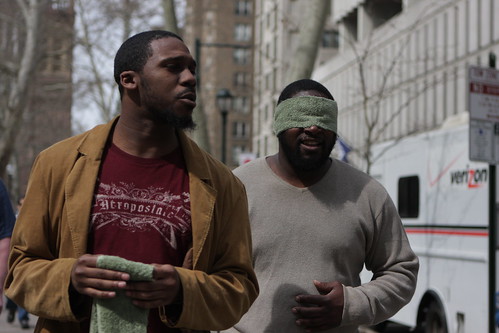
Picture: cc Melody Joy Kramer

Sisters and brothers, have you ever heard of something called a trust walk? Perhaps some of you have done it. It’s a kind of team-building exercise. A group of people is divided into pairs. One person in each pair is then blindfolded. And the other person has to lead the blindfolded person around an obstacle course. After the first person has completed the course, the roles are reversed. What do you think, sisters and brothers? Have you tried this before? Is it something that you’d be willing to do? Would you find it easy? Or difficult? Well it depends, right?

It depends on how much you trust your partner. That’s why it’s called a trust walk. The activity helps to test and to build up trust in the members of the group. So that they can work more effectively together. And, of course, the more dangerous the obstacles, the greater the trust required. If, for example, you knew that you only had to walk around an empty courtyard, then perhaps it wouldn’t matter who was leading you. But if I were to blindfold you and ask you to choose someone to lead you across that dangerous road in front of the church. Who would you choose? You’ll probably choose someone you know very well. Someone you trust. Maybe a relative or a close friend. Someone you know, from experience, to be trustworthy. You wouldn’t choose a stranger. Or, worse still, an enemy. The more dangerous the obstacle, the greater the trust required.

I mention all this because, in each of our Mass readings today, we find people being invited to go on something like a trust walk. In the first reading, God puts Abraham to the test. It’s as though Abraham is asked to enter a dangerous obstacle course blindfolded. But, to see the danger and the blindfold, we must first recall that, earlier in the story, God had promised to make Abraham the father of many nations. And this promise can be fulfilled only through Isaac. Since he is the only son of Abraham and his wife Sarah. But then, in the first reading, God does something that is very difficult to understand. Something that sounds crazy. God tells Abraham to sacrifice Isaac. To kill the one person through whom God’s promise might be fulfilled.

To sacrifice Isaac is to put God’s promise in danger. Without a legitimate son to succeed him, how is Abraham to become the father of many nations? Abraham has no way of knowing the answer to this question. So the call to sacrifice Isaac is really an invitation to step out into the dark. To go on a trust walk. To allow God to lead him through a dangerous obstacle blindfolded. And this is a very difficult thing to do. Yet Abraham obeys. He proves himself willing to do whatever God asks of him. He lets himself be blindfolded. He braves the danger. He crosses the obstacle. He passes the test. How is Abraham able to do this?

The reason is because he already has a very close relationship with God. He knows, from experience, that God can be trusted. And so he is able to put his trust in God even when he is sorely afflicted. Even when he has to pass through great danger. Even when he has to sacrifice something most precious. Without knowing why. And without knowing how God’s promise to him will be fulfilled. In response, God rewards Abraham. God transforms the sacrifice into salvation. God turns the danger into a blessing. I will make your descendants as many as the stars of heaven and the grains of sand on the seashore… All the nations of the earth shall bless themselves by your descendants... Not only will God bless Abraham, God promises also to make him a blessing for others.

In the gospel too, we find people preparing for a trust walk. The reading is taken from the 9th chapter of Mark’s gospel. Earlier, in chapter 8, Jesus had already told his disciples that he would soon have to suffer and die on the cross. And then rise again after three days. At this point in the gospel, Jesus has already started travelling in the direction of great danger. He is walking to Calvary. And he invites his disciples to renounce themselves, to take up their own crosses, and to follow him.

This is, of course, not an easy thing to do. It requires great courage. And deep trust. The disciples need to know that Jesus is actually worthy of their trust. Which is why, in the gospel, Jesus lets three of them experience his Transfiguration. By showing Peter, and James, and John, who he really is. By revealing to them his hidden identity as the glorious Son of God. Jesus is helping them to trust him enough to follow him into the danger of Calvary. He is showing them that he can be relied upon to lead them safely through the obstacle of the Cross.

Which is why, at the end of the experience, God the Father gives them this invitation: This is my Son, the Beloved. Listen to him. The Father calls them to trust in Jesus. To follow him into the darkness of the Cross. This is the true meaning of the Transfiguration. It is meant not just to give the three disciples a good time. But to strengthen their trust. So that they can find the courage to do what Abraham does in the first reading. To continue following Jesus. To continue trusting in God. Even when they are blindfolded. Even when they have to pass through a dangerous obstacle. Without knowing why.

And it’s not just Abraham and Peter. It’s not just James and John. Who are called to do this. Isn’t life itself also very much like a trust walk? Every so often, after a time of relative peace and quiet, we may find our lives turned upside down by one challenging situation or another. Maybe it’s a major illness. Or a death in the family. Or a broken relationship. Or a setback in our career. Or a crisis of faith. An experience that worries our mind. And breaks our heart. Something that leads us to ask the question why? Why me? Why now? Why this? And, all too often, when faced with these experiences, the temptation is for us to think that God has forsaken us. So we too should forsake God.

And yet, our readings remind us that there is another way to look at such situations. That the trials we face may actually be a way in which God is testing us. Strengthening our faith. Building up our trust. Reminding us of what the second reading tells us. That with God on our side who can be against us? That Jesus has not only died for us – he has already risen from the dead, and there at God’s right hand he stands and pleads for us. This is our Transfiguration experience. The same experience that we are celebrating at this Mass. And that we are preparing to celebrate at Easter. By putting ourselves through the discipline of Lent. The glorious feast by which God changes death into new life. Transforms great danger into bountiful blessing. Lent is a time when we allow God to test us. To help us to grow in our knowledge of who God is. So that we can trust God enough to take up our crosses everyday. And to follow him on the road that leads through danger, to true happiness and lasting peace. Not just for us. But also through us, for the rest of our world.

Sisters and brothers, how is God inviting you to take a trust walk with him today?

Saturday, February 21, 2015

From Threat to Transport

1st Sunday in Lent (B)

Picture: cc Jason Jones

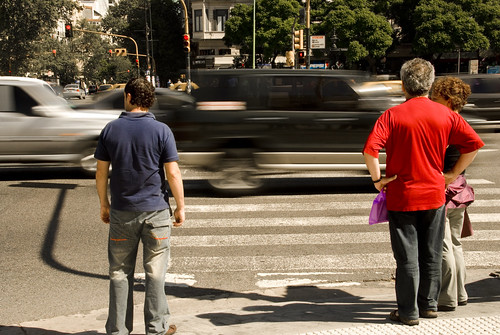
Sisters and brothers, do you know how to transform something dangerous into something useful? Have you ever tried, for example, to cross the road in front of this church? What’s it like? It’s dangerous, right? Dangerous, because the road is very wide. And the traffic moves pretty fast. And there’s also a bend in the road. So the drivers can’t always see you. That road is a dangerous place. But what if you were in a car? Or a van? Well, then the situation changes. In that case, the road becomes more than just a dangerous obstacle. More than just a threat to your safety. With the right vehicle, the road is changed into a means of transport. A way to get you to wherever you need to go.

And the same would be true if the road was replaced by a fast-flowing river. The waters of the river are a dangerous obstacle. A threat to our safety. To swim across the river, we would risk being swept away by the waters. Or attacked by the animals that live in them. But if we were in a boat. Or on a raft. Then the river is transformed. From a place of danger to a means of transport. A way that takes us to our destination.

Sisters and brothers, when we are in the right vehicle, dangerous obstacles become precious means of transport. This is the lesson that our readings teach us on this first Sunday in Lent. In the first reading, Noah has just passed through dangerous waters. Not the waters of a river. But a terrible flood. A flood so severe that it has wiped out every living thing from the face of the earth. Everything, except Noah and those with him. They alone have survived, because they took refuge in the right vehicle. They entered the ark. Not only did the ark protect them. It transformed the dangerous floodwaters into a means of transport. Bringing them safely into the presence of God.

But it wasn’t just the ark that kept Noah safe. It was really the love and mercy of God. The love and mercy that moved God to teach Noah to build the ark. The same love and mercy that now leads God to make a Covenant with Noah and the whole of Creation. Promising that there shall be no flood to destroy the earth again. This Covenant now becomes a new vehicle for Noah, and all that come after him. A vehicle that transforms dangerous obstacles into precious means of transport. All that is needed is for people to remain true to the Covenant. To continue living in the love of God.

In the gospel too, we find someone in a dangerous place. After Jesus had been baptised by John in the Jordan, the Spirit drove him out into the wilderness. Where he was tempted by Satan. But, somehow, Jesus manages to survive the danger. And not only does he survive. We’re told that he was with the wild beasts, and the angels looked after him. The wilderness actually drew Jesus closer to God. And to the creatures of God. How did this happen? Was it not because, like Noah before him, Jesus continued to live in the love of God? Which became a vehicle for him. Transforming the wilderness from a place of danger to a means of transport.

And the wilderness is not the only dangerous place that Jesus enters. There is another. A place called Galilee. We know that Galilee is a dangerous place, because that’s where John the Baptist was arrested. And where he would be put to death. But Galilee is not just a physical location. It is also a spiritual place. The place where Jesus carries out the mission received from his Father. To preach the good news of God’s love for us all. And this is a dangerous thing to do. In carrying out this mission, Jesus will eventually find himself nailed to the wood of a cross.

And yet, for Jesus, Galilee is more than just a dangerous place. It also becomes a precious means of transport. A way to draw closer to God. And this happens because Jesus keeps travelling in the right vehicle. In all that he does, Jesus remains faithful to the love of his Father. And this love transforms the danger and destruction of Good Friday into the glory and resurrection of Easter Sunday. But that’s not all. The good news is that this transformation is not just something that happened to Jesus in the past. It continues to happen to each of us even today.

I’m not sure if you agree with me, sisters and brothers. But our world is a very dangerous place. And I’m not just thinking of those faraway places, like the Middle East and Ukraine, where deadly wars are still being fought. Even here, in relatively peaceful Singapore, the world can be a dangerous place. And not just because it’s possible to get knocked down by a car while crossing the road. Or to suffer a heart-attack while watching TV. Or to crash suddenly into the sea while flying from Surabaya to Singapore.

Our world is dangerous for us, in the same way that the wilderness was dangerous for Jesus. It is a place where we are constantly being tempted. Tempted to stray away from God. Tempted to set our hearts on things less than God. Not just obviously sinful things. But even apparently good things. Beautiful things. Things like a comfortable life and a successful career. There is nothing wrong with such things in themselves, of course. But it is possible to lose ourselves in them. To be so obsessed with working hard to get them. That we lose sight of God. And get swept away by the stresses and strains of daily living. What is more, the world is also dangerous for us the way Galilee was dangerous for Jesus. If we choose to remain true to the mission of Christ. To keep proclaiming the love of God wherever we go. Then it is likely that we will suffer. The world will reject us. We will have to walk the way that Jesus walked. The way of the Cross.

So what are we to do? Should we try to escape from the world? To escape from the wilderness? To escape from Galilee? No. That is not God’s way. That is not Jesus’ way. And that is not our way. The Christian approach to danger is not to avoid it. But to enter into it. Just as God called Noah to enter the waters of the flood. Just as the Spirit drove Jesus out into the wilderness. And then into Galilee. By our baptism, we too are called by God to brave the dangers of our world. So that we can transform it. From a threat to our safety to a means of transport. A way that leads to God. And we can do this only when we travel in the right vehicle. The vehicle of God’s love shown to us in Christ Jesus. The same love that we celebrate at this Mass. The love of the one who has entered heaven and is at God’s right hand. For it is only through him, and with him, and in him, that all our Good Fridays are transformed into Easter Sundays.

And isn’t this why we observe Lent? We enter the wilderness of prayer and fasting and almsgiving. Not to make ourselves suffer. Or to prove ourselves strong. But to take refuge in the vehicle of Christ’s love. Leading us into the presence of God.

Sisters and brothers, even now, God continues to change the dangers of our lives into a means of transport. What must we do to continue taking refuge in God today?