Sunday, March 05, 2017

Of Poisoning & Purification


1st Sunday of Lent (A)

Picture : cc smif

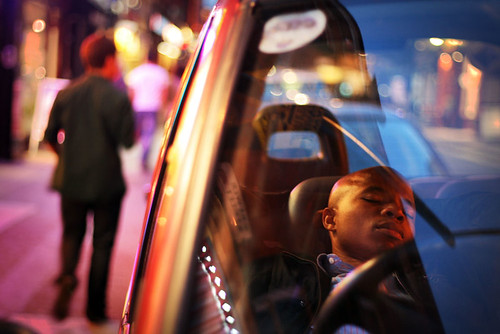
My dear friends, have you ever heard of people who are mysteriously found dead in their cars, with the air conditioner on, and the engine running? Do you know how they are killed? In most cases, these people don’t actually set out to commit suicide. Very likely it all begins with a temptation. A temptation that, I must confess, I myself have felt. Perhaps they are tired. And the weather is hot. So rather than suffer in the heat, they decide to take a nap. While enjoying the cool breeze produced by the car’s AC. But, unfortunately for them, the exhaust fumes must have somehow leaked into the car while they slept. And suffocated them.

And we know how this suffocation takes place. By a colourless, odourless, and tasteless gas called carbon monoxide. As you know, healthy blood contains a protein called haemoglobin. Which allows the blood to carry oxygen throughout the body. Oxygen that the body needs to survive. But once carbon monoxide is inhaled, it poisons the blood by clinging to the haemoglobin. Preventing it from absorbing oxygen. It’s as though the carbon monoxide snatches the breath from the body. Suffocating it. And killing the person.

So this is more or less how those unfortunate people are killed. It involves three steps. First they are tempted by something good. Or apparently better than what nature offers. The cool breeze in the car. Instead of the hot and humid air outdoors. But then, unintentionally, they get poisoned by something else that the car produces: carbon monoxide. And, as a result, they are suffocated to death. Temptation, poisoning and death. Three steps by which they lose their life. Have their breath snatched away from them.

Now, there is, of course, no mention of cars or carbon monoxide in our our readings today. But there is a reference to something that kills people spiritually. Something that the second reading calls sin. Sin entered the world… and through sin death… And, strangely enough, the way in which sin kills people is quite similar to that of carbon monoxide. Isn’t this what we find in the first reading?

Notice how it all begins with a temptation. A temptation not with something bad, but with something apparently good. The woman saw that the tree was good to eat and pleasing to the eye… And not just good in itself. But better than the life that God had already provided for them. And then, once the woman and the man eat of the forbidden fruit. Once they decide to cling to something other than what has already been provided for them. They are poisoned. Outwardly, of course, it may seem as though they are still alive. But, in reality, their disobedience, their sin, suffocates them spiritually. Not unlike how carbon monoxide suffocates us. By clinging to them, and preventing them from enjoying the breath of life that God has already breathed into them. The same breath by which they become living beings.

Temptation, poisoning and death. This is how sin kills us spiritually. Stubbornly clinging to us. Preventing us from enjoying the true life that is God’s precious gift. Thankfully, for those of us who suffer in this way, there is a way out. An antidote. As you may know, the treatment for carbon monoxide poisoning is actually pure oxygen. Which purifies the blood of the poisonous carbon monoxide. Allowing the haemoglobin to recover its ability to carry life giving oxygen to the whole body. In other words, the body is given a new breath of life. Treatment, purification, and life. Three healing steps to reverse the effects of the poison.

But if pure oxygen is the treatment for carbon monoxide, then what is the antidote for sin? We find the answer to this question in the second reading. What reverses the effects of sin is the divine grace, coming through the one man, Jesus Christ. The grace that has come to us as an abundant free gift. And the gospel shows us what it looks like when this divine grace is at work. Specifically, in the example given by Jesus’ own response to temptation.

Notice again how all the temptations he experiences are temptations to apparently good things. He is hungry and needs to eat. Why not turn stones into bread to feed himself? He has come into the world to gather disciples. What could be more effective than a spectacular miracle involving being rescued by angels after plunging from a height? And why not worship the devil, if this can win him all the kingdoms of the world? Isn’t this also what he has come into the world to do? To build a kingdom?

Yet, in every case, Jesus sees through the devil's deception. He refuses to choose to produce something for himself. Contenting himself instead to receive what he needs from his heavenly Father. Insisting on clinging to the breath of life that is the Spirit living and moving in him. The same Spirit that has led him into the wilderness to be tempted. Giving him power to fulfil his mission even in the face of strong opposition. As a result, the devil is defeated, and angels appear and look after him.

In Jesus’ obedience in the face of temptation, we find an awe-inspiring demonstration of the power of the Breath of the Spirit. The Breath of Life. And the good news for us all is that Jesus has already breathed this same Spirit into the world. Especially when he gave his life for us on the Cross. When, after crying out with a loud voice, he breathed his last (Mt 27:50).

All of which might give us a better understanding of what we are doing in this holy season of Lent. Through our lenten discipline of prayer, and fasting, and almsgiving, we are not so much trying to produce something for ourselves. We are not trying to make ourselves holier. Or more pious. Or more spiritually impressive. What we are doing is making time and space for us to inhale more deeply the Breath of Christ. The Breath of the Spirit. The Breath of Life. The same Breath that is for us effective treatment against the poison of sin. Purification from all that clings to us and prevents us from experiencing the love, and joy and peace of God. The fullness of life that is God’s free gift to us and to our world.

My dear sisters and brothers, as we begin this holy season of Lent, how does the Lord wish to save us from carbon monoxide poisoning today?


Sunday, February 26, 2017

Choosing the Right Mattress


8th Sunday in Ordinary Time (A)
(RCIA Rite of Sending)


My dear friends, I hope you don’t mind me asking, but what kind of mattress do you sleep on every night? Do you use a spring mattress? Or a foam mattress? Or do you use no mattress at all? Preferring to sleep on the cold hard floor? And what difference does it make anyway? Some of us may have seen that mattress advertisement in which a father is serving his little boy breakfast. But the poor man is still half-asleep. So, instead of milk, he ends up pouring coffee into his son’s cereal. And no prizes for guessing why the guy is so sleepy in the morning. It’s because he’s using the wrong brand of mattress. He needs to change it to the one that’s being advertised.

It’s an exaggeration, of course. But still, the point is well made. And the point is simply that we need to take care to choose the right kind of mattress on which to sleep every night. We need to choose the kind of mattress that we can trust to give our bodies the rest that they require. Good mattress, restful sleep. Bad mattress, restless nights.

And yet, we also know, sisters and brothers, that it’s not just our bodies that require proper rest. There’s something deep within each one of us that also needs a proper place of rest too. Our Mass readings refer to this inner reality as our soul, or our heart. And just as there are good and bad mattresses for bodies, so too are there good and bad mattresses for hearts and souls as well. Using a good spiritual mattress leads to a restful heart. Using a bad one results in exhausted days and sleepless nights.

Isn’t this what Jesus is teaching us in the gospel? No one can be the slave of two masters. Or, to put it another way, no one can rest his or her heart on two different mattresses at the same time. We have to choose one or the other. And, in the gospel, Jesus offers a very striking contrast between two brands of mattresses: God and money.

What happens when we choose to rest our hearts on money? When our concern goes no deeper than what money can buy? Like food and clothing… Cars and houses… Entertainment and technology… Popularity and success… When we do this, we experience a deep restlessness, which expresses itself in two ways. The first is worry. When we rest our hearts on material things, we somehow always end up worrying about them.

And the really curious thing is that we worry about these things even when we may have more than enough money to buy all of them. Isn’t it true that even the very rich among us worry? Why? I believe this can happen for at least two reasons. The first is that there’s always someone who is richer than us. Someone else who manages to buy things that are newer and shinier, faster and costlier, more stylish and advanced than my own. This, of course, then puts the pressure on me to keep up. To worry about appearances. The second reason is the nature of the market itself. Which keeps coming up with new things for me to buy. Convincing me, through shrewd advertising, that I simply must have them in order to be truly happy.

All of which should help us to better understand what Jesus is actually asking of us when he tells us not to worry. I’m not sure what you think, sisters and brothers. But I find this a very difficult instruction to follow. I’d even go so far as to say that it is, in fact, impossible. It’s impossible for me not to worry about material things. As long as I continue to insist on resting my heart on money. And on the things that money can buy. The only way to stop worrying, the only way to allow my heart to finally enjoy the rest it so desperately needs, is for me to change my mattress. To stop resting my heart on money. And to rest it instead on God alone. In God alone is my soul at rest… Set your hearts on his kingdom first, and on his righteousness, and all these other things will be given you as well.

But that’s not all. Worry is not the only expression of a tired heart. A heart that has chosen to rest on the mattress of money. In the first reading, we find a second sign of restlessness. Not just worry, but also complaint. Here, the people of Israel see that all the material things around them are crumbling. And, having chosen to rest their hearts on them, the people experience a terrible feeling of being abandoned. Forgotten by God. And yet, in the midst of their trial, God reassures them. Even if a woman forgets her baby at the breast… I will never forget you. What God is inviting Israel to do is to keep resting in God. To keep trusting in God’s care and concern for them. Even in suffering.

And this is also what Jesus is inviting us to do in the gospel. This is the only way for us to stop worrying and complaining. We need to trust in God’s care for us. To choose to rest our hearts in God’s love for us. For if God cares even for the birds in the sky and the flowers growing in the fields, will he not much more look after us? We of little faith? To trust in God by remembering how precious we are to him. To rest our hearts in God by seeking his kingdom first. The same kingdom of love and joy and peace that Jesus came to proclaim. At the cost of his own life. What does it look like when people begin to do this?

This is the question that the second reading helps us to answer. What does it look like when someone finally decides to rest his or her heart no longer on money and material things, but on God and the affairs of God instead? When that happens, a radical transformation takes place. A constantly worried and perpetually sleepy shopper of material goods is gradually transformed into a trusted servant, a responsible steward, of the mysteries of God. People must think of us as Christ’s servants, Paul writes, stewards entrusted with the mystery of God. Servants who do their best to be found worthy of God’s trust, by tirelessly proclaiming God’s love.

To change the resting place of our hearts. To trust no longer in money but in God alone. To gradually become ever more worthy of God’s trust in us, by responding generously to the call to proclaim God’s love to the world. This is also the kind of transformation that we have been witnessing in the catechumens and candidates who are gathered here with us at this Mass.

In a few moments, we will be sending them for the Rite of Election, presided by the Archbishop at the Church of St Mary of the Angels next Saturday. And, in sending them, we the parishioners of St. Ignatius Parish are testifying to the transformation that we have seen in them over the past months of the RCIA journey. Since July last year. And even as we testify to their transformation, we are also inspired and challenged by their example to continue submitting ourselves to being transformed as well. From constant worriers to restful hearts. From frantic shoppers to trusted stewards. From worshippers of money to servants of God.

My dear sisters and brothers, baptised and unbaptised alike, on what kind of mattress are you resting your heart today?

Saturday, February 18, 2017

Where Do You Keep Your Valuables?


Saturday in  the 6th Week of Ordinary Time (I)
Profession of Final Vows by Fr. Christopher Wee, SJ
Maranatha Retreat House, Bentong, Pahang, Malaysia

Picture: cc Brook Ward

My dear friends, I hope you don’t mind me asking, but where do you keep your valuables? I mean things like your money, your jewellery, and important documents like the title deeds to your house. Where do you keep all these things? Do you hide them under your mattress? Or in your pillowcase? Or behind the walls of your house? I’m not sure, sisters and brothers, but I suspect that few people actually keep their valuables in their own homes anymore. They prefer instead to surrender them to a bank. They open bank accounts and maintain safe deposit boxes. Why? For the simple reason that they trust the bank to keep their valuables more securely than they themselves can. And how do they know that they can trust the bank? Usually from experience. They have trusted the bank before. And the bank has proven itself trustworthy in the past. (Although, of course, we have to admit that some banks are more trustworthy than others.)

We surrender our valuables to the bank, because we trust it. And we trust it, because our we’ve had positive experiences with it in the past. Experience, trust and surrender… These are the steps by which we safeguard our valuables. And, strange as it may sound, this is also what our Mass readings are speaking to us about today. Except that the readings call it by another name. They call it FAITH.

As you know, at daily Mass this past week, we have been reading from the beginning of the book of Genesis. We have listened to the stories of Adam and Eve. Of Abel and Cain. And of Noah and the Tower of Babel. Today, the first reading from the Letter to the Hebrews reminds us that these are not just random tales of long dead people. No. All these are stories of faith. They show us what faith looks like.

For example, Noah’s faith is seen especially in his obedience to God. Not only does he build an ark exactly according to God’s instructions. He’s willing also to move into the ark together with his entire family. And a whole multitude of animals besides. And he does all this while there is not even a cloud in the sky. No obvious sign of rain. Let alone a great flood. He does all this even when others laugh at him. And call him names. He obeys. He surrenders himself and his whole family to God. Why? Because he believes what God has told him. He trusts that God knows best. That his valuables are most secure when they are surrendered into God’s loving hands. And how does he know this? From prior experience. From his encounters with God in the past. Experience, trust, and surrender. These are the ingredients of faith. This is what faith looks like.

Faith as experience, and trust, and surrender. This is also what we find in the gospel. This is the deeper significance of the Transfiguration. I’m sure none of us will deny that the Transfiguration is a remarkable experience. Jesus brings his three closest friends up a high mountain, where he shows them what he really looks like. He gives Peter, James, and John an awesome vision of his glory as the Only-Begotten-Son-of-God.

But it’s important for us to realise that, on its own, this experience falls short of faith. Seen in isolation, the Transfiguration is nothing more than a feel-good pick-me-up. Not unlike the buzz we may get from a strong cup of coffee. Which quickly passes. Leaving us sleepier than we were before. Or the spiritual high we sometimes feel after an intense retreat. Which eventually fizzles out. Leaving us wondering if the experience was real, or only in our imagination.

The experience of the Transfiguration becomes faith only when we recognise and respond to it for what it really is. First, and above all, an invitation… a call… A call to trust… and to surrender. This is my Son, the Beloved. Listen to him. Listen to him. Obey him. Follow him. And we listen and obey and follow him not by stubbornly seeking to remain on the Mountain of Transfiguration. But by courageously accompanying the Lord down into the Valley of Distress. Along the Way of the Cross. For it is only by enduring the Cross that we come to experience more deeply how truly trustworthy is our God. That even in the face of pain and suffering, of disappointment and discouragement, our God remains ever faithful to us. Bringing us from despair to hope. From darkness to light. From death to new life.

Isn’t this why Jesus warns the three disciples to tell no one what they had seen, until after the Son of Man had risen from the dead? We can only truly appreciate the significance of what happens on the Mount of Transfiguration, let alone to share it with others, when we have first accompanied the Lord down into the depths of the Valley of Distress. When we have first trusted him enough to surrender to him all our joys and sorrows. All our dreams and disappointments. Everything that we hold dear. To entrust our very lives into the warm security of his loving embrace.

All of which may help us to better appreciate what Fr. Chris Wee is about to do later in this celebration. He is about to profess his final vows in the Society of Jesus. As you know, he has actually already made a first profession way back in 1987. And, according to Jesuit practice, that first profession was already a perpetual profession. In making it, he had already bound himself forever. What then is the difference, we may wonder, between that first profession and the one he is about to make today?

I believe there is more than one answer to this question. The first answer is legal. As the Jesuits among us should know quite well, according to Jesuit law, the first profession was binding only on Fr. Chris himself. Then, in a sense, he had freely offered himself to the Society of Jesus. Today, by allowing him to make his final profession, the Society of Jesus, in its turn, binds itself to him. Accepts him completely as one of its own.

However, in addition to this legal difference, I believe there is also a deeper spiritual one. A difference that comes from Fr. Chris having, since the time of his first profession, accompanied Jesus a little further along the Way of the Cross. Descended with our Lord a little lower into the Valley of Distress. And so experienced a little more intimately the trustworthiness of our God. Bringing him joy in sorrow. Assurance in anxiety. New hope in disillusionment. In other words, the difference between the two professions can also be measured in the depth of Fr. Chris’ faith. A faith the implications of which he will soon commit himself again to live for the rest of his life. Continuing the cycle of experience, and trust, and surrender.

So we thank you, Fr. Chris, for giving us the opportunity today to witness and to ponder the inner workings of God’s gift of faith. And we thank you, my dear friends, for being here to support us. And to join us in recognising with ever greater clarity, and responding with ever wider generosity to God’s call to faith. And, most of all, we thank our merciful God for the precious gift of vocation.

My dear sisters and brothers, where are you keeping your valuables today?

Sunday, January 29, 2017

Replacing Loose Connections


4th Sunday in Ordinary Time (A)

Picture: cc Thomas Mathie

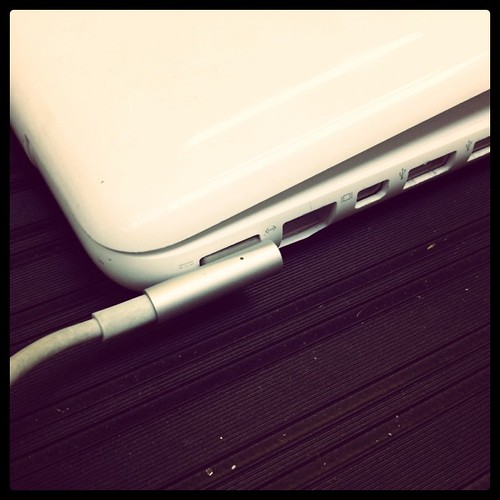
My dear friends, have you ever been troubled by a loose connection? Do you know how frustrating it can be? Some time ago, I had precisely this problem with my laptop computer. Unknown to me, there was a loose connection in the power cable. I would use it to connect the computer to the electrical supply as usual. And everything would be fine for a while. But then, later on, the connection would somehow be lost. Even though the cable was plugged in at both ends. And I would continue working on the computer, blissfully unaware that this had happened. For, as you know, the computer’s built-in battery allows it to continue running, even when disconnected from an external power source.

But the loose connection meant, of course, that the battery was not being charged. Which was very frustrating. Especially when I later needed to rely on battery power, but could not, because the battery had been depleted without me realising it. The problem became irritating enough that I finally decided to replace the faulty cable. To invest in a new one. One that I could truly rely on to power my computer. And to charge my battery.

The frustration caused by a loose connection. By a depleted battery. Sisters and brothers, have you ever experienced something like that before? If you have, you know first hand how important it is to be able to connect your machine to an appropriate power source. And just as computers need to be connected to an electrical power source. So too do we need to be connected to a spiritual power source. One that gives us the energy to live the way human beings are meant to live. In a way that brings true happiness. Not just to us. But to everyone around us as well. Enabling us to live happily and harmoniously with one another. To do this requires a certain type of power. The power to rise above our own often petty concerns and painful insecurities. So as to be able to live in love. To join with others in working for the common good. But from where do we draw this kind of power? What is the source?

The answer is found in those four words that keep getting repeated in the responsorial psalm today: It is the Lord… It is the Lord who keeps faith for ever… It is the Lord who gives sight to the blind… It is the Lord who loves the just… It is the Lord… It is the Lord who sets us free from our preoccupation with ourselves. Who enables us to reach out to those most in need of our attention and our help. It is the Lord who gives us the power to be patient and forgiving. Of others, and also of ourselves. To remain calm and at peace. Even when surrounded by trouble and conflict. Or when experiencing stress and strain. It is the Lord, who is our true spiritual Power Source. It is the Lord…

If this is true, then I am faced with a crucial question: How can I remain connected to the Lord? What do you think, sisters and brothers? How would you answer this question? Speaking for myself, my first response is often to focus on things that I need to do. Or things that I need to avoid doing. For example, I may think that I need to pray more… To complain less… To get more involved in church work… To shop less… To read the Bible more… To gossip less… Things that might be the stuff of resolutions for the new year. Even the lunar new year. 

Which is fine. All of these things are, of course, very important. But doesn’t the doing of these things itself require power too? Especially if I want to do them not just once in a blue moon. Not just for the first two or three months of every year. Or whenever I happen to feel like it. But regularly. Consistently. Perseveringly. To do this requires power. Power to remain faithful to prayer… Power to resist the temptations that so often get the better of me… Power to be patient as much with myself as with others… Power that I am unable to generate on my own. Power that I need to draw from God. My only true Power Source.

Which may make it seem like something of a vicious circle, doesn’t it, my dear friends? On the one hand, I can only live a happy and harmonious life by remaining connected to God. And yet, left on my own, I don’t even have the power to do that. To connect with God. In fact, it is precisely when I mistakenly think that I do. When I forget that it is the Lord alone who is my only reliable Power Source. It is then that I so often become disconnected. And without my even realising it. Disconnected from God by my own pride and presumption. Much like how a computer might suffer from a loose connection. My interior spiritual batteries get depleted. I become more easily irritable and judgmental… Less patient… More vulnerable to temptation… Less inclined to think of the needs of others…

What then can I do? Is there no way out for me? How do I remain connected to God, my One True Power Source? The short answer, my dear friends, is that I cannot. At least not on my own. Left to my own devices, I do not even have what it takes to plug into the Divine Power Supply. I suffer from a perpetual loose connection. And yet, it is precisely when I allow myself to realise this. To acknowledge and to accept my utter helplessness and powerlessness to save myself. It is precisely at that moment that I find the possibility of being saved. For in realising this truth, I am given a chance to replace my faulty power cable. Exchanging prideful reliance on self with humble reliance on God.

Isn’t this what our readings are really about today? Isn’t this what is meant when the first reading tells us to seek integrity? To seek humility? And isn’t this why, in the gospel, Jesus teaches that the poor in spirit are happy? Blessed? Along with all those who have to endure suffering of some kind or other? What is being proposed to us, to you and to me, is not so much a programme of action for us to undertake. But a particular disposition for us to cultivate. The disposition of humility. Of poverty of spirit. An attitude that springs from the deep realisation that I do not have the power to save myself. Let alone others. That, without God, I truly can do nothing. I can’t even connect with the Power Supply.

And yet, quite paradoxically, it is precisely when I allow myself to acknowledge and to accept this, that I am then able to access God’s power. My weakness becomes my new, more reliable, power cable. For the second reading tells us that our merciful God has chosen what is foolish and weak by human reckoning… Those who are nothing at all, to show up those who are everything.

This then is the challenge that our readings place before us today: To remain connected to God, by remaining in touch with our own poverty and powerlessness. Which can be especially difficult for the rich and powerful among us. Those who are accustomed to telling people what to do. To having things go our way. It is difficult for these to rely on God. Yes, difficult… but not impossible. For even the rich and powerful are subject to weakness and powerlessness. We just have to insist on being more honest with ourselves. To dig deeper within. And to allow what we uncover to lead us, in all humility, to God.

My dear friends, loose connections can indeed be very frustrating and draining. For us, and for those around us. How are we being invited to change our faulty power cables today?

Sunday, January 15, 2017

Rehabilitating the Appendix


2nd Sunday in Ordinary Time (A)

Picture: cc AJC1

My dear friends, have you ever felt like an appendix? You know, of course, what an appendix is, right? It’s that slender little tube located at the end of the large intestine. For a long time, it was thought that the appendix serves no useful purpose. That it makes no real contribution to the healthy functioning of the human body. That, in the process of human evolution, it was somehow left behind and forgotten. Indeed, it can even be considered a nuisance. Since it is so prone to getting inflamed. And then having to be surgically removed.

So, my dear friends, have you ever felt like an appendix? Like you serve no real purpose in this world. Like you were useless. A waste of space. I’m not sure. But I suspect that there are more than a few of us who may feel this way from time to time. Whether we may care to admit it or not. Feel as though our existence is pointless. Aimless. Meaningless. Sure, our lives may be filled with many things that we have to do. Some of which may even be very important. And yet, don’t we sometimes still feel strangely empty? Isn’t this why some of us work so hard? Or shop so much? Or check our phones so frequently? Or indulge in various bad habits? Aren’t we somehow trying to avoid the depressing thought that, if we suddenly dropped dead, the world will still go on without us? Sure, there will likely be a wake and a funeral in our honour. Some prayers will be offered for us. Our bosses may need to replace us. Our families and friends may miss us. But, after all is said and done, won’t life go on as it did before? Not unlike how the body goes on even after the appendix is removed? So what’s the point?

My dear friends, have you ever felt like an appendix? I imagine that it can be a terrible thing to feel this way. Perhaps it's what leads some people to think of suicide. After all, if an appendix can be removed without adverse effects, why not a human life? Why not my life? And yet, as some of you may know, more recently, researchers have been saying that the appendix may not be useless after all. It is thought that it could actually perform the important function of storing and preserving helpful bacteria in the body. Bacteria that is essential to the immune system. Bacteria that would otherwise be wiped out should the body suffer a sudden bout of food poisoning, for example. So that it is now believed that people who have had their appendices removed may take a longer time to recover from certain illnesses. In other words, the appendix is in the process of being rehabilitated. Rescued from uselessness.

And what modern researchers are doing for the appendix, our Mass readings can do for us. Especially those of us who sometimes can’t help feeling like an appendix ourselves. For if there is one thing that all our readings have in common, it is that they contain people with a very clear sense of their own function. Their own true purpose. Their own proper role in the greater scheme of things.

In the first reading, the prophet Isaiah reminds the people of Israel of their own high calling. Far from being useless, they are called to be God’s servant. Called to continue praising and glorifying God. By living and worshipping together as a united people in God’s sight. And that’s not all. God tells them that their function goes beyond themselves. It extends even to the far reaches of the world. I will make you the light of the nations so that my salvation may reach the ends of the earth.

We find a similar sense of purpose in the second reading, taken from the beginning of St. Paul’s first letter to the Corinthians. In introducing himself, Paul leaves no doubt as to who he is and what he is called to do. I, Paul, appointed by God to be an apostle. As you know, the word apostle means one who is sent. And not only is Paul sure of his own identity and mission. He is sure also of the identity and mission of the people to whom he is writing. He sends greetings to the church of God in Corinth, to the holy people of Jesus Christ, who are called to take their place among all the saints everywhere…

And just as the second reading describes Paul’s conviction. So too does the gospel present to us with that of John the Baptist. Notice how convinced the Baptist is of Jesus’ identity and mission. Without hesitation, he proclaims Jesus the lamb of God and the Chosen One. And it is not just about Jesus’s purpose and mission that the Baptist is clear. He is clear, first of all, of his own proper role and function. I did not know him myself, he says, and yet it was to reveal him to Israel that I came baptising with water…. Yes, I have seen and I am the witness…

Servant of God and light to the nations… Appointed apostle and holy people… Baptising prophet and outspoken witness… Lamb of God and Chosen One. My dear friends, these descriptions leave no room for doubt that the people in our readings today have a clear sense of who they are and the roles they are meant to play. Isaiah. Paul. John the Baptist. These are people who do not live empty lives. Sure, they do have to face terrible struggles. They may be persecuted and even put to death for their beliefs. But whatever else they may have to suffer, they do not suffer from a sense of uselessness or meaninglessness.

Far from feeling painfully empty, their lives are instead joyfully full. And it is this fullness, this sense of purpose, that is being offered to us today. To you and to me. And the key word is offered. For the sense of purpose enjoyed by the people in our readings today is quite unlike the kind of fullness that our world may encourage us to pursue. The kind of fullness that comes only from our own determination and achievement. Our own desperate attempts to fill our lives with every manner of frantic activity. Yes, even apparently pious activity. The fullness experienced in our readings today is first, and above all, a gift. A gift generously offered. Asking to be humbly received.

Isn’t this why we find words like called and appointed, chosen and sent, appearing so frequently in our readings? Contrary to what we may have been led to believe, the secret to living a truly full and meaningful life comes to us not first of all as a project that we undertake for ourselves. But rather as a gift that we receive from God. The initiative is not ours. But God’s. The same God who called and appointed, chose and sent, first Isaiah, and then John the Baptist. First Jesus, and then Paul. This same God is also calling and choosing, appointing and sending us. You and me. Asking us to let our lives revolve first of all around God’s love for us. A love that has been, and continues to be, offered to us, in the very concrete circumstances of our daily lives. We are called first to experience this love for ourselves. And then to go and share it with the rest of our world. Isn’t this why we gather here at this Mass? To remember and to celebrate this great love. To experience it for ourselves. And then to be sent to proclaim it to others. Go and announce the gospel of the Lord!

My dear friends, a precious gift is even now being offered to us. What must we do to continue humbly receiving it? For ourselves and for those to whom we are sent? What must we do to allow God to continue rehabilitating the appendix of our lives today?