Monday, September 04, 2017

Of Guitar Strings & Tugs-O-War


22nd Sunday in Ordinary Time (A)


My dear friends, have you ever been in a tug-o-war before? You know… two groups of people pulling on a rope with all their might in opposite directions? It can be quite fun. Fun to watch. And fun even to play. Fun, in other words, for the people involved. But have you ever wondered what it might be like for the rope? What it must feel like to be subjected to such great violence? To undergo such terrible tension? It seems quite unfair, doesn’t it? I imagine that it’s not unlike what sometimes happens, in a drama series, to a newly married man (for some reason, it’s usually only the man), whose wife and mother, unfortunately, do not get along. The poor guy is like that rope in a tug-o-war. He experiences tension. Wife pulling him in one direction. Mother pulling him in the other. What to do? How to survive? Seems really unfair. It’s enough to make anyone wonder how and why he got himself into such a fix in the first place.

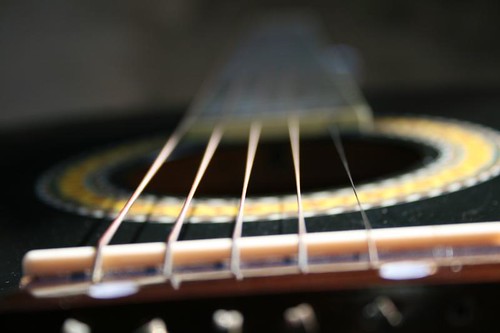
And yet, my dear friends, tension isn’t always bad. Isn’t it true that many beautiful things come to us precisely as a result of tension? Consider a guitar, for example. How does it produce such melodious sounds, if not through tension? Strings of varying thickness, pulled in opposite directions, to varying degrees of tension, allow a musician to extract from them music so beautiful that it can soothe the struggling soul. Much as it may feel uncomfortable, and much as I might wish to avoid it, tension can actually be quite productive. The question, of course, is how to endure tension in such a way that it eventually leads to beauty. This, my dear friends, is the question that I believe our readings help us to ponder today. How to endure tension so that it leads to beauty?

In both the first reading and the gospel, we find people in tense situations. In the first reading, God has given the prophet Jeremiah a message to proclaim. A word that is very difficult for the people to accept. God wants them to submit to their enemies. To suffer defeat. And to be taken into exile. As might be expected, not only do the people reject the message, they also persecute the messenger. They try to silence Jeremiah. Which is why, the prophet complains. The word of the Lord, he says, has meant for me insult, derision, all day long… Should he continue to speak and suffer the painful consequences? Or remain silent in order to save himself? Like the rope in a tug-o-war, Jeremiah experiences tension. He is pulled in opposite directions. He is suspended between speech and silence. Between the proclamation of God’s word and his own desire for self-preservation.

Which is not unlike Peter’s experience in the gospel. Immediately after having been praised by Jesus, in last week’s reading, for correctly identifying the Lord as the Messiah, Peter now finds himself equated with the Devil. All because he tries to discourage Jesus from submitting to his enemies. From undergoing suffering and death. Like Jeremiah, Peter experiences tension. He is suspended between looking at things in God’s way and in his own human fashion. Peter is torn between the call to follow the Lord to his Passion, and Peter’s own desire for self-preservation.

My dear friends, in our Mass readings today, both Jeremiah, the prophet, and Peter, the Lord’s chief apostle, are made to undergo tension. At first glance, it seems quite unfair, doesn’t it? And yet, could it be that God has good reason for allowing this to happen? Could it be that God is inviting them to a closer relationship. Teaching them to endure tension in such a way that it eventually leads to beauty? Isn’t this what Jesus himself does? He goes to Jerusalem, he submits to his Passion and Death, in such a way that God eventually raises him to Life. And isn’t this what Jesus is inviting his disciples to do as well? If anyone wants to be a follower of mine, let him renounce himself and take up his cross and follow me…  Follow me in enduring tension. So that you may follow me into the beauty of my Death and Resurrection. By which I will save the whole world…

All of which is, of course, much easier said than done. We know this. The Cross of Christ is far easier to preach than it is to practice. Easy for me to stand here and tell you that tension can be productive. That it can even lead to beauty. But what do I do when I myself experience it? What do I do when one friend tells me to do one thing, and another tells me the exact opposite? What do I do, when my boss in the office gives me one instruction, and my other boss or bosses at home give me another? What to do, when the world tells me how important it is to make money, and Jesus tells me that human beings do not live on bread alone? How to follow the Lord’s instruction? How to lose my life in order to find it? How to endure tension in such a way that it eventually leads to beauty?

Thankfully, the second reading offers us valuable guidance. Some important steps that we can take. The first step is to think. To think of God’s mercy. Precisely at a time when I may be more inclined to indulge in self-pity. To focus only on my own pain. And perhaps even to blame others for it. The reading invites me to think instead of God’s mercy. God’s love for me. God’s many gifts and blessings showered upon me. Especially in the Dying and Rising of Christ the Son.

And when I do this, when I meditate more deeply on God’s mercy, it’s likely that I will begin to experience what the prophet Jeremiah experiences in the first reading. Perhaps God’s word will start to feel less like a terrible burden, and more like a life-giving flame. Or, as we sang in the response to the psalm, a burning thirst. For you my soul is thirsting, O Lord my God. Perhaps the thoughts of God’s incredible mercy for me will ignite in my heart a fire, will awaken in my body a thirst, that motivates me to do whatever God wants me to do. Giving me strength to take the second step: To worship God with my whole body. With my whole life. To model my behaviour no longer on the world, but instead on Christ. So that I am gradually led to discover and to fulfil God’s will for me even when it is difficult. So that I might allow God to do with me as God does with Christ. To extract from the tense situations of my life beautiful sounds that can soothe, if only in some small way, the sufferings souls around me.

My dear friends, guitar-strings produce music only when they undergo the right tension. What must we do to better allow our merciful God to eventually transform the tensions of our daily lives into lovely instruments of beauty and salvation, for us and for our world, today?

Sunday, August 27, 2017

Key Characteristics


21st Sunday in Ordinary Time (A)

Picture: cc Lubs Mary

My dear friends, how would you feel if I were to ask you whether you know what a key looks like, and how to use it? … Now there was a time in the past, when you might have been expected to take offence. To feel irritated, or even insulted. To think that this is a silly question. For, back then, one key looked pretty much the same as any other. A simple piece of metal with grooves cut into it at one end. And everyone knew what keys looked like and how to use them. But things have since changed, haven’t they? These days, keys come in many different forms. And we may not always know how to use them. Without being told. Well, at least I don’t.

For example, in addition to the old metal keys that we insert into a keyhole, we now also have plastic cards that we tap on or slide across a special electronic surface. Or alphanumeric codes that we type on a keypad. Or our own fingerprints, which some of us use to open our phones. These days, keys come in so many different forms that it’s difficult to say, in advance, what any key might look like. Let alone how it works.

And, if this is true of keys in the literal sense, isn’t it even more true of metaphorical ones? Isn’t it even more difficult to predict what the key to good health looks like? Or the key to a successful career? Or a happy marriage? Here too, keys can come in many different forms. Such as the right diet… or hard work… or good luck… or deep communication… Both literal and metaphorical keys can look very different. Which is why, when a particular type of key is being described, we need to pay close attention. We cannot simply assume that we know what it looks like and how to use it. And this is especially true if the key in question can gain us access to something precious. Something that may well be the deepest desire of our hearts.

Which is precisely what we find in our Mass readings today. As you’ve probably already noticed, both in the first reading and the gospel, keys are being given to certain people. In the first reading, God appoints Eliakim as master of the palace. The gate-keeper for the king. To Eliakim is entrusted the key to the House of David. The authority over the whole palace. The power to decide whom to admit into the presence of the king. In a similar fashion, in the gospel, Jesus entrusts to the apostle Peter a set of keys. Keys that open the gates of not just any earthly palace. But the gates of the kingdom of heaven itself. To Peter is granted the authority to grant access into the very presence of God.

Now, it is possible to interpret this gospel passage to mean simply what it says. That Peter is the appointed gate-keeper of heaven. He’s the one who greets all new arrivals at the pearly gates. With a flowing beard on his face, and an ancient bunch of keys in his hands. Holding the power to decide whether or not to let people in. I’m sure many of us have heard our share of jokes that evoke such an image, haven’t we?

And yet, isn’t it also true that, in this gospel passage, Peter speaks not just for himself, but also as a representative of the other disciples. And the keys that he receives, are meant to be used not just by Peter alone. But also by the others. Not just by the Pope in Rome. But also by every follower of Christ. Even by you and me. To us, collectively, members of the Body of Christ, citizens of the City of God, to us too are entrusted the keys to the kingdom. The awesome power to enter and to admit others into the presence of God. But do we know how to use these keys? Do we even recognise what they look like?

These, I believe, are the crucially important questions that our readings help us to ponder today. In particular, the readings describe at least three important characteristics of Peter’s keys. The first is relationship. The keys to the kingdom are entrusted to Peter as a direct result of his response to Jesus’ question, But you, who do you say I am? A question that is actually an invitation to a deeper, more intimate relationship with the Lord. Entrance to the kingdom depends upon being in right relationship with Jesus. Upon recognising and accepting him, following and imitating him, loving and serving him, as the Christ, the Son of the living God. The Lord and master of my whole life. And just as relationships are built not just on flowery words, but on sincere and consistent actions. So too does entry to the kingdom depend not just on what I say here in church. But also on how I live my life out there in the world.

And yet this kind of intimate relationship, this kind of heartfelt knowledge, this kind of humble acknowledgement of Christ as the centre of my life, does not come to me only through sheer force of will. Not just by tireless effort. Neither by clenched fists, nor gritted teeth. For, as the second reading reminds us,  it is impossible to penetrate God’s motives or understand his methods! On our own we cannot know the mind of the Lord. No one can. No one, that is, except the privileged person to whom God chooses to reveal God’s self.

This is the second characteristic of the keys of the Kingdom: revelation. For isn’t this what Jesus tells Peter? It was not flesh and blood that revealed this to you but my Father in heaven. The knowledge of how to relate with God comes to us in the same way it came to Peter. As a revelation. A precious gift. Something for which we hunger and thirst. Often without even realising it. A gift that God has bestowed on us, and continually offers to us, in Christ Jesus our Lord. A gift that we receive anew every time we gather, as we do now, to celebrate the holy Eucharist.

And when we realise this, when we begin to appreciate how precious a gift we have received in Christ, we experience the third characteristic of the keys of the kingdom. The same thing that Jesus observes when he tells Peter, Simon, son of Jonah, you are a happy man… Rejoicing. Resulting from revelation. Leading to right relationship. These are among the characteristics of the keys to the kingdom. This is what it looks and feels like to enter and to help others enter the presence of God. Rejoicing, revelation, and relationship. Are these not also the very things for which so many people are searching, and often not finding, today? Needing someone to guide them? To help them gain access to the presence of God?

My dear friends, to us have been entrusted the precious keys to the kingdom of heaven. Yes, to you and to me. But how well are we using them to benefit others as well as ourselves? Do we even know what these keys look like in our lives today?

Sunday, July 09, 2017

The Joy of Open Hands (Rerun)


14th Sunday in Ordinary Time

Picture: cc Hamed Saber

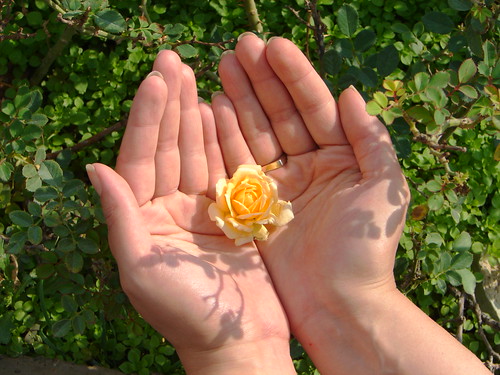
Sisters and brothers, if I may, l’d like to invite you to do something with me right now. At the count of 3, could you please clench your fists as tightly as you can? And then try to notice how you feel. Can you do that? Good. Ready? 1-2-3, clench! And hold... Notice how you feel... Now, again at the count of 3, slowly unclench your fists. And again notice how you feel. Ready? 1-2-3, slowly... open... How do you feel?...

So what is it like, sisters and brothers? What is it like to have your fists clenched? And then to open them up? Any difference? Of course there is, right? It’s the difference between stress and calm. Between exertion and rest. Between anxious grabbing and the willingness to let go…

It’s helpful to keep this contrast in mind, because it can help us appreciate something that our liturgy is inviting us to consider today. Have you noticed what it is? Recall what we asked God to do for us in the opening prayer: Fill your faithful with holy joy, we prayed, for on those you have rescued from slavery to sin you bestow eternal gladness. And, remember also, how the first reading begins. Rejoice heart and soul, daughter of Zion! Shout with gladness, daughter of Jerusalem!… Sisters and brothers, if there is one thing our liturgy is bringing to our attention today, it is joy.

And I think we can all agree that joy is something that everyone desires. Something we all seek. Except that we have different ways of doing it. Do you know what your own approach is? I’m not sure, but I think, for many of us, the way we seek to be happy is the way taught to us by the world. The way of constant effort. Of anxious exertion. The way of the clenched fist and the gritted teeth. We push ourselves hard, and our children as well, in order to to grab as many of life’s pleasures as possible. We believe that the harder we work, the more we grab, the happier we will be.

For many of us, joy is something we have to win for ourselves. Through sheer force of will. Through steely strength of determination. No one makes us happy. We earn it for ourselves. This is what we learn in society. And, more often than not, we assume that this must be true in the spiritual life as well. We think that happiness is only about effort. How to be more joyful? Well, spend more time in prayer. Give more money to the church. Get involved in more ministries in the parish... More time. More money. More effort. Must mean more joy, right? I’m not sure. Perhaps for some this approach does work. But, then again, isn’t it true that, it can also have the opposite effect? Very often, the demand for more only serves to make us more discouraged. More disillusioned. More depressed. Or, what’s worse, it can also make us more arrogant. More self-righteous. More judgmental.

Which is why it’s important for us to pay attention to the different approach presented to us in our readings today. Notice the reason why Zion is asked to rejoice in the first reading. It’s not because of anything she herself has done. Rather, Zion is invited to rejoice in the victory won for her by her king. Her joy is less something she earns than something she receives. Not only that. Notice also the very curious way in which her king is described. He rides not on a war-horse, but a baby donkey. His is an image not of power and might, but of humility and gentleness. Indeed, we may recall that this is the same passage of scripture applied to Jesus, as he enters Jerusalem on Passion Sunday. Quite clearly, the approach to joy being taught to us here is very different from the way of the world. It is less about exertion and grabbing than resting and receiving. Less about the clenched fist than the open hand.

And this is also the same approach that Jesus teaches in the gospel. Notice how the Lord begins by speaking not of our joy, but of God’s. Yes, Father, for this is what it pleased you to do... God rejoices in revealing Himself to mere children. And isn’t this the only true Source of our own joy? If we are able to rejoice, it is only by sharing in the joy of God. By humbly receiving God’s self-communication to us. Especially in the Mystery that we celebrate at this Eucharist. The Mystery of the Dying and Rising of Christ. And isn’t this why the learned and the clever fall short? Not because God doesn’t reveal himself to them. For the psalm tells us that the Lord is good to all, compassionate to all his creatures. If the learned and clever fail to rejoice, it is only because they are too focused on themselves. Too full of their own expertise. Too wrapped up in their own efforts. Too busy clenching their fists.

In contrast, Jesus issues a moving invitation to those who labour and are overburdened. Those of us who find ourselves desperately struggling to meet the demands of the clenched fist. And perhaps often failing. Jesus invites us to come to Him. To approach Him. The victorious yet humble King. The King who is victorious precisely because he is humble. Humble enough even to let Himself be nailed to a cruel cross to set His people free. We are invited to come to Him with open hands. To receive the joy that He has already won for us through His sacrifice. The joy of realising how much God loves us. Cherishes us. Takes pleasure in us. Wants to give us joy. Without our being able to earn it.

And, quite paradoxically, it is when we do this. When we allow God to open our hands and our hearts to receive God’s love. Especially here in the Eucharist. That we find the energy to do what needs to be done. No longer out of an oppressive burden of obligation. But out of a deep and enduring sense of gratitude. As the psalmist says, all your creatures shall thank you, O Lord, and your friends shall repeat their blessing. Isn’t this also what is described in the second reading? When we open ourselves to receive the love of God in Christ, our interests begin to change. We turn away from the unspiritual toward the spiritual. We allow the Spirit of God to make his home in us. To give us the strength to gradually put an end to the misdeeds of the body. To pray more devoutly. To give more wholeheartedly. To serve more selflessly. To experience, even here on earth, something of the joys of heaven.

Sisters and brothers, if I may, I’d just invite you now, once more, to clench your fists... And then to slowly open them up again… Notice how you feel... Two different postures. Two contrasting approaches. One grabbing… The other receiving… One anxious… The other trusting…

Which one will you choose for yourself today?

Sunday, July 02, 2017

Between Money Changer & Marriage Registry


13th Sunday in Ordinary Time (A)

Pictures: cc PJ R & Matt Gibson

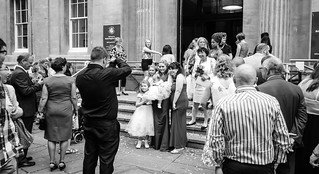
My dear friends, have you ever been to a money changer? Do you know what it’s like? How about the marriage registry? Ever been there? And if I were to ask you the difference between what goes on at each of these places, what would you say? How would you describe it? What is the difference between changing currencies and registering a marriage? 

It’s really quite simple, right? What happens between us and the money changer is basically a transaction. The surrender of one currency in exchange for another. The concern is with the management of assets. Which tends to be an impersonal activity. I don’t even have to do it myself. Someone else could do it for me. As long as I trust that person with my money. Also, what happens at the money changer is typically a one-off deal. I could, of course, keep going back to the same guy. But I don’t have to. Each transaction is complete in itself.

In contrast, the couples at the marriage registry aren’t just performing a transaction. At least we hope not. What they are doing is committing themselves to a new intimate relationship. That of marriage. Which is nothing if not deeply personal. The focus is not so much on the management of their assets as on the investment of their very selves. The donation of their very lives. Which is why what takes place at the registry is significant not just for that one day, important as it may be, but for the whole of the couple’s new life together.

Money changers handle transactions. Marriage registries mediate relationships. Transactions have to do with possessions. Relationships connect persons. The changing of currency can be a one-off affair. But marriages affect one’s whole life. For better or for worse. Till death do us part. It’s helpful and important to keep these differences in mind, as we ponder what our Mass readings are saying to us today. The message is quite clear, isn’t it? Or so it seems. There is an obvious recurring theme. Can you make out what it is?

Yes, it’s hospitality. Welcome. Welcome shown especially to God present in God’s representatives. In the gospel, Jesus tells his apostles, Anyone who welcomes you welcomes me; and those who welcome me welcome the one who sent me. In other words, those who show hospitality to the apostles are being hospitable to Jesus himself. And, in welcoming Jesus, they welcome the heavenly Father who sent him. But that’s not all. We’re also told that this hospitality shown to God actually attracts a reward. Anyone who welcomes a prophet because he is a prophet will have a prophet’s reward…

The first reading gives us a very helpful illustration of what all this looks like. The Shunamite woman welcomes the prophet Elisha precisely because he is a prophet, a man of God. She quite literally makes room for him in her home. As a result, she receives a reward. A great blessing. New life. This time next year, the prophet tells her, you will hold a son in your arms.

The message couldn’t be clearer, right? Show hospitality, and you will receive a reward. Which is an important message for us, especially today. When hospitality often seems to be in such short supply. Even as more and more people experience the dire need for it. The most striking example is, of course, refugees fleeing their war-torn and conflict-ridden countries, in the hope of finding a safe place in which to live.

But it’s not just faraway refugees who need hospitality. It’s also the strangers among us. Not just those who may bear different passports, but also those who think and speak and look different from us. Or even those unnoticed guests who come to our parish for Mass for the first time. And what about the members of our own family? Strange as it may sound, isn’t it true that our own spouses, and parents, and children also often yearn to receive a welcome from us? Dearly wish that we might give them room? Not just room in our homes, but room in our hearts. Room that we offer when we truly listen to what they might have to say. Truly receive and accept them as they are. Could it be that to welcome all these people is also to welcome God? And so to receive a reward?

And yet, much as all this may be true, it still falls short of the deeper message in our readings today. For it is possible to approach hospitality as I would a money changer. As though I were performing a transaction. Seeking to welcome others by focusing only on the transfer of my assets, instead of the investment of my own self. So that hospitality becomes something impersonal. And what’s worse is when I show hospitality to others only in the hope of receiving a reward. Not unlike how I might exchange one currency for another.

Of course, I don’t typically realise that this is what I’m doing at the time. But how do I react when things don’t go well for me despite all my good works? Am I not prone to anger and resentment? To doubt and depression? As though God owes me something for all the good that I have done?

The hospitality that our readings propose is quite different. It’s not a commercial transaction, but a loving relationship. A relationship initiated first of all by God. It is God who has shown hospitality to me. It is God who has made room for me, given me new life, through the dying and rising of Christ the Son. As the second reading reminds us, when we were baptised we went into the tomb with Christ… so that as Christ was raised from the dead… we too might live a new life.

Isn’t this the prophet’s reward? Not a cushy existence in the secular world, but an intimate relationship with God. A new life in God. A secure place in the kingdom of God. A kingdom of love, and justice, and peace, attained not through the exchange of assets, but by the loving self-donation of Christ. So that for us Christians, hospitality is not simply an occasional one-off activity, but a life-long commitment to follow Christ in laying down one’s life in love of others. In love for the Lord. To be hospitable is first to enjoy the hospitality of God in Christ. The same warm welcome that we are gathered here at this Mass to experience and to celebrate. And then to go out and to share it with the many who are in such great need of it.

My dear friends, there is a big difference between the money changer and the marriage registry. Between commercial transactions and true relationship. When we look at our own lives today, which of these do we see?

Sunday, June 25, 2017

A Light in Dark Places...


Solemnity of St Paul the Apostle
Patron of the Pauline Family

Readings: Isaiah 49:3, 5-6; Galatians 1:11-20; Matthew 10:16-22

My dear friends, are you familiar with the Lord of the Rings movies? If you are, you may recall a scene in the first movie, The Fellowship of the Ring, in which the elf queen, Galadriel, presents Frodo, with a precious gift. Do you remember what it is? It’s a glass bottle containing the light of Eärendil, the elves’ most beloved star. May it be a light for you, the queen tells Frodo, as she hands him his gift. May it be a light for you in dark places, when all other lights go out. Later in the story, this gift comes in handy when Frodo is captured by a giant flesh-eating spider, and trapped in the black cave where it lives. The starlight proves useful not just for finding an escape route, but also for warding off the spider’s deadly attacks.

A light in dark places, when all other lights go out. A light that can dispel the deepest darkness, and lead us out, from danger into safety. Isn’t this a gift that we would all dearly love to have? And isn’t this also something like what we find in our Mass readings on this solemn feast of St Paul the Apostle, Patron of the Pauline Family? But in order for us to appreciate the gift, we need first to see the reason why it is given. We need to realise that, in each of our readings today, there is actually a growing danger. An encroaching darkness that manifests itself in different forms.

In the second reading, this darkness threatens the Christians in Galatia. And it comes in the form of a certain teaching that some have been spreading. As you know, Paul writes this letter mainly to refute this teaching, which he considers to be false. It is a dark and distracting cloud that casts a shadow of doubt on the joyful message that the Galatians had received earlier. The gospel that was preached to them by Paul. What is this false teaching? It is the apparently pious yet dangerously insidious insistence that non-Jews must be circumcised in order to become Christian. An insistence that makes salvation depend more on human performance than on the grace of God. Doubt and distraction arising from false teaching. This is the darkness we find in the second reading.

In the first reading, the darkness is even less obvious, mainly because a verse is missing. As you may have noticed, the reading is taken from verses three, five and six of Isaiah forty-nine. Verse four has been left out. Yet, it is in verse four that we find a helpful reminder of the darkness that the other verses are meant to dispel. Here, we find the prophet saying to himself, My toil has been futile, I have exhausted myself for nothing, to no purpose. In the midst of the considerable difficulties and setbacks he has had to face, in carrying out his God-given mission, the prophet has been feeling discouraged and disillusioned. What’s the point of all my hard work?! Nothing seems to change anyway… Discouragement and disillusionment arising from the trials of ministry. The apparent lack of effectiveness and success. This is the darkness we find in the second reading. A darkness that threatens to engulf not so much the people to whom he is sent, but the prophet of God himself.

And whereas the first two readings deal with darkness in the present, the gospel looks to the future. As Jesus gathers his apostles, and prepares to send them out on mission, he warns them of the terrible trials that are to come. The challenges that they can expect to face. And not only the challenges, but also the worry and anxiety that is likely to result from them. Worry about how to speak and what to say when they are dragged before their persecutors. Anxiety over the sight of brother betraying brother, and a father his child… Worry and anxiety for the future. This is the darkness that we find in the gospel.

Doubt and distraction caused by a false teaching focusing only on human performance. Discouragement and disillusionment resulting from a lack of success. Worry and anxiety at one’s own weakness and inadequacy before the considerable challenges that lie in the future. These are the forms that darkness takes in our readings today. Forms that we ourselves may experience from time to time. But if this is the darkness that threatens, then what is the light that dispels it? What is the precious gift that is being offered to us anew?

Don’t you find it striking, my dear friends, that although the forms of darkness may be different, in our readings, the gift given to dispel it is actually essentially the same? In the second reading, Paul counters the darkness of false teaching not just by presenting the light of true teaching. At least not in a purely academic or intellectual way. Instead, Paul takes care to share with the Galatians his own personal experience of meeting and being called and transformed by the Crucified and Risen Christ. God set me apart, Paul insists, from the time when I was in my mother's womb, called me through his grace and chose to reveal his Son in me.

In the first reading too, in his discouragement, the prophet finds new strength and purpose by a renewal of his own God-given calling. And now the Lord has spoken, who formed me in the womb to be his servant… I shall make you a light to the nations so that my salvation may reach the remotest parts of earth. And what do we find in the gospel, if not a description of Jesus calling and sending his apostles. Inviting them not so much to be effective, but to persevere, to stand firm, in living out their call. You will be universally hated on account of my name; but anyone who stands firm to the end will be saved.

And isn’t this an important reminder for us as we celebrate this solemn feast of the patron of the Pauline family? A family that seeks, especially through its use of communications media, to dispel darkness in all its various forms? The darkness of conflict and division, of selfishness and greed, of discouragement and despair, of rumour-mongering and fake news. And perhaps what is most insidious of all, the darkness that springs from the false belief that the salvation of our world depends only on us. On our own performance. On our own strength. On our own success. In the midst of all these forms of darkness, our readings remind us of the truth expressed in those famous words of St Mother Theresa: God has not called me to be successful. He has called me to be faithful.

My dear sisters and brothers of the Pauline family, truly, a precious gift has been given to us. The same gift that Paul and the apostles received. The gift of our call to be faithful disciples and joyful witnesses of Christ. Which is for us a light in dark places, when all other lights go out. What must we do to keep cherishing and sharing this undying light today?