Sunday, October 09, 2022

Pathways of Return


28th Sunday in Ordinary Time (C)


Readings: 2 Kings 5: 14-17; Psalm 97 (98): 1-4; 2 Timothy 2: 8-13; Luke 17: 11-19

Video: YouTube mikedye1


My dear friends, have you ever watched a boomerang flying back to the one who threw it? It can be quite fascinating. But according to Wikipedia, not all boomerangs return when thrown, only those that are designed to do so. So if a boomerang does return, it is acting according to its original design. We might even say that it is coming back to itself.


Can the same also be said about us? We may recall that, in the Parable of the Prodigal Son, found in Luke 15, it is when the younger son came to himself that he also finally returns to his father (Lk 15:17 NRSV). So to truly find and come back to ourselves is also to return to our heavenly Father. The prodigal does this through repentance. In today’s scriptures, we see people doing it in other ways.


Like boomerangs, both the Syrian in the first reading, and the Samaritan in the gospel, return to the one who cured them of leprosy. But they do this not so much to repent, as to say thank you. And it’s important that we carefully ponder their actions, to realise to whom they are actually returning.


The first reading ends with Naaman expressing a solemn commitment to worship no other god except the Lord. Likewise, the Samaritan turned back praising God at the top of his voice and threw himself at the feet of Jesus in a sincere expression of worship. All of which clearly indicate to us that both of them believed they were returning not just to any earthly healer, but to God. As a result, not only were they cured of their ailments, they also came back to themselves. By returning to God in thanksgiving, they were able to claim the salvation that the Lord has shown to the nations.


And gratitude isn't the only other way to make a return. When Elisha refuses to claim credit for Naaman’s healing, when he declines to accept a present for it, isn’t he returning all glory and praise to God instead? And when, in the second reading, Paul bravely bears his own hardships, even to being chained like a criminal, isn’t he remaining true to himself by returning all glory and praise to the Crucified and Risen One, who had sent him out on mission, and whose example he is following?


So not just repentance for mistakes made, but also gratitude for gifts received, gratuity in service rendered, and generosity in enduring trials for the sake of the Good News. These are the paths taken by the people in our readings to return to God. Gratitude, gratuity and generosity. These narrow and rocky trails present a sharp contrast to the broad and smooth expressways of cutthroat competition, relentless profit-making and anxious self-gratification to which many of us are drawn by default, even as we keep yearning and searching for that authenticity and peace that often seems to remain stubbornly and frustratingly just out of our reach.


Sisters and brothers, with all due respect to Wikipedia, do you know what some people call a boomerang that does not return? A stick. What can we do to help one another become more of a boomerang and less of a stick today?

Sunday, October 02, 2022

Between A Rock & A Receptive Space


27th Sunday in Ordinary Time (C)

Readings: Habakkuk 1: 2-3, 2:2-4; Psalm 94 (95): 1-2, 6-9; 2 Timothy 1: 6-8, 13-14; Luke 17: 5-10

Picture: Wikipedia


My dear friends, if you had to move a mountain, which would you need more, something hard or something soft? Some of us may remember that classic Chinese story about the fool who moved a mountain (愚公移山). One day, an old man, living at the foot of a mountain, decides that it’s too much of an obstacle, and resolves to remove it. So he mobilises his whole family, and sets to work. His neighbours laugh at him for attempting the impossible at an advanced age. But he replies that, even if he dies before completing the project, his family will persevere and get it done. Clearly, what the story values is hardness. Not just the hardness of shovels and pickaxes, but that of firm resolve and persistent effort.


In our scriptures too, we find obstacles that require moving, both external and internal. The first reading speaks of oppression and injustice, tyranny, outrage and violence… Strong words that well describe the external realities we find in our world today. The obstacle in the gospel, on the other hand, is more of an interior one. For what prompts the dialogue in the reading is the Lord’s command in the previous verse, where he says that, if the same person sins against you seven times a day, and turns back to you seven times and says, “I repent”, you must forgive’ (Lk 17:4 NRSV). We must let go of our grudges, and forgive.


And whether the task is to remove the mountain of injustice out in the world, or to uproot the mulberry tree of resentment deep within my heart, the scriptures invite us to rely on the same effective tool: faith. But what does authentic Christian faith look and feel like? How does it work? I’m not sure, but I suspect that, for a good number of us, faith works like the old man in that Chinese story. It moves mountains only through the hardness of my own firm resolve and persistent effort. But what if my resolve and efforts are just not hard enough?


Interestingly, when our readings speak of hardness, it’s only in reference to the power of God. Come, ring out our joy to the Lord; hail the rock who saves us… In contrast, what God asks of us is more of a softening, a greater receptivity. O that today you would listen to his voice! ‘Harden not your hearts.’ So, in the first reading, faced with a mountain of injustice, the helpless prophet is asked to wait patiently and faithfully, until he receives a new vision. Also, in the gospel, Jesus speaks of the need to adopt the humble disposition of a slave, ever ready to receive the master’s further instructions. And, in the second reading, although Paul speaks of a Spirit of power, and love, and self-control, this comes not as the result of one’s own hard work, but only as a gift from God in Christ Jesus. A gift that brings both the clarity to know what to do, as well as the courage and conviction to do it. Even to bear hardships for the Good News, relying on the power of God. 


Sisters and brothers, although we may be hemmed in by mountains of various kinds, both external and internal, we believe that God continues to save us in Christ. What must we do to allow God to soften our hearts, so that we might be more receptive to the power of his love and mercy today?

Sunday, September 25, 2022

Between the Fiddle & the Fire


26th Sunday in Ordinary Time (C)
(World Day of Migrants & Refugees)


Readings: Amos 6: 1, 4-7; Psalm 145 (146): 7-10; 1 Timothy 6: 11-16; Luke 16: 19-31

Picture: cc paurian on Flickr


My dear friends, what do you think? Is there anything wrong with playing the violin? Of course not, right? And yet, haven’t we heard the phrase, to fiddle while Rome burns? It means to do something relatively trivial or irresponsible in the midst of a crisis or an emergency. On its own, fiddling is not a sin. But to do it when I should really be helping to put out a raging fire must surely be wrong, if not possibly a sign of insanity.


To fiddle while Rome burns. This is also the sinful tendency highlighted in both the first reading and the gospel. And I have to confess that I say this with a certain tremor in my heart, because I find this tendency in myself as well. The tendency to be so absorbed in seeking, securing and savouring my own comfort, success and enjoyment – including that of my family, my community and country – that I become oblivious to the suffering of many others around me. The readings speak of sprawling on cosy beds, dressing in fine clothes, feasting on sumptuous foods, even inventing musical instruments, without caring about the ruin of Joseph, or the misery of poor Lazarus. Fiddling while Rome burns.


And isn’t it truly sobering to consider how easy it is to fall into this sin today? Continually, we receive news from around the world of people suffering terribly from the effects of climate-change, of economic disparity, of war and conflict. Effects which, I’m told, my own lifestyle somehow contributes to exacerbating, even if only in small ways. Surely, it can’t be right for me to focus only on enjoying my own life, without somehow attending to all this suffering.


What then am I to do? The scriptures offer not so much a prescription of solutions as a process of growth. A process that begins with what the rich man was hoping to do for his brothers, after his death. He wanted to help them repent. To turn their apathy into compassion. Beginning perhaps with a tremor in the heart. So that they might be more receptive to the voice of the Lord, and the cries of those who suffer, including the migrants and refugees we especially remember today. For the Lord protects the stranger… upholds the widow and orphan but thwarts the path of the wicked.


And that’s not all. Beyond repentance and receptivity, there is yet another step in the process. We find it in the second reading, where Paul reminds Timothy of his God-given duty. A duty we all share, by virtue of our baptism. The duty to fight the good fight of faith. To engage in an ongoing struggle, first against my own selfish and narcissistic tendencies, and then to bravely bear witness to the truth in the world, as Jesus did before Pontius Pilate. To share in the Cross of Christ, so as to share in his Resurrection, giving glory and praise to our God… Repentance, receptivity and struggle. This is the pilgrim journey that the scriptures mark out for us.


Sisters and brothers, amid the fires engulfing our world, what must we do to help one another focus less on our fiddles, so as to walk this path together more resolutely today?

Sunday, September 04, 2022

Letting Go

23rd Sunday in Ordinary Time (C)


Readings: Wisdom 9:13-18; Psalm 89 (90): 3-6,12-14,17; Philemon 9-10,12-17; Luke 14:25-33

Picture: Photo by Seth Doyle on Unsplash


My dear friends, do you remember when you first learned how to swim? What did you find most challenging? For me, it’s learning how to float. Using my arms and legs to propel myself through the water is easy enough, because I remain in control. But floating requires letting go, and there's something inside me that resists that. Yet, without knowing how to float, I move through the water only with much tension and anxiety.


I believe this anxiety, this need to be in control, is also what our scriptures help us to ponder today. The first reading talks about how difficult it is for us humans to know the intentions of God…. (For the) reasonings of mortals are unsure and our intentions unstable. Isn’t this instability of intention due, at least in part, to my own anxious need for control? Which affects not just how I relate with God, but also with things and people. At home, at work, and even at play. Whether I realise it or not, when I seek to control everything and everyone in my life–even those I may profess to love very much–I end up treating them like my personal property. As a result, I turn them into obstacles that keep me from drawing close to God.


Isn’t this is why Jesus says that I cannot become his disciple without first hating my father, mother, wife, children, brothers, sisters, and even my own life as well? Perhaps what needs to be hated, or set aside, is not the people themselves, but my need to control them, to treat them as mine. For none of us can be a disciple unless we give up all our possessions.


But if it is really so difficult, how does one learn to let go? The readings offer at least three insights. The first is that it’s helpful to have a companion and guide. Which is the role that Paul plays in the second reading. Someone who, whenever I may find myself stuck in my own anxiety, gently nudges me to contemplate a fresh perspective. Reminding me to consider that, in God’s eyes, a thousand years are like yesterday, come and gone, no more than a watch in the night. Inviting me to pray for the grace to know the shortness of my life, that I may gain wisdom of heart.


Also, in addition to companionship and contemplation, a third insight is the usefulness of a crisis, such as the one faced by Philemon in the second reading. He has been separated from his slave, Onesimus. And, like someone teaching another to float in deep water, Paul shrewdly makes use of this crisis to challenge Philemon to let go. To surrender his ownership of Onesimus, and to treat him as a brother-in-the Lord, instead of just another piece of property.


Companionship, contemplation and crisis. Aren’t these insights particularly relevant for us, who live in such anxiety-provoking times? They offer us a path by which we may be set free. The better to reach out and to connect with others, with our world, and with God, in humility, mercy, and love.


Sisters and brothers, even as we may find ourselves immersed in deep and troubled waters, how might we help one another float more freely in God’s tender embrace today?

Sunday, August 21, 2022

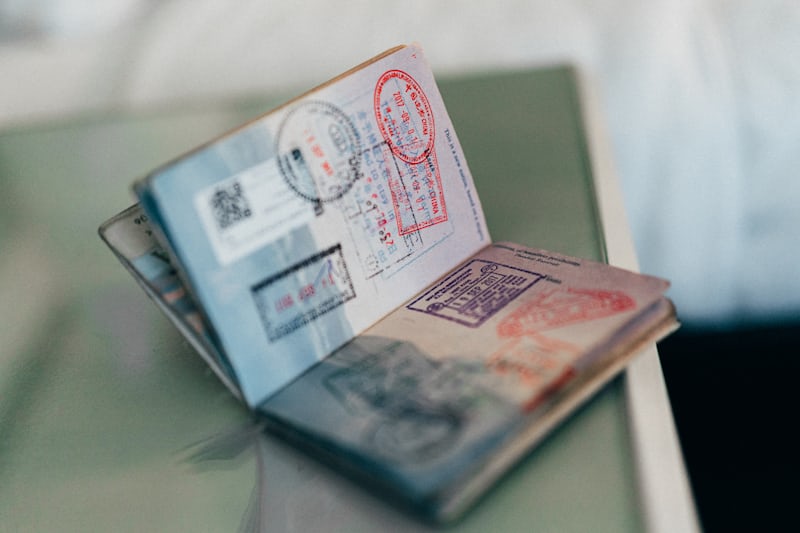
Passport Renewal


21st Sunday in Ordinary Time (C)


Readings: Isaiah 66:18-21; Psalm 116 (117); Hebrews 12:5-7, 11-13; Luke 13:22-30

Picture: Photo by ConvertKit on Unsplash


My dear friends, do you need to renew your passport? As you know, it was announced just a few days ago that those whose passports are valid for only six months or less should apply for a new one now, if they wish to travel in December… We all know that a valid passport is crucial, not only for travel abroad, but also in order to return home. For a passport is what gains us recognition and access.


And isn’t the failure to gain recognition and access precisely the problem in the gospel? Jesus tells us to enter by the narrow door. For once the door is locked, you may find yourself knocking, but the master of the house will say (and he says it twice), I do not know where you come from. It’s as though the Lord is reminding us to renew our passports, so that we may be recognised and granted entry into God’s kingdom. How do we do this? What does it mean to enter by the narrow door?


It’s important to remember that, if the door is narrow, it’s not because those wishing to enter are too many, or the master too stingy. In the first reading, the Lord is so generous that passports are granted freely and widely, not just to the people of Israel, but also to everyone else. I am coming, the Lord says, to gather the nations of every language…. I will give them a sign and send (them) to the nations.


We Christians believe that this sign, this door, this God-granted passport is none other than Jesus himself. Who tells us in John’s gospel, I am the gate. Whoever enters by me will be saved (10:9). Isn’t this why the door is narrow? It’s narrow because, to enter it, I have to walk the way Jesus walked, the way of humility and loving service, the Way of the Cross.


Unlike official travel documents, the passport that gains me entry into heaven is not printed on paper, nor can it be carried in my pocket or purse. No, the passport into heaven consists in a life moulded into the shape of Christ’s, and a heart made tender, like the one that was pierced through for our faults, and crushed for our sins.


And how is this moulding of life, this tenderising of the heart accomplished, if not by the method described in the second reading. Suffering, we’re told, is part of (our) training; God is treating you as his sons. Suffering, borne patiently, humbly and hopefully, in union with the crucified Christ, bears fruit in peace and goodness. Precious gifts that we can share with those around us who may be suffering even more. Such as those whom the pandemic has left much lonelier and more vulnerable, or those most affected by rising costs of living. 


Sisters and brothers, even as some of us may be rushing to obtain a new travel document, in order to enjoy a brief vacation overseas, what steps should we be taking to help one another ensure that our heavenly passports remain valid for entry into our eternal home?