Sunday, April 16, 2023

From Liturgy to Life

2nd Sunday of Easter

(Sunday of Divine Mercy)


Readings: Acts 2: 42-47; Psalm 117 (118): 2-4, 13-15, 22-24; 1 Peter 1: 3-9; John 20: 19-31

Picture: By Brandon on Unsplash


My dear friends, do you eat salmon? Do you recall how they reproduce? As you know, they undertake something called a salmon run. An annual migration, in which the salmon make an arduous journey upstream, from the deep oceans where they live back to the shallow creeks in which they were born. Although the vast majority do not survive the trip, it results in new life for the species. Perhaps we don’t think of it this way but, at this time each year, don’t we Christians undergo sort of a liturgical salmon run? By enduring the rigours of forty days of Lent, we return to the spiritual birthplaces of our faith, where we spend a further fifty days of Easter joyfully savouring the mysteries through which we receive new life.


Returning liturgically to the birthplaces of our faith. Isn’t this what each of our readings help us to do today? In the gospel, after having been scattered when Jesus was arrested, the disciples fearfully huddle together behind closed doors. The trauma of their Lord’s Passion has not only dashed their dreams and broken their hearts, it has also severely shaken their faith. Indeed, scholars say they remain in the darkness of unfaith. It is into this gloomy, anxious, confining space, that the Crucified and Risen One appears. By offering a greeting, he restores peace. By baring his scars, he ignites joy. By sharing his mission and Spirit, he bestows fresh purpose, along with the power needed to fulfil it. By making his presence keenly felt, the Lord rekindles faith. Even returning a week later, to do the same for the one who was absent.


In the second reading, St Peter reminds the early Christian communities that what was done for the first disciples has also been done for them. Through the great mercy of the Father, they too have been given new birth as God’s sons and daughters. They too have received a sure hope in future glory. They too experience great joy despite having to endure all sorts of trials for their faith. They too firmly believe that Jesus is Lord. Except that, unlike the first disciples, their faith doesn’t come from actually having seen Jesus in person. Rather, their encounter with the Crucified and Risen One is through the life of his Body, the Church.


A Body that expresses its faith not just liturgically, but also in actuality. Not just in prayer, but also in life. A Church that doesn’t just enjoy and hoard the many gifts it has received, but also courageously and generously lays down its own life, so that others too might live. Isn’t this the experience of the Jerusalem community in the first reading? Through its brave witness of life, day by day, the Lord added to their community the number of those destined to be saved. And shouldn’t the same be said of us as well? Aren’t we part of Christ’s Body? Gathered not just to keep swimming complacently in the vast ocean of God’s mercy, but also to somehow lay down our own lives, so that others too might live.


Sisters and brothers, as we celebrate another Sunday of Divine Mercy, how might the Crucified and Risen One be drawing and empowering us to make a salmon run not just liturgically, but also in actuality today?

Sunday, April 09, 2023

Between Celebrity & Art

Easter Sunday of the Resurrection of the Lord


Readings: Acts 10: 34, 37-43; Psalm 117 (118): 1-2, 16-17, 22-23; Colossians 3: 1-4; John 20: 1-9

Picture: Amber Kipp on Unsplash


My dear friends, if given a choice, which would you rather be, a celebrity or an artist? Celebrity is just another word for fame. Which is why today, through the power of social media, even a cute cat can quickly become a celebrity. On the other hand, although some artists may be famous, it is said that what makes a work of art is not so much its popularity, as its ability to mediate encounters with truth. For instance, we may think of how a piece of music, or a good movie can move us. Whereas celebrity is defined by fame, art is related to truth.


I mention this because, judging from the first reading, already in New Testament times, Jesus was actually quite famous. Such that, even when speaking to a Roman centurion, in the coastal town of Caesarea, Peter can confidently assume that he must have heard… about Jesus. And yet, on its own, the Lord’s celebrity isn’t enough to satisfy the hungry heart. If it were, Cornelius wouldn’t need to send messengers to fetch Peter from Joppa, a journey taking four days, round trip.


Nor would the disciples in the gospel be running around so frantically. Of course, grief is probably what drives Mary, and Peter, and the disciple Jesus loved. But we need to consider the nature of their loss. To remember that, for them, the crucifixion of Jesus didn’t just occasion the death of a loved one. They were his closest followers. They had staked their whole lives on what he taught. And he had claimed equality with God. Yet the scriptures call accursed anyone who hangs on a tree (cf Dt 21:23). More than any ordinary grief, what the disciples are experiencing is a profound crisis of truth and meaning. The kind of thing that drives some people to suicide, or to addictions and obsessions that are simply more prolonged forms of suicide.


Which is why the gospel account is so significant. Although the Risen Christ still hasn’t shown himself, already at his empty tomb the disciples encounter Truth with a capital T. Truth found in the divine work of art that is the life of Christ. Who, despite facing stiff opposition, had shown the depth of his love by going about doing good and curing all who had fallen into the power of the devil. And even after they had killed him, the Lord’s love proved stronger than death. Truth more enduring than propaganda. Such that even for the disciples to linger at the painful place where his body had been laid is enough to restore in them the light of faith. And to bestow on them power to become what Peter becomes for Cornelius and his household: courageous witnesses to Truth.


A people whose very life becomes God’s work of art. The kind of life described in the second reading. Not the attention-craving existence of the rich and famous. But the self-emptying life hidden with Christ in God. A life that often seems foolish by worldly standards. Yet its wisdom will be made manifest when Christ is revealed in all his glory.


Sisters and brothers, our world has no shortage of celebrities. What it needs are more witnesses to Truth. How might we allow God to mould us into better artists this Easter?

Sunday, April 02, 2023

Stirred & Shaken


Palm Sunday of the Passion of the Lord (A)


Readings: Matthew 21: 1-11; Isaiah 50: 4-7; Psalm 21 (22): 8-9, 17-20, 23-24; Philippians 2: 6-11; Matthew 26: 14-27: 66

Pictures: By Alex Boyd & Kike Salazar N on Unsplash


[At the Entrance:] My dear friends, did you use a teaspoon this morning? We often use one to mix ourselves a drink, to stir a liquid into which we wish to add something else. As we begin this most holy week of the Church’s year, the gospel offers us a similar image. It tells us that upon the Lord’s entrance into Jerusalem, the whole city was stirred. Somehow the sight of the Lord, coming as a triumphant king, yet riding on a lowly donkey, agitates everyone. Prompting them to ponder the question, who is this? Inviting them to let the answer penetrate and transform the busy beverage of their daily lives. As we raise our palms, ponder our scriptures, and perform the prescribed rituals at this Mass, let us also allow ourselves to be stirred by these questions: Who really is Jesus… to me? Where is he going, and what is he suffering… for me? What difference does he actually make… in my life?


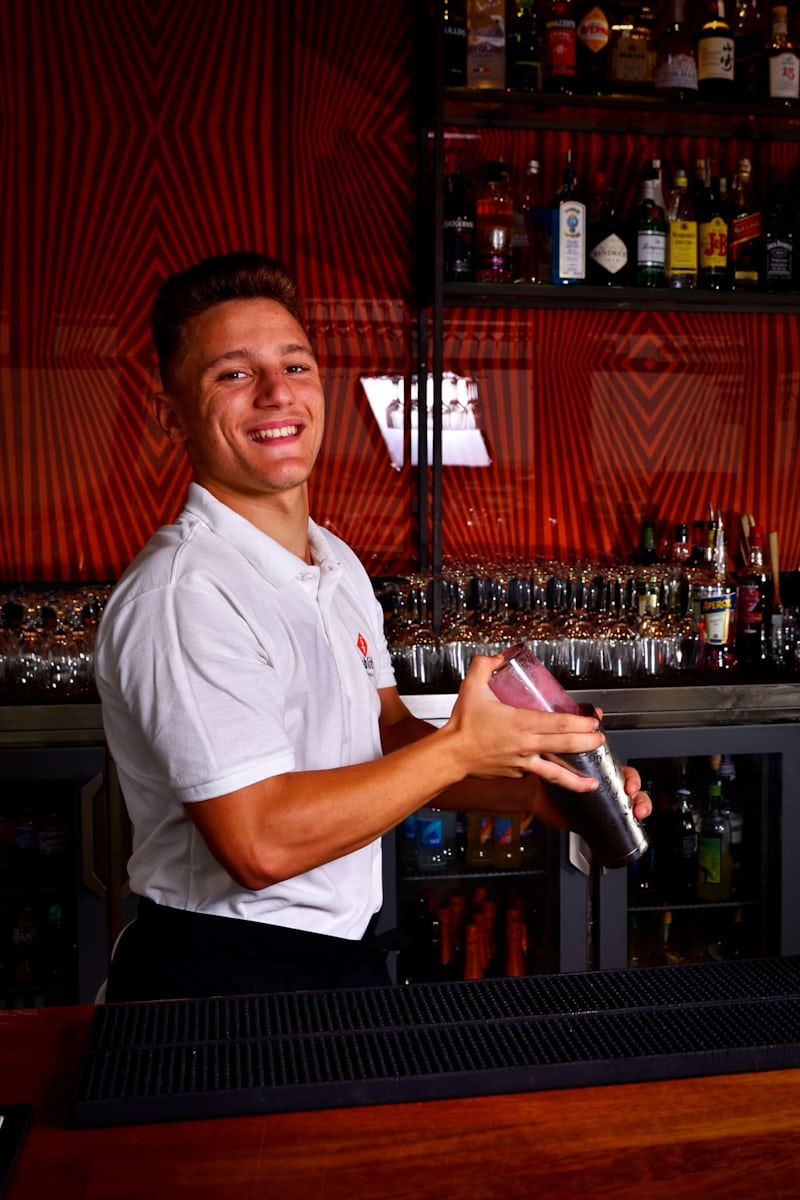
[After the Passion:] As any avid fan of James Bond can tell us, the fictional British spy prefers his martinis shaken, not stirred. A helpful reminder that there’s more than one way to mix a drink. Helpful, because the gospel tells us that, just as the whole city was stirred at Jesus’ entrance into Jerusalem,  so too is the very earth shaken, when the Lord finally dies on the Cross. From a tiny spoon sleepily stirring a breakfast beverage, to a pair of giant hands vigorously shaking an adult cocktail. The change in imagery is striking, isn’t it?


Indicating that, as the Lord’s Passion progresses, there is a corresponding increase in the power of the question, who is this? Power to uncover disordered attachments, and resistance to the truth. Such as the stubborn refusal of some to accept Jesus, and the anxious request to secure his grave. Power to change hearts. Such as how, at the sight of Jesus breathing his last, even the soldiers who crucified him – likely the same ones who had tormented and mocked him just hours before – even they, are moved to acknowledge him as son of God. And power to deepen discipleship. Evidenced by how some of Jesus’ followers, especially the women, are able to accompany him, albeit from afar, all the way to the end.


And what about us? We who conscientiously observe Holy Week every year, and who publicly profess our faith in the Lord every week. To what extent do we make his attitudes our own? The countercultural attitudes of downward mobility, of him who did not cling to his equality with God but emptied himself to assume the condition of a slave… even to accepting death… on a cross… If you’re like me, the answer is likely mixed. Which is why, in addition to pondering his Passion in the liturgy, we also need to cultivate his habits in daily life. Taking care to awaken each day to listen like a disciple, to speak to the wearied with a disciple’s tongue, and to courageously follow the Lord to Calvary and beyond.


Sisters and brothers, there really is more than one way to mix a drink. As we accompany the Lord to his Passion, how might he be stirring and shaking us, helping us to better absorb his attitudes into our hearts, our lives, and our world today?

Sunday, March 26, 2023

Of Places & People


5th Sunday of Lent (A)


Readings: Ezekiel 37:12-14; Psalm 129 (130); Romans 8:8-11; John 11:1-45

Video: TODAYonline on YouTube


My dear friends, do you recall that flaming-red HDB lift lobby in Tampines, which went viral some weeks ago? Initially, residents complained that it was too creepy, and the authorities responded by repainting the ceiling white. But then some others were actually attracted to the place, and started using it for fashion shoots. From an eery haunted house to a stylish photography studio. Isn’t it interesting how a place can seem so different when the people are changed?


In our scriptures too, we find places being transformed through a change in people. The promise God makes in the first reading comes at the end of a vision received by the prophet Ezekiel. He sees a scary place. A valley filled with dry human bones. An abandoned battlefield where, as an act of humiliation, the dead bodies of the losers had been left to rot in the sun. But then breath enters the bones. The corpses are given new life. The place undergoes a radical transformation, from humiliating graveyard to rejuvenating spa. And God goes on to explain that this vision is less about the dead than it is about the living. The broken remnants of God’s people, living in exile. God promises to raise them from their metaphorical graves, and to resettle them in their homeland. How? By first putting God’s spirit in them. By changing them into a holy place, a faithful temple, a true house of God.


In the gospel, a cave used as a tomb becomes a womb, from which a corpse is brought back to life. And this transformation of place is again effected by a change in people. A process involving several steps. First, there is a delay. Jesus waits till his dear friend has died, before visiting. And even after he arrives, instead of heading directly to the tomb, the Lord hangs back and engages people in dialogue. The delay allows mourning. The dialogue deepens trust. All of which serve to heighten receptivity to the Spirit, to awaken faith. I am the resurrection and the life… Do you believe this? Eventually a gracious invitation is extended: Where have you put him? Lord, come and see… So the Lord goes. He draws near. And through the power of his presence, coupled with the fervour of their faith, death gives way to new life.


Delay, dialogue and drawing near. Isn’t this also how we hope to be changed in Lent? A time when we prepare to faithfully accompany the Lord who, through his Dying and Rising, keeps drawing near. We hope to undergo that same life-giving change, which he effected in his friends at Bethany. Allowing the Spirit of Christ to dwell in us and to possess us. So that he who raised Jesus from the dead (might) give life to (our) own mortal bodies through his Spirit living in (us). And this change in us is not just for us. It is also so that this conflict-ridden disaster-prone world of ours, including our society and Church, our schools and homes and workplaces, might all be transformed into the Kingdom of God.


Sisters and brothers, much as we may sometimes have to change places to appease people, how shall we let God transform the world, by first effecting changes in us this Lent?

Sunday, March 19, 2023

Between Condition & Choice


4th Sunday of Lent (A)


Readings: 1 Samuel 16:1, 6-7, 10-13; Psalm 22 (23); Ephesians 5:8-14; John 9:1-41

Video: Movie Buff Guy on YouTube


My dear friends, which do you think is worse? To be blind in one eye or in both? The answer seems obvious, right? And yet we also know that to close one eye is to look the other way. To ignore something we know to be true. Perhaps a mistake or a misdeed of some sort. Whether it’s because we want to give someone a second chance, or due to laziness or apathy, fear or favour, whatever the reason, to close one eye is to remain blind by choice. And this is one of the two different kinds of blindness we find in our scriptures today.


But let us consider the other kind first. We may call it blindness as a condition. One example is that unnamed man in the gospel, who was blind in both eyes. A condition he did not choose. He was born that way. But when the Lord tells him what he must do to be healed, he obeys without hesitation. As a result, he eventually receives not just his sight, but also the grace to recognise, worship and follow Jesus as Lord. Through humble obedience, a physical disability becomes a channel of great spiritual blessing.


But blindness is not just a physical condition, right? It is often also a social one. Why does Samuel want to anoint Jesse’s eldest son? Isn’t it because the prophet is socially conditioned to be blinded by Eliab’s imposing physique? Such that Samuel is unable, at least initially, to adopt God’s perspective. For the Lord does not see as mortals see; they look on the outward appearance, but the Lord looks on the heart (NRSV). Thankfully, again through humble obedience, Samuel overcomes his social conditioning. The prophet receives new spiritual sight, and the nation its rightful king.


Unfortunately, the same cannot be said about the other characters in the gospel. Unlike Samuel, the blind man’s neighbours, his parents, and the religious leaders all fail to get past their social conditioning. Though faced with the undeniable fact of the blind man’s healing, they still lack the honesty and humility to accept Jesus as Lord. The neighbours may be too distracted by the busyness of daily life. The parents are too fearful of being expelled from the synagogue. The leaders are too attached to their own status. Whatever the reason, they all end up closing one eye to the truth. And their blindness gets worse. It progresses beyond a received condition, to a guilty personal choice.


It’s clear then that what our scriptures offer us today is at once a joyful promise and a sobering warning. The promise is that the Lord can and wants to help us transcend our conditioning, to give us new spiritual sight. And the warning is that the choice remains ours to make. Whether to be like children of light… having nothing to do with the futile works of darkness but exposing them by contrast, or to keep ignoring the Lord’s illuminating presence and action in our daily lives.


Sisters and brothers, strange as it may sound, in the spiritual life, it's probably far more dangerous to be blind in one eye than in both. What must we do to let the Lord open both our eyes this Lent?