Sunday, June 18, 2023

Landmarks to Liberation


11th Sunday in Ordinary Time (A)


Readings: Exodus 19: 2-6; Psalm 99 (100): 2-3, 5; Romans 5: 6-11; Matthew 9: 36-10: 8

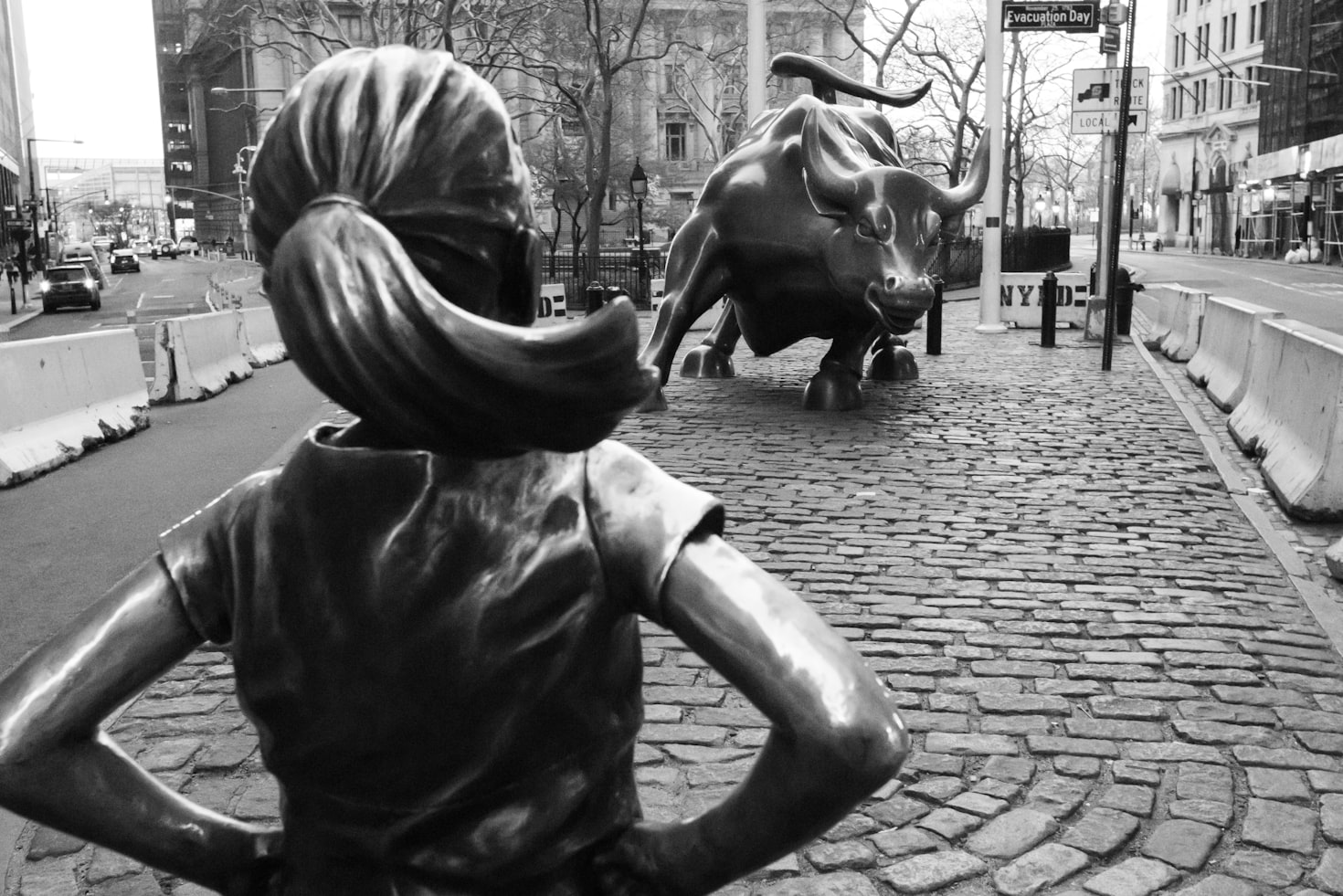
Picture: By Beth Macdonald on Unsplash


My dear friends, have you ever given someone directions before? How did you do it? Very likely, landmarks were used, right? At the T-junction, turn left… At the petrol station, turn right… And notice how, each time a landmark is recognised, there’s an action to perform. Turn left… Turn right… Similarly, landmarks are what we find in our scriptures today. The first reading refers to places like Rephidim and Sinai and Egypt. But more important than these physical locations is the spiritual landmark they represent. To recognise it, we need to recall what happens to the Israelites at each place.


In Egypt, they are oppressed and can’t break free. At Rephidim, they have no water to quench their thirst. Yet each time, in their helplessness, God rescues them. God frees them from the Egyptians, and makes water flow from the rock. Helplessness and rescue. This is the first landmark. And as with any set of directions, once a landmark is recognised, there’s an action to perform. So at Sinai, God invites the people to obey God’s voice and hold fast to God’s covenant. To trust and submit to God. This is what the Israelites are asked to do at the first landmark. And not just the Israelites, but we Christians as well. For God has rescued us too. As St Paul reminds us, we were still helpless when… Christ died for (sinners)… Like the Israelites, we have good reason to trust and to surrender our lives to the Lord.


But that’s not all. There’s also a second landmark. We find a hint of it already in the first reading, when God tells the Israelites they will be a kingdom of priests. For priests are consecrated not just for God, but also for other people. This second landmark is recognised by the twin experiences in the gospel. First, the compassion of Jesus at the sight of the crowds, because they are harassed and dejected. According to another translation (NRSV), they are harassed and helpless. And second, we have the call that Jesus issues to the Twelve, telling them to go and proclaim that the kingdom of heaven is close at hand… Compassion and call. This is the second landmark. And once it is recognised, the appropriate response is to commit and to serve, to proclaim and to heal. To truly become God’s consecrated priests to the harassed and helpless crowds among whom we live.


Helplessness and rescue, compassion and call. These are the landmarks on the spiritual path from oppression to freedom. A timely reminder for us, even as we hear of the tragic sinking of yet another boat in the Mediterranean, overloaded with desperate people seeking better lives, including many children. Nor do we have to look that far to uncover oppression. According to the philosopher Byung-Chul Han, this digital society in which we live actually trains us to oppress ourselves. According to him, ours is an achievement society that makes us exploit ourselves until we collapse. We develop auto-aggressive traits that often lead to suicide…


Sisters and brothers, in our helplessness, Christ has set us free. How is he calling us now to help one another recognise and follow the landmarks along the way to true freedom?

Sunday, June 11, 2023

Never To Let Us Go


Solemnity of the Most Holy Body & Blood of Christ (A)


Readings: Deuteronomy 8: 2-3, 14-16; Psalm 147: 12-15, 19-20; 1 Corinthians 10: 16-17; John 6:51-58

Picture: Brooke Cagle on Unsplash


Well, you only need the light when it's burning low,

Only miss the sun when it starts to snow,

Only know you love her when you let her go…

And you let her go…


My dear friends, do these lines sound familiar? They're from a song by the English singer-songwriter, Passenger. They speak of a man’s regret at having taken his lover for granted, at realising what she really means to him, only after she’s gone. Released in 2012, the song eventually topped the charts in many countries around the world. Perhaps a sign that many of us know what it feels like to forget to cherish the people we love… until it’s too late. Sadly, this tendency to take love for granted often extends beyond the people in our lives, to include even the God who keeps us all alive.


Isn’t this why, in the first reading, Moses anxiously tells the Israelites to remember how God had led them for forty years in the wilderness to humble them, to make them understand that man lives on everything that comes from the mouth of the Lord? Moses has good reason to worry. For the Israelites are about to enter the Promised Land, a place where milk and honey flow. It had been difficult enough for them to obey God in the wilderness, where they were often hungry. What more in a land of plenty, when their bellies will be full?


Well, we all know the story, right? We know that the people did, indeed, forsake God. But the good news is that despite their forgetfulness of God, God refused to forget them. Again and again, God sent prophets to remind them of their need for God. And when they rejected these, God even sent God’s only Son. And when he too was persecuted and put to death, God not only raised him to life, but also made him forever present and accessible to God’s people–to all of us–especially in the celebration of the Eucharist.


As the second reading reminds us, the blessing-cup that we bless is a communion with the blood of Christ, and the bread that we break is a communion with the body of Christ. By partaking in the Eucharist, we draw life from Christ, just as he draws life from the Father. Enabling us to become part of the corpus christi, the body of Christ, here on earth. Giving us power to live as he lived, and to love as he loved.


Isn’t this what we are celebrating today? Not some obnoxious obligation to drag ourselves out of bed on a sleepy Sunday morning, but a powerful expression of a love that refuses to let us go. Which brings to mind these words from another song. A song not of regret, but of wonder and praise, of gratitude and hope…


Could the Lord ever leave you?

Could the Lord forget his love?

Though a mother forsake her child,

He will not abandon you…


Sisters and brothers, the Eucharist is a precious gift from a Lord who refuses to let us go. What must we do to keep clinging ever more tightly to him, today and everyday?

Sunday, May 28, 2023

Remembering to Breathe


Pentecost Sunday


Readings: Acts 2:1-11; Psalm 103 (104): 1, 24, 29-31, 34; 1 Corinthians 12: 3-7, 12-13; John 20: 19-23

Picture: By Kinga Howard on Unsplash


My dear friends, would you mind doing a very simple exercise with me? When I give the word, just gently take a deep breath and hold it in for a moment. Then slowly let it out. That’s it. Simple. Okay? Ready? Breathe in… Hold… Breathe out… How do you feel? What happened? At least three things, right? First, by flexing some muscles, we expand our chest. We make space for air to flow into us, for the breath to fill our lungs. But we don’t just keep the air to ourselves, we release it. As a result, we receive new life. Our bodies are renewed.


Inhalation, exhalation and renewal. Doesn’t something similar happen at Pentecost? For a start, it’s helpful to notice a word that keeps recurring in our Mass today. The word is fill. The entrance antiphon reminds us that the Spirit of the Lord has filled the whole world. In the opening prayer, we ask God to fill… the hearts of believers with divine grace. And in the first reading, not only does the noise of a wind fill the entire house, the disciples are filled with the Holy Spirit. And it’s worth recalling that the Hebrew word for spirit also means breath.


At Pentecost, the Spirit comes like a divine breath from heaven and fills the disciples. This doesn’t happen by accident. As we may recall from last Sunday’s reading, the disciples had prepared for it. They were praying steadfastly, and with one accord, in the upper room. And before that, the Crucified and Risen Jesus had been consoling, encouraging and guiding them. Helping them to release their guilt and grief, and make space for the Spirit. Teaching them to inhale the very Breath of God. All of which, by the way, has also been our experience throughout the season of Easter.


And just as inhalation naturally leads to exhalation, shortly after being filled with the Spirit, the disciples are led to share God’s Breath with others. Bearing witness to Jesus not just through their preaching, but also in the shared life they lead. Doing for others what Jesus does for them in the gospel. He breathes on them, and shares with them both his mission and the power to carry it out. A mission that benefits not just those at whom it is directed, but also renews the Church. Helping her become what she is called to be. Not just an accidental gathering of harassed weekend worshippers, but a single Body of Christ, made up of different parts, each uniquely gifted to offer fitting service to the Lord.


Inhalation, exhalation, and renewal. Isn’t this what the Spirit brings at Pentecost? Isn’t this how the Breath of God comes to fill and renew everything? And doesn’t our shiny modern world need this precious gift now, when so many of us often find ourselves either struggling to breathe, or even forgetting how? Too many still lack the most basic conditions for safe and dignified human living. While others are deceived into smothering themselves with the endless pursuit of superfluous things. Yet, amid it all, the Spirit continues to blow and flow, filling the world with God’s life and love. All we need to do is make space.


Sisters and brothers, how is the Spirit inviting us to breathe more deeply today? 

Sunday, May 21, 2023

Beyond the Market


7th Sunday of Easter (A)


Readings: Acts 1: 12-14; Psalm 26 (27): 1, 4, 7-8; 1 Peter 4: 13-16; John 17: 1-11

Picture: By Daniel Lloyd Blunk-Fernández on Unsplash


My dear friends, what’s the first thing that comes to mind when you hear the word economy? Perhaps it’s money, or the stock market. Yet, as you know, the word economy actually comes from a Greek root, meaning house or household. And if we stop to think about it, this close connection between a house and a market or money makes a lot of sense, right? After all, isn’t the world our shared house? And what makes the world go round, especially today, if not money?


Even so, our scriptures invite us to ponder an alternative economy, a different kind of household. Consider this deep desire expressed so poignantly in the psalm: There is one thing I ask of the Lord… to live in the house of the Lord, all the days of my life. The psalmist longs to rest in the temple, the holy house where God dwells among God’s people. Yet when Jesus visits the temple, in the second chapter of John’s gospel, he ends up driving out the money-changers and sellers, telling them to stop making my Father’s house a market-place (2:16 [NRSV])! And when the authorities challenge him to justify his actions, he defies them to destroy the temple of his body, and in three days he will raise it up.


By his Dying and Rising, Jesus embodies an economy very different from that of the world. Today’s gospel indicates what this new economy looks like. One striking feature of Jesus’ prayer to his heavenly Father is the frequent appearance of the word give. It is the Father who gave Jesus his teaching and his mission, as well as all those who follow him. And Jesus, having given his disciples the Father’s teaching, now prays to be able also to give them eternal life, by asking the Father to give him glory through the Cross. Give… give… give… Unlike the world, the economy of God’s household is not that of buying and selling, but of solidarity and gift.


And isn’t this what the disciples in the first reading are preparing to receive? By persevering in prayer in one accord, they offer the Spirit a fitting place in which to rest. So that the Spirit might give them power to become, for the world, a life-giving household, with its own distinctive economy. And, as the second reading points out, the Spirit’s power enables disciples even to joyfully endure the inevitable persecutions that result from the radical following of Christ. To see these troubles as welcome signs that the Spirit of glory indeed rests on them, as it first rested on their Lord and Master.


Which is not to say that the market is all bad. Its benefits are undeniable. But it can also very easily turn into an idol, the worship of which brings death, especially to those most vulnerable, including the poor, our own children, and our planet as well. The market’s logic can pollute our homes and even our church, making it hard to find a safe enough place to rest. Isn’t this why Pope Francis often speaks of the need to transform an economy that kills into an economy of life? 


Sisters and brothers, as we prepare to celebrate the Spirit’s coming at Pentecost, how might we embrace more wholeheartedly God’s life-giving economy today?

Sunday, April 23, 2023

Clearing the Fog, Connecting the Dots, Calling to Faith


3rd Sunday of Easter (A)


Readings: Acts 2: 14, 22-33; Psalm 15 (16): 1-2, 5, 7-11; 1 Peter 1: 17-21; Luke 24: 13-35

Picture: Romain Vignes on Unsplash


My dear friends, have you ever experienced a brain fog? Say you’re reading a book or an email, and you find yourself going over the same line again and again, without catching its meaning. You know all the words, but can’t quite connect them. And it’s not because the sentence is too hard. It may be very simple. But for some reason you just can’t focus your thoughts. It’s as if a fog has descended upon your brain, slowing it down, preventing you from grasping what you see.


In today’s gospel, the disciples experience something similar. They can plainly see Jesus, but they can’t recognise him. They can readily recount all the recent events that have transpired concerning him, but they cannot grasp their meaning. It’s as if a fog has descended, keeping them from connecting the dots. Except that, in their case, the fog is not in the brain, but somewhere else. Jesus indicates just where when, after patiently listening to what they have to say, he calls them foolish and slow to believe. In another translation (NRSV), the Lord says, Oh, how foolish you are, and how slow of heart to believe all that the prophets have declared!


What the two disciples are suffering is not a fog of the brain, but of the heart. A thick cloud of unbelief keeps them from recalling what the prophets had long foretold. That it was necessary the Christ should suffer and so enter into his glory. By helping them to connect the dots, the Lord dispels the fog. Causing their hearts to burn with renewed faith and hope. Opening the way for them to recognise him. And it’s no coincidence that the recognition happens at the breaking of bread. For what the Lord does at this meal doesn’t just recall his actions at the miraculous feeding of the multitudes, and the Last Supper. It also points to what we do at the Eucharist.


Here the Crucified and Risen One helps us connect the dots of our lives. Here he clears away the fog of our unbelief. Here he helps us recognise him, even amid troubling events and painful experiences. Renewing our faith and hope in God, and showing us how we can do what Peter does in the first reading. Enabling us to help others connect their dots, and come to faith in God. Isn’t this why the second reading tells us to take care to remember? To remember, as we do at every Eucharist we celebrate. To remember that the ransom to free us from a useless way of life was paid neither in silver nor gold, but in the precious blood of a lamb… namely Christ.


My dear friends, as you know, in recent days, important people have been considering the likely impact of grave global events on our life as a nation, and how we might best respond. Added to this, it’s likely that we all have our own personal challenges to face. And, amid it all, we believe that Jesus continues to draw close and walk with us. Consoling and encouraging us. Helping us to recognise him.


Sisters and brothers, whether we realise it or not, a cloud of unbelief is no less debilitating than a brain fog. What must we do to let the crucified and risen Lamb of God renew our faith and hope in him this Easter!