Friday, February 29, 2008


Friday in the 3rd Week of Lent
How Long?


Readings: Hosea 14:2-10; Psalm 81:6c-8a, 8bc-9, 10-11ab, 14 and 17; Mark 12:28-34

It’s a long road to freedom, a winding steep and high.
But when you walk in love with the wind on your wing;
And cover the earth with the songs you sing;
The miles fly by…


So goes an old hymn that we used to sing in church. Indeed, it’s a long road to freedom. Just ask anyone addicted to alcohol or drugs, pornography or sex, gambling or work… And we can probably substitute freedom with many other things, too, things like peace and justice, wisdom and virtue. But how long exactly is the road? That seems to be question that our readings invite us to consider today. How long is the road to the end of poverty and hunger and environmental degradation? How long is the road to the day when people will be able to live together as brothers and sisters? How long is the road to the Kingdom of God?

On the one hand, the road does often seem too long to contemplate without losing hope. Can the distance be any greater than that between the developed and underdeveloped, the conservative and the liberal, the saint and the sinner? But isn’t there also another side to the issue? Recall, for example, the parable that we heard at Mass not too long ago, the story of Lazarus and the rich man. What distance could be longer than that between the rich man’s prosperity and Lazarus’ destitution? And yet, for the rich man at least, the road was as short as the distance to his own front door.

Isn’t this the message of our readings today? Straight are the paths of the Lord, in them the just walk, but sinners stumble in them. The way to the Kingdom is as long and as short as our willingness to repent, to change our ways, to return to the Lord, to center our lives no longer on selfishness but on love. Isn’t this why Jesus is able to tell the scribe that he is not far from the Kingdom of God? As suspicious as he might at first have been of the Lord’s apparently unorthodox teachings and actions, he was willing to recognize truth when he heard it. As long as the road may seem, it is really as short as acknowledging and committing ourselves to following Christ, the Way, the Truth and the Life.

How much further do we have to go today?

Thursday, February 28, 2008


Thursday in the 3rd Week of Lent
Composite Picture


Readings: Jeremiah 7:23-28; Psalm 95:1-2, 6-7, 8-9; Luke 11:14-23

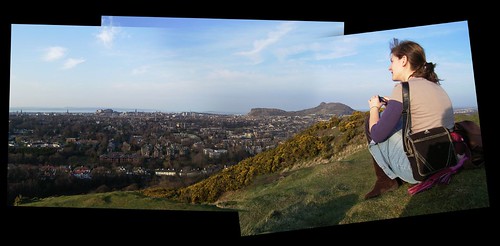
We’re probably all familiar and in agreement with the phrase, a picture is worth a thousand words. And isn’t it also true that several pictures can often be worth more than one? Think, for example, of the person who wishes to take a picture of the panoramic view from the top of a tall building or mountain, but doesn’t have a wide-angled lens. One way out is simply to take several photos and then merge them to form a composite. A picture may be worth a thousand words, but several pictures are better than one.

This seems to be a good metaphor for what our readings offer us today: a composite picture of our situation before God. The first image is a rather bleak one. It captures what our relationship often tends to look like, and is poignantly expressed in God’s words through the prophet concerning his people: they… turned their backs, not their faces, to me… We might imagine a loving father calling out to his children, warning them of the pitfalls of life and teaching them the way they should walk. Instead of listening carefully, however, the children turn and run away. And this picture of children running away from their father is complemented by another one, a snapshot, this time, of their interior condition: they walked in the hardness of their hearts.

As if this combination of images were not gloomy enough, the gospel adds yet another, one that helps us to delve deeper into what is happening to these fugitives, the reason for their flight. Quite paradoxically, their running away is a sign not of freedom but of captivity. The children turn their backs on their father because they have been captured by Satan, the strong man fully armed who stands guard over all his possessions. At this point, the resulting image is bleak indeed. But, thankfully, it remains incomplete.

The good news comes in the form of two further images from the gospel. As stubborn as the children may be in continuing to put as much distance as possible between themselves and their father, on his part, the father simply refuses to let them go. The Kingdom of God has come among you, says Jesus. Or, in another translation, has overtaken you. In Christ, the persistent love of the father pursues and overtakes his wayward children. By his life, death and resurrection, the champion runner, sent by the father, succeeds in catching up with the children. He melts their hardened hearts, defeats and binds up the strong man, and seizes his stolen possessions.

This is the composite image that our readings present. It is a powerful picture, one that is calculated to bring about in us, exactly what they portray. But for that to happen, we must do what the amazed crowds are unwilling to do in the gospel. We must first be able to identify ourselves in the image: to recognize the ways in which we continue to flee from God, to locate the portions of our heart that remain hardened and held hostage by the strong man, and, most importantly, to welcome the different ways in which God is overtaking us. This is what we must do to truly experience the value of this composite image.

Several pictures are indeed worth more than one, but how much are they worth to you today?

Wednesday, February 27, 2008


Wednesday in the 3rd Week of Lent
At the Frontier


Readings: Deuteronomy 4:1, 5-9; Psalm 147:12-13, 15-16, 19-20; Matthew 5:17-19

Dear brothers, don’t you find it striking how closely our readings today mirror the Pope’s address to GC35? On the 21st of February, with words both inspiring and encouraging, the Holy Father affirmed who we are as Jesuits by reminding us of where we are called to be. As his predecessors did before him, he placed us at the crossroads of conflicting ideologies, at the frontiers of faith and reason, of religion and culture, of spirituality and justice. And, quite coincidentally, in today’s first reading, we also find the Israelites at the frontiers of the Promised Land. But, as exciting as it may seem, we dare not forget that the frontier is often a very uncomfortable place to be. It is at once a place of opportunity as well as danger, of promise as well as risk. Like the Israelites, we find ourselves on the threshold of a new destination. Yet, as many of our brothers have experienced first hand, this can also be a place of deep suffering, where we can very easily lose our way.

Faced with this distressing prospect, both the Holy Father and Moses seem to offer similar advice. Both issue a call to fidelity. The Holy Father reminds us to loyally fulfill the fundamental duty of the Church, of fully adhering to the word of God… Similarly, Moses exhorts the Israelites to observe and take care not to forget the decrees and statutes of the Lord. Remembrance and observance: these are to be our safeguards against danger, our rudder and compass in stormy seas.

Even so, don’t our readings also invite us to reflect more deeply upon what this means for us? For what did the scribes and the Pharisees of Jesus’ day do if not carefully remember and observe the law? Didn’t they expend much time and effort in searching the scriptures, and in teaching the law to others? And yet, their actions were found to be contrary to those of Jesus, the one who comes not to abolish but to fulfill the law and the prophets. What does this tell us if not that there is a kind of remembrance and observance of the law, a kind of apparent fidelity to doctrine, that leads to death? Isn’t this the kind that tends to treat the law as a dead letter, the kind that ends up entombing the divine Lawgiver in a distant past? In contrast, Jesus practices and teaches a different kind of remembering.

I think I recently caught a glimpse of what this can look like while anointing a dying man at the Philippine General Hospital. The patient was already comatose when I arrived, and several members of his family were in tears. Feeling rather inadequate, I began tentatively by simply reminding us of our shared belief in the Lord’s presence and in his power to save. Gazing briefly at the faces of those gathered around the patient, I thought I sensed a subtle change in the atmosphere. Some nodded silently to signal their agreement with what I had said. Others closed their eyes in fervent prayer. It was as though the simple act of remembering had led us to recognize the Lord’s presence at this difficult time, when a loved one was struggling to negotiate the crucial frontier between life and death.

Isn’t this the kind of remembering that we need, the kind that helps us to recognize the presence of Christ, the same Christ who died and was raised to life at the crossroads of human and divine existence? And isn’t this precisely the kind of remembering that we are engaged in at this Eucharist as well, the kind that mediates God’s ongoing presence to God’s people, the kind that leads us to exclaim, together with the Israelites of the first reading: what great nation is there that has gods so close to it as the Lord, our God, is to us whenever we call upon him.

Brothers, even as we may find ourselves being called to negotiate the frontiers of human existence, how are we also being invited to remember unto recognition today?

Tuesday, February 26, 2008


Tuesday in the 3rd Week of Lent
Connecting the Dots


Readings: Daniel 3:25, 34-43; Psalm 25:4-5ab, 6 and 7bc, 8-9; Matthew 18:21-35

Few will disagree that forgiveness is among the most difficult of gifts that one human being can offer another. It probably ranks up there with laying down one’s life. Indeed, the process of forgiving someone can even feel like a form of martyrdom. Something in us has to die in order that we might live anew. Mercy doesn’t seem to come naturally to us. The most obvious difficulty has to do with resisting the urge to seek revenge. And, of course, vengeance can be both active as well as passive aggressive.

But even if we do succeed in resisting the urge, there are yet other hurdles to cross. Part of the problem lies in the fact that some of these obstacles can masquerade as true forgiveness. A good example is the apathy that refuses or simply fails to acknowledge, and so ends up condoning and perpetuating, wrongdoing. Witness the battered spouse who has yet to find the courage to stand up to his/ her abuser, or the benighted populace in some countries, that continues to elect crooks to high office simply because it doesn’t know any better. In contrast, true forgiveness is neither ignorance nor self-deception. Rather does it involve a possibly long and complex process of seeing ever more clearly the full extent of the damage done to us – and possibly taking appropriate steps to protect ourselves – but then also letting go both of the hurt, as well as the desire for vengeance.

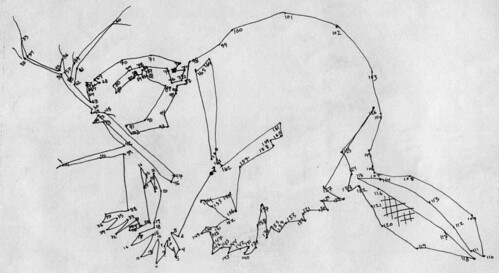
True forgiveness is not easy. Which is why our readings today are so precious. More than simply imposing upon us the unbearable obligation to forgive, they actually invite us to reflect upon the way that needs to be walked by all who earnestly desire to grow in the ability to offer this gift. This path is a process of remembering. It looks somewhat like a favorite pastime of some children: the exercise of connecting the dots.

Consider Jesus’ parable in the gospel. The king punishes the wicked servant for a very specific reason. Failing to forgive his fellow servant is only part of it. The full extent of his offense can perhaps be described quite simply as a failure of memory, a failure to connect the dots. More specifically, it is the failure to connect the experience of two relationships: the wicked servant’s relationship with God and with his fellow servant. It is the failure to remember that one is a forgiven debtor, and to allow that experience to flow naturally into a desire to write off another’s debt.

The first reading provides a striking contrast to this image of disconnected dots. Consider Azariah’s situation. He is praying in a furnace because he has defied the king of Babylon, bravely choosing to remain faithful to the traditions of his ancestors. Yet, instead of judging those who might be less faithful, Azariah offers a prayer for mercy. He begs for forgiveness because, faithful Jew though he may be, he realizes that he remains connected to his people, and is somehow implicated in their sins. We are reduced… brought low everywhere in the world this day because of our sins… He realizes that God relates to us not just personally but also communally. And his ability to connect the dots in this way is not without benefit. For, in asking forgiveness for his people’s sins, he is also able to rely upon God’s promises to their ancestors. Do not take away your mercy from us, for the sake of Abraham, your beloved, Isaac your servant, and Israel your holy one… Unlike the wicked servant in the gospel, Azariah is able to ask God to remember your mercies, O Lord, because he himself is not forgetful that he is part of a sinful people. He is able to connect the dots.

How might we be helped to do the same today?

Monday, February 25, 2008


Monday in the 3rd Week of Lent
Interdepartmental Shopping


Readings: 2 Kings 5:1-15ab; Psalm 42:2, 3; 43:3, 4; Luke 4:24-30

We often hear it said that God works in mysterious ways. Indeed, in Isaiah 55: 8-9, we find these words: For my thoughts are not your thoughts, nor are your ways my ways… As high as the heavens are above the earth, so high are my ways above your ways and my thoughts above your thoughts. How, we may wonder, does God’s thoughts differ from ours? Perhaps it goes something like this.

Human thought often proceeds like someone shopping in a huge department store. The goods are all neatly organized: men’s wear on one floor, for example, and ladies’ accessories on another. Convenient as this is, it also means that you can’t buy everything you want on the same floor. To shop for your wife or your mom, you have to first leave the floor where the stuff for your husband or your dad is found. In contrast, perhaps God’s thoughts and action are mysterious in that they are capable of holding very different, even apparently contradictory things, on the same floor. Consider what is happening in the readings today.

God does something truly extraordinary in the first reading. God heals Naaman of his leprosy. And Naaman takes extraordinary measures to receive this healing. He travels from Aram to Israel, bringing with him great riches to present to the foreign king. But notice also how God carries out this extraordinary healing. Not only does God work through an ordinary slave-girl, but, through the prophet Elisha, God also works the healing by having Naaman perform the very mundane act of bathing in a river. In fact, it is precisely because the request is so ordinary that Naaman is at first unwilling to do it.

Likewise, in the gospel, God is undertaking a radically new project: nothing less than the salvation of the whole universe. And yet, this novel initiative is undertaken in the person of Jesus of Nazareth, who is so familiar to his own townsfolk that they find it impossible to accept him, and even go to the extent of seeking to kill him. What sets them apart from Naaman, the foreigner, is that they are unwilling to consider the possibility of entertaining the new in the familiar. They are resistant to entertaining two seemingly contradictory ideas. They refuse to consider the possibility of shopping for different things on the same floor.

Undertaking the extraordinary in the ordinary, initiating the new in the familiar: aren’t these striking examples of how mysterious are the ways of God?

And if this is how God thinks and acts in the scripture, perhaps it might do us good, especially in the season of Lent, to reflect more deeply upon how God might be doing the same in our lives. How, for example, does God work not just in church on Sundays, but also in our homes and offices and schools on the other days of the week? How are we being invited to respond to and cooperate with God’s initiatives in extraordinary events as well as in ordinary ones, in the familiar as well as in the new?

How is God inviting us to learn to shop across departments today?