Monday, September 29, 2008

Friday, September 26, 2008


Friday in the 25th Week of Ordinary Time
Telling Time


Readings: Ecclesiastes 3:1-11; Psalms 144:1b and 2abc, 3-4; Luke 9:18-22
Picture: CC littledan77

Have you ever had the following experience? For some reason you suddenly awaken with a jolt after a good night’s sleep. Still a little drowsy, you reach for the bedside clock and find that you’re already 15 to 30 minutes behind your usual schedule. Hurriedly you scramble out of bed and proceed with the routine morning ablutions. But when you’re done and finally get a chance to look at the clock again, you realize that you’re actually a whole hour ahead of schedule. You’d earlier misread the time. Feeling rather bemused and even a little foolish and embarrassed, you wonder what you’re going to do now.

Ever had a similar experience? Or some other experience of getting the time wrong?

I wonder if the disciples found themselves in a similar situation in our gospel today. The incident described is probably very familiar to us. It is found also in the gospels of Matthew (16:13ff.) and Mark (8:27ff.). But notice how, in Luke’s version, Jesus’ immediate response to the disciples’ declaration that he is the Christ of God is to rebuke them. Unlike Matthew’s version, there is no praise of Peter for getting the answer right. But didn’t they get the answer right? Isn’t Jesus indeed the Christ, the anointed one, of God? Why the rebuke? And why so soon? Perhaps it had something to do with timing. Perhaps the disciples were jumping the gun in thinking only about the glory of the anointed one, without giving due consideration to the lesson that Jesus goes on to teach them – that the Christ must first endure a time of trial.

But, what next? After having gotten the time wrong, what are the disciples to do now? What are we to do when we find ourselves getting the time wrong? How do we learn to get the time right next time?

Some indication of an answer is found in both the first reading and the gospel. In the former, Qoheleth tells us that it is God who has made everything appropriate to its time. And, more importantly, he goes on to say that God has also put the timeless into (our) hearts. In other words, it is possible to get some sense of what the right time – God’s time – may be at any given moment in our lives. And isn’t this what we find Jesus doing at the beginning of the gospel? We’re told that, before summoning his disciples, Jesus was praying in solitude. He was looking into his heart. He was seeking the timeless. He was consulting his Father. He was telling the time.

What time is it for us today?

Thursday in the 25th Week of Ordinary Time
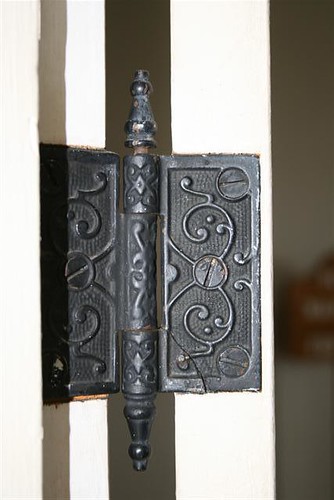
The Crucial Hinge


Readings: Ecclesiastes 1:2-11; Psalms 90:3-4, 5-6, 12-13, 14 and 17bc; Luke 9:7-9
Picture: CC Wm Chamberlain

You are not alone!

Today, I can’t help but recall these words, uttered repeatedly by a presenter at one of a series of orientation events that I had to attend over the last several days.

You are not alone!

For me, those words seem like a hinge around which two significant interior movements were (and probably still are) taking place in me as I begin yet another new stage in my life. The first of these movements was occasioned by the massive information overload that my fellow incoming graduate students and I were experiencing. There was just so much to do and to become familiar with in such a short time. It was quite overwhelming. Have we bitten off much more than we can ever hope to chew? And yet, even in the midst of the growing realization of the immensity of the task ahead of us, I also found myself quite consoled by the sincerity and genuine concern expressed by those whose responsibility it is to welcome us and to ease our transition into graduate study, as well as by the considerable resources to which we have access.

You are not alone!

This sharing of my orientation experience is occasioned by our readings today, which also present us with two (possible) movements centered upon a hinge. We find the first movement expressed in both the first reading and the gospel. In the latter, for all his despotic power, Herod finds himself greatly perplexed by the reports concerning Jesus. And in the former, for all his obvious intellectual acumen, Qoheleth comes to the conclusion that, especially when seen from the vast perspective of history, all human effort is vain. There is nothing new under the sun… Here we find a movement from the arrogance born of a false sense of mastery and self-sufficiency to the perplexity that springs from a realization that, whatever appearances might suggest, we don’t really have a handle on the world.

But, even if this is true, we are not doomed to perpetual anxiety and despair. For our readings also speak to us of a second possible movement – one that invites us to see beyond the historical to the eternal. And, not unlike my experience at orientation, this movement also takes place around a hinge. We find this hinge in the response to the psalm:

In every age, O Lord, you have been our refuge…

Even as crisis situations – such as the one that Wall Street is facing at the moment, for example – may force us to acknowledge how small we are, and how insignificant are our efforts when viewed against the immensity of creation stretched out in time and space, the psalm prompts us to make the following prayer: Teach us to number our days aright, that we may gain wisdom of heart…

Teach us to realize that we are not alone. Teach us to move not only from arrogance to perplexity, but also from perplexity to trust. Help us continue hoping in the One who is always there for us. Give us the wisdom and courage to act even when situations seem to overwhelm our meager abilities to respond…

How might the Lord be reminding us today that we are not alone?

Sunday, September 21, 2008


25th Ordinary Sunday (A)
Passing the Driving Test


Readings: Isaiah 55:6-9; Psalm 145:2-3, 8-9, 17-18; Philippians 1:20c-24, 27a; Matthew 20:1-16a
Picture: CC Ruth L

My sisters and brothers, many of you drive, don’t you? Do you like it? I do. Of course, we all know that it’s not good for the environment. And, especially with today’s gas prices, many of us are probably trying to lessen the amount of time we spend in our cars. But still, we can’t deny the fact that, for the most part, driving is an enjoyable experience. There’s something about being free to roam about wherever you want, without being constrained by bus schedules or someone else’s routine. And what with the wonderful weather and the beautiful scenery here in Southern California – driving is invigorating!

But not everyone is fit to drive. To obtain a license, not only must you be old enough, you also have to pass several tests. There’s a theory test, a test of eyesight and a road test. You need to pass them all before being given your license. You need to demonstrate your knowledge of local traffic rules and basic driving skills, before being granted the freedom to roam about freely in your car.

There’s a somewhat similar situation in the spiritual life as well. In a way, the Christian life is a quest for freedom. This is not just any kind of freedom. It’s not just the ability to do whatever we want whenever we feel like it. What Christian freedom looks like is illustrated by St. Paul in the second reading. For him, it's a matter of life and death.

Most of us value our own lives very much. Whatever we may say in polite conversation, we don’t really want to die. We cling to life like a stubborn stain to a white shirt. But, on the other hand, we probably also know of others who may actually be looking forward to death. Perhaps their lives are filled with terrible disappointments and suffering. Perhaps they’re lonely and find no meaning in their earthly existence. Whatever their exact situation, they long for release. They see death as a way to escape from their troubles. In either of these cases, whether one desires to live or to die, one remains limited and confined by the circumstances of one’s life. One isn’t free.

In contrast, notice what Paul says in the second reading. Notice the tension he experiences. I do not know which I shall choose, he says, life or death. And the reason for his dilemma is because either option offers him the possibility to love. Death means being with Christ in a most intimate way. And life means being able to serve those entrusted to his care. Paul experiences a tension because he is free. Like a licensed driver on the road, he experiences the invigorating freedom to choose the loving thing in every situation. He is free to conduct himself in a way worthy of the gospel of Christ.

And isn’t this the same freedom that we – the daughters and sons of God, the citizens of God’s Kingdom – are meant to enjoy? Isn’t this the divine driver’s license that we all want to receive? But what do we need to be ready to roam freely in God’s Kingdom? Drivers need to know the roads. We need to know our God.

And our readings today provide us with two tests by which we can gauge our knowledge of God. Both are practical tests. Each one is targeted at people in different situations. The test in the first reading is meant for those who have fallen away from God. The language used is quite strong: let the scoundrel forsake his way, and the wicked his thoughts, let him turn to the Lord for mercy…

Although we may not be scoundrels in the true sense of the word, don’t we all have experiences of being in the wrong, of having sinned in some way? And sometimes it is precisely because we are not really out and out scoundrels that we find it difficult to turn back to God. We wonder how we could have done such a terrible or stupid thing. We are embarrassed to admit our failure to ourselves, let alone to our God. It is precisely at such times that we face a tough challenge. We face a difficult test. It is a test of how well we know our God. It is a test of how deeply we realize what our readings are reminding us today: that our God is generous and forgiving, gracious and merciful, slow to anger and of great kindness… To pass the test is to take advantage of the Lord’s mercy, to turn back and to be reconciled with God.

But sinful though we all are, we don’t always find ourselves in a situation of having fallen. Sometimes, we may actually feel that we are on reasonably good terms with God. Like those people in the gospel, who have been working all day in the vineyard, we may be conscientiously fulfilling all our God-given responsibilities. We go to church. We say our prayers. We give to charity. We care for others. But are we truly free? Again, there is a test for us, a test of how well we know our God. It consists in how we react to situations wherein God shows mercy to others, especially those others whom – whether consciously or not – we may consider to be less holy or less spiritual than ourselves.

To take a rather mundane example, let us say that Mary is a highly respected member of her parish, where, for many years she has been the leader of the lectors. Then, one day, someone else is chosen to replace her. Not only is this person a far less experienced lector than Mary is, but she is also known to be a single parent – the result of a youthful indiscretion. Doesn’t Mary face a test in a situation like this? How will she react to being replaced by such a person? Will she complain as the people in the gospel do? Like those laborers who had worked hard all day, will she also grumble to herself that someone who had previously committed the sin of fornication has now been made her equal? Or will she instead rejoice at the marvelous generosity of her God, who offers to all comers, the fullness of love and life? Will her knowledge of God be such that she is willing to graciously be last who once was first?

Sisters and brothers, I have a secret to share with you. I only recently received my California driver’s license, having only just relocated here from Singapore. And to get that license, I had to take the theory test at the DMV office in downtown Santa Barbara. Here’s the secret. Being already a licensed driver in Singapore for many years, I was rather overconfident and, to my utter embarrassment, I failed the test the first time I took it. Thankfully, after sitting at the DMV and studying the Driver Handbook for a couple of hours, I was able to pass the test the second time round.

Whether it is at the first or second try (or even the third or the fourth) what is important is for us to pass the test -- to realize ever more deeply with each passing day, the tremendous depth of God's love for us -- and so to enjoy the freedom of the sons and daughters of God, the freedom to love as God loves. For, as St. John tells us, everyone who loves is begotten by God and knows God… for God is love (1 John 4:7-8).

Sisters and brothers, how might God be testing us today?

Saturday, September 20, 2008


Friday in the 24th Week of Ordinary Time
Accepting Our Traveling Companion

Readings: 1 Corinthians 15:12-20; Psalm 17:1bcd, 6-7, 8b and 15; Luke 8:1-3
Picture: CC dontdothisathome

Those who have done it before sometimes tell us that going on a trip with a friend typically has one of two consequences. It either reinforces or ruins the relationship. This has probably to do both with the sudden decrease in space between each person, as well as the sudden increase in time spent together. Especially if you’re sharing a hotel room, there’s nothing like a trip to highlight every little idiosyncrasy, every little behavioral quirk in another person. Little things – such as snoring, or noisy bathroom habits, or taking too much time over a meal – things that may often escape notice in the usual interaction between friends, suddenly seem to take center stage. The question one is faced with then is how much one values the relationship – enough to accept these new, and perhaps less than desirable, discoveries about the other?

Listening to our gospel reading today, we may well wonder if something of the same process took place among the traveling companions described there. Jesus journeyed from one town and village to another, we are told. And accompanying him were the Twelve and some women… What was it like for these followers of Jesus as they followed him on his journey? What was it like to be in such close physical and emotional proximity to the Lord, and to his other followers? We may well surmise that in addition to the geographical itinerary that they all traversed in common, there was also a spiritual journey that each one had to make, a passage into deeper relationship with the Lord.

Consider, for example, how some of them came to be followers of Jesus. Some of the women, we’re told, had been cured of evil spirits and infirmities. And it is at least probable that many others were hoping that Jesus might liberate the Jews from foreign rule. And yet, we also know well the destination towards which Jesus was heading – Calvary and the Cross. What was it like for those first disciples, as their journey progressed? What was it like to see their initial hopes gradually fade away with the diminishment and death of their chosen Master?

Quite likely, each disciple faced a similar daunting challenge. It is the same challenge that Paul writes about in the first reading. If for this life only we have hoped in Christ, we are the most pitiable people of all… It is the awesome project of allowing our hopes in Christ to be deepened (and not destroyed) by his Passion and Death. It is the difficult task of receiving the grace to believe in the Resurrection of the Lord. This doesn’t mean, of course, that we should give up our work in this world. Quite to the contrary, it means allowing our otherworldly hope inform and strengthen our earthly efforts.

Journeying together with this traveling companion of ours – so human and also so divine – we find ourselves led to the boundaries of our hope. The question we face is whether or not we are willing to cross those boundaries, whether or not we are ready to accept the peculiar idiosyncrasies of our traveling companion, and move with him into the peace and joy of the Kingdom.

Care for a vacation together anyone?