Monday, January 26, 2009


3rd Sunday in Ordinary Time (B)
Panhandler's Plea


Readings: Jon 3:1-5, 10;Psalm 25:4-5, 6-7, 8-9; 1 Corinthians 7:29-31; Mark 1:14-20
Picture: cc stephenccwu

Sisters and brothers, I’m reminded today of a young couple whom I walked by just a few days ago along State Street in Downtown Santa Barbara. They were panhandling. Which isn’t so out of the ordinary for that part of town. But what drew my attention was the fact that they looked cleaner and healthier than the average hobo, and they were also accompanied by three dogs. On taking a closer look, I noticed that the guy was holding up a piece of cardboard on which was written something that almost made me laugh out loud. Family killed by Stormtroopers, it said, need change for Jedi training. With a sign like that, I’m not sure if they actually collected any money.

In any case, strange as it may seem, it is those words crudely scrawled on that ragged piece of cardboard, that our Mass readings recall to my mind today. As we are all probably well aware, the words allude to the Star Wars saga. But what possible connection might they have to today’s readings? And what possible relevance might they have for us? At least three points, I think, three points of convergence between the panhandler’s sign and the scriptures, three aspects that invite our reflection.

First, there is, of course, the element of misfortune and danger. Family killed by Stormtroopers – not just a reference to a past misfortune, but also an implication of real and present danger. Those familiar with Star Wars will remember, for example, how the evil Emperor’s strenuous efforts at finding and destroying the young Luke Skywalker not only result in the death of Luke’s friend and mentor, Ben Kenobi, but also force Luke to flee his home planet of Tatooine. Misfortune and danger. Not unlike the situation that we find in our readings today.

Consider the message that Jonah is sent by God to announce to the Ninevites in the first reading. Forty days more and Nineveh shall be destroyed. There we have the explicit danger, the fast approaching misfortune. And there’s also something unspoken too. What’s implied is that it is through their own conduct, their own actions, that the Ninevites have brought this calamity upon themselves.

We find something ominous in the second reading too. Here, even though no sin or fault is indicated, we’re reminded of the ephemeral nature of our existence upon this earth – for both the innocent and the guilty alike, the world in its present form is passing away.

Still, all is not lost. Something can yet be done. And here’s the second point of convergence. For our panhandling friends on State Street, the solution lay, apparently, in receiving spare change. For the Ninevites too, the answer lay in change, but change of a different sort. What they needed was not so much monetary assistance from without, as much as divine intervention from above. And in order to receive this, they had first to undergo a change of heart, an interior conversion expressed in concrete exterior actions. We’re told that the people of Nineveh believed God; they proclaimed a fast and all of them, great and small, put on sackcloth.

As a result, another very mysterious change was brought about. Apparently, a change actually took place in God. We’re told that God repented of the evil that he had threatened to do to them. However we choose to interpret this statement, the point remains that the way out of the perilous situation facing the Ninevites lay in change of a very definite sort, change that was both deeply felt and concretely expressed. The dark clouds of danger and misfortune could only be dissipated when the Ninevites resolved to turn away from their usual attitudes and actions.

But that’s not all. Even if that’s how the first reading ends, the other readings tell us that this change, this repentance, this turning away from, needs to be accompanied by a turning towards something or someone. Need change for Jedi training, said the panhandler’s sign. Likewise, and this is our third point of convergence, the change of repentance is needed only so that we can undergo training of a certain sort. This is the same training for which the psalmist prays when he asks God to teach me your ways, guide me in your truth and teach me… It is the same training for which Simon and Andrew, and James and John abandoned fish and family in order to undergo. Not Jedi training, surely, but Jesus training. Come after me, and I will make you fishers of women and men. It is also through this same training that we learn what it might mean to put into practice Paul’s enigmatic words to the Corinthians in the second reading: to have spouses and yet to act as not having them, to weep and to act as not weeping, to rejoice as not rejoicing, to buy as not owning, to use the world as not using it fully.

These then are the three points of convergence between the scriptures and the panhandler’s sign: danger, change and training. And do we really have to reflect much more deeply to see their relevance for us today? Surely the dangers of our current situation are evident enough. Can we not see ever more clearly the likely consequences of, for example, continuing to enshrine greed as the only necessary engine of progress, or to excuse the shedding of innocent blood as inevitable collateral damage, or to neglect our responsibility to respect and to uphold the sanctity of life as much as the sacredness of the earth?

Faced with these and other dangers, do we not find ourselves yearning for change? And yet, are we not also painfully aware of what the Ninevites realized so well – that we can truly change the world only by first changing ourselves? And do we not need now, as much as the first disciples did then, to undergo the training that our Lord continues to offer us? Indeed, isn’t this the very training that we have gathered here, around ambo and altar, to celebrate – the paschal training offered by the One who lived, died and was raised to life for us?

Sisters and brothers, perhaps we’re not so much different from those two youthful panhandlers on State Street, or from the recalcitrant people of Nineveh, or those diligent fishermen on the Sea of Galilee. Like them, we too require change so that we can devote ourselves to the training that is able to save us from calamity.

How might the Lord be offering these very things to us today?

Sunday, January 04, 2009


Wedding Mass of Christina Puno & Warren Okubo
Thank You for the Music

Readings: Genesis 1:26-28, 31a; Psalm 103:1-2, 8 & 13, 17-18a; 1 Corinthians 12:31-13:8a; John 15:9-12

Christina and Warren, dear friends, are you familiar with the word Abba? Some of you may know that in Aramaic, Abba means father. But that’s not the Abba I mean. I’m sure at least some of us here are also familiar with the Swedish pop group from the 1970’s. Perhaps some of us have watched the more recent musical, Mamma Mia, or the movie of the same name, which featured their songs. I don’t know how you feel about ABBA, and I’m sorry if this seems less than appropriate, but on this joyous occasion, I’m reminded of the following words from an ABBA song entitled Thank You for the Music.


I’m nothing special. In fact I’m a bit of a bore.
If I tell a joke, you’ve probably heard it before.
But I have a talent, a wonderful thing.
‘Cause everyone listens when I start to sing.
I’m so grateful and proud.
All I want is to sing it out loud.

So I say:
Thank you for the music, the songs I’m singing.
Thanks for all the joy they’re bringing.
Who can live without it, I ask in all honesty?
What would life be?
Without a song or a dance what are we?
So I say thank you for the music.
For giving it to me.


Whether we like ABBA or not, I’m reminded of these words today because they resonate rather well with what we are doing here. As you may know, in the song, a woman celebrates and gives thanks for her musical talent: Thank you for the music, the songs I’m singing. Thanks for all the joy they’re bringing… And aren’t we doing something very similar at this celebration too?

Don’t get me wrong. I don’t really know whether either of you, Christina or Warren, or any of the rest of us, for that matter, is musically inclined. No, the song that I’m referring to is of a different sort. The music for which we are giving thanks today is, of course, the love between Christina and Warren. One of the main things we are doing at this celebration is saying thank you for the music, thank you for the song of love that has brought together, not just these two young people, but also all of you, their family and friends. But what exactly is the nature of this song? Why are we so grateful for it? What does it sound like? From where does it come? And where does it lead us? The answers to these questions are found in the beautiful readings that you, Christina and Warren, have chosen for this celebration.

These readings tell us at least three things about the song for which we are giving thanks. The first is how precious, how very important, it is. For in the first reading, we are told that woman and man are made in the image and likeness of God: in the image of God he created… them. And we know, of course, from the first letter of John, that God is love (1 John 4:16). It follows, then, that the song of love that we are celebrating today is not something extra, something that is good to have but that we can actually do without. For if we are all made in the image of love, then we can remain human only to the extent that we keep singing love’s song. By inviting us to this celebration, Christina and Warren, you are reminding us that, as important as it may be to have a comfortable home, a good job, a stylish car, well-connected friends, lightning-fast Internet service, or HD TV, love is far more precious. For love is what makes us who we are – to be human is to be loved and to love. Or, if you prefer ABBA’s expression: who can live without it, I ask in all honesty? What would life be? Without a song or a dance, what are we?

And that’s not all. Not only is it precious, but our readings also tell us that this song of love is immensely powerful. Consider what we heard about love in the second reading. When faced with trying situations and difficult people, for example, when our tongues are itching to say something sarcastic or hurtful, when our hands are eager to wrap themselves around another’s throat and to give it a good shake, love gives us the power, instead, to be patient and kind. When circumstances – either experiences of failure or success – may lead us to think either too poorly or too highly of ourselves, love empowers us to be neither jealous nor pompous. And when it may seem that everyone around us delights only in that which is comfortable and convenient, in whatever is easy and painless, love enables us to rejoice only with the truth, even if the truth comes at a cost, as it did for the Lord Jesus and those who seek to follow him.

Yes, this song that we are celebrating today is indeed as powerful as it is precious. Which is why the readings remind us of a third important thing about this song of love. In order for it to endure in our lives, we have to do all we can to persevere in singing it. As Jesus tells us in the gospel, remain in my love. If you keep my commandments, you will remain in my love. Or, in the words of ABBA, we need to remember that we have all been given a wonderful thing, for which we are justifiably grateful and proud. Such that all we want to do is evermore to sing it out loud.

Dear friends, isn’t this why we are all here today? We have come to witness this joyous moment when you, Christina and Warren, will commit yourselves to each other, not just for a day, but for the rest of their lives, not just in good times, but also in bad, not just in the vigor of youth and health, but also even in the frailty of sickness and old age. Today you will declare before the church and the rest of the world that, through your life together, even when circumstances might seem to conspire to drown out your song, you wish to keep on singing.

And you, Christina’s and Warren’s family and friends, will also pledge to support them, to share in the song of their love. Why? Because, as Jesus reminds us in the gospel, I have told you this so that my joy might be in you and your joy might be complete. This is my commandment: love one another as I love you. Whatever may happen in the future, whatever the price we may have to pay, we believe that as long as we continue to renew and to live out our commitment to singing this song that begins in God and that continues to resound among us, we will all be led ultimately to the fullness of joy.

Dear friends, today is indeed a joyous occasion. Christina and Warren, together with you, in this Eucharistic celebration, we all want to say a big thank you to God, and to one another. Together with you, we all want to say thank you for the music, the song that makes us grateful and proud! May our compassionate God grant us the power to keep on singing it out loud!

Friday, December 26, 2008


Christmas Day (Readings for Mass at Midnight)
The Cavalry in the Child


Readings: Isaiah 9:1-6; Psalm 96: 1-2, 2-3, 11-12, 13; Titus 2:11-14; Luke 2:1-14
Picture: CC luvsbooks

Sisters and brothers, just before the 8:30 Mass last night, I received an email from a relative, asking for prayers for her father. He’s in the hospital with internal bleeding. And the doctors have yet to discover the source of the bleed. My relative said that she is both worried and scared. She also said that somehow it doesn’t feel like Christmas even though it is. Have you ever had a similar experience: that it doesn’t feel like Christmas even though it is? I suspect that the feeling is more common than we might think. And, with the global economy in its current state, we might expect the experience to be even more common this year.

But what does Christmas really feel like? What situations and emotions do we usually – habitually, and almost unconsciously – associate with Christmas? One of the things that come to my mind, of course, is a childhood memory of desperately waiting for Midnight Mass to be over so that I could rush home to open the presents under the tree. Of course, we will all have our own cherished memories of Christmas, of family and friends, of church and carols. And, for the most part, these will be pleasant memories, warm and cozy memories, memories that fill our hearts with song. But is that really all there is to Christmas? When we listen to our scripture readings today, for example, what kind of experiences, what sort of images do we find?

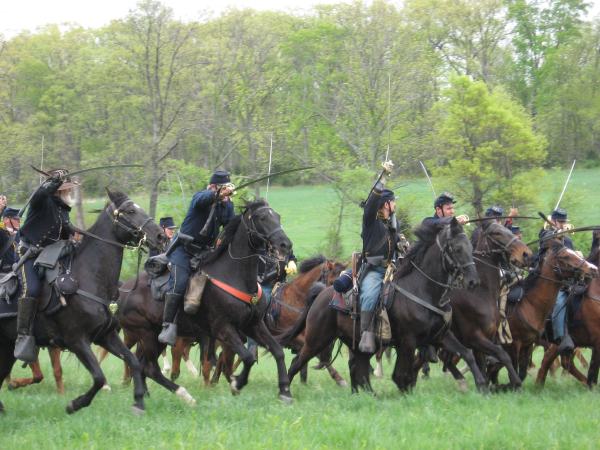
I don’t know about you, but the image that our readings bring to my mind today is one from the old Westerns. You’re probably familiar with it. The pioneers are happily moving west in their wagons, when they are suddenly attacked by Indians – or, to be more politically correct, Native Americans. Immediately, they circle their wagons and try to hold off the fierce aggressors. But, being both outnumbered and outgunned, they don’t stand a chance. The casualties mount. Resistance seems useless. The end is imminent. Then, just in the nick of time, they hear the welcome sound of a bugle call. The cavalry is here! The attackers are driven off. The pioneers are rescued. There is great relief and much rejoicing all round.

We find a similar situation in our readings don’t we? There is an initial experience of oppression, danger and despair. The first reading tells us of a people who walked in darkness. And this situation is mirrored in the gospel, where Joseph and Mary are among those laboring under foreign occupation. Even though Mary is with child, they have to undertake an arduous journey for the sake of a census. But then something happens. Much more than a bugle call, we find instead a wondrous angelic proclamation, a multitude of the heavenly host… praising God and announcing that a savior has been born for you who is Christ the Lord... The people who walked in darkness have seen a great light… And as a result, there is much relief and great rejoicing. The cavalry is here!

What does this tell us about Christmas, sisters and brothers? What do we learn, if not that the true feeling of Christmas, the great joy that the Christ-child brings, is something that is rescued from the jaws of danger and despair. The joy of Christmas is meant precisely for those who, like my relative, find themselves worried and scared. It is to people such as these that God sends a message of rescue and of hope.

But still, the image of the cavalry’s arrival only gets us so far, doesn’t it? How are we to hear the bugle call when a loved one is desperately ill in hospital and the doctors can’t seem to find the cause? How are we to catch sight of the cavalry when our 401(K) investments are besieged by market forces and there is no rescue in sight? How are we to lift our spirits in joy and excitement when all we feel is the dull weight of anxiety and apprehension?

We have to admit that these are difficult questions, without easy answers. Even so, on this Christmas day, could our readings have something more to say about all this? Indeed they do. But we need to look more closely at the picture that they paint for us. For, although this picture is very similar, in some respects, to the one in the old Westerns, it is also different in very significant ways. And it is to these differences that we need to pay close attention.

First, notice what happens to the shepherds upon receiving the angelic proclamation. Quite unlike the pioneers’ immediate positive response to the bugle call, we are told that the shepherds were struck with great fear, a feeling with which we can all identify. It is a natural reaction to strange and unexpected events, events not unlike a sudden illness, whether physical or financial. Yet, to their credit, although the shepherds are afraid, they do not run away. They remain in conversation with the angel, at the precise location of their fear. And in doing this they find reassurance and guidance. They are told what to do. They are taught how to recognize the cavalry: this will be a sign for you… an infant… lying in a manger… Could this be what we are invited to do too, when we find ourselves feeling fearful at Christmas?

Which brings us to the second significant difference. This is something we know all too well. But often familiarity breeds ignorance. So we need to allow our readings to remind us yet again: the rescue we need so desperately, comes not so much as a deadly cavalry charge but rather in the form of a helpless infant, sharing a bed with animals in a cave, because there was no room for them in the inn. Could it be that to experience the true feeling of Christmas, we need to spend time gazing upon this infant – to see, in this child, not just the valiant charge of the cavalry, but also, especially, the selfless giving on the cross at Calvary?

There is also at least one more difference to consider. In the Westerns, what is highlighted is usually the dramatic and lightning-quick rescue brought about by the cavalry. The pioneers themselves don’t need to do too much. But the situation in our readings is rather different. Notice what we heard in the second reading about the effects of Christ’s coming. The grace of God has appeared, saving all and training us to reject godless ways and worldly desires… to cleanse for himself a people as his own, eager to do what is good. The cavalry rescues the pioneers all but instantaneously. But the child in the manger saves us by putting us through rigorous training. Could this training be what we need to experience the true joy of Christmas?

Of course, all this requires time. The move from fear to joy requires time. The recognition of the cavalry in the child requires time. The training that molds a people eager to do what is good requires time. Are we not fortunate, then, that Christmas doesn’t end with Christmas day, but continues throughout the Christmas season, until we celebrate the Baptism of the Lord on January 11? Won’t we need all this time to learn to experience the true feeling of Christmas?

Sisters and brothers, the bugle has indeed sounded! The cavalry is here! How are we being invited to deepen our Christmas joy today?

A blessed Christmas to one and all!

Sunday, December 21, 2008


4th Sunday of Advent (B)
Getting the Right Idea


Readings: 2 Samuel 7:1-5, 8b-12, 14a, 16; Psalm 89:2-3, 4-5, 27, 29; Romans 16:25-27; Luke 1:26-38
Picture:

Sisters and brothers, I’m reminded today of a person, whom we will call Sam. Sam was browsing in Borders Bookstore one day, when a perfect stranger approached and said, Hi Honey! Now, there was no one else along that particular aisle at the time. What do you think was Sam’s reaction? What do you think went through Sam’s mind? Perhaps Sam remembered having heard or read somewhere that people don’t go to Borders simply to shop for books, but also to hook up with other people. And perhaps Sam was indignant at being accosted in this way. Perhaps Sam was even ready to turn around and give the bold stranger a telling off for being so forward. Thankfully, however, Sam took a moment to first look more closely at the offender. For it was only then that Sam noticed the little gadget sticking out of one of the stranger’s ears. Of course! The person wasn’t being rude. The person wasn’t even speaking to Sam. The person was greeting someone else, on the phone.

Have you ever had a similar experience? Isn’t it amazing how easy it is to get the wrong idea, how easy it is to allow what we see and hear to lead us to make certain wrong assumptions about what’s actually going on?

And isn’t it easy too to get the wrong idea about what Advent and Christmas are all about? Many of us find ourselves much busier than usual during this holiday season. There are gifts to be bought, trees to be trimmed, food to be prepared, decorations to be hung, cookies to be baked, cards to be written and sent… Where I live, for example, there are three Christmas trees – one in the reception area, one in the dining hall, and another in the living room. With all this busyness going on around us, it’s easy to go through the season thinking that Advent and Christmas are all about filling up space – space in our homes and on our streets, on our mantles and in our stockings.

To be fair, of course, not all of these activities are for our own enjoyment. There are those of us who also make a special effort, during this season, to give to charity. But still, don’t even worthy actions such as these often remain just another thing that we do, at Christmas, simply to fill up the spaces in our lives? I’m reminded of hearing, for example, a member of a charitable organization lamenting on National Public Radio the other day, that while there is a typical spike in contributions during the holiday season, in contrast, February and March are particularly difficult months, when the poor seem all but forgotten.

But if Advent and Christmas are not really about us filling up space, then what is it about? And if we are, indeed, so prone to getting the wrong idea, what can we do about it?

Perhaps we need to follow Sam’s example, and take a closer look. In particular, we need to examine carefully what the scriptures are telling us today. For in our first reading, we find someone else who is also prone to getting the wrong idea, someone no less than King David himself. Prior to the events of today’s reading, David has been very busy fighting wars and struggling and scheming for his own political survival. And, finally, we meet him today at the pinnacle of his power. We are told that he has settled into his house. He has subdued all his enemies and his seat on the throne is secure. He now has time on his hands. We might say that, after all the busyness, he suddenly finds an opening in his schedule. And how does he react? Rather quickly, he tries to find something else to do to fill up that empty space. He wants to be a master-builder. He proposes to construct a house for his God.

But God has other ideas. Instead of allowing David simply to continue engaging in yet another activity, even an activity for God’s benefit, God invites David to reflect more deeply on the true significance of all that has happened and is happening to him. God reminds David that it was never really only about him, about what he was doing for God, but it was instead about what God was doing for him, and through him, for the rest of the people. It wasn’t David who was filling up space, as much as it was God who was preparing a place for God’s people. It was God who was the divine Master-Builder.

It was I who took you from the pasture… to be commander of my people Israel…. I will fix a place for my people Israel; I will plant them so that they may dwell in their place without further disturbance…

And if it is God who is the Master-Builder, if it is God who seeks to fix a place for us in God’s kingdom, then what is our proper role? What is our proper response? What is the true significance of Advent and Christmas for us? More than simply a time for us to fill up space, this is primarily a season in which we make space – space in our hearts and in our lives – for God. And if, ultimately, it is God who is the one who builds, then the appropriate response for us is not that of King David in the first reading, but that of Mary in the gospel. Our proper role is not that of master-builder but that of handmaid.

Of course, Mary’s is not an easy role to play. The master-builder calls the shots. The handmaid only listens and obeys. The master-builder may enjoy the limelight and the acclaim. The handmaid is happy simply to remain in the background. As Paul tells the Romans in the second reading, not to us, but to the only wise God, through Jesus Christ be glory forever and ever.

And there is a further difference between the builder and the handmaid that makes the latter role a far more difficult one to play. Like those who contribute to charity only at Christmas, the builders among us can choose to give only particular portions of our time and resources. We can be satisfied with offering only whatever is convenient, whenever it’s convenient. But the handmaid is different. To be a handmaid is to give not just what one has, some of the time, but also all of who one is, all of the time. As we said of the Virgin Mary in the opening prayer, she placed her life at the service of God’s plan.

Isn’t this why we need this season of preparation? Like Mary, who took time to converse with the angel, and like Sam who took time to look closely at the stranger, we too need this season to consider carefully what is expected of us, to surface our doubts and anxieties, and to experience God reassuring and strengthening us. We need to do this so that we may obtain the courage and generosity to dedicate our lives ever more completely to God’s great construction project. We need this time to make space – in our hearts, in our lives, and in our world – so that Christ, the Living Temple of God, may once again be born among us.

Sisters and brothers, it is indeed easy to get the wrong idea. But how is God inviting us to look more carefully, and to make space more generously, for the Christ-child today?

Monday, December 15, 2008


3rd Sunday of Advent
Stay in Touch with the Light


Readings: Isaiah 61:1-2a, 10-11; Luke 1:46-48, 49-50, 53-54; 1 Thessalonians 5:16-24; John 1:6-8, 19-28
Picture: LATimes Print Edition

Sisters and brothers, something about the main section of Friday’s LA Times caught my eye. You probably noticed it too. It was quite difficult to miss. A quick glance at the paper brought to view the usual slew of bad news. On the front page there was a report about how the recent Metrolink train crash was probably the result of bad decisions made by the company two decades ago that had gambled with passenger safety. On the same page, there was also news about how, in China, economic woes have led to increasing outbreaks of rioting and unrest. And, of course, the auto bailout had died in the Senate. Further on, on page 16, there was news that a meter reader in Orlando, Florida had found the grisly remains of a toddler, suspected to be those of 2 year old Caylee Marie Anthony, missing since June 15, and alleged to have been murdered by her very own mother. Like I said, it was the usual slew of bad news.

But in the midst of all this darkness, what caught my eye was the lone colored photograph on the front page. It was a photograph of an elderly Jewish man, planting a kiss on the cheek of a younger black man. It was the picture of 86-year old Marty Biegel, former history teacher and basketball coach at Fairfax High School in LA. And the man he was kissing was Darryl Brooks, a former player in Marty’s team. In the paper, Marty’s story took up the whole of page 20. It told of how, in a dark time of racial desegregation in the schools of LA, Marty had helped to build bridges between the races by welcoming black athletes into his gym. It was also about how these players had since become his friends for life, such that even to this day, Marty and his former players, black and white, continue to have regular get-togethers. It was a story of how one person was able to make a difference in the lives of others. It was a heartwarming story. You could feel your spirits lifting even as you read it. You felt happy. You felt like life was worth living, even in the face a slew of bad news. You noticed how the story in the paper ended with Marty telling his friends to please stay in touch. And you found yourself wishing you too could stay in touch with this person who had let his light shine out so brightly, yet so unobtrusively, in the midst of the darkness.

But what I found so amazing was that one could actually feel that way simply by reading the story of one person, even a person such as Marty Biegel. How marvelous it was that even a single story of someone who had let his light shine out in the darkness could actually lighten my heart on a Friday morning, when the rest of the news was threatening to plunge it into the depths of darkness.

And isn’t this very much like what our prayers and readings at today’s Mass are seeking to do for us today? We all know very well that times are bad – perhaps worse for some than for others. Everyone has their own story of woe, their own burdens to carry. Yet, in the midst of our experiences of darkness, both personal and communal, our attention is being drawn to a particular figure. It is a figure that we already met last Sunday. It is the figure of the voice crying out in the desert, make straight the way of the Lord.

As we may remember, last Sunday, what was emphasized in the message proclaimed by this voice was the call to repentance. We were invited to level the mountains and to fill in the valleys of our hearts, so that a smooth highway might be paved for the Lord’s coming.

Today, the message remains the same, but the emphasis has shifted. Even as we continue to heed the call to repentance, today the voice beckons us also to rejoice. As Paul tells the Thessalonians in the second reading: Rejoice always…. for this is the will of God for you…

But how are we to heed this call? How are we to rejoice, especially if we find ourselves engulfed in darkness of one form or another?

Much like Friday’s paper did with the story of Marty Biegel, our readings invite us, not just to listen to what the voice is telling us to do, but also to what it tells us about itself. We are invited to listen to its story. For not only does this voice tell us to rejoice, it also speaks to us of its own experience of rejoicing. As it tells us in the first reading, I rejoice heartily in the Lord, in my God is the joy of my soul; for he has clothed me with a robe of salvation and wrapped me in a mantle of justice…

Here, we find the first answer to our problem. The first secret to rejoicing in the darkness is to continue to look to the Lord for our joy, to recall the many things that the Lord has done and continues to do for us, not least the gift to us of Christ the only begotten Son, both in the stable at Bethlehem and on the mount of Calvary. Again, as Paul tells the Thessalonians in the second reading: in all circumstances give thanks…

But that is not all. Notice also what the voice says at the beginning of the first reading. Notice the strong sense of purpose. The spirit of the Lord God is upon me; he has sent me to bring glad tidings to the poor… And notice too, how, in the gospel, this same sense of purpose fills the mind and heart of John the Baptist. Like the one in the first reading, John also comes to testify to the light. And notice how this sense of purpose, this mission of testimony, gives John an enduring appreciation of his own proper identity. He is quite happy to tell the religious authorities that he is not the Christ. Indeed, he is quite happy to say that he is not worthy even to untie the sandal strap of Christ. Isn’t there something deeply liberating in this realization – that one is not the Christ? Knowing who we’re not frees us to be who we are meant to be, and to do that which we are called to do, to testify to the light.

The scriptures go on to show us at least one other secret to the art of rejoicing in the darkness. We caught a glimpse of it in the first reading, which speaks of how just as the earth brings forth its plants, and a garden makes its growth spring up, so will the Lord God make justice and praise spring up before all the nations. We saw it too in the second reading, where Paul assures the Thessalonians that the God of peace will keep them blameless for the coming of the Lord Jesus Christ. The secret is a firm hope in the fidelity of God – trusting that God will always remember God’s promise of mercy.

Gratitude, testimony and hope – these are some of the things we find when we listen carefully to the voice crying out in the desert. These are the means by which the voice rejoices, even as it continues to proclaim a message of consolation in the desolate wastelands of the desert.

And if, in this season of Advent, we were to continue to focus our attention on this voice, might it not happen, as it did with Marty Biegel and the LA Times, that we will find ourselves caught up in its joy, the same joy that endures even in the most desolate of deserts? Might we not find ourselves illuminated by the light that shines even in the darkest of nights? Might we not find ourselves desiring to heed Marty Biegel's parting words to us, to stay in touch with the light?

My sisters and brothers, on this 3rd Sunday of Advent, what reasons might we have to rejoice in the Lord today?