Sunday, February 15, 2009


6th Sunday in Ordinary Time (B)
From Quarantine to Compassion


Readings: Leviticus 13:1-2, 44-46; Psalm 32: :1-2, 3-4, 5-6; 1 Corinthians 10: 31-11:1; Mark 1:40-45
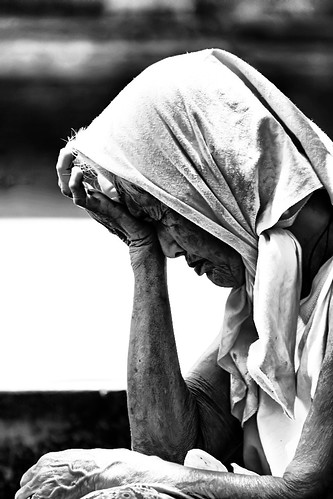
Picture: CC scragz

Sisters and brothers, there’s a bug going around town, isn’t there? In my community, three out of the five of us have been feeling under the weather. And wherever I go, whether it’s in school or church, at the cafĂ© or on the street, I seem to encounter more people with coughs and sniffles, at least more than usual. I’ve also noticed my own reaction to all this. I’ve noticed myself becoming more conscious about personal hygiene, more careful about whom I sit next to or shake hands with. I even find myself getting mildly irritated when people forget to cover their mouths and noses when they cough or sneeze. Still, in spite of my irritation, I try not to make too big a deal of it. Even if I do move away just a little when people cough, I try to do it discreetly, without seeming impolite.

But I imagine that my apparent patience is only because the illness is relatively minor. As much as a bad cold will inconvenience me, I know that I’ll probably recover in a couple of weeks. What would my reaction be if the illness were more serious, more highly contagious? What if it was SARs, or a particularly resistant strain of TB, for example? Would I be satisfied with simply practicing good hygiene? Probably not. Faced with such dangers, we tend to step up our precautions, don’t we? We move from hygiene to quarantine. We isolate the sick in order to protect the healthy. We set up boundaries between places that are sterile and those that are infected. We try to shield ourselves by remaining inside and avoiding the outside.

And it’s not just against physical illness that we do this. Don’t we find a somewhat similar move from hygiene to quarantine in international relations? Don’t we boycott or embargo so-called rogue states or dictatorships? And how about when we send crazy people to asylums, and criminals to prison? Or when the poor end up on the streets? And, closer to home, don’t many if not all families have so-called black sheep -- those we prefer to avoid meeting or talking about?

Which is why the practice we find in today’s readings is not so difficult to understand. In the first reading, someone with a sore on the skin is considered a threat to the community, not just medically, but also spiritually, since that person is considered ritually unclean, and needs to be quarantined. Notice the clear demarcation, in the first reading, between the inside and the outside of the camp, and in the gospel, between the town and the deserted places. If the healthy are to be protected, the sick need to be isolated.

As prudent and highly necessary as this practice is, however, it does have dangers of its own, doesn’t it? For one thing, when we isolate those we deem to be sick in one form or another, don’t we run the risk of forgetting about them altogether, of treating them as if they were nonexistent, even of wishing they were dead? Much like one would remove a diseased limb from one’s body, in dealing in this way with those we deem to be diseased, don’t we run the risk of moving beyond quarantine to the more drastic step of amputation?

And this tendency to amputate is something we need to pay close attention to. It is a sign that we are fooling ourselves if we think that we can keep ourselves truly healthy simply by practicing hygiene and quarantine. For this tendency is a symptom of a more deadly disease that infects us all, whether we find ourselves inside or outside. This particular sickness makes our fear and our need for self-preservation run riot, to the extent that we are even willing to sacrifice others to save ourselves. Aren’t the Holocaust and other instances of genocide only among the more extreme examples of the deadly effects of this illness?

Thankfully, however, for some mysterious reason, we never quite succeed in our attempts at doing away with the different and the diseased, the infirm and the inconvenient. Somehow, those we seek to amputate have a way of coming back to haunt us. Isn’t this what we find in today’s gospel, when the leper suddenly shows up where he isn’t supposed to be? Kneeling down, he begs Jesus: If you wish, you can make me clean.

The leper’s actions and his words offer us both a diagnosis and a cure for our disease. If you wish, you can make me clean. Doesn’t this simple straightforward statement powerfully uncover our illness? Isn’t the trouble with us not so much that we can’t make him clean, but that we don’t really want to? And if we really allowed the sight of that wretched specimen of humanity, kneeling in the dusty street, to move our hearts and to haunt our memories, as Jesus so plainly does, will we not also begin to be healed of our own deadly disease, our selfishness and our apathy?

Quite ironically, it is in the leper – in those we may prefer to forget and to isolate, to quarantine and to amputate – that we find the possibility for salvation. But this possibility of a cure only becomes a reality for us if we do what Paul advises in the second reading. We are saved only if we imitate the Lord in seeking the benefit of many, in allowing our fear to be changed into compassion, our passivity into action. And it is precisely this change, this great healing, that Jesus seeks to bring about.

Perhaps this also explains why Jesus insists that the leper should not publicize his cure. For once we think that he has been healed of his disease, can the leper still provide us with a cure for our own? Will he still be capable of moving us to compassion? And perhaps this is also why Jesus ends up exchanging places with the one who can’t keep a secret. In remaining outside in deserted places, Jesus takes on the role of the leper, and becomes the cure for our disease. In order to find Jesus and the healing that he brings, we need to leave the deceptive protection, the artificial isolation, of our towns and our camps. We need to reach out to those living on the fringes, those we might otherwise prefer to ignore and to forget. And, especially with the economy the way it is, it is probably not too difficult for us to find such people today.

Earlier, in our opening prayer, we said that in Jesus Christ God changed humanity’s history by his command of perfect love. Through his life, death and resurrection, Jesus shows us an alternative to our fear-driven strategies of hygiene, quarantine and amputation. He offers us the possibility of writing a different history, a history driven by love and compassion, a history of healing and reconciliation, a history characterized by a reaching out in love to those most in need.

Sisters and brothers, even as many are celebrating St. Valentine this weekend, perhaps it’s appropriate for us to ask ourselves which history it is that we are writing, which disease it is we are resisting today?

Monday, February 09, 2009


5th Sunday in Ordinary Time (B)
Stories Of Loss and Danger


Readings: Job 7:1-4, 6-7; Psalm 147:1-2, 3-4, 5-6; 1 Corinthians 9:16-19, 22-23; Mark 1:29-39
Picture: CC Sir Mervs

Sisters and brothers, today I’m reminded of two stories with which most of you are probably already familiar. The first took place just a couple of weeks ago. It’s the story of the family of seven who died in Wilmington on January 26 – victims of what looked like a murder-suicide. Apparently, the parents had recently been dismissed from their jobs for trying to defraud their employer. And the father then shot and killed his wife and five children, including two sets of twins, before turning the gun on himself.

The second story is older and from further away. It’s the story of the Polish Franciscan priest, St. Maximilian Kolbe. In July 1941, while detained at the Nazi concentration camp in Auschwitz, Fr. Kolbe was starved to death by his captors, after having volunteered to take the place of another prisoner who had been chosen to suffer that very fate.

These two stories are both the same and yet different. They are the same in that both are stories involving loss. In the first, the parents had lost a lucrative means of making a living, and would soon lose their reputations as well. In the second, Kolbe had lost his physical freedom, and much more besides. In both cases, people would also end up losing their very lives as well. But how different are the circumstances. As appalled as we might be at the loss of life in each case, when we hear about the first story, we cannot help but shake our heads at the terrible tragedy of it all. But when we recall the second, something truly marvelous happens within us. We are moved and inspired by what we find.

What does this difference in our reactions tell us if not that there are some losses that are more tragic and more dangerous than others. Worse even than the loss of one’s life is the prospect of losing one’s hope and the sense of one’s own dignity and purpose as a human being. At least arguably, these precious things were lost in the first story, but retained and even advanced in the second.

In our readings today, we also find situations of loss and of danger. We probably all know very well the story of Job. We know how he had lost everything in a series of disasters: his wealth, his property, his family, and even his health. And, in today’s first reading, we find Job in danger of losing something even more precious. My days are swifter than a weaver’s shuttle, he prays, they come to an end without hope… Job is in danger of losing his sense of hope and purpose in life. For what meaning can there be, if a righteous person like him should have to suffer in such terrible ways? Should he follow the advice of his friends and see his trials as God’s punishment for sins he has no knowledge of having committed? Should he simply end his life, as did the Wilmington family in our first story? It is out of this terrible situation of loss and of danger that Job offers his prayer to God.

And isn’t it true that Job’s story is also often our story as well? Even if we consider neither our virtue nor the extent of our difficulties to be quite on par with Job’s, from time to time, don’t we too suffer from losses of one kind or another? And when this happens, don’t we sometimes feel tempted to believe that God is punishing us for sins we may not even be conscious of committing, or thinking that maybe this is due to bad karma? Wondering about the meaning behind it all, don’t we sometimes even find ourselves pushed to the edge of despair? And if, like Job, we were to cry out to God, how might God reply?

The response will, of course, vary from situation to situation, and from person to person. Even so, is there not perhaps some discernible pattern to God’s response? Could this be what we find in today’s gospel? For here too, we are faced with situations of loss and danger. The most obvious of these are to be found, of course, in the people who flock to Jesus. We are told that they brought to him all who were ill or possessed by demons. And he cured many who were sick with various diseases, and he drove out many demons…

Is this then, how God invariably responds to our experiences of loss and danger? If we have a cancerous tumor, does God always take it away? If we are possessed by demons of loneliness or depression, anxiety or despair, does God always ease our pain? If we lose our jobs or our 401(k) investments, does God always immediately reinstate them? While it is true that God often does do such things for us, and while it is highly appropriate and even commendable that we should pray for them if we need to, isn’t it also true that, perhaps just as often, what we pray for doesn’t seem to come to pass? Isn’t this also the situation in the book of Job? In spite of Job’s incessant pleading, for much of the time, God seems to remain painfully silent. What then are we to make of today’s gospel passage?

A clue to an answer is to be found perhaps in what Jesus does at the end of the reading. In spite of a growing demand for his ministry of healing and deliverance, Jesus ultimately decides to leave. Let us go on to the nearby villages, he says, that I may preach there also. What does this tell us if not that, as important as it was for Jesus to cast out demons and to heal, in his mind, it was even more important to preach the good news of the coming of God’s kingdom. And the purpose of his miracles is precisely to proclaim and lead people into this same kingdom. As he tells his disciples: For this purpose have I come.

Here, we find not only a sense of Jesus’ priorities but also the pattern of God’s response to our experiences of loss and danger. If preaching the good news appears more important for Jesus than even healing and casting out demons, isn’t it because, more dangerous even than the loss of one’s wealth and health, is the loss of one’s sense of hope and purpose as a human being? Indeed, isn’t this a danger that Jesus himself faces in the gospel? How tempting it must have been for Jesus to remain where he was well received, and perhaps to set up his own private practice. But, after spending time in prayer, Jesus decides to do otherwise.

Doesn’t his experience show us that one encounters the danger of forgetting one’s purpose as much in seasons of success as in times of suffering? And isn’t this precisely the danger that the good news addresses? Isn’t it in the good news that we find the hope and meaning that we need to face and to overcome the trials that beset us, much as Maximilian Kolbe did at Auschwitz? Isn’t this also the experience of Paul in the second reading, who professes to have made myself a slave to all so as to win over as many as possible…. for the sake of gospel, so that I too may have a share in it?

Sisters and brothers, it’s not a matter of debate that we are now living in a time of loss and of danger. But isn’t it just as much a time of opportunity and obligation, a time when we, the followers of Christ, are especially needed to go out into the global village to preach the good news both in word and action?

How are we being invited to do this today?

Sunday, February 01, 2009


4th Sunday in Ordinary Time (B)
Piercing Problem


Readings: Deuteronomy 18:15-20; Psalm 95:1-2, 6-7, 7-9; 1 Corinthians 7:32-35; Mark 1:21-28
Picture: CC Stuti~

Sisters and brothers, do any of you have ear piercings? I understand that people who do sometimes face a problem. The piercing is, of course, meant for earrings. But, as anyone can imagine, it’s neither comfortable nor convenient to have heavy pieces of jewelry hanging from your ears all the time. On the other hand, however, you don’t want to remove the precious object for too long, because if you do, the hole is likely to close. And then you’ll have to endure the pain of getting your ears re-pierced. So you’re faced with a dilemma. Do you wish to tolerate the hassle of continually wearing a pair of earrings, or do you want to remove them and run the risk of needing to have your ears re-pierced?

Of course, I've heard that these days one can actually buy something called a retainer, which is designed to keep piercings open. But I do remember a time before retainers were readily available. Back then, one of my relatives used to walk around the house with a small piece of a broken toothpick stuck into each of her earlobes – a convenient solution to a difficult dilemma. But I suspect that this tactic is not without risks of its own, one of them being the possibility of infection.

Strange as it may seem, in the spiritual life too, there is a somewhat similar dilemma, a parallel to the piercing problem. We find it, for example, in the experience of the Israelites in the first reading. What is their dilemma? On the one hand, they know that they are nothing without the Lord, their God, who had earlier saved them from slavery in Egypt. Especially through their struggles in the desert, they are beginning to realize that there is something like a piercing within their hearts and in their life together as a people. There is a special space that is meant for God alone to fill. On the other hand, however, they find the experience of God too terribly intense to undergo for any extended period of time. More than any heavy piece of jewelry, the weight of the Divine is so great that when it comes upon them, it feels as if they will perish. So they beg Moses: Let us not again hear the voice of the Lord… lest we die. But then, their piercings keep crying out to be filled. What to do?

As we know, throughout their history in the Old Testament, the Israelites will face continual temptations to fill-in their God-shaped piercings with things that are less than God, things like pagan idols, and greed, and even, as in the case of the Pharisees and scribes of Jesus’ day, the keeping of ever stricter and more detailed prescriptions of the Law. And when this happens, a kind of spiritual infection sets in. When God’s rightful place is usurped, people suffer. The poor are neglected and exploited. The rich lose a sense of their own humanity. Wars and conflicts erupt. The nation itself degenerates in decadence and decay.

It is in the midst of this difficult dilemma then, that Moses announces God’s promise to send a prophet, whose main role is to be something of a retainer. The prophet’s task is to help the people to keep their piercings open for God alone. But for this solution to work, the prophet must speak only what God commands. And the people must heed the prophet’s message. However, we know that frequently, things will not work out as planned. Often, the people will reject and even do away with their God-appointed retainer. Or the prophet will be motivated by self-interest, and end up speaking what is false. In either case, the piercings are once again infected. Suffering and death are the result.

It is into such a situation of spiritual sickness that Jesus enters like a powerful antibiotic. Here at last is the only possible resolution to the dilemma. On the one hand, Jesus is truly God, and so, he is able to occupy the people’s piercings without causing an infection. On the other hand, however, Jesus is also fully human. People can relate to him without suffering the terrible weight of the Divine. As Jesus tells us in another gospel: my yoke is easy and my burden light (Mt. 11:30). It is this resolution to the dilemma that we see in today’s gospel. More effective even than a God-appointed prophet, the divine-human authority of Jesus’s person and teaching are such that they are able to drive out the unclean spirits that contaminate people’s hearts and lives. Quiet! Come out of him! And with a loud cry the unclean spirit is expelled.

Sisters and brothers, isn’t this precisely the kind of authority and healing power that we need so very much especially today – when we seem to be surrounded by difficulties on every side, the financial situation being the most pressing? Plagued by anxieties of every sort, do we not find ourselves sorely tempted to look for quick-fixes of one kind or another, to seek purely practical solutions, relying only on better laws, for example, or more advanced technology, or more accurate information?

These things are, of course, very important. Yet, isn't there also a spiritual dimension to the problem? Could it be that ours is also a spiritual ailment? Could it be that, like the Israelites, ours is also a case of infected piercings? Could it be that we have allowed God’s place to be usurped by unclean spirits of different sorts, greed and self-interest and apathy being among the more obvious? If this is true, then we need to remember that illnesses such as these cannot be effectively treated by simply gathering more and more information. Nor, for that matter, are they cured by merely going to church more often, without a corresponding change in one's attitudes and behavior. As we see in today’s gospel, it is in the synagogue that the possessed person appears. And neither does the unclean spirit lack information. It knows quite well who Jesus is.

Spiritual illnesses require spiritual treatment. The infection of our piercings can only be eradicated when we truly immerse ourselves in the power of Jesus’ teaching and healing action. And isn’t this the reason why we have gathered here this evening? More than merely to satisfy a weekly obligation, we are here so that, in the gathering of God's people and the proclamation of God’s Word, in the breaking of the Lord’s Body and the pouring out of his Blood, our piercings might be purified of every unclean spirit, and God restored to God’s rightful place. We are here, so that, as Paul exhorts the Corinthians to do in the second reading, we too might, once again, commit ourselves to serving the Lord without distraction. Such that when we leave this place to return to our own respective homes, our various occupations and different relationships, we too might become true prophets in the world, God’s retainers, committed to helping to preserve God’s rightful place in the piercings of human hearts and lives.

I'm reminded, for example, of the report in today's LA Times, about the prophetic actions of parish communities in Orange County, who are taking concrete steps to help people suffering under the weight of the current economic crisis.

If today you hear his voice, harden not your hearts…

Sisters and brothers, this is what we prayed in the responsorial psalm just now. How might we better respond to God’s voice as it addresses us today?

Monday, January 26, 2009


3rd Sunday in Ordinary Time (B)
Panhandler's Plea


Readings: Jon 3:1-5, 10;Psalm 25:4-5, 6-7, 8-9; 1 Corinthians 7:29-31; Mark 1:14-20
Picture: cc stephenccwu

Sisters and brothers, I’m reminded today of a young couple whom I walked by just a few days ago along State Street in Downtown Santa Barbara. They were panhandling. Which isn’t so out of the ordinary for that part of town. But what drew my attention was the fact that they looked cleaner and healthier than the average hobo, and they were also accompanied by three dogs. On taking a closer look, I noticed that the guy was holding up a piece of cardboard on which was written something that almost made me laugh out loud. Family killed by Stormtroopers, it said, need change for Jedi training. With a sign like that, I’m not sure if they actually collected any money.

In any case, strange as it may seem, it is those words crudely scrawled on that ragged piece of cardboard, that our Mass readings recall to my mind today. As we are all probably well aware, the words allude to the Star Wars saga. But what possible connection might they have to today’s readings? And what possible relevance might they have for us? At least three points, I think, three points of convergence between the panhandler’s sign and the scriptures, three aspects that invite our reflection.

First, there is, of course, the element of misfortune and danger. Family killed by Stormtroopers – not just a reference to a past misfortune, but also an implication of real and present danger. Those familiar with Star Wars will remember, for example, how the evil Emperor’s strenuous efforts at finding and destroying the young Luke Skywalker not only result in the death of Luke’s friend and mentor, Ben Kenobi, but also force Luke to flee his home planet of Tatooine. Misfortune and danger. Not unlike the situation that we find in our readings today.

Consider the message that Jonah is sent by God to announce to the Ninevites in the first reading. Forty days more and Nineveh shall be destroyed. There we have the explicit danger, the fast approaching misfortune. And there’s also something unspoken too. What’s implied is that it is through their own conduct, their own actions, that the Ninevites have brought this calamity upon themselves.

We find something ominous in the second reading too. Here, even though no sin or fault is indicated, we’re reminded of the ephemeral nature of our existence upon this earth – for both the innocent and the guilty alike, the world in its present form is passing away.

Still, all is not lost. Something can yet be done. And here’s the second point of convergence. For our panhandling friends on State Street, the solution lay, apparently, in receiving spare change. For the Ninevites too, the answer lay in change, but change of a different sort. What they needed was not so much monetary assistance from without, as much as divine intervention from above. And in order to receive this, they had first to undergo a change of heart, an interior conversion expressed in concrete exterior actions. We’re told that the people of Nineveh believed God; they proclaimed a fast and all of them, great and small, put on sackcloth.

As a result, another very mysterious change was brought about. Apparently, a change actually took place in God. We’re told that God repented of the evil that he had threatened to do to them. However we choose to interpret this statement, the point remains that the way out of the perilous situation facing the Ninevites lay in change of a very definite sort, change that was both deeply felt and concretely expressed. The dark clouds of danger and misfortune could only be dissipated when the Ninevites resolved to turn away from their usual attitudes and actions.

But that’s not all. Even if that’s how the first reading ends, the other readings tell us that this change, this repentance, this turning away from, needs to be accompanied by a turning towards something or someone. Need change for Jedi training, said the panhandler’s sign. Likewise, and this is our third point of convergence, the change of repentance is needed only so that we can undergo training of a certain sort. This is the same training for which the psalmist prays when he asks God to teach me your ways, guide me in your truth and teach me… It is the same training for which Simon and Andrew, and James and John abandoned fish and family in order to undergo. Not Jedi training, surely, but Jesus training. Come after me, and I will make you fishers of women and men. It is also through this same training that we learn what it might mean to put into practice Paul’s enigmatic words to the Corinthians in the second reading: to have spouses and yet to act as not having them, to weep and to act as not weeping, to rejoice as not rejoicing, to buy as not owning, to use the world as not using it fully.

These then are the three points of convergence between the scriptures and the panhandler’s sign: danger, change and training. And do we really have to reflect much more deeply to see their relevance for us today? Surely the dangers of our current situation are evident enough. Can we not see ever more clearly the likely consequences of, for example, continuing to enshrine greed as the only necessary engine of progress, or to excuse the shedding of innocent blood as inevitable collateral damage, or to neglect our responsibility to respect and to uphold the sanctity of life as much as the sacredness of the earth?

Faced with these and other dangers, do we not find ourselves yearning for change? And yet, are we not also painfully aware of what the Ninevites realized so well – that we can truly change the world only by first changing ourselves? And do we not need now, as much as the first disciples did then, to undergo the training that our Lord continues to offer us? Indeed, isn’t this the very training that we have gathered here, around ambo and altar, to celebrate – the paschal training offered by the One who lived, died and was raised to life for us?

Sisters and brothers, perhaps we’re not so much different from those two youthful panhandlers on State Street, or from the recalcitrant people of Nineveh, or those diligent fishermen on the Sea of Galilee. Like them, we too require change so that we can devote ourselves to the training that is able to save us from calamity.

How might the Lord be offering these very things to us today?

Sunday, January 04, 2009


Wedding Mass of Christina Puno & Warren Okubo
Thank You for the Music

Readings: Genesis 1:26-28, 31a; Psalm 103:1-2, 8 & 13, 17-18a; 1 Corinthians 12:31-13:8a; John 15:9-12

Christina and Warren, dear friends, are you familiar with the word Abba? Some of you may know that in Aramaic, Abba means father. But that’s not the Abba I mean. I’m sure at least some of us here are also familiar with the Swedish pop group from the 1970’s. Perhaps some of us have watched the more recent musical, Mamma Mia, or the movie of the same name, which featured their songs. I don’t know how you feel about ABBA, and I’m sorry if this seems less than appropriate, but on this joyous occasion, I’m reminded of the following words from an ABBA song entitled Thank You for the Music.


I’m nothing special. In fact I’m a bit of a bore.
If I tell a joke, you’ve probably heard it before.
But I have a talent, a wonderful thing.
‘Cause everyone listens when I start to sing.
I’m so grateful and proud.
All I want is to sing it out loud.

So I say:
Thank you for the music, the songs I’m singing.
Thanks for all the joy they’re bringing.
Who can live without it, I ask in all honesty?
What would life be?
Without a song or a dance what are we?
So I say thank you for the music.
For giving it to me.


Whether we like ABBA or not, I’m reminded of these words today because they resonate rather well with what we are doing here. As you may know, in the song, a woman celebrates and gives thanks for her musical talent: Thank you for the music, the songs I’m singing. Thanks for all the joy they’re bringing… And aren’t we doing something very similar at this celebration too?

Don’t get me wrong. I don’t really know whether either of you, Christina or Warren, or any of the rest of us, for that matter, is musically inclined. No, the song that I’m referring to is of a different sort. The music for which we are giving thanks today is, of course, the love between Christina and Warren. One of the main things we are doing at this celebration is saying thank you for the music, thank you for the song of love that has brought together, not just these two young people, but also all of you, their family and friends. But what exactly is the nature of this song? Why are we so grateful for it? What does it sound like? From where does it come? And where does it lead us? The answers to these questions are found in the beautiful readings that you, Christina and Warren, have chosen for this celebration.

These readings tell us at least three things about the song for which we are giving thanks. The first is how precious, how very important, it is. For in the first reading, we are told that woman and man are made in the image and likeness of God: in the image of God he created… them. And we know, of course, from the first letter of John, that God is love (1 John 4:16). It follows, then, that the song of love that we are celebrating today is not something extra, something that is good to have but that we can actually do without. For if we are all made in the image of love, then we can remain human only to the extent that we keep singing love’s song. By inviting us to this celebration, Christina and Warren, you are reminding us that, as important as it may be to have a comfortable home, a good job, a stylish car, well-connected friends, lightning-fast Internet service, or HD TV, love is far more precious. For love is what makes us who we are – to be human is to be loved and to love. Or, if you prefer ABBA’s expression: who can live without it, I ask in all honesty? What would life be? Without a song or a dance, what are we?

And that’s not all. Not only is it precious, but our readings also tell us that this song of love is immensely powerful. Consider what we heard about love in the second reading. When faced with trying situations and difficult people, for example, when our tongues are itching to say something sarcastic or hurtful, when our hands are eager to wrap themselves around another’s throat and to give it a good shake, love gives us the power, instead, to be patient and kind. When circumstances – either experiences of failure or success – may lead us to think either too poorly or too highly of ourselves, love empowers us to be neither jealous nor pompous. And when it may seem that everyone around us delights only in that which is comfortable and convenient, in whatever is easy and painless, love enables us to rejoice only with the truth, even if the truth comes at a cost, as it did for the Lord Jesus and those who seek to follow him.

Yes, this song that we are celebrating today is indeed as powerful as it is precious. Which is why the readings remind us of a third important thing about this song of love. In order for it to endure in our lives, we have to do all we can to persevere in singing it. As Jesus tells us in the gospel, remain in my love. If you keep my commandments, you will remain in my love. Or, in the words of ABBA, we need to remember that we have all been given a wonderful thing, for which we are justifiably grateful and proud. Such that all we want to do is evermore to sing it out loud.

Dear friends, isn’t this why we are all here today? We have come to witness this joyous moment when you, Christina and Warren, will commit yourselves to each other, not just for a day, but for the rest of their lives, not just in good times, but also in bad, not just in the vigor of youth and health, but also even in the frailty of sickness and old age. Today you will declare before the church and the rest of the world that, through your life together, even when circumstances might seem to conspire to drown out your song, you wish to keep on singing.

And you, Christina’s and Warren’s family and friends, will also pledge to support them, to share in the song of their love. Why? Because, as Jesus reminds us in the gospel, I have told you this so that my joy might be in you and your joy might be complete. This is my commandment: love one another as I love you. Whatever may happen in the future, whatever the price we may have to pay, we believe that as long as we continue to renew and to live out our commitment to singing this song that begins in God and that continues to resound among us, we will all be led ultimately to the fullness of joy.

Dear friends, today is indeed a joyous occasion. Christina and Warren, together with you, in this Eucharistic celebration, we all want to say a big thank you to God, and to one another. Together with you, we all want to say thank you for the music, the song that makes us grateful and proud! May our compassionate God grant us the power to keep on singing it out loud!