Monday, July 04, 2011


God of My Vocation

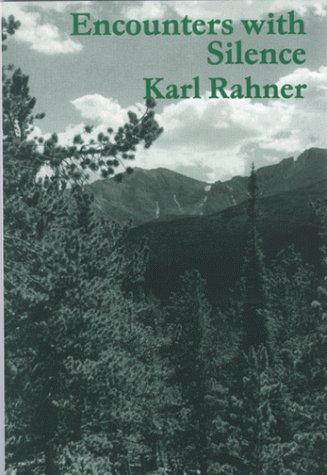
My dear sisters and brothers, on occasions such as this, one is led to consider how much of all that one is, and all that one has, one owes to others. I think not only of family and friends, teachers and formators, benefactors and parishioners, but also of people of different times and places. Many of whom I have never even met: People whose books have enriched me, whose lives have inspired me, whose achievements have benefited me, even those whose mistakes have been lessons for me. It is this sense that little about me is truly original that gives me the courage (some would say thick skin) to share with you the following words, which I have shamelessly stolen from a prayer written by the late Jesuit theologian, Karl Rahner. The prayer is entitled God of My Vocation.

O God of my calling.... Can I preach Your Gospel, if it has not struck deep roots in my own heart? Can I pass on Your life, if I am not alive with it myself? .... It’s unavoidable: Your official business and my private life cannot be separated.

And that is precisely the burden of my life. For look, Lord: even when I announce Your pure truth, I’m still preaching my own narrowness and mediocrity along with it. I’m still presenting myself, the “average man.” How can I bring my hearers to distinguish between You and me in the frightful mixture of You and me that I call my sermons? How can I teach them to take Your word to their hearts, and forget me, the preacher? ....

O God of my vocation, when I consider these things, I must confess that I don’t at all feel like taking my place in the proud ranks of Your confident and conquering apostles. I rather feel that I should be on my way, simply and humbly, walking in fear and trembling. I don’t mean to criticize those among my brethren who can be so happily sure of themselves, those of Your servants who so unmistakably reflect the inner confidence that they are coming in the name of the Lord God of Hosts, and who are quite amazed if anyone does not immediately recognize in them the ambassadors of the Almighty.

I cannot belong to that fortunate group, O Lord. Grant me rather the grace to belong to the number of Your lowly servants who are rather amazed when they are received by their fellow (human beings). Let my heart tremble again and again in grateful surprise at the miracles of Your grace, which is mighty in the midst of weakness. Let me continue to marvel that I meet so many (people) who allow me, poor sinner that I am, to enter into the secret chamber of their hearts, because they have been able to recognize You hidden in me....

O God of my vocation, I am only a poor mask, behind which You have chosen to approach (people) as the hidden God. Grant me the grace day by day to be ever more free from sin and self-seeking. Even then I shall remain what I can’t help being. Your disguise and Your unprofitable servant. But then at least I shall grow ever more like Your Son, who also had to envelop the eternal light of His divinity in the form of a servant, to be found in the garb and livery of a (human person).

When I bear the burden of Your calling, when Your mission weighs down heavily upon me, when Your Majesty humbles me, and my weakness is taken up into that of Your Son, then I may confidently trust that the hindrance which I have been to Your coming may still turn out to be a blessing to my (sisters and) brothers. Then perhaps You will transubstantiate my servitude... into a somehow sacramental form, under whose poverty You will be the bread of life for my brethren.

O God of my vocation, let my life be consumed as the Sacred Host, so that my brothers (and sisters) and I may live in You, and You in us, for all eternity. Amen.


My sisters and brothers, thank you all for coming. May your presence here tonight be an ongoing channel of grace, for you and all your loved ones, in the days to come...

Sunday, July 03, 2011

14th Sunday in Ordinary Time (A)
If You Don’t Use It, You Lose It

Readings: Zechariah 9:9-10; Psalm 145:1-2, 8-9, 10-11, 13-14; Romans 8:9, 11-13; Matthew 11:25-30
Picture: cc Alexander Savin

Sisters and brothers, do you exercise? What kind of exercise do you do? And why? As you know, if we were to go to East Coast Park after this Mass, we will probably see many people there walking or jogging, cycling or roller-blading. And it’s no secret why these people do these things. They know that the body needs exercise to remain in good condition. They know that unless they engage in some form of regular physical activity, their bodies will grow weak and become more prone to illness. As the saying goes: if you don’t use it, you lose it.

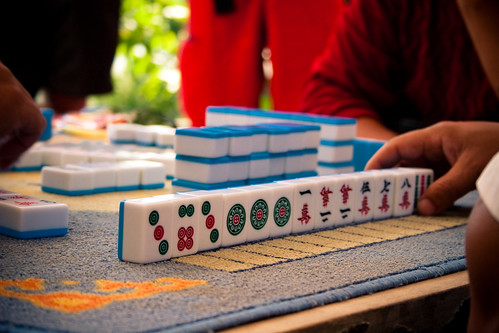
I’ve also heard of a community of religious sisters, all of whom have already retired from active ministry. In addition to saying their daily prayers, these nuns actually spend a good portion of their time playing mahjong. Don’t worry. They’re not gambling. The sisters are encouraged to play mahjong because those caring for them know that this game can help them to remain mentally alert. They know that, like the body, the mind too needs exercise. Otherwise, as we age, we become more prone to diseases like dementia. As with the body, so too with the mind: if you don’t use it, you lose it.

But, of course, there is a limit to what we can do. No matter how far or how often we may walk, no matter how many rounds of mahjong we may play, finally, if and when sickness decides to come knocking on our door, we will still be unable to escape its clutches. Death comes to us all. That is just the nature of things.

What’s more, it is actually possible to be in excellent physical and mental condition and still be deeply unhappy. We can think, for example, of the pair of Hong Kong celebrities who have been filling the news lately. So rich and famous. So talented and good-looking. Yet so very miserable. And what about us? Even if we may not be celebrities ourselves, don’t we have our fair share of problems too? Misunderstandings with family and friends, difficulties in school or the workplace, financial setbacks, loneliness, boredom, and the routine stresses and strains of daily living. These are just some of the many burdens that, from time to time, each of us has to bear.

Isn’t this why we find Jesus’ invitation to us in today’s gospel so very consoling? Come to me, all you who labour and are overburdened, and I will give you rest. When we hear these words, don’t we wish we could run immediately to the Lord and enjoy the rest that he offers us? And when we listen to the first reading speak about the king who comes to us riding on a donkey, and who will proclaim peace to the nations, don’t we wish we could welcome this king with open arms? Don’t we yearn to experience his peace?

And yet, it’s not always easy to come close to Jesus, is it? As much as we may want to enjoy his company, all too often we allow other things to come between us and the Prince of Peace. Sometimes it’s a matter of simple ignorance. We want to go to the Lord, but we just don’t know how. At other times, we are kept from drawing close to Jesus, because we are clinging to something else. A sinful habit, perhaps. Or a painful memory. Low self-esteem. Or an inadequate appreciation of God's love for me. An obsession with material concerns. Or just plain old-fashioned laziness.

And then, of course, there is that one obstacle that we all struggle with at some point or other. Even the great St. Peter and the rest of the first apostles stumbled over this obstruction. What is it? It is the realization that the way of peace, on which this donkey-riding king from the first reading wishes to lead us, is also the road to Calvary. And the easy yoke that Jesus wishes to lay upon our shoulders in the gospel is none other than the wood of the Cross. For, as we all know, in the mystery of Christ–the same mystery that we are celebrating in this Mass–Death and Resurrection are really two sides of the same coin. We only get to Easter Sunday by passing through Good Friday. To come close to Jesus is also to bear the life-giving burden of his holy Cross. When we realize this, will we still wish to come to the Lord?

What then are we to do? How can we overcome all the formidable obstacles that keep us from approaching Jesus? The solution lies neither in physical strength nor in mental ability. Neither solely in the body nor in the mind. It is to be found, instead, in the spirit. As St. Paul tells us in the second reading: (our) interests are not in the unspiritual, but in the spiritual. For unless (we) possessed the Spirit of Christ (we) would not belong to him. What all this means, sisters and brothers, is that, in order to live a full human life, as Jesus did, it is not enough just to engage in physical and mental activity. It is not enough simply to go jogging, or to play mahjong. In order to come to Jesus, and to enjoy his rest, in order to experience his peace, what we need above all, is to engage in  regular spiritual exercise. We need to deepen our prayer.

Which brings us to the reason why my companions–Fr. Ravi and Bros. Jerome, Stanley and Basil–and I are here today. We are Jesuits, followers of St. Ignatius of Loyola, a saint of 16th century Spain, who was blessed with a gift for guiding others in the ways of prayer. The five of us will be outside the church after Mass to share a little, with any of you who may be interested, about the Spiritual Exercises, a book that St. Ignatius wrote. It is a manual for helping people to grow closer to God. For, in the words of Ignatius himself: just as taking a walk, journeying on foot, and running are bodily exercises, so we call Spiritual Exercises every way of preparing and disposing the soul to rid itself of all (disordered) attachments, and, after their removal, of seeking and finding the will of God (SpEx. #1).

To rid ourselves of disordered attachments. To grow closer to Jesus. To find the courage to shoulder his yoke–the Cross of Compassion. And, in shouldering it, to enter into his rest, the rest that the Father’s will alone can provide. This is what it means to engage in spiritual exercise.

Sisters and brothers, even as we may struggle with our many problems, our Lord continues to invite each of us to come to him. But in order to be ready to answer his call we need to exercise regularly. For as it is with the body and the mind, so too with the spirit: if you don’t use it, you lose it.

Sisters and brothers, what forms of spiritual exercise are you doing today?

Sunday, May 29, 2011


6th Sunday of Easter (A)
Bearing Joy on Broken Legs

Readings: Acts 8:5-8, 14-17; Psalm 66:1-3, 4-5, 6-7, 16, 20; 1 Peter 3:15-18; John 14:15-21

Sisters and brothers, I think that by now at least some of us have seen the news report that has been making the rounds on the internet. It tells the story of how a little puppy–a terrier mix by the name of Mason–recently brought great joy to the hearts of his family. Mason lives in the town of North Smithfield, in Alabama. On the 27th of April, Mason had gone missing. A tornado had struck his home and carried him off. After searching in vain for days, his owners had given up hope of ever finding him alive. Then, a couple of weeks later, the family returned to their destroyed house, to see if there was anything they could salvage, only to find their faithful pet sitting on what was left of their front porch, waiting for them. Both of  Mason’s front legs were broken. Yet the little guy had somehow managed to crawl through the rubble and get back home.

Carried off by a tornado. Suffering from the pain of two broken legs. And yet, he was still able to bring joy to the hearts of his family. From where did this little puppy find the strength and the courage to do what he did? What was the reason for his bravery? We can’t say for sure. Mason can’t tell us. He is, after all, only a dog.

But it’s not just puppies who can be bearers of joy even after having their legs broken. We Christians are called to do the same. Isn’t this what we find in our readings today? In the first reading, we’re told that Philip brought great joy to the people of Samaria when he proclaimed Christ to them. He healed the sick. He cured the crippled. He freed those who were possessed by unclean spirits.  And notice too the circumstances that led Philip to do all these things. As you know, our reading today is taken from the Acts of the Apostles. It begins from verse 5 of chapter 8. Chapter 7 had ended with the brutal killing of Stephen, one of Philip’s companions. The religious authorities had stoned Stephen to death. And then, in the first four verses of chapter 8, we’re told that, after Stephen’s execution, there broke out a severe persecution of the church in Jerusalem. As a result of which, the Christians were scattered. So Philip’s ministry among the Samaritans was a direct result of the attacks on Christians that  arose after Stephen was killed.

Swept away by a tornado of persecution. Suffering from the pain of a friend’s death by stoning. Yet Philip still managed to bring the joy of the Risen Christ to the people of Samaria. Clearly, the experience of Philip the Christian bears a striking resemblance to that of Mason the dog. Except for two important differences. For one thing, Mason brought joy to his own family–those who loved him, who fed and cared for him, those who were his friends. Philip, on the other hand, ministered to Samaritans–people who were traditionally treated by the Jews as enemies.

There is another difference. Mason is only a dog, unable to speak. But Philip is both a human being and a follower of Christ. And as such he is both able and duty-bound to give an account of his actions. As the second reading reminds us, this is what Christians are called to do. Just like Philip’s community, the Christians in the second reading are also undergoing persecution. And, in the midst of their trials, they are being asked to respond in a very specific way. Not only are they not to retaliate but, quite incredibly, they are asked to share the joy of their faith even with their enemies. Always be ready, they are told, to give an explanation to anyone who asks you for a reason for your hope.

But what exactly is the reason for a Christian’s hope? What is the source of our strength? We find the answer in the gospel. Here, as Jesus continues his farewell speech at the Last Supper, he tells his disciples what they should do after he is gone. Jesus tells them how they can continue to enjoy his presence even after he has been cruelly swept away from them by the hatred of his enemies. If you love me, Jesus tells them, you will keep my commandments. And I will ask the Father, and he will give you another Advocate to be with you always, the Spirit of truth.... (who) remains with you, and will be in you.

What we find here in our readings today, sisters and brothers, is an important reminder. As followers of Christ, when our legs are broken by the tornadoes of life, not only are we called to continue to bring joy to others, but we are also expected to be ready to somehow share with them the reason for our hope, to impart to them the source of our strength. And this is a most timely reminder for us, especially in these days when it is becoming ever more tempting to react very differently to the trials and tribulations of life. Instead of bringing joy to others on broken legs, there are those who would prefer to snatch security and happiness from out of the barrel of a smoking gun.

We all know, for example, what happened when recently the news broke about the killing of a notorious master terrorist. In some parts of this country, people were dancing in the streets. It is, of course, quite understandable why some might react in this way–especially those who might have lost loved ones at Ground Zero, when the Twin Towers fell, or in the War on Terror in Iraq or Afghanistan. And, especially on this Memorial Day weekend, it is only appropriate that we remember the bravery of the many veterans, who have exposed themselves to danger and made the ultimate sacrifice, so that we might be kept safe. Indeed, we can hardly deny the importance of taking steps to defend ourselves and our families against external threats.

And yet, especially on this Memorial Day weekend, perhaps it is also important for us to keep another memory alive. Perhaps it is important to remember the examples of Mason the dog and of Philip the Christian. Perhaps it is important to recall that there are other possible responses to the storms of life. That, as Christians, baptized in water and the Holy Spirit, we have access to a power that allows us to bring joy to others even on broken legs.

Sisters and brothers, what is our reaction to the tornadoes of life today?

Sunday, May 22, 2011

5th Sunday of Easter (A)
Disturbances and Dwelling-Places

Readings: Acts 6:1-7; Psalm 33:1-2, 4-5, 18-19; 1 Peter 2:4-9; John 14:1-12
Picture: cc frozbeats

Sisters and brothers, do you like disturbances? I don’t. I like peace and quiet. I like it when my home is neat and tidy, when everything is in its rightful place. I don’t like it, for example, when I enter the restroom and find that the toilet roll has been used up and nobody has bothered to replace it. Disturbances like that are inconvenient. I don’t like disturbances. Sometimes I wish that there were no disturbances in my life.

Which is why, it’s important for someone like me to remember that disturbances can also be very necessary and important too. Think of this beautiful church of ours, for example. Think of how and why it came to be built. Remember how we felt when the beloved old church was torn down. Remember also the disturbance we had to endure when this new church was being built. For many Sundays we had to worship in a tent. And, where once there stood a House of God, there was in its place only the noise and dust of construction. Why did we put ourselves through such inconvenience? Was it because we like disturbances? No. We went through the trouble of building a new church because our community was growing in number, and the old church could no longer accommodate everyone. The main reason why we chose to endure the disturbance of construction was so that we could make space for more people.

Enduring disturbance to make space for others. This is also what we find in our first reading today. While the earlier chapters of the Acts of the Apostles tell us about how peaceful and united the early Christian community was, today, in chapter 6, we find a disturbance. The Greek-speaking Jewish Christians are complaining that their widows are being left out of the daily distribution of food. What to do? Well, if the apostles were as allergic to disturbances as I am, they might have been tempted to do nothing. They might have said something like: We are very busy people. We have been chosen by God to preach the Good News. Don’t bother us with such trivial matters. But, thankfully, the apostles are not like me. They don’t say such things. Instead, they take the trouble to overhaul the structure of the community. They commission a group of leaders to take care of the needs of those who have been neglected. They endure the disturbance so as to make space for others.

And by doing this, they were building up the church. Of course, they were not building a physical structure, like we did with this new worship space. But still, they were building in some way. In the words of the second reading, the early Christians were allowing themselves to be living stones being built into a spiritual house. Through their willingness to endure disturbance so as to make space for those in need, they were offering spiritual sacrifices acceptable to God in Jesus Christ. They were building upon the foundation, the cornerstone, that is Jesus Christ.

For this is also what we find Jesus himself doing in the gospel. Today we read from chapter 14 of John’s gospel. The scene is the Last Supper. Jesus has just washed his disciples feet. Judas has left the room to betray his Master. Soon, in chapter 18, Jesus will be arrested and sentenced to death. But before that happens, here in chapter 14, Jesus begins his long farewell speech. He  comforts his disciples and explains to them his reason for going to his death. Do not let your hearts be troubled, he tells them. In my Father’s house there are many dwelling places.... And if I go and prepare a place for you, I will come back again and take you to myself, so that where I am you also may be. Jesus willingly undergoes the disturbance of the Cross so as to make space for us in his Father’s house.

But that’s not all. In addition to telling us the reason for his going, Jesus also tells us how to follow him. I am the way and the truth and the life. No one comes to the Father except through me. In other words, in order to get to the dwelling places that Jesus has prepared for us, we need to do what he has done. Like the early Christians in the first reading, we need to be willing to undergo disturbance in order to make space for others.

And it’s not just in the church that we need to do this. In society too, don’t we often see people who have been left out? Aren’t there many who desperately need us to disturb our lives in some way, just so that they may have the space to live? I’m reminded of the report in a recent issue of the Santa Barbara Independent, which told of how 350 volunteers gathered at the Earl Warren Showgrounds on a Sunday in February this year. They were being trained to interview homeless people, and to join a massive campaign to stem the rising tide of deaths by moving the sickest among (the homeless) directly into housing. It was also reported that many of these volunteers were slated to start their surveying at 4 a.m. the next day! I do not know how many of these volunteers are followers of Christ. Or, in the words of the gospel, I do not know how many of them have faith in the Lord, or even in God. But it does seem clear, doesn’t it, that what they were doing is something that a Christian is called to do. They were undergoing disturbance so that others might find a dwelling-place.

Sisters and brothers, might there be any disturbances waiting for you in your life today?

Sunday, May 15, 2011


4th Sunday of Easter
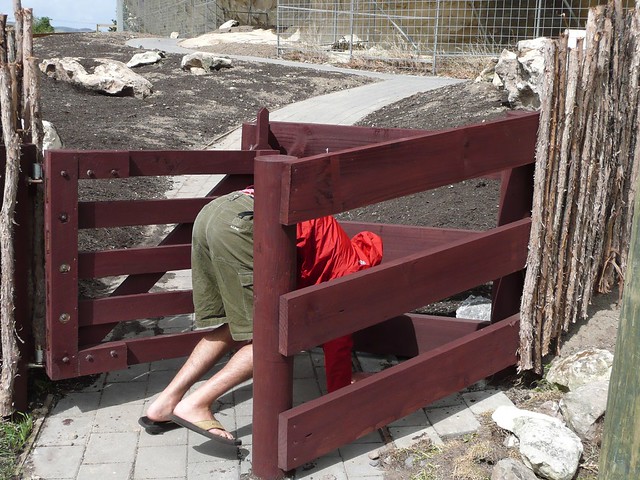
Through the Shepherd-Gate

Readings: Acts 2:14a, 36-41; Psalm 23:1-3a, 3b, 4, 5, 6; 1 Peter 2:20b-25; John 10:1-10

Picture: cc  Seth Mazow 

Sisters and brothers, do you have many relatives? How close are you to them? Relatives can usually be divided broadly into two groups: distant and close. Both groups are related to you by blood. But they differ in the degree of intimacy that you share with them. Distant relatives don’t really know much about you. And you don’t know much about them either. You probably don’t even see each other very often. Maybe only on special occasions. In contrast, close relatives are those with whom you share a special bond. With them you keep in close contact. You make a substantial investment of time and energy in each other’s lives.

But suppose for a moment that you had a distant relative to whom you wanted to draw closer. Maybe, for some reason, the two of you have grown apart over the years. And now you want to change things. What do you do?  Is there a path that you can take? Well, for a start, both of you probably have to make a commitment to becoming more involved in each other’s lives. And not only that. You also have to take concrete steps to express that commitment. You have to take the trouble to keep in touch more regularly, and to meet from time to time. But perhaps the best test of your commitment will come when your relative encounters some difficulty or trial. Maybe there’s a serious illness, or a business has failed, or someone is in trouble with the law. When this happens, do you still want to be close? Even if you may not be able to solve the problem, how willing are you to remain present, to lend a listening ear, a supporting shoulder? These then are some of the things that can bring distant relatives closer: commitment, communication and care.

There is a similar path to intimacy in the spiritual life as well. In today’s gospel, Jesus makes it clear that he wishes to have a close personal relationship with all of his disciples. He compares this closeness to the relationship between a shepherd and his sheep. The sheep depend on the shepherd for everything they need to stay alive. And the shepherd dedicates his whole life to caring for his sheep. But how does one cultivate such a close relationship as this? What is the path that needs to be taken? To help us to answer this question, Jesus uses another comparison. He says that we have to enter through a special gate, the shepherd-gate. I am the gate for the sheep. Whoever enters through me will be saved. But what exactly does this mean? What does this gate look like? What must we do to enter through it?

When we pay close attention to our Mass readings for today, we find that this special gateway actually consists of three gates. In the first reading, it’s the day of Pentecost, and Peter has just preached a moving sermon about the dying and rising of Jesus. After listening to him, Peter’s listeners are cut to the heart. They want to draw closer to the Lord. What are we to do? they ask. In response, Peter invites them to walk through the first gate. Repent and be baptized, he says. To enter into a closer relationship with the Lord, one must first pass through this first gate, the gate of commitment. One repents and is baptized.

But, as we all know quite well, the rite of baptism alone does not always bring a person closer to Christ. Don’t we know of people who, even after being baptized, don’t ever come to church anymore, except on special occasions like funerals and weddings? And isn’t it true that even those of us who do come to church every Sunday don’t necessarily have a close relationship with the Lord? Which is why, it’s important that we consider carefully what Jesus tells us about his sheep. They have a very special talent. When the shepherd calls his own sheep by name and leads them out, the sheep follow him, because they recognize his call. And, as we know, another word for call is vocation. A true disciple of Christ is one who is capable of receiving a vocation. But how? How does one learn to recognize another’s voice?

Some of us may still remember a time before the invention of cellphones and caller ID. And yet, even without these things, there were occasions when, having picked up the phone, you knew immediately who was on the other end of the line. Even before the speaker identified herself. How did you know? Was it because you had gone for some special training in voice-recognition? No. You recognized the other’s voice because you had been spending much time talking with her. Voice-recognition comes from frequent communication. How do sheep learn to recognize the shepherd’s voice? By listening to it often. For us too. When we find ourselves at the crossroads of our lives, how do we know the direction God wishes us to take? How do we recognize the Lord’s voice? How do we receive a vocation? By spending quality time in prayer, and especially in meditation upon the scriptures. Communication is the second gate that leads us closer to the Lord.

There’s one more gate. This is probably the most effective one for leading us closer to the Lord. It is also the most difficult one to enter. In the second reading, we’re told that if you are patient when you suffer for doing what is good, this is a grace from God. For this you have been called (it is your vocation as a Christian), because Christ also suffered for you. Just as we are drawn closer to a relative by sharing in her trials, so too are we drawn closer to the Lord when we share in His sufferings. It doesn’t have to be something as great and glamorous as a martyr’s death. It often happens in quiet and inconspicuous ways. When we go out of our way to be nice to a difficult member of the family, for example, even when we are unappreciated or rejected. By doing such things, we are accepting the Lord’s call to enter through his gate, the gate of the Cross.

Sisters and brothers, as with family members, so too with the Lord. Entering into a closer relationship means being willing to pass through the three gates of commitment, communication, and the Cross. This is the special gateway through which our Lord invites us to enter. As Christians, this is our vocation.

How willing are we to accept the Lord’s call? How much do we want to draw closer to the Good Shepherd today?