Sunday, July 28, 2013

Between the Packaging and the Present


17th Sunday in Ordinary Time (C)

Picture: cc Steve Baty

Sisters and brothers, do you ever receive gifts from others? What does it feel like? Every year, around Christmastime, my community receives gifts from very kind and generous people. Usually we get food hampers. Which we appreciate very much. Typically, the food is packed in the usual way. In a basket of some kind, wrapped in cellophane. But, some years ago, we received hampers that were packed differently. Not in the usual flimsy baskets. But in solid boxes. I still remember one hamper. It was packed in a square bright-red box that looked like a mini suitcase. Complete with a little handle. And two golden fasteners. One on each side. The bag looked so attractive, that I saved it. In fact I still have it today. I use it for storing things. But here’s the sad thing. I may still have the box. But I can no longer remember anything about the food that was inside it. Nor about the person who gave it to us.

What do you think about that, sisters and brothers? To pay so much attention to the packaging, but to forget all about the present itself? Imagine for a moment that you were the one who gave me that hamper. How would you feel? I’m not sure. Maybe you’d be happy that I at least found some use for the box. But what if I had saved only the box, and threw out all the food that came in it. How would you feel then? Probably not so good. Not so good, because I did not properly appreciate your present. And not just your present, but also you yourself. After all, isn’t that the reason why we call them presents? Because we somehow make ourselves present in the things we give to others? As the poet Kahlil Gibran once wrote: You give but little when you give of your possessions. It is when you give of yourself that you truly give. If this is true, then to receive a gift well, it’s important not to confuse the packaging for the present. The box may be attractive. But the food is the real gift. And not just the food, but the giver, whom the food represents.

To receive a gift well, we must learn not to confuse the packaging for the present. And it’s important to keep this lesson in mind today, because it can help us to understand something that our Mass readings are trying to teach us. As you know, today’s readings are all about prayer. And not just any kind of prayer. But good prayer. Effective prayer. This is what the disciples are asking Jesus about in the gospel. Lord, teach us how to pray… And not just to pray in any ordinary way. But to pray as the Lord Himself prays. To pray so that God will listen to them. This then is the question, sisters and brothers, that we are being invited to ponder today: How can we pray well? Pray effectively?

The answer Jesus gives is surprisingly simple. Shockingly clear. Ask, and it will be given to you; search, and you will find; knock, and the door will be opened to you... In other words, if you want to pray well, if you wish to pray effectively, then don’t give up. Just keep on praying. Just keep on asking... searching... knocking... This is what Abraham does in the first reading. In his prayer–in his conversation with God–Abraham does not give up. He keeps on pestering God until he finally gets God to agree to give him what he wants. So this is the answer: Good prayer, effective prayer, is persistent prayer. As simple as that.

But is it really so simple? Is it really true that all I need to do to get what I want is to keep asking God for it? Is prayer really only about persistence? If that’s the case, then what do you think will happen if I keep praying for a BMW 7 series? And what if I made a 9-day novena for that intention? Or, better, what if I prayed for it 24 hours a day, 7 days a week? Do you think I will get it? Of course, I’m just trying to be funny. I don’t really need a BMW. But what if I were to pray for something more serious than that? Like a better job. Or a good spouse? Or a baby? Or better results in my studies? Or for the conversion of a child of mine who has gone astray? And what if I were to pray for days and months. Even for years. And still not get it? What then? Does it mean that our readings are wrong?

I’m not sure, sisters and brothers. But I think we find the answer in  something in our readings that we haven’t mentioned yet. Something important. Especially here in Luke’s gospel, although Jesus tells us to ask, to search, and to knock, he doesn’t really say that we will get exactly what we ask for. He doesn’t say that if I ask for a BMW, that is what I will get. What Jesus says, instead, is that the Father will give me the Holy Spirit. And the Spirit is, of course, nothing less than God’s very Presence. This is what Jesus is promising us. This is the fruit of good prayer. If we keep praying, we will receive God’s Presence. This is the Gift that God is always eager to give to us. God wants to give us Himself. God wants to give us His Presence in the Holy Spirit. And not just in the Holy Spirit, but also through Christ Jesus our Lord. As the second reading reminds us, it is in the dying and rising of this same Jesus that God has forgiven us all our sins. In Christ, God has cancelled every record of the debt that we had to pay; he has done away with it by nailing it to the cross.

This is the precious Gift that God has given to us, and continues to give to us even today. Here and now, as we gather around the altar at this Mass. This is the priceless Present that God keeps offering us. A present that we learn to receive by praying without giving up. I may begin, for example, by praying persistently for a BMW. And, hopefully, as I continue to pray, God will help me to see that I don’t really need a BMW. Hopefully, God will help me to realise that what I need more is to feel secure in God’s love and care for me. What I need more is to experience God’s Presence, in and around me. And then to be moved to share that Presence with others. The BMW I may not get. (Probably won’t get.) But a deeper relationship with God I will. Simply by persisting in prayer. By spending quality time conversing with the Lord. Bringing to God what is in my heart. And listening to what God wishes to say to me.

But, even so, it’s not always easy to see this. Especially if I keep insisting on getting the BMW. If I keep focusing my attention on the things that I want. Instead of on the God who wants to be with me. The God who is always and already present to me. Caring for me. Protecting me. To do this is very much like what I was doing with the Christmas hamper. It is to confuse the packaging for the present. It is to fail to do what we were asking God to help us to do at the beginning of this Mass. You will remember that, in our opening prayer just now, we asked God to grant that we may use the good things that pass in such a way as to hold fast even now to those that ever endure.

Sisters and brothers, isn’t it true that very often what we pray for are the things that pass? And that’s fine. That’s all right. We do need these things after all. Even if they do eventually pass. Even Jesus teaches us to pray to the Father for our daily bread. But could it be that all these things are only the packaging? Could it be that the true Present that God wants to give us, the actual Gift that God has already presented to us, is really God’s own Self? Through the Son, in the Spirit? This above all is the Gift that never passes away. This beyond all else is the Good that ever endures. And it is this that God is ever willing to bless us with always.

Sisters and brothers, how can we pray so as to accept more readily, to appreciate more deeply, this God, who continues to make of Himself a priceless Present to us today?

Saturday, July 20, 2013

Between 4 & 5-Star Service


16th Sunday in Ordinary Time (C)


Picture: cc Roving I

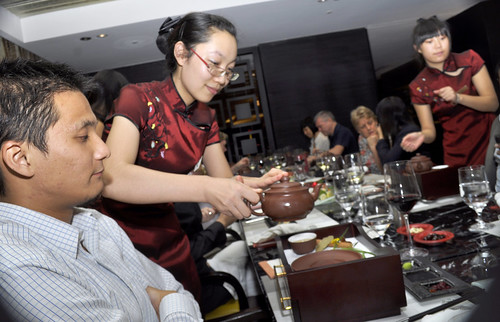
Sisters and brothers, when you visit a store, or a hotel, or a restaurant, what kind of service impresses you? What are the kinds of things the staff might do that might make you sit up and take notice? In a good way. What are the actions that might even make you consider writing a note of thanks and praise? What are the things that make the difference for you between 4-star and 5-star service?

For me, the difference lies in the distinction between what I call provision and reception. What do I mean? I may be wrong, but I suspect that many of us often think of service in terms only of provision. We speak, after all, of providing a service. And that is, in a way, accurate. Good service does mean providing something. And providing it well. If I go to a restaurant, for example, I expect the food to be tasty, and served in a timely fashion. I expect the wait staff to be polite and knowledgeable. I expect the premises to be clean. The ambience inviting. These are things I expect a good restaurant to provide. And I judge the quality of service according to how well such provisions are made.

But that’s what I might expect from any good restaurant. Those are things that any reasonable patron might expect. Usually. Ordinarily. But what’s the difference between a good restaurant like that and an even better one? What’s the difference between 4-star and 5-star service? Perhaps we may think that the difference lies in the provision of even more things. Like maybe offering lemonade instead of plain water when the customer walks in. But I’m not sure. I think the difference lies rather in how well the restaurant responds not just to the usual, but to the unusual. Not just to the ordinary, but to the out-of-the-ordinary. If I have a certain food allergy, for example. How able and willing is the staff to change the menu to cater to my need? For me, great service is not just about providing more and more things. But providing what truly meets the needs and desires of the one being served. Truly receiving the individual patron. Who may have very particular, even unusual needs. 4-star service may be only about provision. But 5-star service is really about reception.

I mention this because, as you probably have noticed, our Mass readings for today are all about service. In the first reading, when God appears in the form of three unknown travellers, Abraham welcomes them in these words: Do not pass your servant by. In the second reading, Paul speaks about how he became the servant of the church. And, in the gospel, we hear about how Martha was distracted with all the serving. What’s more, our readings are not only about service rendered to just anyone. Our readings invite us to reflect on service rendered to God. The divine Patron. Also, our readings are not just about ordinary service. Not just about good service. But better service. Greater service. 5-star service.

At first glance, it may seem that service of God is really only a matter of provision. And even more provision. The first reading, for example, gives us a very detailed description of the many things that Abraham provided for his three guests. He offered them bread and meat. Cream and milk. And then he stood by and waited upon them while they ate. In the second reading, Paul describes his service in terms of a responsibility. God made me responsible, he says, for delivering God’s message to you. For proclaiming to the people, providing them with, God’s good news of salvation in Jesus Christ. This is Paul’s service.

And we could probably be forgiven for remaining with this impression–for thinking that service is only about providing–if not for the gospel. For here, the one who seems to be doing her very best to provide for her guest, is precisely the one whom Jesus gently reprimands for offering the less satisfactory service. Martha is doing all the work. And very important work. She is busying herself preparing everything necessary for feeding the Lord. Everything that Abraham does in the first reading. Without Martha’s work, Jesus would go hungry. And yet, the Lord says that it is Mary who has chosen the better part. It is Mary who has provided the greater service.

One way to resolve this apparent contradiction is to look beyond the activities of provision to the attentiveness of reception. Let us consider again what exactly it is that makes Abraham’s service stand out in the first reading. Notice the unusual nature of the situation. Notice how God chooses to arrive during the hottest part of the day. A time when people in their right minds would be resting. As Abraham himself appears to have been doing. Sitting by the entrance to his tent. Instead of running around. Working up a sweat. Struggling to put a meal together. And yet, this is exactly what Abraham ends up doing when these unexpected visitors arrive. Abraham responds generously to the very particular needs of his very particular guests. He receives them even though they choose to arrive at a very inconvenient time. Reception and not just provision. This is what makes Abraham’s service greater.

But there’s something even more. Despite the already high level of  hospitality shown by Abraham and his wife Sarah, God calls them to an even greater receptivity. Notice how the reading ends with a promise. Not enough that Abraham should be willing to receive God in the heat of the noonday sun. He and his wife are called to go even further. They, who are long past the age of childbirth, are invited to receive into their hearts an incredible pledge. To receive into their lives an impossible gift. I shall visit you again next year without fail, Abraham is told, and your wife will then have a son. A post-menopausal woman bearing a child. This is an idea that not even Sarah is able to receive. At least not at first. Further on in the book of Genesis, we’re told that she laughed when she heard this. It was simply too incredible to be true. And yet, this was the hospitality that God required of her and her husband. This was the greater service she was being asked to provide. A service she could only perform by first being willing to receive God’s incredible gift.

And isn’t this also what sets Mary apart from Martha in the gospel? Even though it may seem that Mary does nothing useful, she really provides the Lord with the one thing that he needs. The one thing for which he hungers. For Jesus is no ordinary guest. He is God’s greatest gift to us. The gift that wants to be received. The Word-Made-Flesh who yearns, more than anything else, to be heard, and heeded, and lived. By allowing herself to be distracted with all the serving, by all the providing, Martha fails to give the Lord what he wants most of all. Even if she may have provided everything else that an ordinary guest might have required. And so her hospitality remains good. But no more. Mary’s is the better part. Mary’s the 5-star service.

And I suspect, sisters and brothers, that many of us find this difficult to accept. I know I do. Especially because we live here in Singapore. Where everything is about being active, and keeping ourselves ever more busy. Where, when we think of serving God, what often comes to mind are probably thoughts of adding more and more activities to our daily schedule. Or of joining more groups or ministries in the church. Never mind if that’s what God really wants of us. And yet, our readings today remind us that perhaps what we need is first to pay attention to what God might be offering us. First to receive God’s gift. First to listen to God’s call. And, in so doing, to choose the better part.

Sisters and brothers, how might we provide God with what God wants? How might we offer God the truly 5-star service today?

Sunday, June 30, 2013

Let Freedom Ring! (Rerun)


13th Sunday in Ordinary Time (C)

Picture: cc Tony Fischer

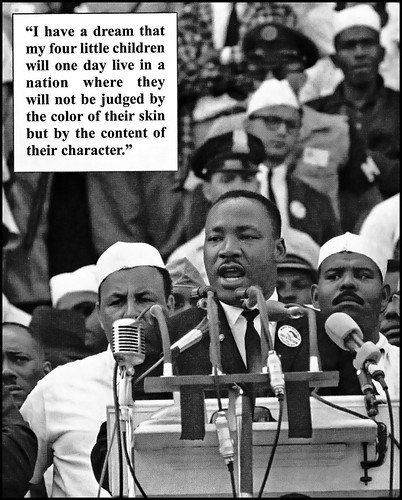
I have a dream… I have a dream…

Sisters and brothers, I think at least some of us will recognise these words from that famous speech delivered in 1963 by the late leader of the American Civil Rights Movement, Rev. Martin Luther King, Jr. In this speech, Rev. King was speaking of his hope–his dream–that all people, especially all those of his own Negro race, would one day enjoy freedom. Freedom from discrimination. Freedom from oppression. Rev. King’s dream was of a future in which all Americans would be treated equally, regardless of the colour of their skin.

Sisters and brothers, to be honest, I too have a dream. I too dream of freedom. But, sad to say, the freedom that I sometimes dream about is far less noble, far less honourable, far less selfless than Rev. King’s. I’ve had this dream for some time now. Though I can’t quite remember when it began. I’m not always aware of it. It seems to make its presence felt especially when things aren’t going so well for me. The shape of this dream has been shifting with the passing of the years. But, at its core, it has always remained the same dream.

As a child, for example, I sometimes found myself dreaming of a day when I would no longer have a naggy grownup breathing down my neck. Insisting that I take a bath when I didn’t want to. Or refusing to let me out of the house when I wanted to join the neighbourhood kids in their games. As a student, I dreamt of finally being free from the burden of mathematics exams and physics tutorials. In the army, I dreamt of no longer having to report to camp at some unearthly hour. Of no longer having to spend those seemingly senseless nights performing guard-duty. Trying to keep people out of a place where nobody really wanted to go anyway. At work, I dreamt of not having deadlines to meet, or a boss to answer to. And, to be honest, now that I’m a religious, there are days when I dream–dare I say it–of being free from one or other of my confreres in community. Or even from my superior.

In other words, what I dream of from time to time is not so much to be liberated from the burden of discrimination, as to be freed from the yoke of responsibility and accountability. My dream is to live the life of a free agent. One who can do whatever he wishes. One who is tied down by nothing. Answerable to no one. And aren’t there people who seem to already be living this kind of life today? Aren’t there people who seem rich enough and unattached enough to be burdened by no worries at all? To be able to do whatever they want?

To use an image from our readings today, my dream is to no longer have a field to plough. Of course, unlike Elisha, I’ve never actually ploughed behind an ox before. Let alone twelve. But I can imagine what a backbreaking job it must be. So there is a part of me that doesn’t quite understand the hesitation on the part of Elisha in the first reading. And also of those people in the gospel, who ask to follow Jesus. Jesus seems to be offering to take them away from it all. To set them free from all the burdens of life. Isn’t this the answer to all their prayers? To finally be liberated from the tiresome grind of their daily responsibilities? Why hesitate?

Thankfully, Saint Paul comes to my rescue. In the second reading, he clarifies for me the true meaning of freedom. You were called to liberty, he says, but be careful or this liberty will provide an opening for self-indulgence. St. Paul is drawing a distinction here between liberty and license. Between freedom and self-indulgence. And, not only that, but quite surprisingly, Paul sees self-indulgence or license as itself a yoke of slavery. Paul reminds me that my dream of freedom can quite easily turn into a nightmare of bondage. And actually, deep in my heart, I know that he speaks the truth.

I know, from experience, that simply doing whatever I want can make me a slave of some unseen force. Even of my own self. Isn’t this how our different addictions arise? Isn’t this how we end up being obsessed with food and drink? Or gambling? Or gaming? Or the Internet? Isn’t this also somehow connected to the violence that some of us do to ourselves? As for example, when some people starve themselves to death for the sake of keeping slim? Or when others cut themselves, so that the resulting physical pain will help to ease their deep emotional hurts? And aren’t the more respectable addictions no less dangerous? Addictions such as workaholism, perfectionism, and keeping up with the Jonsesism. If the neighbours change their car, shouldn’t we do the same? If our friends send their kids for ballet, violin, karate, swimming and art classes, shouldn’t we follow suit?

So, in light of today’s readings, my childhood dream is revealed for what it really is: wishful thinking. There is no such thing as a life of absolute freedom. At least not in the way I imagine it to be. The truth is that to live a fully human life in this world is to always be ploughing a field, to always be labouring under some yoke of responsibility. In the first reading, even though, Elisha slaughters his oxen and uses his plough as fuel for cooking them, we are told that he then rose, and followed Elijah and became his servant. Instead of escaping from all responsibility, Elisha traded one plough for another. A more meaningful one.

We see the same thing in the gospel as well. Even though Jesus challenges the three men he meets to leave their old lives, it is only so that they might follow the Lord wholeheartedly. That they might lay their hands on the plough that Jesus will give them. Without looking back. Isn’t this what Jesus himself does? Isn’t Jesus himself also labouring under the yoke of responsibility? Isn’t he ploughing the field set apart for him by his heavenly Father? Isn’t this why he resolutely takes the road for Jerusalem? And aren’t we well aware of the significance of his resolution? Jesus knows that the field he is ploughing will soon be sown with the seed of his own body and blood. But only so that all of us might reap a harvest of life in its newness and fullness. Jesus journeys resolutely to Jerusalem so as to be lifted up on the Cross. And then to be raised from the dead on the Third Day.
Jesus’ journey is, for us who call ourselves his followers, the true image of freedom. It is not the freedom of my dream. It is not the freedom of those who bear no responsibilities. It is not the freedom of one who cares only for the self and the satisfaction of its endless cravings. Rather, it is the freedom of those empowered by the Spirit, of whom Paul writes in the second reading. It is the freedom of the One who loves God and neighbour even to the very last drop of his blood. It is the freedom of the One who is able, resolutely, to lay down his life, so that others might flourish. This is what true freedom looks like. This is the field in which we are all invited to labour. Indeed, the only field worth ploughing. Today we are being awakened from the dream of living as free agents. We are being invited to leave the dead to bury their dead, so that we might labour in the field that bears fruit unto eternal life.

Sisters and brothers, we began by recalling these words from Rev. King’s famous speech: I have a dream. Perhaps it’s only fitting that we end with three other words from that same speech. Let freedom ring! In the power of the Spirit. In the footsteps of Christ the Lord. Let freedom ring! In our world and in our country. In our parish communities and in our families. In each of our own individual lives. Let freedom ring! Let true freedom ring!

Sisters and brothers, what can we do to make this dream more of a reality today?

Saturday, June 29, 2013

Under the Durian Tree


Church of Ss. Peter and Paul
Day 2 of Triduum in Preparation for Patronal Feast

Picture: cc sj liew

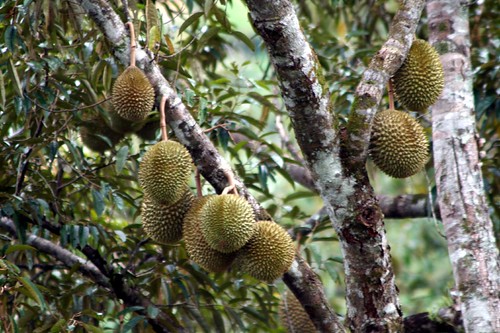
Sisters and brothers, do you like durian? I remember, when I was still a full-time National Serviceman, there were times when our training took us to places where there were many durian trees. And, often, we would see people sitting very patiently under those trees. Do you know what they were doing? I’m sure you can guess. They were waiting for the durians to fall. As you know, it’s really quite easy to tell when durians ripen. They simply fall off the tree on their own. You don’t have to pluck them. All you have to do is to be at the right place at the right time, and you’ll enjoy a feast. For free. Ripe and tasty durians straight from the tree.

I mention this because, on this second day of our Triduum, our Mass readings are all about what happens when fruit ripens. And not just any kind of fruit. But fruit from the tree that we were describing on the first day of our Triduum. Those of us who were here yesterday will remember that we were talking about a special kind of knowledge. Not just the knowledge that makes us very smart. Or the kind that may help us to earn a lot of money. Or the knowledge that may win us many friends and fans, make us very famous and popular. What we were talking about yesterday was that special kind of knowledge that enables us to enter the kingdom of heaven. The knowledge that results from an intimate personal relationship with Jesus. The knowledge that comes from putting Jesus at the centre of our lives. Making Him the foundation of everything that we think and say and do.

If we were to think of this knowledge as a tree–maybe even a durian tree–what do you think the fruit of this tree looks like? And what do you think happens when this fruit ripens? These are the questions that our Mass readings help us to answer today. Notice, first, what this fruit looks like. Notice, for example, what happens to Peter in the gospel. You may remember that yesterday we were talking about what happened to Peter at the place called Caesarea Philippi. How he responded to Jesus’ question, Who do you say I am? We said that although Peter answered with the right words–you are the Messiah–he didn’t really understand their proper meaning. He couldn’t accept that Jesus was the kind of Messiah who would have to suffer, and die, before being raised to life on the Third Day.

In today’s gospel, Peter is once again questioned by Jesus. This time we are no longer at Caesarea Philippi. We are at a place called the Sea of Tiberias. And much has happened in between. Peter has witnessed the arrest, the torture, and the crucifixion of Christ. He has experienced his own shameful weakness. How he denied his beloved Master and Friend. Not just once, but three times. After all these experiences, Peter is finally getting to know Jesus a little better. In today’s gospel, Jesus deepens this knowledge by asking Peter another question: Do you love me? And notice what happens when Peter says yes. Jesus tells Peter to feed my lambs. To look after my sheep.

Not only that, Jesus also tells Peter what will happen if he truly loves the Lord. When you were young, Jesus says, you put on your own belt and walked where you liked; but when you grow old you will stretch out your hands, and somebody else will put a belt round you and take you where you would rather not go. To love is to somehow hand over control of one’s life to the beloved. Isn’t this what parents do all the time? They may stay up all night, for example, caring for a sick child, even though they may have to go to work first thing the next morning. Or some parents may spend much valuable time volunteering at a primary school in the hope of securing a place for their child... who may still be only four years old. This is the result of love. When people allow the seed of the knowledge of Christ to be planted in their hearts and in their lives, the seed grows into a tree, which starts to bear fruit. And this is what the fruit looks like. When we truly love the Lord, we begin to care for others as well. Even to the extent of doing things we would rather not do. Or allowing ourselves to be led to places where we would rather not go.

We see something similar in the second reading too. Here, the apostle Paul describes his own experience of meeting and falling in love with Christ. Notice the stark contrast between what Paul was like before and after he met the Crucified and Risen Christ. Before he met Christ, Paul was an enthusiastic persecutor of Christians. He went out of his way to arrest and imprison them. But after he met the Lord, after God chose to reveal his Son to him, Paul became the most famous and hardworking apostle of all. Going to great lengths, travelling to distant places, just to proclaim Christ to the pagans. To share with as many people as he could, the wonderful Good News that Jesus has saved us from our sins. This was Paul’s way of doing the same thing that Jesus had asked Peter to do. In telling the world about Jesus, Paul was caring for the Lord’s sheep. Feeding the Lord’s lambs. Even going to places where he would not otherwise have wanted to go.

But if this is what the fruit of the tree of the knowledge of Christ looks like, what happens when it ripens? We find the answer in our first reading today. And, strangely, it’s very much like what happens when durians ripen. Like the people I saw during National Service, in our first reading, we also find someone sitting and waiting. He’s sitting and waiting at the Beautiful Gate of the Temple. And, although he may not know it, he’s longing to taste the fruit from the tree of knowledge. The fruit from the tree of love. He begs from Peter and John. Two of the Lord’s closest friends. Two of the people who have come to know Jesus best of all. And notice what happens. The fruit falls from the tree. And the hungry taste of it. The one who was a cripple from birth begins to walk again. And not just to walk, but even to jump and to praise God. And to lead others to marvel at the mighty works of God.

Sisters and brothers, this is what happens when the fruit of the knowledge of Christ ripens. It falls from the tree and it blesses people with its sweetness. So that the lame may walk, the blind may see, the deaf may hear, the dejected may rejoice, the lonely may find companionship… And this fruit is meant to grow not just in the lives of the first disciples. Not just in the time of the early church. It is meant to grow in our lives, and in our own time, as well. In yours and in mine. For isn’t it true that there are many around us who, whether they know it or not, are still sitting and waiting to taste of the sweetness of this fruit? There are many around us, both near and far, who have yet to experience the joy of knowing Christ. Who may only know the name of Jesus, without experiencing the power that comes from trusting in Him. In surrendering their lives into His gentle hands. People who are materially poor. Unable to find a proper roof over their heads, even in a place like Singapore. People who are socially poor. Unable to connect with others in a meaningful way. People who are spiritually poor. Who may have many possessions, or who may busy themselves with many activities, but whose hearts often remain so painfully empty. 

Sisters and brothers, there are many of such people all around us. People sitting and waiting at their own Beautiful Gate. We have only to open our eyes and to look. As followers of Christ, as those who have received the teachings of the great apostles, St. Peter and St. Paul, we too are called to offer the fruit of our love for Christ with all of those who need it.

My dear friends, there are many people still sitting and waiting under the durian tree. Will any fruit be falling from us for them today?

Knowledge and the Kingdom


Church of Ss. Peter and Paul
Day 1 of Triduum in Preparation for Patronal Feast

Picture: cc Ronald Peret

Sisters and brothers, what do you think would happen to me if I were to board an MRT train, or a public bus, or if I were to walk into a shopping mall, light up a cigarette and start smoking? You know what would happen to me, right? Very likely I’d get into plenty of trouble. Probably have to pay a hefty fine, because smoking is prohibited in all these public areas. And we all know why. It’s because smoking is bad for us. And not just for the smoker, but also for everyone around him or her. Today, we all know the dangers of second-hand smoke. We know that it can cause cancer and other lung diseases. We know all this. And yet, some of us still smoke, don’t we? Why do you think this is so?

I’m not sure. But I think it’s because we can know something, and still not really know it. There is someone, for example, who used to be a heavy smoker, who finally died of lung cancer. Just before he died, this person took the trouble to warn his friends not to smoke. At the end of his life, this person finally came to realise the danger of cigarettes. But don’t you think he already knew this even while he was still smoking? Of course he did. He knew it, the way I know it. The way most of us know it. He knew it in theory. Not so much in practice. He knew it, and he didn’t really know it.

It was only after he was actually stricken with cancer, that the dangers of smoking became real to him. Really real. Cancer meant that he was unable to sleep, because he was up all night coughing. Cancer meant that he had to struggle hard just to breathe, even while he was doing nothing but sitting up in bed. Cancer meant that he had to go through many rounds of chemotherapy. And suffer the terrible side-effects. Before cancer, he already knew that smoking was dangerous. But he also didn’t really know it. At least not enough to change his life. We can know something, and still not really know it.

And what is true of the dangers of smoking is also true of the promises of God. We can know them, and still not really know them. At least not enough to have them affect the way we live. Isn’t this what we see in our first reading today? The passage is taken from the 16th chapter of the book of Genesis. Earlier, in chapter 15–yesterday’s first reading–God had made several promises to Abram. God had promised Abram an heir. A son of his own flesh and blood. God had promised to make Abram’s descendants as many as the stars in the sky. And also to give him the land of Canaan. Abram knew all this. And yet, in today’s reading, it’s as though Abram did not know it. It’s as though he had not received any promises. Why else would he agree to the plan proposed by his wife, Sarai? Why bother to have a child with the slave-girl Hagar, if Abram really knew that God wanted to give him an heir? If he really trusted in God’s promises to him? Isn’t it true that Abram knew, but also didn’t really know?

We find something similar in the gospel reading as well. We have already seen how important it is to know the dangers of smoking. It is a matter of life and death. Similarly, in the gospel, we find a kind of knowledge that is also a matter of life and death. Not just earthly life. And not just earthly death. But eternal life and death. In the gospel, Jesus invites us to meditate on an important question: How does one gain entrance into the kingdom of heaven? The answer is quite surprising. It is not those who say to me, “Lord, Lord,” who will enter the kingdom of heaven, but the person who does the will of my Father in heaven. In other words, we don’t get to heaven simply by calling upon the Lord Jesus. It’s not just a matter of lip service. We have to do the Father’s will. But this is not really so surprising. We know this already.

What is more surprising is how Jesus goes on to describe what these same people will say to him on the day of judgment. Did we not prophesy in your name, they will say, cast out demons in your name, work many miracles in your name? Notice how active all these people are. They prophesy, cast out demons, work miracles... They don’t just practice lip service. They are actually very busy people. And busy doing things in the Lord’s name. Yet, surprise surprise. When the day of judgment comes, Jesus rejects them. And notice what Jesus says, as he turns them away: I have never known you…

I have never known you. What this tells us, sisters and brothers, is that in order for us to get into the kingdom of heaven, in order for us to do the Father’s will, we have to somehow allow Jesus to get to know us. To somehow allow ourselves to get to know him. This is the crucially important kind of knowledge that we need. The kind that comes from an intimate personal relationship with the Lord. The kind that the people who say Lord, Lord do not have. They claim to know Jesus. They claim to do works in his name. But they don’t really know him. They know his name. But they don’t really know his person. They don’t really know how he feels. How he acts. What he values. What he loves.

Isn’t this also the experience of Simon Peter at Caesarea Philippi. You will, of course, remember how, at Caesarea Philippi, Jesus asks his disciples this question: Who do you say I am? In Mark’s gospel, Simon Peter replies by saying You are the Messiah (Mk 8:29). And, in a way, this is the right answer. Jesus is indeed the Messiah. The Anointed One. Peter knows the right words. But he doesn’t really know their proper meaning. He may be thinking the way many other Jews were thinking at the time. That the Messiah would be a mighty general, who would lead an army to fight against the Romans. So that when Jesus starts to tell his disciples about how he is going to have to suffer, and die, and then rise from the dead, Peter objects. And he gets scolded by Jesus. Get behind me, Satan! At Caesarea Philippi, Peter already knows Jesus. But he also doesn’t know Him. Not yet.

How then, sisters and brothers are we to know Jesus? To know him and to allow him to know us in a way that can gain us entrance into the kingdom of heaven? Jesus himself gives us the answer in today’s gospel. It’s not enough to know his name. It’s not enough even to do many many things for Him. What we need is to make Him the very foundation of our lives. To make Him the centre of everything we think and say and do. Everyone who listens to these words of mine and acts on them will be like a sensible man who built his house on rock. Rain came down, floods rose, gales blew and hurled themselves against that house, and it did not fall: it was founded on rock.

To make Jesus Himself the bedrock of our lives. Not just someone to whom we turn when we need something... And then forget when everything is well again. Not just someone we think about once a week, on a Sunday, because otherwise we might be in danger of committing a mortal sin. We need to make Jesus our everything. The reason why we get out of bed in the morning. Why we marry. Or stay married. Or remain single. The reason why we rejoice. The reason why our hearts are broken with sorrow. There are no half measures. We need to make Jesus our all. This is the only way we can truly get to know him. This the only way we can truly learn to do the Father’s will. By getting to know Jesus. By allowing ourselves to be known by Him.

This is not easy, of course. In fact, we could not do it on our own. The Good News is that Jesus Himself wants to help us. Jesus Himself wants to be close to us. And He wants it bad enough even to hang on the Cross for us. All we need to do is to ask Him. To call on Him for help.

Sisters and brothers, how does the Lord wish to get to know you better today?