Sunday, October 26, 2014

Living Love & Telling Time


30th Sunday in Ordinary Time (A)

Picture: cc Robert Couse-Baker

Sisters and brothers, do you ever think about the importance of being able to tell the time? To know what time it is is also to know where I need to be. And what I need to do. Have you ever missed an important appointment, for example? Or a valuable career opportunity, perhaps? Or even an episode of your favourite Korean drama? Simply because you lost track of time? Doing the things we love often depends upon knowing what time it is. But what does it take to tell time? And to do it accurately?

Imagine, for a moment, the face of a clock. The kind that has moving hands. Rather than changing numbers. What do you think are the more important parts that make up this machine? The things that enable it to keep time? I’m no expert. But I think a clock has three main components. The first is the mechanism inside the clock. The moving internal parts that usually remain unseen. These are crucial. They have to move at just the right speed. Otherwise the clock will either run too fast or too slow.

And yet, as important as it is, the internal mechanism alone is not enough for us to tell the time. We also need the hands on the face of the clock. By pointing at the right numbers, the hour, the minute, and the second hands indicate to us the exact time at any given moment. But that’s not all. For the clock to keep accurate time, at least one more important component is needed. Something called the pivot. This is the slender rod at the centre of the clock, which joins the mechanism to the hands. Translating the regular internal movement into a reliable external reading. Without the pivot, the inner mechanism might continue to move, but the hands will not turn. The clock would be useless.

Internal mechanism. External hands. Connecting pivot. Three essential components to an accurate clock. Three things that help us to tell time. To know where we need to be and what we need to do at any given moment. To understand what life requires of us. And how we should respond. Sisters and brothers, as strange as it may sound, I believe that this is also what our Mass readings present to us. Today, our readings provide us with something like the face of a clock. Helping us to see for ourselves what time it is in our lives as Christians. And what God requires of us here and now.

Like any good clock, there are three main parts. First, the internal mechanism. In the gospel, the Pharisees try to disconcert Jesus–to trip him up– by asking him a complex legal question. Which is the greatest commandment of the Law? This is a difficult question, because the Law, as you know, consists of no less than 613 commandments. To single out one of these as the most important is no easy task. And yet, by trying to be difficult, the Pharisees actually help to uncover for us exactly what it is that makes Jesus tick. The inner mechanism that drives the Lord’s every thought and word and action. You must love the Lord your God with all your heart, with all your soul, and with all your mind. You must love your neighbour as yourself. Love of God and love of neighbour. This is what moves Jesus. What leads him to descend from heaven onto the earth and into the grave. And then, at the appointed time, to ascend again back into the sky. And if this is true of Jesus, our Master. Then it should also be true of us, his disciples, as well. Our interior lives should also be motivated by the same movement of love.

But that’s not all. The interior movement of love needs also to be translated into concrete external actions. Actions like those described in the first reading. Here, having freed the people of Israel from slavery in Egypt, God enters into a covenant with them. Teaching them how they are to live in the Promised Land. God’s instructions are very practical and detailed. They show the Israelites what love of God and of neighbour look like in the particular situation in which they find themselves. Specifically, the love commandment translates into caring for the foreigner, the widow, and the orphan. Three groups of people who are especially vulnerable at the time. Keeping the love commandment also means showing mercy to the poor. Refusing to charge them interest on a loan. Not depriving them of what they need to keep warm at night...

Like the hands of a clock, the first reading shows us what love requires of the people of Israel in their own particular situation. It indicates to us what love looks like in the concrete. And it should also move us to look at our own situation. To consider, for example, who are the most vulnerable in our midst. Who are the equivalent of the foreigner and the widow. The orphan and the poor. To identify the ways in which our society may be exploiting the needy. By abusing migrant workers for example. Those who arrive on our shores seeking a better life. By confiscating their passports. By making them pay exorbitant agency fees. By treating them more like commodities than human beings. Or even by neglecting or mistreating our very own children. By pressurising them to perform beyond their capabilities. Sisters and brothers, what do you think? To what forms of vulnerability and need might the turning hands of the clock of God’s love be pointing to us? And how are we being invited to respond?

To answer these questions honestly, there is something else that we need. Something that connects the internal movements to the external actions of love. We need a pivot. Which is what we find in both the responsorial psalm and the second reading. The psalm does this through the power of memory. It reminds us of how God is our rock, our fortress, our saviour. Our shield, our mighty help, our stronghold. It invites us to remember–as we do every time we gather to celebrate the Eucharist–how God has been and continues to be a safe refuge for us in all our trials and temptations. It also inspires us to make a return. Of love for love. To respond by saying–not just with our lips, but also with our lives–I love you, Lord, my strength.

We find a similar connection, a similar pivot, in the second reading. Here St. Paul congratulates the Thessalonians for successfully translating their faith into action. How do they achieve this? By doing two things. Observation and imitation. You observed the sort of life we lived, Paul tells them, and you were led to become imitators of us, and of the Lord. The Thessalonians are able to do what is required of them by remaining connected with the same love that moves and empowers Paul and the Lord Jesus himself. And, by doing this, they themselves, in their turn, become a great example for others everywhere to follow. An example even for us to follow. If only we are willing to observe and to imitate the love of the Lord and of his saints. Both those who have gone before us. As well as those who may still be walking among us. Sitting next us...

Sisters and brothers, as it is with a clock, so too with the love of God and of neighbour. To be able to tell the time accurately, we need three things: interior movement, external actions, and a connecting pivot. What are we doing to continue reading and responding to the signs of our time today?

Monday, October 20, 2014

Order By Attraction


29th Sunday in Ordinary Time (A)–Mission Sunday
Good Shepherd Lay Associates Day of Recollection

Picture: cc Windell Oskay

Sisters and brothers, what do you think is the best way to clear up a mess? Imagine, for example, that you’ve gone abroad for a holiday. Leaving your house in the care of some friends. And, upon your return, you find that your friends have left your house in a state of chaos. How would you go about putting things back in order? The answer is quite simple, right? To tidy things up you need to sort them out. Carefully separate one thing from the other. And then put each thing back in its own proper place. Separation. That’s how we usually bring order out of chaos.

Now that may be true of tidying up your house. But can you think of some other situation where another method might work just as well? Or maybe even better? I’m reminded of a science experiment that our teacher once performed for us when we were still in school. Onto a stiff piece of cardboard, the teacher poured a container-full of rusty iron filings. Which spilled out all over the cardboard. Making quite a mess. Then, the teacher took a magnet and put it under the cardboard. And, to our amazement, the chaotic pile of iron filings arranged themselves into an orderly pattern. How did this happen? How did a messy heap get tidied up so neatly and so quickly? You know the answer. It was achieved by the power of attraction. Attraction of the iron filings to the force field exerted by the magnet.

Separation is not the only way to bring order out of chaos. Sometimes attraction works much better. I think this is also the lesson that our Mass readings are trying to teach us today. The gospel presents us with a mess. A state of chaos. The mess comes in the form of a question posed to Jesus by the Pharisees and the Herodians. Is it permissible to pay taxes to Caesar or not? The question is asked with the intention of trapping Jesus. Of getting him into trouble. But even if it’s a dishonest question, a messy question, it’s still a valid one. An important one. Should a faithful Jew pay taxes to a foreign power that is occupying Jewish land by force? This is a difficult question. A messy question. A potentially dangerous question.

How does Jesus tidy up the mess? What answer does he offer? Give back to Caesar what belongs to Caesar–and to God what belongs to God. The answer is as elegant as it is simple. But what does Jesus mean? One possible interpretation is that Jesus is calling for a strict separation of religion and politics. Of church and state. According to this understanding, what Jesus is saying is that the question of whether or not one should pay taxes is a purely political or civil one. And so it should not be mixed up with the religious question of what God requires. To tidy up the mess, we must separate the questions into two boxes. Taxes in one. God in another. And neither should be allowed to affect the other.

But scripture scholars tell us that such a view is mistaken. Not least because, in the ancient world, religion and politics were not separate, but very much mixed. The first reading shows us just how mixed. Here, the Persian king, Cyrus, has conquered the Babylonians, and allowed the people of Israel to return from exile in Babylon to their own land. These actions of Cyrus are clearly political actions. And yet, in the reading, God tells Cyrus that, unknown to him, all his political achievements have actually been the result of God’s action. Though you do not know me, God says, I arm you that men may know from the rising to the setting of the sun that, apart from me, all is nothing. Clearly, in the eyes of God there is no separation between religion and politics. God sees and is concerned about everything and everyone. So that even if the coin used to pay taxes in Jesus’ day may belong to Caesar, Caesar himself belongs to God. Indeed, everything belongs to God. For apart from God, all is nothing.

So how then to tidy up the mess? How to bring order to the chaos? Surely we cannot continue to mix religion and politics in exactly the same way today? Surely we Christians cannot seek to impose all our religious beliefs on everyone else? Especially if we make up only a relatively small percentage of our country’s population? Surely we do not expect our Archbishop to tell the government exactly how to run the country? Or the government to tell us Christians how to worship? And what to believe? So how then are we Christians to conduct ourselves in civil society? When should we speak up? When should we remain silent? How shall we even go about making such decisions? To tidy up the apparent messiness of our political and religious lives? Our Mass readings don’t give us exact answers to all these questions. But they do point us in a helpful direction.

In the second reading, St. Paul praises the Thessalonian Christians for having shown their faith in action, worked for love and persevered through hope, in our Lord Jesus Christ. Even though they live in a largely pagan society, the Thessalonians have succeeded in properly ordering their lives in Christ. How did they manage to do this? For St. Paul, the power to do this comes to them from God. From the attractive force that God exerts upon them. We know that God loves you, Paul writes, and that you have been chosen, because when we brought the Good News to you, it came to you not only as words, but as power and as the Holy Spirit and as utter conviction. If the Thessalonians have succeeded in bringing order out of their chaotic lives, it is because they have allowed themselves to be attracted, above all else, by the power of God’s love for them in Christ Jesus. And, like iron filings arranged by a magnet, they have allowed this powerful attraction to permeate all of their lives. To affect everything that they think and say and do. They have managed to order their lives not so much through separation. But through attraction.

And isn’t this a helpful insight for us to ponder? Especially today, when we celebrate Mission Sunday. And when you Lay Associates and Lay Partners of the Good Shepherd congregation gather to renew your commitment to the mission. For whether we care to admit it or not, it is into a messy world that we are all sent on mission. A chaotic world that cries out for order. And we Christians can only be of some help to the extent that we first allow God to put order into our own individual lives. Arranging them around our primary attraction to God. And then sharing this attraction with others. Even magnetising them. So that they too may be drawn into the force field that is God’s enduring love for the world.

Sisters and brothers, life can often seem quite messy. And yet, God continues to attract us to himself in Christ. What can we do to continue allowing the powerful magnet of God’s love to bring order out of chaos? In hearts, in our lives, and in our world, today?

Sunday, October 05, 2014

Healing Steps

 
27th Sunday in Ordinary Time (A)


Sisters and brothers, imagine for a moment that you haven’t been feeling too well. You don’t know what exactly is the matter. But something just doesn’t feel right. You’re experiencing symptoms of some sort. Maybe it’s a headache. Or tiredness. Or insomnia. Something like that. Something that’s bearable. But also serious enough to make you worry. So, after suffering in silence for a while, you finally pluck up your courage and go to see a doctor. What can the doctor do for you?

I’m not a doctor. But speaking from a lay person’s perspective, three things come to mind. The first is, of course, diagnosis. The doctor figures out what, if anything, is wrong with you. Then, once this is determined, the doctor goes on to prescribe a course of treatment. And, if the treatment works, a good doctor may also offer you some advice for prevention. For avoiding such illnesses in the future.

Diagnosis, treatment, and prevention. Three important steps by which we are healed. Healed not just of physical ailments. But also spiritual ones as well. Isn’t this what’s happening in our readings today? Isn’t this what the stories of the vineyard are really about? As we’re told in the first reading and the response to the psalm, the vineyard of the Lord is the house of Israel. And something is wrong with the vineyard of the Lord. With God’s people. She’s experiencing certain worrying symptoms. Signs of an illness. What are these signs? And what is God’s diagnosis?

In the first reading, the problem is one of production. The vineyard is producing bad fruit. Despite all the owner’s efforts at cultivating good domesticated grapes, the vineyard produces sour wild grapes instead. In her life as a people, God expects Israel to produce the good domesticated fruit of justice and integrity. Of care and concern for the poor and the weak. The needy and the lonely. To be a society where everyone is adequately provided for. But Israel refuses to be domesticated. She prefers to grow wild. To live by the law of the wild. Survival of the fittest. Everyone looking only to his or her own interests. As a result, Israel produces the tragically sour fruit of bloodshed and distress. Of pain and suffering.

In the gospel, the problem is not just one of production. But also of management. If the vineyard is not producing the good fruit that’s expected of it, it’s because it’s being managed by greedy and dishonest tenants. People who live by the law of the wild. People unwilling to work for another. People who misappropriate the vineyard’s produce. People who scheme to snatch the vineyard itself away from its owner. People willing even to commit murder, just to satisfy their own selfish ambitions.

Sisters and brothers, I’m not sure how you feel when you listen to this diagnosis. But I can’t help wondering if it doesn’t also apply to me. To my life. Both as an individual and as part of a community. A church. A society. A world. Isn’t my life also meant to be a vineyard of the Lord? In everything that I do–at home or at work, in church or in the streets–am I not also supposed to be producing the good fruit of justice and integrity. Of care for the weak and the needy? Doesn’t my life also belong to God?

And yet, how willingly do I submit my life to God’s direction? How often do I prefer instead to run wild? To do only what I want to do? How often do I manage my own life as though it belonged only to me? And not to God? Consciously or unconsciously, how often do I misappropriate the glory and honour that is due to God? Just to puff up my own ego? To feed my own ambition? And doesn’t all this self-centredness cause suffering of some kind? Perhaps, at times, even bloodshed and distress? And isn’t this why, in my more lucid moments, I myself feel like something is wrong, or out of place? Like I need help, and healing?

Which makes it all the more important that we carefully consider the treatment that God prescribes for his problematic vineyard. His wayward people. In the first reading, because the vineyard resists God’s efforts at domesticating it, God decides to abandon it to the wilderness. To tear down the protective wall that God had built around it. To let it face the dangers of living in the wild. The aim is, of course, to lead the vineyard to a change of heart. To entice it to turn back to God. To finally submit itself to God’s management. Not unlike how the prodigal son (Lk 15:11-32) finally decides to return to his father. To live in his father’s house.

A new management is also what Jesus prescribes in the gospel. Since the religious leaders have proven themselves greedy and corrupt, God will replace them with new leaders. People who build their lives not on the ambition of the chief priests and Pharisees. But on the love of Christ. So that the stone rejected by the builders becomes the foundation stone of God’s people.

Sisters and brothers, isn’t this prescription also applicable to us? To me? Perhaps not all the time. But at least sometimes. Sometimes, when I experience trials and difficulties in my life, could it be that God is allowing me to experience the wilderness? But only with the aim of leading me to a change of heart? Could it be that God is inviting me to finally turn over the management of my life into God’s infinitely more capable hands? Into the hands of Christ? The same hands that loved me enough to be nailed to the wood of the Cross? Could it be that it is only when I do this–when I turn over the management of my life to Christ–that I will finally begin to bear the fruit I am meant to bear? Justice and integrity. Healing and wholeness.

But that’s not all, sisters and brothers. Beyond diagnosis and treatment, there is also prevention. Even after being healed, what can I do to avoid illness? To stay healthy? In the second reading, St. Paul suggests three things. The first is prayer. There is no need to worry, Paul writes, but if there is anything you need, pray for it. Much like how going for routine medical check-ups can give us peace of mind. Regular prayer can allow the peace of God to guard our hearts. The second thing is a healthy diet. Not so much what we put into our stomachs, but what we allow to enter our minds and hearts. Fill your minds with everything that is true, everything that is noble, everything that is good and pure… And, finally, the third thing is frequent exercise. Keep doing all the things that you learnt from me, Paul says, and have been taught by me and have heard or seen that I do… Regular prayer, a healthy diet, and frequent exercise. These are St. Paul’s suggestions for remaining in good spiritual shape.

Sisters and brothers, in the book of Exodus (15:26), the people of Israel are assured that God is the the Lord who heals them. What about us? How does God wish to heal us of our ailments? And to make us instruments of healing for others? What can we do to claim this precious healing for ourselves and for our families? For our church and for our world today?

Saturday, September 27, 2014

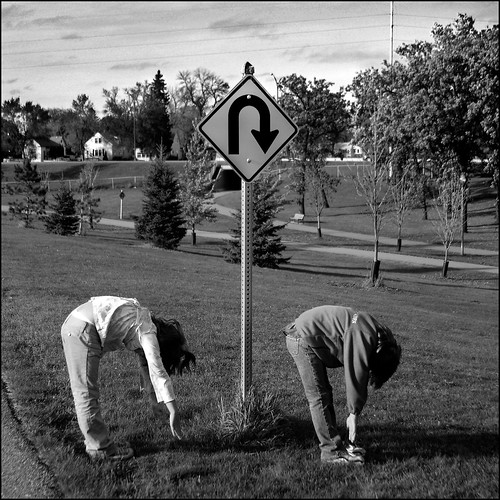
The Difference A U-Turn Makes


26th Sunday in Ordinary Time (A)
100th World Day of Migrants and Refugees

Picture: cc gfpeck

Sisters and brothers, have you ever experienced for yourself what a difference a U-turn can make? Have you ever, for example, found yourself in a car going in the wrong direction? Maybe you took a wrong turn. Or maybe you missed your exit on a highway. What to do? You need to turn around. But you can’t do that unless and until you find a U-turn. In a small city like Singapore, this is usually not too much of a problem. U-turns are relatively common. But imagine travelling in a strange country. And having to drive many kilometres going the wrong way. All because you can’t find a U-turn. It can be quite frustrating. Even scary. Especially if your car is running low on fuel. Or you’re facing an emergency of some sort. In such situations, a U-turn can make all the difference. Even the difference between life and death.

U-turns that make the difference between life and death. This is also what we find in our readings today. In the first reading, we find people making U-turns of two different types. The upright man renounces his integrity to commit sin and dies. The sinner renounces sin to become law-abiding and honest. And so finds life. The upright man makes a U-turn towards death. The sinner towards life. The first sabotages himself. The second wins salvation. In each case it is the direction of the U-turn that makes all the difference. The difference between death and life.

In the gospel too, U-turns are what make all the difference. A father asks two sons to work in his vineyard. One son refuses. But later changes his mind and goes. Another son does the opposite. He agrees. But then changes his mind and doesn’t show up. Both sons make U-turns. But in opposite directions. The first son toward obedience. The second disobedience. But the story is, of course, a parable. It’s not just about obeying an earthly father. But our Father in Heaven. It’s not just about working in an ordinary vineyard. But the Vineyard of Life Eternal. Here, as in the first reading, obedience leads to life. Disobedience results in death. And, again, it’s the direction of the U-turn that makes all the difference.

That much is clear. And yet, sisters and brothers, do we really know what it means to be obedient? Or disobedient? Do we really know what it looks like to be heading towards life? And what it looks like to be going in the opposite direction? Do we really know? Perhaps this may sound to us like a very silly question? After all, we’re respectable church-going people. Of course we know what it means to be obedient to God! Of course we know what it looks like to be on the way to life!

And yet, in the gospel, it is precisely the people who think they know who really don’t. That’s the reason why Jesus tells the parable in the first place. To show the chief priests and elders of the people that they don’t really know what it means to be obedient. That, even though they may pride themselves on their own knowledge and practice of the Law, they are actually heading in the wrong direction. Not towards life. But towards death.

So what does obedience look like? How do we know whether or not we are headed in the right direction? To find the answer to this question, we need to look more closely at our readings. In the first reading, God poses this question to the people: Is what I do unjust? Is it not what you do that is unjust? What is this distinction that God is making? In the eyes of God, what is the difference between the just and the unjust?

Again, the difference has to do with U-turns. The justice of God consists in God’s willingness to allow the sinner to repent. In contrast, God considers the people unjust because they refuse to let this happen. They refuse to give others the opportunity to turn their lives around. To make U-turns. And isn’t this true of the chief priests and elders in the gospel? Thinking that they themselves are already on the right path, they refuse to entertain the possibility that tax collectors and prostitutes could repent and find life. It never occurs to these self-righteous men that public sinners could actually be making their way into the kingdom of God before them.

Sisters and brothers, isn’t this what makes the difference between true justice and injustice? Between obedience and disobedience? Between life and death? The willingness to allow others to make U-turns. The readiness to give those heading in a wrong direction the opportunity to turn their lives around. The responsorial psalm summarises this in a single word. Mercy. Remember your mercy, Lord. The psalmist prays. Do not remember the sins of my youth. In your love remember me… In other words, Lord, be merciful to me. Give me the opportunity to turn my life around. Allow me the chance to make a U-turn unto life.

Remember your mercy, Lord. This poignant prayer of the psalmist, which we can so easily make our own, finds its answer in the second reading. Here St. Paul describes for us what God’s mercy looks like in the flesh. Again, it has to do with U-turns that make all the difference. Though his state was divine, Christ Jesus, in his mercy, chose to make a detour in the direction of our own sinful condition. He chose to empty himself. Even to the point of accepting death on a cross. But God worked a U-turn of his own. God raised him high. Turned around the scandal of his dying. And transformed it into the glory of unending life. Gave him the name which is above all other names. So that, through him and with him and in him, those of us headed in the wrong direction might be able to turn our lives around. If only we would praise his name. If only we would follow in his steps. If only we would immerse ourselves in his mercy. And share it with others.

To show mercy to others. To allow them the opportunity to change their lives for the better. To give them the chance to make a U-turn in the direction of new life. This is what obedience looks like. This is what God has done for us in Christ. This is also what we, in our turn, are called to do for others. And it’s fitting that we should be reminded of this especially today. As we celebrate the 100th World Day of Migrants and Refugees. A day when we consider the many people in the world whose lives have been turned upside down. People displaced from their homes for one reason or another. People crying out for the opportunity to turn their lives around again. People in need of mercy... Not just those living in faraway lands. But also those who have somehow found their way to our shores. Not just those suffering from the more obvious violence of war and natural disasters. But also those fleeing from the more subtle cruelty of  an oppressive global economy. Forced to sell their labour, and sometimes even their bodies, in exchange for poor wages and harsh treatment.

Sisters and brothers, could it be that if we were only to look carefully around us, we would find many still needing to turn their lives around? What can we do to show them mercy? To help them make a U-turn unto new life today?

Sunday, September 21, 2014

Between Pay & Passion


25th Sunday in Ordinary Time (A)

Picture: cc brett jordan

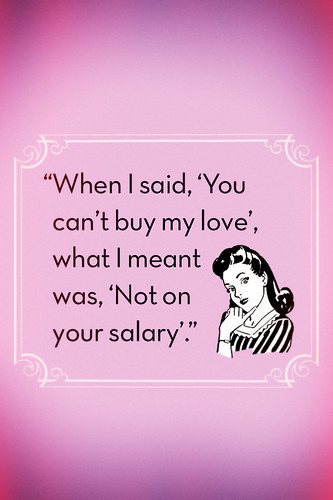
Sisters and brothers, have you ever heard people talk about the difference between a job and a passion? A job, as you know, is something that we do in exchange for a salary. We may or may not like the work itself. In fact, we may even find it very burdensome. But we still do it, because we need the money. A passion, on the other hand, is something that we are enthusiastic about. We may or may not receive any money for it. In fact, we may even have to spend our own money to get it done. But we do it anyway, because it’s important to us. It gives our lives meaning. The work energises us. Makes us happy. Even if we don’t get paid for it.

What makes the difference between a job and a passion is our motivation. What we are seeking. In one case, it’s the money. In the other, it’s the activity itself. There are, of course, some lucky people whose jobs are their passion. They are paid to do what they like to do. So a teacher, for example, may receive a salary for her work. And she may need it to survive. But the money may not be her primary motivation. It’s not what gets her out of bed in the morning. She may teach not so much for the money, but more because she really wants to share her knowledge and experience with others. To help the young learn new things. To make a difference in their lives. And in society as a whole.

People like that are truly fortunate. But, for the rest of us, our jobs are often something we do only because we need to make a living. Which is fine. There’s even a dignity in that. And it’s important that we receive a just wage for it. And yet, monetary rewards can only go so far to motivate us. Sometimes the work may become so burdensome that the money just doesn’t seem worth all the effort. All the stress. What to do? Some of us may quit. Look for another job. Or, if that’s not possible, we may be forced to stay on. Going through the motions of our daily routine in a more or less mechanical fashion. Beginning each workday already eagerly looking forward to its end. What a contrast between this kind of work and the kind done by the passionate teacher!

And it’s not just at work that we find this difference between an oppressive job and an energising passion. We find it in the spiritual life as well. Actually, I think this difference is also what our Mass readings are inviting us to ponder today. Why do you think, sisters and brothers, that the workers who were hired first, in the gospel, protested so strongly when they saw the latecomers receiving the same pay as they did?

The reason is found in the words they use. You have treated them the same as us, though we have done a heavy day’s work in all the heat. A heavy day’s work in all the heat. What do these words indicate to us, sisters and brothers, if not that those hired first saw their work as nothing more than a job? And a burdensome job at that. They found no joy in what they did. They had done it only for the pay. Which should be fine. Many of us do that. We need to. Except that this parable isn’t really about any ordinary employment situation. In telling it, Jesus is trying to show us what the kingdom of heaven is like. And it would appear that, in the kingdom of heaven, God expects people to work not just for pay. Not just to do a job. But to pursue a passion. To do what St. Paul is doing in the second reading.

Scripture scholars tell us that the letter to the Philippians was probably written from prison. Paul knew he might soon be executed. And yet, even in such dire straits, Paul has only one concern. Notice how, in five short verses, the word Christ appears no less than four times. And, quite amazingly, Paul can’t decide whether he wants to live or to die. Because, he says, Christ will be glorified in my body, whether by my life or by my death. Clearly, in everything that he does, both in life and in death, Paul seeks only one thing. To glorify Christ. What a contrast. What a great distance there is between Paul and the workers in the gospel!

Is this not unlike the distance mentioned in the first reading, which tells us that the heavens are as high above earth as God’s ways are above our ways? For, unlike us, God does things more for passion than for pay. Notice how, in the gospel, the landowner keeps going out to the market place to recruit more workers. And he insists on doing it himself. Instead of sending his foreman. He even goes out at the eleventh hour. Why? What difference could that last hour make to the profitability of his vineyard? Unless, of course, his concern is less with making more profits than with finding work for the unemployed. With caring for those who are standing idle in the market place. Isn’t this his passion? To seek out and to recruit all those who have yet to find a meaningful occupation. All those still lost and aimless. Lacking direction. So that it is not so much the salary that is the reward. The main attraction is the work itself. The joyful opportunity to labour in the Vineyard of Life.

Isn’t this what Jesus is sent into the world to do? To offer all of us a meaningful occupation. The joyful task of experiencing for ourselves, and of sharing with others, the Good News of God’s love for us all. A love that’s willing even to lay down its own life so that others might live. The same love that we celebrate at this Eucharist. And yet, isn’t it also true that, all too often, we see this work, of living and spreading the Good News, as a burden? If we even think of it at all. Perhaps because, in our minds, doing this work means having to spend more time in church. Joining this or that ministry. But could we be wrong? Could it be that the vineyard of the Lord is not just here in church? But out there in the world? In our workplaces and in our schools. In our homes and on the streets. Could it be that doing this work requires only that we have a passion for sharing God’s love with others? At times in words, and always in deeds?

But that’s the trouble, isn’t it, sisters and brothers? What is needed is a joyful passion. But what we experience is often only an oppressive burden. We are conditioned to think of the spiritual life only in terms of obligations and merits. Instead of generosity and joy. Even if we do pray the Prayer of Generosity every Sunday. Like the workers in the gospel, we tend to keep a careful count of every second we spend on the things of God. Every little prayer we say. Every Mass we attend. Every good deed we perform. And we expect to be rewarded for it all.

But if all this is true, then how can we change? How can we move away from seeing our faith as an oppressive job to letting it become our one energising passion? How do we bridge that great distance between our own calculative ways and God’s generous love? As the first reading tells us, in everything we do, we need to seek the Lord while he is still to be found. To call to him while he is still near. And we find the motivation to keep doing this when we remember that, like that landowner in the gospel, God is always already passionately searching for us. For you and for me...

Sisters and brothers, in the ordinary situations of your life, how passionately are you searching for God today?