Sunday, February 28, 2016

Between The Barren & The Burning (Rerun)


3rd Sunday of Lent (C)

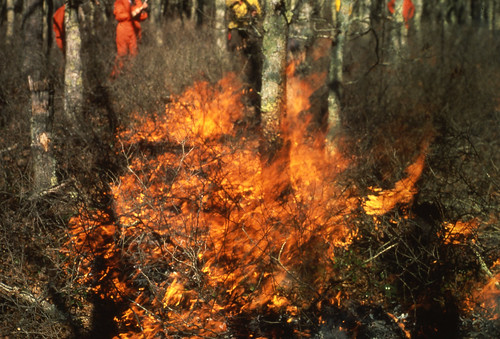
Picture: cc Inga La Puma

Sisters and brothers, some of you may remember the story that is told of a parishioner who put a big smile on the priest’s face when she said to him, after Mass one Sunday morning, Congratulations, Father! That was a wonderful homily! But Father’s smile quickly faded when he heard what she told him next: Everything that you said applies to someone whom I know!

Was Father’s homily really good? Did he truly deserve the compliment? The story doesn’t say. The point is that, good or bad, the words were wasted on the parishioner. For if everything Father said applied only to someone else, then nothing applied to her. So that, very likely, on that Sunday morning, she left the church in exactly the same state as when she arrived. Unchanged and unrepentant.

And this is precisely the kind of resistance to repentance that our Mass readings are warning us against today. They do this by inviting us to reflect upon a curious conversation between two mysterious plants. A barren tree and a burning bush. In the first reading, there is, of course, the obvious presence of a burning bush. But where is the barren tree? To answer this question, we need to recall what we know about Moses.

On the one hand, we cannot deny that, till this point, his life has been fruitful in several respects. He is a husband. And a father. And a shepherd. When we meet him in the first reading, he is busy doing what shepherds do. He is leading his father-in-law’s flock across the desert. And yet, busy and fruitful though it may be, Moses’ life is also, in a very important sense, barren. Barren because he has not yet begun to fulfil God’s plan for him. God wants him to shepherd not just his relative’s flock. But God’s own people. To set them free from slavery in Egypt. And to lead them, through the desert, to a new life in the Promised Land.

How does God effect this remarkable transformation in Moses? How does the keeper of sheep become a leader of Israel? How does the barren tree begin to bear God’s intended fruit? The process begins with an intense encounter. An intimate conversation between the barren tree and the burning bush. Between Moses and God. And it is only because Moses recognises the presence of God in the bush. It is only because he is willing to engage in this difficult dialogue. That he is finally transformed into the person he is called to be.

Of course, we may wonder what exactly was that burning bush that Moses encountered. Was it literally a plant engulfed in flame? Or is this just a metaphor for some other kind of experience? We can’t be sure. Perhaps it doesn’t matter. The point is that, literal or metaphorical, the experience was not wasted on Moses. Unlike that parishioner we mentioned earlier, however reluctant he may have been at first, Moses was willing finally to listen. He allowed God’s Word to change his life.

Contrast that with what we find in the gospel. Here, it is, of course, the barren tree that stands out. Jesus uses it as a metaphor for certain people of his day. People whose lives are barren. Probably not because they are too lazy to get a job. Or because they neglect their daily prayers. Or fail to go to the synagogue on the Sabbath. Or to keep any of the other commandments. Very likely they do all these things quite well. They may even lead very busy lives. Lives that seem fruitful in various ways. And yet, like Moses, they remain, in a very important sense, barren. They have not yet begun to fulfil God’s plan for them. Not yet allowed themselves to be freed from their preoccupation with worldly concerns. To become a true light to the nations. Leading others into the freedom of God’s kingdom.

What’s even more serious than the barrenness is their blindness. Unlike Moses, they allow their busyness to prevent them from recognising God’s powerful presence in their lives. They fail to see the burning bush when they come across it as they journey through the desert of their lives. But where, we may ask, in the gospel, is this bush? To recognise it, we need to consider carefully what Jesus has to say about the public’s reaction to two disasters that occurred at that time. When Herod massacred a group of Galileans. And when a collapsing tower killed eighteen people at Siloam. People responded by saying that the victims were being punished for their own sins.

Rather than treating those disasters as burning bushes bearing important messages for themselves. Urgent wake-up calls addressed to them. Urging them to change their own way of life. People reacted to the disasters much like how that parishioner reacted to the priest’s homily. They saw them as targetted only at others. Those other people suffered because they were sinful. Which implies that we are spared because we are righteous. They needed to change. We do not. So the burning bush may go on burning. But we continue as we were. Unchanged and unrepentant.

I’m not sure, sisters and brothers, but I suspect that this kind of attitude is still quite common among us today. I confess to finding it in myself as well. Consider, for example, this hypothetical situation. I’m sure you’ve all heard about Madonna’s infamous concert at the Sports Hub tonight. What do you think would happen if, God forbid, some terrible disaster were to befall that event. It's not too difficult, is it, for us to imagine some Christians, even apparently devout Catholics, reacting to such a disaster by claiming that it is fitting punishment for a bunch of devil-worshippers?

But is Madonna really a devil-worshipper? Were the victims of the Galilean massacre, and those who died at Siloam indeed more sinful than everyone else? It’s unlikely that we’ll find conclusive evidence one way or the other. The point is that focusing only on them, on their sins, real or imagined, makes us resistant to change. Blinds us to the call of God. So that we end up wasting precious opportunities for repentance.

Consider what Jesus has to say in the gospel about those who died: Do you suppose that they were more guilty than all the other people living in Jerusalem? They were not, I tell you. No; but unless you repent you will all perish as they did. And consider what Paul writes, in the second reading, regarding the trials that the Israelites suffered in the desert. Paul emphasises that these things happened to them as warnings for us, not to have the wicked lusts for forbidden things that they had. For the man who thinks he is safe must be careful that he does not fall. 

Conversations between barren trees and burning bushes. Transformations of preoccupied self-absorbed herders of sheep into passionate God-fearing leaders of nations. This is what we find in our Mass readings today. Conversation and transformation. Obedience and repentance. These are the things that God is offering us, on this 3rd Sunday in Lent. This is the urgent call addressed to us. Not to just to anyone else. But to us. To me. And to you.

Sisters and brothers, what must we do to listen and to change? To repent and to bear fruit today?

Sunday, February 21, 2016

Castles in the Air–Bodies on the Cross


2nd Sunday of Lent (C)

Picture: cc THEMACGIRL

Sisters and brothers, I think you know what it means to build castles in the air, right? It’s to dream big dreams. To make great plans. To draw up grand schemes. Is there anything wrong with that? What do you think? According to the 19th Century American writer and poet, Henry David Thoreau, it’s actually okay to do this. Provided we don’t stop there. If you have built castles in the air, he writes, your work need not be lost; that is where they should be. Now put the foundations under them. In other words, by all means build castles in the air if you wish. But don’t forget to also ground them in reality.

This is actually something that we all know quite well. At least in secular life. For example, we know that there’s no point in dreaming of a successful career, if we don’t work hard to make that dream come true. And there’s no use thinking about what course I want to study in the university, if I don’t make the effort to take and to pass the entrance exams.

Isn’t this the big difference between visionary leaders and lazy dreamers? Both have one thing in common. They are able to see what most other people don’t. An inspiring vision. Perhaps even an impossible dream. Visionary leaders and lazy dreamers both build castles in the air. At least in the beginning. What sets them apart is not so much what they see with their eyes and in their minds. But what they do with their hands and their feet. How willing and able they are to transform visions into reality. To transport castles from the air onto solid ground.

I mention this because, on this 2nd Sunday of Lent, our readings are full of people seeing glorious visions. In the first reading, God takes Abram out of his tent, and invites him to dream big. Look up to heaven and count the stars if you can. Such will be your descendants. For Abram, this is truly an incredible vision. An impossible dream. For, as you know, at this point in the story, both Abram and his wife Sarai are already very old. And still they remain childless. Yet God invites Abram to dare to dream of descendants as numerous as the stars.

In the gospel, Jesus takes Peter, James and John up a high mountain, and shows them an awesome vision. Not only do Moses and Elijah appear in their heavenly glory. Jesus himself is transfigured before them. His face was changed and his clothing became brilliant as lightning. And it’s important for us to remember that this vision is not just about Jesus. It is also about the glory that we ourselves will share, as his disciples. As St. Paul reminds the Philippians in the second reading: For us, our homeland is in heaven, and from heaven comes the saviour we are waiting for, the Lord Jesus Christ, and he will transfigure these wretched bodies of ours into copies of his glorious body. 

The vision that the three disciples see on the mountain is the same one that Paul shares with the Philippians. It is the vision of our own heavenly destination. As daughters and sons of God. Adopted brothers and sisters of the Lord. We believe that a time will come when all of us will be transfigured, as Christ was. When all our sorrows will be removed. Our every tear wiped away. And peace and justice will reign over all the earth. This is the dream. This is our vision. And what a grand vision it is. Is it any wonder that Peter wants to pitch tents, and to remain on the mountain? So that he can keep enjoying the glorious sight?

And yet, Jesus doesn’t allow him to do so. Why? Isn’t it because, at this point in the story, the Transfiguration on the Mountain is still something of a castle in the air? A dream that needs to be made real. A promise that has to be fulfilled. Something more needs to be done. Jesus has to come down the Mountain of Transfiguration, in order to climb the Hill of Calvary. To be lifted up on the Cross on Friday. So as to be raised to life on Sunday.

This is what it will take to transport the dreamy castle in the air onto the solid ground of human reality. Just as in the first reading, Abram offers the broken bodies of various animals as a sign of the covenant between him and God. So too, in the gospel, God will offer the broken body of his only Son. To gather together all of us. God’s scattered and wayward children.

This is how the glorious dream of eternity becomes real in time. This is how ruptured relationships are healed. How a shattered world is made whole again. By bodies that allow themselves to be broken in the name and for the sake of love. This is what is meant in the gospel, when the voice from the cloud says: This is my Son, the Chosen One. Listen to him. Listen to him, when he calls you to follow in his steps. Listen to him, when he invites you to walk the Way of the Cross. Listen to him, because this is the path to true and lasting glory…

And yet, my dear sisters and brothers, how many of us find this easy? How many of us have the courage truly to listen? Faithfully to follow? To forgive someone who has hurt us? To reach out to those who need us? To work for the benefit of those who cannot repay us? Are we not, instead, often sorely tempted to be like those people for whom Paul weeps in the second reading? I repeat it today with tears, he says, there are many who are behaving as enemies of the cross of Christ. They are destined to be lost. They make foods into their god and they are proudest of something they ought to think shameful; the things they think important are earthly things. People who spend their lives clothing their bodies in vanity. And padding their bank accounts out of greed. Rather than breaking themselves for love.

Isn’t this why we need this great Season of Lent? Through our penitential practices, we train our bodies. And we beg God’s grace. So that we can keep following Jesus to the Cross. And with him to have our hearts and our bodies broken in love. So that the dream can continue to be fulfilled. And our darkened world transfigured in glory.

Sisters and brothers, on this 2nd Sunday of Lent, what must we do to keep transporting castles in the air onto solid ground today?

Surprised By Joy


Wedding Of Terry & Sian

Readings: Song of Songs 2:8-10, 14, 16a; 8:6-7a; Psalm 144:8-10, 15, 17-18. R. v. 9; 1 Corinthians 12:31-13:8; John 15:12-16

Terry and Sian, my dear friends, I think you’re probably familiar with the American comedienne, Ellen DeGeneres. You probably also know that she hosts her own TV talk-show. Simply called Ellen. Well, I recently stumbled upon the tail-end of an episode of Ellen, where she had tricked one of her fans onto her show. And then surprised the unsuspecting woman with a generous gift. A brand new car. A Chevrolet Malibu. Which was something that the fan really needed. Since her current vehicle had a cracked windshield, and was more than a hundred years old. I exaggerate…

In any case, you can imagine the fan’s reaction to the gift. To say that she was overjoyed would be an understatement. She couldn’t stop shouting and screaming. And jumping up and down. The gift was clearly something that she appreciated very much. That she had not expected it at all, only added to her delight.

Now I can’t say for sure, my dear friends, because I only just met them a few days ago. And I apologise if my perceptions are completely off the mark. But it seems to me that there is something of that same joy in both Sian and Terry. Of course, in my brief meeting with them, I did not witness any shouting or screaming. Or jumping up and down. I’m not sure if they ever do that. Do you? …

No, their joy is of a quieter, more mild-mannered sort. Quieter, and yet unmistakable. And, like what I saw on the talk-show, I think it comes from realising that they have each received a precious gift. A gift that they both appreciate tremendously. And perhaps also a gift that delights them all the more, because it appears to have come when they weren’t quite expecting it. Again, I may be wrong, but I tend to think that the readings that you, Sian and Terry, have chosen for this celebration actually tell us the story of this gift. And of this joy.

The first reading speaks of a Lover seeking his beloved. Calling her from her hiding place in the clefts of the rock, in the coverts of the cliff. And the Lover persists in his search. He keeps calling to his beloved. Until he finds her. Until she comes out to meet him. Now it is perhaps natural for us to immediately equate the Lover with the groom. And the beloved with the bride. But I wonder if that’s really how you, Terry and Sian, interpret the text.

I expect that most of the rest of us already know how Terry and Sian met, right? And I trust that I am not betraying any confidences by revealing this. As you know, they bumped into each other on an online dating website. So, in a sense, they were both searching. And they both found what they were looking for. And yet, perhaps it is just as true that they were also each waiting to be found. Each waiting to be called from out of their respective hiding places. And not just called by one another. But called, especially, by Love. Called to be loved. And to return love for love.

Which explains why there is an obvious joy and delight in them, now that their search has been rewarded. Now that they have each found true friendship. True companionship. True Love. Love that has come to them, first of all, as a gift. And isn’t this really what the second reading tells us about Love? That it is a gift. We know the passage well, of course. It is a popular one. Especially at weddings. But I daresay that we often read it only as something like an instruction manual. Telling us what we ought to do. Love is always patient and kind, the reading says. So we too must be patient and kind. Something like that…

And yet, before it is a responsibility and a task, something that we ought to do, Love is first and above all a gift. That is how the reading begins. Be ambitious for the higher gifts. And I am going to show you a way that is better than any of them. For St. Paul, Love is not just a gift, but the highest gift. It is not something that we can manufacture for ourselves. Not by our eloquence, or our intelligence. Not by our faith, or even by great feats of sacrifice. For if I even let them take my body to burn it, but am without love, it will do me no good whatever. Much as we hunger and thirst for it, we cannot generate Love for ourselves. We can only receive it as a gift. A gift from God. Freely given. And requesting a free response.

Isn’t this what you, Terry and Sian, are celebrating today? Isn’t this the reason for your joy and delight? The same joy and delight that you are inviting the rest of us to share. It is a joy and a delight at the realisation that you have both received a tremendous gift. Perhaps it is a gift that has surprised you. I’m not sure. But a gift nonetheless. And perhaps this explains your choice of the responsorial psalm. A song of gratitude for the goodness and generosity of God. A proclamation of how worthy our God is to receive our praise. For all the good things that God has done and continues to do for us. All your creatures shall thank you, O Lord, and your friends shall repeat your blessing. 

And isn’t all this the indispensable preparation that we need to hear and to understand what the Lord Jesus is telling us in the gospel? This is my commandment: love one another, as I have loved you. Indispensable, because we cannot love as Christ loves unless we first allow ourselves to receive, to experience, and to rejoice in the love that he has showered upon us. We cannot truly lay down our lives for our friends, unless we realise and celebrate the way in which he has first laid down his life for us. The way in which he has accepted and recognised us as his friends. Isn’t this this the deep Mystery that we are celebrating at this Mass?

I have no idea what that woman did with the car that she received on the talk-show. But I’d like to imagine that she did with it what it was manufactured for. That she used it in all the different ways a car is meant to be used. Ferrying herself and her family and friends to and from wherever they need to go. For that is probably the best way in which we can receive a gift. By using it to the full.

And perhaps what is true of a car is true too of Love. We receive it most gratefully, when we live it to the full. When we do whatever is necessary in the days ahead to remain in the Love of the One who was gracious enough to call us his friends. And to lay down his life for us. So that we too might lay down our lives for one another. 

Terry and Sian, my dear friends, what must we do to continue joyfully receiving and living in Love today?

Thursday, February 18, 2016

Clinging to the Life-Line


Funeral Mass for Joshua Ong

Readings: Wisdom 4:7-15; Psalm 27; John 11:17-27
Picture: cc Shemsu.Hor

My dear sisters and brothers, I’m not sure if any of you have ever gone mountain-climbing or rock-climbing before. I haven’t. But I’ve seen people do it. Perhaps you have seen it too. As you know, one thing that climbers usually do is to rope themselves to one another. And we know why they do that, right? It’s so that, in case one of the them slips and falls, the other can pull him back to safety. The rope is a life-line. An assurance of safety.

Of course, for those of us who are watching the climbers from afar, we may not always notice the rope. We may forget that each climber is connected to a life-line. And so, when we see someone slip and fall, it is natural for us to feel anxious and scared. Especially if the person is a close friend of ours. Or a relative. Someone we love and care about. And yet, as long as the rope holds. And as long as the climbing companion is securely anchored. The one who has slipped and fallen will not perish. He can still be pulled to safety. And we can all breathe a sigh of relief.

I mention this because today we gather to say goodbye to someone who has slipped and fallen. Someone we love. Someone we will miss terribly. Our beloved son and grandson. Our relative and friend. Joshua. And the circumstances of his falling are so tragic, and so sudden, that we find ourselves at a loss. We are heartbroken and confused. Troubled and anxious. Not only are we burdened by our own pain and grief. We may also be worried about what will happen to Joshua now. Will he ever recover from his fall? Or will he be lost forever?

And it is at this difficult time, that our Church reminds us of our Faith. Of what we believe. For Joshua is not just loved by us. Joshua is also loved, above all, by God. The same God who gave him to us. The same God who called him from his mother’s womb. The same God who has cared and protected him all the days of his life. Not only that, we also know that Joshua is not just any ordinary person. He is also a baptised Christian. A disciple of Christ. Marked with the sign of the Cross. And filled with the Holy Spirit. We believe that, just as mountain-climbers rope themselves to one another for safety, so too, at his baptism, Joshua was roped to our Lord Jesus Christ. Who is his life-line. His assurance of safety.

So that even though Joshua has now slipped and fallen. And even though we are heartbroken and anxious. We dare to believe that everything will be alright. That he will be pulled to safety. This is what our Mass readings are helping us to remember today. The first reading talks about how people who look on, uncomprehending, may not realise the truth about the virtuous person who dies before his time. They may think that this person is lost, simply because he dies young. But the reading reminds us that grace and mercy await the chosen of the Lord, and protection, his holy ones. Even though our beloved Joshua has died so suddenly, and so young. We dare to hope that God will pull him to safety. For he is not just our beloved son. He is, above all, a beloved son of God.

And this hope of ours is strengthened especially by what we see Jesus doing, and what we hear him saying, in the gospel. Jesus’ friend Lazarus has died. Actually he has already been buried. And Jesus visits his tomb to grieve. And also to comfort his family and friends. But, most of all, to raise his friend to life. And to teach us all a valuable lesson. This is what Jesus does for his friends. Those who are tied to him in a bond of friendship and love. He doesn’t just allow them simply to slip and fall, and to perish forever. He goes to their aid. He pulls them to safety. He calls them to life. Jesus is our safe anchor. Our reliable life-line. And what Jesus does for Lazarus, he will also do for our beloved Joshua. And for all of us.

This, my dear friends, is the challenge that we face today. To realise that even though our hearts are broken to pieces. Our throats choked with grief. And our eyes filled with tears. The Lord continues to ask us the question that he asks Martha in the gospel: I am the resurrection and the life, he says. Anyone who believes in me, even though he dies he will live… Do you believe this? … Do you believe that I can and will pull our beloved Joshua to safety? Do you believe that I can and will pull all of you to safety? Do you believe I can mend your broken hearts? Calm your cries of grief? And wipe away your tears. Do you believe this?

My dear friends, at our baptism, we were all given a life-line. We were all roped tightly to Christ. Especially in this difficult time, how are we being called to cling ever more tightly to Christ, and to one another, today?

Sunday, February 14, 2016

Questions of Safety


1st Sunday of Lent (C)


Sisters and brothers, I think most of you have heard about the powerful earthquake that struck the city of Tainan, in southern Taiwan, last Saturday. But did you know that all but two of the people who were killed when the quake struck were inside the same 17-storey apartment complex? Why did this building collapse, when many others around it remained standing? This is the question the authorities are now asking. And for good reason.

Examination of the collapsed building has revealed that tin cooking-oil cans and styrofoam appear to have been used as filler material inside some of its concrete beams. It’s too early to say whether any laws were broken in the building’s construction. But it is clear that the authorities are now taking the matter very seriously. Serious enough that, on Tuesday, three former executives of the company responsible for erecting the building were taken into custody for questioning.

I’m not sure, sisters and brothers, but I imagine the relatives of those who died are probably wishing that these questions had been asked earlier. That checks were made sooner. To ensure the building was properly built. Steps taken so that its occupants might have a reasonably safe structure in which to live.

And if this is true of a physical building, shouldn’t it be true of my spiritual life as well? When disaster strikes, will I be able to withstand the shock? Or will I simply crumble and collapse? Like that building in Tainan. How really safe and secure is the spiritual structure in which I live? What can I do to make it stronger? What questions do I need to ask? What checks do I need to make? What steps can I take? These are some of the things that our Mass readings help us to ponder on this 1st Sunday in Lent.

We see this especially in the opening lines of our responsorial psalm. He who dwells in the shelter of the Most High and abides in the shade of the Almighty says to the Lord: “My refuge, my stronghold, my God in whom I trust!” But what does it mean to dwell in the shelter of the Most High? To abide in the shade of the Almighty? And what can I do to ensure that I am indeed living in this safe and secure spiritual Place? Each of our Mass readings provides its own answer to these questions. And these answers can be summarised in three words.

The first word is ritual. For the first reading describes a ritual celebrated by the People of Israel. To offer to God the first-fruits of the harvest. And this ritual involves three actions. The first is pronouncement. After the people have approached the priest at the altar, they are asked to remember and to recite aloud all that God has done for them. Especially how God heard their voice when they called on the Lord. How God rescued them from slavery in Egypt. And led them to the Promised Land. After they have made this prouncement, they are then asked to lay (your gifts) before the Lord your God, and bow down in the sight of the Lord your God. Presentation and prostration. These are the other two actions of the ritual.

But that’s not all. The ritual actions of pronouncement and presentation and prostration are not meant to stand on their own. They are, rather, an expression of a whole way of life. A life that constantly and carefully recalls and recites the Lord’s goodness. A life that repeatedly presents to the Lord the very best of what I have and who I am. In gratitude for all that God has done and continues to do for me. A life that is, above all else, an act of worship to the Lord. To celebrate this ritual is really to commit myself to keep on dwelling in the shelter of the Most High. To keep on abiding in the shade of the Almighty. And so to enjoy the safety and security of the Lord’s embrace.

The second word is reading. For this is what St. Paul is doing in the second reading. He helps his readers, and all of us, to read and interpret Scripture. And he assures us that the Word of God, which provides us a safe shelter, is not very far away. It is, instead, very near to us, it is on our lips and in our hearts. All we have to do to continue to live in this powerful Word is to keep believing in our heart and to keep confessing with our lips. To keep living a life that is rooted and grounded, shaded and sheltered, in the love of God shown to us in Christ Jesus.

The third answer to the question of how to take shelter in God is provided by Jesus in the gospel. After being baptised in the Jordan River. And after being filled with the power of the Holy Spirit. Jesus doesn’t just rush headlong into his public ministry. Instead, we are told that he is led by the Spirit through the wilderness. He makes a retreat. Why a retreat? Apparently only so that he can be tempted by the devil. But why? Wouldn’t it be better not to be tempted? Perhaps. But, then again, perhaps not. For if the strength of a building is not tested, how will we know it is strong enough to withstand an earthquake? So Jesus allows himself to be tempted. To be stress-tested. To practice resisting the devil’s cunning tactics. Such as the temptation to use his power for self-serving purposes. And the temptation to worship anything, or anyone, other than God alone. As well as the temptation to put God to the test by acting recklessly instead of responsibly.

In successfully resisting each of these temptations, Jesus demonstrates the structural strength and firm foundation of the spiritual building in which he lives. More than any other person, it is Jesus who shows us what it means to dwell in the shelter of the Most High. And to abide in the shade of the Almighty. For he will continue to dwell and to abide in the will of God, even when this dwelling turns into the darkened shade and the crushing shelter of the cruel Cross. And his Father will reward his trust by raising him from death to life.

Ritual, reading, and retreat. Three ways to help us to keep dwelling in the shelter of the Most High. To keep abiding in the shade of the Almighty. And are these not the very things that make up this great Season of Lent? What is Lent, after all, if not one long retreat? A time when we practice resisting the devil. And what are we invited to do more in Lent, if not to celebrate rituals? More frequently and more conscientiously. Liturgical rituals like the Holy Eucharist, and the Sacrament of Reconciliation. Devotional rituals like the Stations of the Cross, or the Holy Rosary, or the Chaplet of the Divine Mercy. Personal rituals, like prayer and fasting and almsgiving. And what good will all these rituals do us, if they are not informed by the careful and attentive reading of Sacred Scripture?

But still, as important as they all are, we need to remember that the practices of ritual, reading, and retreat will benefit us only to the extent that we connect them to the rest of our lives. So that our whole life becomes a continual act of worship to God. For everyone who calls on the Lord will be saved.

Sisters and brothers, it is truly tragic when we question the safety of a building only after it collapses. And kills many people.

How is God inviting us to question our spiritual safety today?