Sunday, November 13, 2016

T-K-K


Wedding Mass of Benjamin & Sophia

Readings: Genesis 2:18-24; Ps 148:1-4.9-14 R/v.12; Colossians 3:12-17; John 15:9-12
Picture: LTA

Ben and Ika, my dear friends. Have you ever felt incomplete? And do you know what it takes to become complete? As you know, not far from this church, there is an MRT Station named Tan Kah Kee Station. People who live in this area will tell you that this station took a very long time to complete. This was because, half-way through the project, the main contractor went bankrupt. And the development stalled. Whatever the reason, for a very long time the poor Tan Kah Kee Station looked like nothing more than an abandoned construction site. In fact, the project took so long to complete that people began calling it the Tan Ku Ku Station. (In Hokkien, Tan Ku Ku = wait long long.)

Evidently, it takes hard work and quite a bit of luck to complete an MRT station. And, as we all know, even after the station is complete, it still requires ongoing maintenance to remain fully operational. To remain truly complete. But what about human beings? What does it take to become a complete human being? What do we have to do? Believe it or not, my dear friends, this is the question that you, Ben and Ika, are inviting us to ponder today. Especially through the readings that you have chosen for this joyous occasion. For each of the readings that you have picked actually speak to us about the process of completion.

Notice, for example, how the first reading begins. God has already created the first man. But God is somehow still not fully satisfied. The man remains incomplete. It is not good that the man should be alone, God says. So God sets out to create the first woman. And not just the first woman, but the first human relationship. And it’s important to pay attention to how this happens. First the man is put to sleep. His ego is tranquilized. Then he donates a part of himself. And it’s only then that the man and the woman both find completion. In their relationship with each other. This at last is bone from my bones. and flesh from my flesh! A relationship between true equals. A relationship born of self-denial and self-donation. This is how the creative power of God makes true human relationships arise and grow. This is how we become complete.

The second reading too speaks to us about completeness. Not just how to become a complete human being. But also how to become complete as a people. For you are God's chosen race, his saints; he loves you. God chooses us and loves us and wants us to become complete. Complete not just as individuals. Complete not just as couples. But complete as a whole people chosen by God. How? By putting on the right clothes. Not designer fashion. Like Calvin Klein or Giorgio Armani. But Christian virtues. Like compassion and kindness. Patience and gentleness. And to complete all of these, we need to clothe ourselves especially with love. Not just any kind of love. But the love that we receive from Christ. Who laid down his life for us on the Cross. To constantly be reminded of his incredible love. As we are doing in this Mass. To allow the message of Christ to find a home in us. So that we can be moved to love one another. This is how we become complete as a people.

But that’s not all. To be a complete human being is not just to be related to another human being. Nor is it just to be related to the whole People of God. It is also, first and above all, to be related to God himself. Isn’t this what Jesus is talking about in the gospel? The Lord teaches us how to become complete by remaining in a loving relationship with God. As the Father has loved me, he says, so I have loved you. Remain in my love. How to remain in his love? By keeping his commandments. And why remain in his love? To become complete. I have told you this so that my own joy may be in you and your joy be complete.

This is what our readings tell us. That we become complete by entering into loving relationships with other people, with the chosen people, and, above all, with the God of all peoples. And this message is, of course, especially appropriate for a wedding ceremony like this. For isn’t this what marriage is all about? Don’t we find the same three relationships here? First, the coming together of a man and a woman–of you, Ben and Ika–in a special married relationship. So that you become, no longer two separate people, but one body. Sharing a common life together. And you do this not just on your own. But also in the presence of all the rest of us. Members of the Church. As well as in the sight of God. Three relationships: between spouses, withing the Church, and with God. This is how marriages become complete.

And yet, we must be careful not to be mistaken. While it is true that after today’s wedding Mass, both of you, Ben and Ika, will be married for the rest of your lives. We must not think that your marriage is complete simply because you have pronounced your vows. As I’m sure, all the married people among us will remind us, the completion of marriage is not just accomplished in a single moment. Here and now. Once and for all. But it is also a continual task. Which we have to keep taking steps to  accomplish moment by moment. Day by week by month by year.

Putting in continual effort. First to remain in touch with the love of Christ. Who fell asleep and poured out his life for us on the Cross. So that we too might find the strength to keep putting our own egos to sleep. In order to give of ourselves in love to others. To our spouse first of all, of course. But also to others around us. Especially those most in need. And to do this is not easy. We need support. Not just of the friends and relatives gathered here. But also of the rest of the Body of Christ. The rest of the People of God. We need to remain connected to the Church in some way, if we are to keep working at becoming complete.

Just as an MRT station requires ongoing maintenance. So too does a marriage require constant effort to bring it to completion. But this is something that I think you, Ben and Ika, already know every well. I think, for example, of all the time and effort that went into bringing you both together as a couple. I think of how, initial attempts by your respective relatives to get you to meet each other didn’t quite work out. Because you, Ika, were still in another relationship. And you, Ben, simply refused to be match-made. It took nothing less than a funeral and a sudden thunder storm to bring you both together. And to eventually gather the rest of us here to share your joy on this happy day.

And yet, this is not something to be ashamed of. For we are all familiar with the popular saying that a wedding may be for a day, but a marriage is for a lifetime. This is true. A marriage is for life. And it will take a whole lifetime of joyful effort to bring it to completion. Joyful effort not just from you, Ben and Ika, but also from the rest of us, as we give you our care and support. And even though it may seem like we have to wait a long time. Even though it may feel like we have to to tan ku ku. Still, we are happy to do it. For even more than MRT stations, marriages and loving relationships are truly worth waiting and working for.

Ben and Ika, my dear friends, as we joyously give thanks to God for bringing us together today, what do we need to do to continually bring this marriage to completion in the days ahead?

Sunday, November 06, 2016

Of Sprints & Marathons


32nd Sunday in Ordinary Time (C)

Picture: cc MIKI Yoshihito

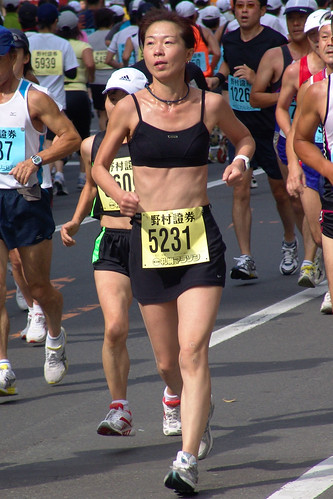
My dear friends, do you know the difference between a century sprint and a marathon run? They are both foot races, of course. But with one very importance difference: the distance. A century sprint, as you know, is run over 100 metres. And it usually lasts no more than 10-20 seconds. But a marathon spans over 42 kilometres. And it typically goes on for hours. A vast difference in the distance covered, as well as the time taken.

But that’s not all. This difference in distance means that runners must approach each of these races in a very different way. As you know, sprinters need to give it all they’ve got right from the very beginning. Anything less and they lose the race. Marathoners, on the other hand, have to be careful to pace themselves. To conserve their energy. Otherwise they won’t be able to complete the distance. Let alone win the race. Which makes it very important for a runner to know what kind of race he or she is running. For the distance to be covered determines the way in which a race is run. Imagine how disastrous it would be for someone to run a marathon as though it were a century sprint. The runner would be tired out in no time at all.

But if this is true of foot races, can we not say the same about the spiritual life as well? Could the way in which we run the race also depend very much upon the distance we need to cover? If so, then it’s important for us to determine what kind of race we are entering. And this is precisely the question that our Mass readings present for our reflection today. This is the deeper significance of the apparently abstract problem that the Sadducees pose to Jesus in the gospel.

The question is whether or not there is life after death. Whether the race we are running ends at the point of our departure from this earth. Or whether it somehow continues even beyond. The Sadducees try to show the absurdity of the resurrection by a rather far-fetched example of a woman who marries several brothers, one after the other. If there is indeed life after death, they argue, then won’t she become a polygamist in the next life? To which Jesus responds by saying that the next life is different from the current one. Those who are judged worthy of a place in the resurrection from the dead do not marry because they can no longer die, for they are the same as the angels…

This argument is actually not too difficult for us to understand. And yet, it is possible to follow the Lord’s argument and still lose sight of its deeper significance. For, if there is such a thing as a resurrection from the dead. If the race that is human life actually continues even beyond death. Then surely this should somehow affect the way we live. Could it be that just as a marathon needs to be run differently from a sprint, so too does eternal life need to be lived differently from a merely temporal existence? So that whether or not we believe in the resurrection of the dead has important consequences for our daily living.

We see these consequences strikingly illustrated in the first reading. Here a Greek king forces a family of Jews to break the the Jewish Law, by tasting pig’s flesh. Eat pork or suffer cruel torture and agonising death. This is the terrible choice presented to each of the seven brothers and their poor mother. Quite amazingly, one after the other, they somehow find the courage to defy the king. They insist on keeping the Law even at the cost of their lives. And what helps them to do this is their unshakeable confidence in the resurrection. Their belief that, provided they remain faithful, even if they have to lose their earthly lives, God will preserve them for eternal life. Ours is the better choice, declares the fourth brother. To meet death at men’s hands, yet relying on God’s promise that we shall be raised up by him.

Although life on this earth may often seem to many like nothing more than a brief sprint. Over and done with in a few relatively short moments. For these brothers, life in God lasts for all eternity. It is more like a marathon than a sprint. And, as such, it needs to be run differently. Except that, in the spiritual life, the approach is the exact opposite of ordinary races. As we said, in foot races, sprinters typically go all out right from the start. They expend all their energy in order to win the race. In contrast, many of those who think that human life is nothing more than a sprint, that it ends at death, often go to great lengths not to spend themselves but to preserve their lives at all cost. And even to feed their many and varied appetites. Their constant craving for money and comfort. For success and popularity and power. Let us eat and drink, for tomorrow we die (1 Cor 15:32).

On the other hand, while marathoners usually take care to pace themselves. To conserve their energy. Christians who believe in the resurrection are called to act in the opposite way. To live life as though it were a long distance race, continuing far beyond life on this earth, is to do what those brothers in the first reading did. To go all out and spend oneself in the service of God and of neighbour. To be willing even to lay down one’s earthly life in the cause of justice and right.

But surely this approach makes no sense at all, does it? How can someone reasonably be expected to run a marathon as though it were a sprint? By going all out right from the beginning? By expending all of one’s energy from start to finish?

The answer lies in the second reading. Where we find another important difference between the spiritual life and an ordinary foot race. A foot race, as we all know, involves great expense of energy. Even though a marathoner may have the opportunity to take some nourishment along the way, this energy is very quickly burned off as the race progresses. But the spiritual life is quite different. Here the energy being expended does not come from the runner. It comes instead from another Source. The same divine Source to whom St. Paul addresses his prayer in the second reading. May our Lord Jesus Christ himself, and God our Father who has given us his love and… such inexhaustible comfort and such sure hope, comfort you and strengthen you in everything good that you do or say.

To believe in the resurrection, to run the race of the spiritual life as though it were a marathon, and not a sprint, is not simply to exert ourselves to the point of burn-out. It is rather to choose to continually tap into the inexhaustible energy of God’s infinite love for us all. And this is precisely the choice that you our new Catechumens are making today. This is the deeper significance of the ritual that we celebrated just now. The signing of your whole body with the Cross of Christ. The sign of our belief in the resurrection. The sign of our commitment to live life as though it were truly a marathon powered by the love and mercy of God. A race in which we are called to continually spend ourselves in the cause of justice and right. For the greater glory of God and the common good.

My dear sisters and brothers, Catechumens and baptised Christians alike, what must we do, you and I, to continue running this race in the way it is meant to be run today?

Saturday, November 05, 2016

Transporter


Wedding Mass of Mark & Sheryan

Readings: Genesis 2:18-24; Ps 148:1-4.9-14 R/v.12; Colossians 3:12-17; John 15:9-12
Picture: cc Chris Radcliff

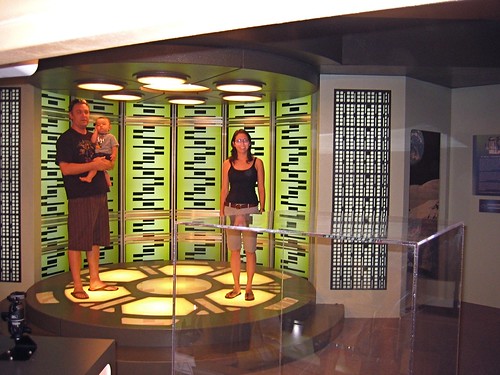
My dear Mark and Sheryan, relatives and friends. Do you know what a transporter is? No, I am not talking about an MRT train or a bus. A taxi or an airplane. Nor am I referring to a courier service like FedEx or DHL. Actually, what I have in mind is not found in the real world at all. At least not yet. It exists only in the realm of science fiction. Those of you who happen to be fans of Star Trek will know what I am talking about.

In the science fiction world of Star Trek, a transporter is a device found on board the Federation starship Enterprise. And, as its name suggests, this amazing machine has one main function. It transports people or objects from one location to another. Should members of the starship’s crew get stranded on an alien planet, for example, the transporter is able to quickly beam them back to the safety of the mothership. Without the vessel having to waste precious time making a potentially dangerous landing.

Imagine having the power to be instantly transported to a place of safety and security. Of nurture and nourishment. Comfort and consolation. Inspiration and motivation. A place from which we can then set out again and again. To explore strange new worlds, to seek out new life and new civilisations, to boldly go where no man has gone before… Isn’t this something like what we are celebrating today? As we witness the exciting beginning of your new life together, Mark and Sheryan? As we gather here to share your joy? And to assure you of our love and support?

A transporter. Strange as it may sound, my dear friends, isn’t this something like what we believe Christian marriage to be? Isn’t this what we find in the readings that you, Mark and Sheryan, have chosen for this joyous occasion? Just as the transporter in Star Trek has the ability to beam space explorers back to their mothership. So too do the readings transport us to a very special spiritual place. Have you noticed where or what this place is?

The first reading paints for us a picture of the creation of the first woman. And not just the first woman. But also the first relationship between human beings. And it’s important to notice how this happens. How human relationships begin. First something has to be put to sleep. The self-seeking ego is anaesthetised. After which, the man is able to give away a part of himself. A rib. Out of which an intimate new bond is formed. This at last is bone from my bones and flesh from my flesh!

But there is more. Pondering and praying over this picture of creation, the early Fathers of the Church found themselves transported to another spiritual location. To the scene of Christ on the Cross. The scene of the One who submitted to the sleep of death. And out of whose pierced side flowed blood and water. Symbols of the birth of the Church. The Body of Christ. The People of God. The Communion of Saints. The place where many different people are intimately bound together as one.

Transportation. We find this same amazing power at work too in the second reading. Which speaks about the importance of wearing the right clothing. Not Calvin Klein or Giorgio Armani. Not Giordano or Uniqlo. But compassion and kindness. Humility and gentleness. Patience and, above all, love. But from where do we obtain these priceless pieces of spiritual clothing? And how do we go about putting them on? Don’t these questions lead us back, once again, to the Cross of Christ? To that place where the Lord courageously allows himself to be stripped of his garments? In order to put on the uniform of Love-Beyond-All-Measure? The same love that leads him to be stripped not only of his garments. But even of his very dignity. His dignity both as a human being and as the only-begotten-Son-of-God.

And just in case we may feel uneasy. Just in case we may think that these reflections are far too morbid for a joyous occasion like this. Our Gospel reading helps to reassure us. For here, at the Last Supper, on the night before he dies, Jesus tells his disciples to remain in my love. To remain in the same incredible and steadfast love that the Lord pours out on Calvary. So that, once again, we find ourselves transported to the Cross. To that apparently dark and forbidding place. Except that, seen through the eyes of faith, the Cross of Christ is neither morbid nor forbidding. The Lord invites us to remain at his Cross not to frighten us. But to give us joy. The joy that comes from realising how much we are loved. I have told you this so that my own joy may be in you and your joy be complete. This is my commandment: love one another, as I have loved you.

To be transported to the spiritual Mothership that is the Cross of Christ. A place of safety and security. Of nurture and nourishment. Comfort and consolation. Inspiration and motivation. So that we can then be sent out again and again to explore strange new worlds in the name of love. Isn’t this what Christian marriage is meant to be? Isn’t this how married love is born? How it remains fruitful in our lives and in our world?

And even if this may sound far-fetched to some. Even if there are those who may not understand how light can shine out in darkness. How life and love can be born of suffering and death. This is not new to you, Mark and Sheryan. For have you not experienced something similar in your own history as a couple? Don’t you find it significant, for example, that you first met each other in a clinic? Where you were both presumably seeking medical attention? And precisely at a time in each of your lives when you were recovering from earlier relationships that had recently ended? Isn’t it striking that this love of yours should have been born and nurtured in places as these? Places populated by people in need of healing?

And what is perhaps even more significant is something that you, Sheryan, have written. I hope you don’t mind me sharing it here. But I find it striking that you should have mentioned this not once but twice. We all know that all newlyweds look forward to sharing happy times together. Which is as it should be. And yet you, Sheryan, say that you are looking forward also to something else. Not just to the good times. But also to arguing with your husband into old age. Again, perhaps some may think this strange. And yet, perhaps it isn’t strange. Perhaps it is simply a sign of your realisation that true love is nurtured not just in times of calm, but often also and especially in the midst of the storm. When we may find ourselves transported to the Cross of Christ.

Transportation. Isn’t this what we find in the love-history that you, Mark and Sheryan, share? Isn’t this what we all wish for you both in the days ahead? And not just for you, but also for ourselves. That in the midst of the ups and downs of life, we may all somehow allow ourselves to transported to the safety and security of the Cross of Christ. So that we can be sent out, again and again, to explore strange new worlds in the name of Love.

Mark and Sheryan, family and friends, what must we do to continue being transported to the Mothership of Love today?

Sunday, October 30, 2016

When The Feet Don't Reach The Pedals


31st Sunday in Ordinary Time (C)

Picture: cc Karl Gruenwald

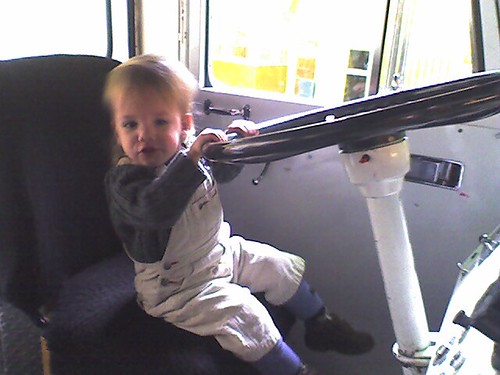
Sisters and brothers, do you ever encounter people who simply refuse to accept their own limitations? How do you feel? As you know, young children often have this tendency. I have a vague memory of how, when I was very little, I used to want to drive my father’s car. It didn’t matter to me that my feet couldn’t reach the pedals. If I had my way, I would have tried to start the engine and drive off by myself. I simply refused to accept my own limitations.

Of course, we consider this tendency in little children cute and adorable. But what about when we find it in an adult? How do you feel, for example, when someone at work stubbornly refuses to accept your help with a project? Even though the person hasn’t received the required training. And then you end up having more work to do, because you have to tidy up the mess that the person leaves behind. How do you feel then?

I’m not sure about you, my dear friends. But my typical reaction is irritation and anger. I must confess that I have little patience for this sort of thing in others. The tendency to refuse to accept one’s own limitations. And yet I do realise that there is a reason for my impatience. It is probably because I myself am prone to the same thing. I too find it difficult to admit my own limitations. I too often insist on doing things that are actually beyond me. Such as when I try to control everything in my life, for example. And then get stressed out or upset when I don’t succeed.

Which is probably why there’s a part of me that feels uneasy when I hear about those troublesome people in the gospel reading today. The ones who complain about Jesus. The gospel tells us that, when these people saw what was happening between the Lord and Zacchaeus, they protested by saying, He has gone to stay at a sinner’s house. Do you know why this makes me uneasy?

Well, first of all, it’s clear to me that these people are reacting in a way that demonstrates their failure to recognise their own limitations. Not only do they judge Zacchaeus a sinner, they also  presume to judge the Lord himself. But on what do they base their judgment? Only on what they can see with their eyes. Eyes which, by the way, are obstructed by prejudice. Eyes that see only what they want to see. Eyes that refuse to acknowledge their own inability to read another person’s heart. In order to uncover the goodness that may be hidden there. The goodness that is a sign of God’s imperishable spirit present in all.

I feel uneasy because, I too find myself often tempted to react in the same way. I too am prone to making snap judgments about the moral condition of my neighbours. Even if I may not complain aloud, I look down on them in my heart. And, by doing this, I fail to acknowledge my own limitations. I refuse to recognise that I really cannot read another’s heart. Yet I insist on judging the person’s goodness. It’s as though I were a little boy again. Stubbornly insisting on driving my father’s car. Even though my feet are not able to reach the pedals. Except that I’m not a cute little boy anymore. And I should really know better.

Perhaps this is why I find myself drawn to that little man in our gospel reading today. For, even though the public considers him a serious sinner, Zacchaeus has at least one redeeming quality. The very thing that I find so sorely lacking in myself. He has the ability and willingness to recognise his own limitations. I imagine that, especially in Jesus’ day, it must not have been very dignified for a grown man to be seen climbing a tree in broad daylight. Let alone a senior government official like Zacchaeus. And yet, that is precisely what he does. Why? The reading tells us it is because he was too short and could not see Jesus for the crowd. Clearly here is a man who is able to accept his own limitations. And is willing to take steps to address them.

But that’s not all. There is something deeper. For we’re told that Zacchaeus climbs the tree only because he is anxious to see Jesus. But why does he wish to see Jesus in the first place? Could it be that it’s because Zacchaeus is painfully aware not only of his physical limitations. But also, and especially, of his spiritual shortcomings? Could it be that, just as he climbs up a tree because he knows he is small in stature, so too does he seek out Jesus because he realises that he is poor in spirit?

And it is helpful for us to consider what happens as a result of Zacchaeus’ humility. His willingness to recognise his own limitations. Jesus invites him to come down from the tree, and then goes to stay at his house. In Jesus’ response, the poor tax collector experiences something that Pope Francis himself experienced at the age of 17. The merciful gaze of God calling him to follow the Lord. The same merciful gaze described so beautifully for us in the first reading: In your sight, Lord, the whole world is like a grain of dust…. Yet you are merciful to all… and overlook men’s sins so that they can repent.

Moved by this intimate experience of God looking tenderly and mercifully upon him, Zacchaeus declares: I am going to give half my property to the poor, and if I have cheated anybody I will pay him back four times the amount. We often consider these words an expression of his intention to repent. A pledge for the future. A promise to turn over a new leaf. But there is also another possible interpretation.

Scripture scholars tell us that, in the original Greek, Zacchaeus’ words are actually in the present tense. So that rather than promising to do something in the future, the man may actually be describing what he is already doing in the present. I am already giving half my property to the poor… But, if this is true, then why does Jesus say that salvation has come? Perhaps salvation comes to Zacchaeus when he is led to recognise something that he had not appreciated before. By gazing mercifully upon him, Jesus helps him to recognise the goodness in himself. So that, just as the sycamore tree gives Zacchaeus the height to look upon the Lord. So too does the merciful gaze of Jesus help him to see the depths of the goodness of God, already present and active in his life. And, in seeing this, the man is saved.

My dear friends, could this be what salvation looks like for us as well? Could it be that this is what St. Paul is referring to in the second reading? When he prays that our God will make you worthy of his call, and by his power fulfil all your desires for goodness… Could this be our path to salvation? First to acknowledge our limitations. Then to seek the Lord with all our heart. And to experience him looking mercifully upon us. Helping us to recognise God’s goodness already powerfully at work in our own lives. And then to be moved to follow him on the Way that leads to life. The Way to Calvary and beyond.

My dear friends, could it be that our readings present us with a choice between two people? The one who is willing to acknowledge his own limitations and the one that is not. Could it be that we are being invited to choose between a humble little man climbing a sycamore tree, and a stubborn little boy insisting on driving his father’s car?

My dear friends, which of these will you choose to imitate today?

Sunday, October 23, 2016

Between Taxi & Ambulance


30th Sunday in Ordinary Time (C) (Mission Sunday)


My dear friends, do you know the difference between hailing a taxi and calling an ambulance? Of course, I expect that many of us have the good fortune never to have had to call for an ambulance before. But, even so, perhaps we can imagine what it feels like to do so. And then compare that feeling with the experience of hailing a cab. So what is the difference?

Before considering the differences, we should note one important similarity. Whether we hail a taxi or call an ambulance, we do so only because we wish to be taken somewhere else. Both taxis and ambulances are for travel. But different types of travel. First, the situations are usually very different. Typically, we use taxis for routine travel. With ambulances, however, things are quite different. I don’t call an ambulance just to fetch me to work or to church. I do it only in an emergency.

Then, in addition to this difference in situations, there is also a difference in control. When I board a taxi, although the vehicle is being driven by someone else, I still remain very much in control. Or at least I expect to be. I control not only where we go, but also the route we take. In contrast, in an ambulance, I have to give up control. Over both destination and route. The urgency of the situation demands that the ambulance take me to the nearest hospital by the fastest way. I have little choice in the matter. I must simply submit myself to being brought where I need to go.

These differences in situation and control should help me to appreciate an even deeper difference between taxi and ambulance. Although both vehicles bring me to new physical locations, when I hail a cab, I usually do so only to remain the way I am. To maintain the status quo. In contrast, whenever I call an ambulance, it’s always in the hope of arriving at something new. To be rescued from illness. To experience healing. I board a taxi for constancy. I ride an ambulance for change.

Routine versus emergency. Control versus submission. Constancy versus change. These are some of the contrasts between taxis and ambulances. And it’s important to keep them in mind. If we are to avoid tragic consequences. Imagine what would happen, for example, if an ambulance arrives for me, but I stubbornly resist being taken away. Or I argue with the paramedics over where I want to go. I act as though I were boarding a taxi instead of an ambulance. The resultant delay could well make the difference between life and death.

But we also need to realise that these contrasts apply not just to travel on the roads. They apply just as well to travel in the spirit. Which is what our Mass readings are about: spiritual travel. Notice how, in the second reading, St. Paul describes his life in terms of a movement from one place to another. At the beginning of the reading, he speaks of having run the race to the finish. Then, at the end, he confidently declares that the Lord will bring him safely to his heavenly kingdom. And notice too how the first reading speaks of the humble man’s prayer piercing the clouds and arriving before God.

And just as it is important to distinguish between different forms of travel by road. So too is it crucial that we discern between different approaches to travel in spirit. Isn’t this the critical lesson that Jesus is trying to teach the Pharisees in the gospel? In the parable that he tells, the Lord makes a sharp distinction between two different approaches to prayer. One helpful and one not. One practiced by the Pharisee. The other by the tax collector. And the contrasts between these two approaches to prayer are strikingly similar to those between taxis and ambulances.

The Pharisee prays as though he were simply hailing a cab. Very likely, for him it’s all only a matter of routine. Not that routine is bad. It can actually be very helpful. Many of us come to Mass as a matter of routine. That’s okay. But routine alone is not enough. Not by a long shot. Imagine how a wife would feel if she could tell that her husband was taking her out on a date only to check off an item on his to-do list. Or imagine how you would feel if I presided at this Mass mechanically. For no other reason than routine. In contrast to the Pharisee’s routinised performance, the tax collector prays like someone truly experiencing an emergency. Rather than hailing a cab, he is quite obviously calling an ambulance. He is painfully aware of his own dire need for divine intervention. God, be merciful to me, a sinner!

Next, it is quite obvious that at no point in his prayer does the Pharisee surrender control. Instead, he speaks to God as though he were giving directions to a cab driver. He knows exactly where to go. And how to get there. I am not like this tax collector, he says. I fast twice a week; I pay tithes on all I get… In contrast, the tax collector’s posture eloquently expresses his sense of his own helplessness. His realisation that his life is beyond his control. He stands some distance away. He dares not raise his eyes. He beats his breast. And, unlike those of the Pharisee, these actions of the tax collector are not affectations. Things he does just to impress bystanders. No. The tax collector’s posture is clearly not one of arrogant control, but of humble submission.

Finally, as with hailing a cab and calling an ambulance, we see in the Pharisee and the tax collector the same contrast between constancy and change. Being so incredibly satisfied with himself, the Pharisee seeks only to remain as he is. To maintain the status quo. It is the tax collector who desperately wishes to improve his spiritual state. And He knows he needs God’s assistance to do it. He prays for help to change.

Routine versus emergency. Control versus submission. Constancy versus change. The same differences that we find between taxis and ambulances, we find as well between the prayer of the Pharisee and that of the tax collector. And this sharp contrast has serious consequences. Although the Pharisee and the tax collector both appear to be praying, Jesus says that only the tax collector goes home at rights with God. Only his prayer finds a hearing. Like the prayer of the humble man in the first reading, only the tax collector’s prayer pierces the clouds. Only his petition arrives finally before God.

All of which should prompt us to reflect on our own practice of prayer. When we come to Mass every Sunday, for example. Is it only a matter of routine or of emergency? Do we act like we are in total control, or do we humbly submit to God’s action? Do we truly seek lasting change, or do we cling stubbornly to the status quo? Even more, it’s important that we allow these questions to inform not just our prayer, but also our work, our sense of mission. Our efforts to reach out to those most in need. Most in need not just of material help. But also of spiritual rescue.

Routine versus emergency. Control versus submission. Constancy versus change. These crucial contrasts make the difference between life and death. For ourselves and for our world. My dear sisters and brothers, both in the way we pray and in the way we fulfil our Christian mission, what exactly are we doing? Do we act like we are truly crying for an ambulance? Or are we only calling a cab today?