Thursday, November 30, 2017

Saving Space


Feast of St Andrew, Apostle
(Day 1 of SFX Triduum)

Readings: Romans 10:9-18; Psalm 18(19):2-5; Matthew 4:18-22
Picture: cc Donnie Ray Jones

My dear friends, are you familiar with the 3 R’s? I’m sure you are, right? Perhaps you’re just wondering which 3 R’s I’m referring to. These days, the common reference is to the 3 R’s of environmental protection. Namely, reduce, reuse, and… recycle. 3 basic actions for helping to save our planet. And then there are also the 3 R’s of primary education. Do you remember what they are? Reading, wRiting, and… aRithmetic. 3 basic skills that every good primary school tries to help its students to master.

But what about the theme that we have chosen for this triduum in preparation for the parish feast of St Francis Xavier? As you know, the focus this year is on being missionary disciples, and the special role of the family in this effort. Which is very appropriate, since Francis Xavier is one of the Church’s two patron saints of the missions. And, just last year, Pope Francis issued a document on the love of the family, entitled Amoris Laetitia. The Joy of Love. Could it be that just as there are 3 R’s in environmental protection, and 3 R’s in primary education, there are also 3 R’s in missionary discipleship? This, my dear friends, is the suggestion that I wish to offer for our reflection over the course of these three evenings.

But first, please allow me to ask you another question. Have you ever come across parents saying something like this to their children? Imagine that it’s almost dinnertime, but the kids are having a snack, because they’re already hungry. So the parents yell at them: Don’t spoil your appetite! Save your stomachs! Now we know, of course, what this means. It’s not that the kids’ stomachs are in any kind of danger. What the parents mean is that the kids should not snack so much that they won’t be able to eat their dinner later. The parents want the children to save space in their stomachs for the food that is yet to come. To save space to receive what is more important. Don’t we need to do this in the spiritual life as well? To save space in our hearts and in our lives to receive and to respond to God’s Word. Receptivity and responsiveness to God’s Call. This is the first R of missionary discipleship. This is what we find in our Mass readings for today.

The first reading tells us that if your lips confess that Jesus is Lord and if you believe in your heart that God raised him from the dead, then you will be saved. Belief in and confession of God’s message is what saves us from sin and selfishness. They give our lives meaning. Allowing us to experience love and joy and peace, even in the midst of stress and suffering and sorrow. Receptivity and responsiveness to God’s Call is central to our faith. And yet, the reading goes on to say that, although the Good News of God’s love and mercy in Christ has gone out through all the earth, not everyone listens to it. Not everyone obeys what they have heard. Not everyone is able to receive the message. It’s as though, like hungry children, who have filled their stomachs with too many snacks, people are simply too full to feast at the Table of the Lord. 

Which is perhaps something with which many of us can identify. For aren’t our own lives also filled with many things? Not just many material possessions, over which we may worry and fret. Such as houses and cars, businesses and careers… But also the many activities that cram our busy schedules. Often leaving us little time for ourselves. Time to relax and to get in touch with our deeper desires… Time to connect meaningfully with the people we love and who love us… Time to care for those around us who may need our help… Time simply to allow God to hold us in the warmth of his loving and merciful Embrace… Is it any wonder then, that we may find it difficult to become missionary disciples? For how can we be expected to announce the Good News to others, if we haven’t found the space to receive it for ourselves?

Which is why today’s gospel reading is so valuable. For here we find an impressive image of people who are so remarkably receptive and so generously responsive to God’s Call. There are a few points in the reading that are particularly striking. Notice first how the people whom Jesus calls are all very busy. Simon and Andrew are making a cast in the lake. James and John are mending their nets in their boat. And they are doing all this not as a hobby. They are busy making a living. And yet, when Jesus calls, they leave everything. They leave their nets and their boats. They leave loved ones and colleagues. And, perhaps what’s even more difficult, we may imagine that they leave also their own dreams and ambitions behind.

Another striking thing is that they do this without any hesitation. Even though they don’t know exactly what they are getting themselves into, when Jesus calls, they leave everything and follow him at once. Bible commentators say that the lack of hesitation indicates the great attractiveness of the Lord. Which may be true. But might it not tell us something, not just about the One who calls, but also about those who respond? Doesn’t it show us that, filled though their lives may be, with work and other worries, the brothers have not allowed these more mundane concerns to spoil their appetite for something more important? In the midst of very busy schedules, they have somehow managed to save space in their hearts to receive God’s Call.

Which brings us to another striking characteristic in the gospel story. The fact that families figure so prominently in it. I’m not a scripture scholar, but isn’t it striking how it is two pairs of brothers who receive and respond to God’s Call? And how one of these pairs is described as leaving their father to follow the Lord? The gospel doesn’t say this explicitly. But might we not imagine that the brothers’ ability to respond so readily to Jesus has something to do with how they were brought up in their respective families? Isn’t it possible that they have been taught from young that, beyond the many things that fill their daily lives, they need also to take care to save space for more important things? That beyond busying themselves with catching fish for a living, they need also to be ever prepared to answer the call to gather people into God’s Kingdom. To be true missionary disciples of the Lord.

If this is true, then perhaps what we find in our Mass readings is a call addressed to all of us as well. And to our families. Which very likely come in different shapes and sizes and situations. The invitation is for us to take care to live our family life in such a way that our attention is not completely absorbed by the cares of daily living. That we somehow continue to be mindful to make time and space in our daily routines for the things of God. By praying and reading the Bible together perhaps… By being involved in parish liturgies and other activities wherever possible… By reaching out to those who may need our help… Or by simply trying to find and follow God’s Call in the people and situations we encounter everyday. And teaching our children to do the same.

Receptivity and responsiveness. This is the first R of missionary discipleship. The indispensable first step in imitating St Francis Xavier, and becoming true witnesses and proclaimers of the Good News to the world around us. Receptivity and responsiveness, cultivated in holistic family living.

My dear sisters and brothers, parents often take care to remind their children to save their stomachs for the main meal. What must we do to save space in our hearts and in our families to receive and respond more generously to the Call of Christ today?

Sunday, November 26, 2017

Teachers & Students, Shepherd & Sheep


Solemnity of Christ the King
(SMS Alumni Association Mass)

Picture: cc Global Action Nepal

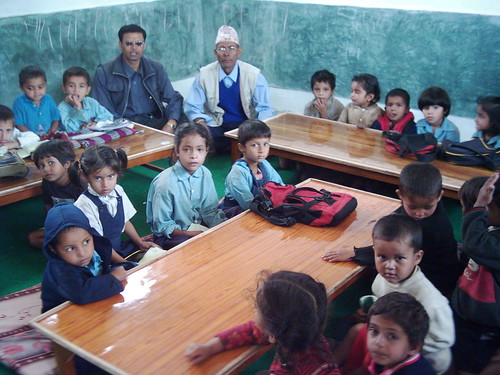
My dear sisters and brothers and children, do you consider yourself a good student? I know that it may have been quite a few years since some of us graduated from school. But even so, isn’t it true that, in a certain sense, we all continue to be students throughout our lives? So what does a good student look like? How would we find out? I’m not sure, but I think one way to find out is to consider what a good teacher does. Because a good student is someone who responds well to a good teacher. So what exactly does a good teacher do?

That’s not too difficult a question to answer, right? A good teacher teaches. By conducting lessons in the classroom, for example. By assigning work to be done at home. And also by giving students a good example to follow. So that a good student is someone who pays attention in class. Someone who diligently completes the assigned homework. And someone who follows the teacher’s good example. And that’s not all. For a good teacher doesn’t just teach, right? He or she also gives tests and examinations. So to be a good student is also to prepare to be tested. To prepare to be examined. To be judged in some way.

We know how to be a good student by considering what a good teacher does. If this is true, then perhaps the same can be said for being a good Christian. We learn to be a good Christian by considering what Christ does. But what does Christ do? This is the question that our readings help us to ponder on this Solemn Feast of Christ the King.

Both in the first reading and the psalm, we’re presented with the moving image of a good shepherd. Like a conscientious shepherd watching over his flock, so too does Christ the King care for his people. Care for us. For you and for me. Not only does he stand up in the middle of his scattered sheep, keeping all of us in view, but he also guides us to fresh and green pastures and streams of restful waters to revive our drooping spirits. He is careful even to ensure that each individual sheep is looked after according to its particular needs. The sick have their wounds tended. And the healthy receive the care they need to avoid falling ill.

If this is how Christ exercises his authority as king, then we become good Christians only by behaving like true members of his flock. Only to the extent that we are willing to hear and follow his voice as he leads us to the green pastures of the Bible, for example. To take time to read and pray over the scriptures. Allowing them to comfort and to challenge us. And to submit ourselves to the Lord’s healing hands, as he gently mends our broken hearts, and invites us to forgive those who may be responsible for breaking them.

But, as we may well know from experience, this is not always easy to do. For there are many other voices competing with the shepherd for my attention. Voices that claim to offer me true happiness. But when I allow myself to be seduced by them, I find that these voices lead me not to refreshing streams, but to stagnant pools of muddy water, unfit to drink. For example, I may spend much time and energy slaving away to build a future for myself. And pressuring my children to do the same. Only to discover that all the money I make and all the prestige I may gain cannot fill the gaping hole in my lonely heart.

I meet many different people everyday. I may even have thousands of friends on Facebook. And yet, I can’t seem to connect with just one human person in a truly meaningful and fulfilling way. I live with my family under the same roof. But I struggle to spend quality time with them. I fiddle daily with the newest most advanced gadgets. Devices that keep me plugged into the world 24 hours a day, 7 days a week. And yet, I still can’t escape the uncomfortable feeling of being somehow cut off and isolated. Not just from others. But even from my deeper self. Who am I, really? What is the meaning of my life? Why am I so restless and unhappy?

It is especially to those of us who may find ourselves in such distressing circumstances that our readings offer much needed consolation. If the world does not fulfil you, then come to Christ the Good Shepherd. Christ the merciful King. Listen to his voice. Become his sheep. Let him lead you to where you need to go. For, as the second reading tells us, just as all die in Adam, so all will be brought to life in Christ.

But that’s not all. For just as teachers don’t just teach, but also give tests and set examinations for their students, so too does the Good Shepherd judge his sheep. And what is the one thing that distinguishes the sheep that belong to Christ the Shepherd-King? How do they pass his test? According to the gospel parable the true sheep of the shepherd are those who follow his example. Those who behave not just as sheep, but also as shepherds as well. Those who make efforts to care for those most in need. And, by doing this, they actually end up caring for the Chief Shepherd himself. For I was hungry and you gave me food; I was thirsty and you gave me drink; I was a stranger and you made me welcome... In so far as you did this to one of the least of these brothers of mine, you did it to me.

The implication for us is clear. We become true sheep of the shepherd’s flock, true followers of Christ the King, only to the extent that we ourselves are willing to care for the least ones in our midst. Not just those whose stomachs need to be filled, but also those who may long for a listening ear and a reassuring touch. Not just those imprisoned by bars of steel, but also those trapped in emotional and spiritual cages. Bound by regrets of the past, addictions in the present, and anxieties for the future. Not just those afflicted by diseases of the body and of the mind, but also those who, like the Rohingya in Myanmar, the starving people of Yemen, the homeless poor here in Singapore, have fallen victim to the illnesses of society. To selfishness and greed. To anger and violence and apathy.

My dear friends, just as we know how to become a good student by considering what a good teacher does, we know how to be a good Christian by considering the actions of Christ our caring Shepherd and our merciful King.

What must we do to be better students and ever more faithful Christians today?

Saturday, November 04, 2017

Between Sponge & Stone


31st Sunday in Ordinary Time (A)

Picture: cc Speshul Ted

My dear friends, can you tell me the differences between a sponge and a stone? It’s not too difficult right? A sponge is soft and empty. Hollow. Made up of many little pockets of air. A stone, on the other hand, is hard and solid. Packed with its own stuff. And this difference in composition accounts for a sharp contrast in how sponges and stones receive and give. When we pour water onto a dry sponge, for example, the liquid is soaked up. The sponge receives the water quite readily. But when we do the same with a stone, the water simply splashes off. The stone resists the gift. And if we fill a bag with sponges, and give it to someone to carry. The person can do it without much difficulty. Whereas a bagful of stones becomes a heavy burden. Also a wet sponge can be used to moisten the lips or cool the forehead of a sick person. To soothe and to give comfort. But we wouldn’t use a stone that way. It may do more harm than good.

Sponges give comfort. Stones tend to burden. Sponges are receptive to a gift of water. But stones resist. And these differences in how sponges and stones give and receive result from a deeper difference in their respective composition. Sponges are empty. Stones are full. I mention all this, because we find a similar contrast in our Mass readings today. Not exactly a contrast between sponges and stones, but between two kinds of people.

On the one hand, the second reading gives us an inspiring description of how Paul and his companions have given of themselves to the Christians in Thessalonica. Like a mother feeding and looking after her own children… eager to hand over… not only the Good News but their whole lives as well… slaving night and day so as not to be a burden on any one. On the other hand, in the gospel, Jesus criticises the scribes and the Pharisees for tying up heavy burdens and laying them on people’s shoulders. Imposing arbitrary and impractical human rules more for their own benefit than for the good of those entrusted to their care. Similarly, in the first reading, God accuses the priests of burdening people. Causing many to stumble by their false teaching. While Paul and his companions soothe and comfort others like wet sponges. The priests and scribes and Pharisees burden people like heavy stones.

Clearly, what we find in our readings today is a sharp contrast between two ways of giving. Between generous support and burdensome imposition. But what accounts for this difference? How is it that some can give comfort and support like sponges, while the others only burden like stones? It may not be so obvious, sisters and brothers, but this difference in giving is related to a difference in receiving. For, in addition to Paul’s generosity in giving, the second reading also describes the Thessalonians’ openness in receiving. Their receptiveness to the Good News. Accepting it for what it really is, God’s message and not some human thinking. And, as a result, the Good News has become a living power among them. Motivating them to give generously to others. As Christ first gave of himself to them.

Isn’t this the secret to every Christian’s ability to give? Doesn’t generosity in giving flow from openness in receiving? And could it be that, if the priests and scribes and Pharisees are such poor givers of themselves to others, it is only because they are first poor receivers from God? But if this is true, then how does one become a good receiver in order to be a better giver? The answer is found in the psalm. Here, like Paul and his companions in the second reading, God is likened to a mother feeding and looking after her child. Except that our attention is drawn more to the child. To its attitude as it looks at its mother. The description is quite striking and moving. My heart is not proud nor haughty my eyes… I have set my soul in silence and peace… Hope in the Lord both now and for ever. Unlike a stone, the psalmist is filled not with his own concerns, but only with what God wishes to give. Like a dry sponge, his heart is empty and waiting. Open and receptive to God’s gracious presence.

In sharp contrast, consider the dire warning that God issues to the priests in the first reading: if you do not find it in your heart to glorify my name… I will… curse your very blessing. In other words, if your hearts are too full of the self to make space to receive the gift of God’s presence. Then all your attempts at giving to others, at serving and blessing them, will be transformed instead into a burdensome curse. Not unlike sponges and stones, the people in our readings are able to give well only because they first receive well. And they receive well, only because they are empty of themselves. Open to receive the power and inspirations of God’s Spirit.

But if all this is true, then what about us? We who routinely pray our Prayer of Generosity at Mass every week. We who aspire to give of ourselves to others. To our family and friends. To our parish community and our wider society. How well do we actually give? To what extent do our attempts at giving really help people? To what extent do they become a burden to them instead? As the Chinese saying goes, yue bang yue mang (越帮越忙). The more you help, the busier we become. Could it be that, in order to give effectively to others, we need to first examine how well we receive from God? How attentive and receptive are we, for example, to the graces that God is offering to us at this very Mass? How open are we to receive the nourishing spiritual food served at the twin tables of the Word of God and the Body of Christ? And could it be that to do this, to be more receptive to God’s gifts, we need to be less full of ourselves? Less obsessed and preoccupied with many things.

Not that we should ignore our legitimate needs and desires. Nor should we shut out our worries and anxieties. On the contrary, what we need to do is instead to get in touch more deeply with them. With those areas where we feel most keenly our own weakness and helplessness. Our misery and poverty. Our utter and inescapable dependence on God. To go to those places in our hearts that we so often do our best to avoid, because they make us so uncomfortable. Avoid by busying ourselves with other things. Even apparently godly things. And yet, could it be that it is precisely at these places of discomfort that we are more likely to experience God? Fortifying us in our weakness. Feeding us in our hunger. Filling us in our emptiness. 

For us Christians, generosity in giving flows from that openness in receiving born of poverty of spirit. Blessed are the poor in spirit, for theirs is the kingdom of heaven.

Sister and brothers, what must we do to be more like sponges and less like stones today?

Sunday, October 29, 2017

Telling Time (Rerun)


30th Sunday in Ordinary Time (A)

Picture: cc david pacey

My dear friends, do you know what time it is? How would you find out? Now, of course, many of us use our phones. But not so long ago, all we had to look at was a clock. And I don’t mean a digital clock, but an analogue one. The kind with moving hands, rather than flashing numbers. But have you ever considered how a clock like that tells time? What does it need to do so? I’m no expert. But I think it has three main components. The first is the mechanism inside the clock. The internal parts that remain unseen. These are crucial. They have to continue moving at just the right speed. In order for the clock to keep good time.

But the internal mechanism alone is not enough. The clock also needs to express that interior movement in an exterior way. That’s what the hour, minute, and second hands do. They point to the correct numbers on the clock’s face, so that we can read the time. And for the clock to keep accurate time, at least one more important part is needed. Something called the pivot. The slender rod at the centre of the clock, which joins the mechanism to the hands. Translating the regular internal movement into a reliable external reading. Without the pivot, the inner mechanism might continue to move, but the hands will not turn. The clock cannot be read.

Internal mechanism. External hands. Connecting pivot. Three components of an accurate clock. Three things that help us to tell time. To know where we need to be and what we need to do. To understand what life requires of us. Sisters and brothers, strange as it may sound, I believe that this is also what our Mass readings offer us today. A kind of spiritual clock, allowing us to read the signs of our times. To realise what God might be asking of us here and now.

Again, there are three main parts. First, the internal mechanism. In the gospel, the Pharisees try to disconcert Jesus, to trip him up, by asking him a complex legal question. Which is the greatest commandment of the Law? This is a difficult question, because the Law consists of no less than 613 commandments. To single out one of these as the most important is not an easy task. And yet, although difficult and devious, the Pharisees’ question uncovers exactly what it is that makes Jesus tick. The inner mechanism that motivates the Lord’s every thought and word and action. You must love the Lord your God with all your heart, with all your soul, and with all your mind…. you must love your neighbour as yourself. Love of God and love of neighbour. The primary motivation for everything Jesus does. The power that moves him to descend from heaven to earth. From cross to tomb. So that we might be raised from death to life. And if this is true of Jesus, the Master, then it should also be true of us, his disciples. Our lives should also be powered by the same interior movement of love. A movement that begins when we allow ourselves gratefully to receive God’s love in Christ.

But that’s not all. The interior movement of love needs to be expressed in concrete external actions. Like those described in the first reading. Here, having freed the people of Israel from slavery in Egypt, God enters into a covenant with them. Teaching them how they are to live in the Promised Land. And God’s instructions are very practical. They show the Israelites what the love commandment looks like in practice. It translates into caring for the foreigner, the widow, and the orphan. Three of the most vulnerable groups of people at the time. Showing mercy to the poor. Refusing to charge them interest on a loan. Not depriving them of what they need to keep warm at night.

Like the hands of a clock, the first reading shows us how the inner law of love is expressed in outward action. And it should also inspire us to examine our own situation. To consider who are the more vulnerable among us. The modern-day counterparts of the foreigner and the widow, the orphan and the poor. People like the many migrant workers among us, for example. Those who arrive on our shores seeking a better life. Those who build our roads and care for our children. To consider how some of us might unknowingly abuse them, by viewing them with disdain and suspicion. Or by treating them more like objects than human beings. We may consider also how our very own children are sometimes neglected and mistreated. When their care-givers prioritise work over spending quality time with them. Or when they are pressured to perform beyond their capabilities. Just to inflate our own egos. Sisters and brothers, what do you think? What does love and mercy need to look like today?

To answer this question adequately, there is something else that we need. A pivot that helps us connect the internal movements to the external actions of love. Which is what we find in the second reading. Here St Paul congratulates the Thessalonians for successfully translating their faith into action. How do they do this? Through observation and imitation. You observed the sort of life we lived, Paul tells them, and you were led to become imitators of us, and of the Lord. And even to become models for others to observe and to imitate. Sisters and brothers, are we not called to do the same? To observe and to imitate worthy models of Christian living? Above all, of course, the model provided for us in Christ. Whose merciful love we celebrate at this Mass. But also the examples of the many saints who have gone before us. Saints like our patron St Ignatius of Loyola, and Mother Teresa of Calcutta. As well as the saints who may still be walking among us. More famous ones, like our beloved pope, who lives in Rome. But also the less known ones, like the kind neighbour next door, or the fellow parishioner in the same pew beside me.

Sisters and brothers, like its physical counterpart, a spiritual clock needs three things to keep good time: interior movements of love, and exterior acts of mercy, connected by inspiring models of life. Where do we find these components in our own lives? What time is it for us, for you and for me, today?

Sunday, October 22, 2017

Between Power & Department (Rerun)


29th Sunday in Ordinary Time (A)
(Mission Sunday)

Readings: Isaiah 45:1,4-6; Psalm 95(96):1,3-5,7-10; 1 Thessalonians 1:1-5; Matthew 22:15-21
Picture: cc Lucy Fisher


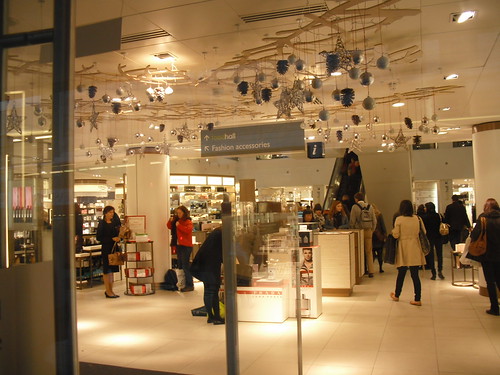
My dear friends, do you like to shop in a department store? If you do, what do you like about it? One of the things that I like is, precisely, the departments. They allow all the merchandise to be neatly organised and easy to locate. If I want to buy a shirt, I can just go directly to the menswear department. I don’t have to waste time wandering among pots and pans or women’s clothes. Everything has its place. Its own proper department.

But what about electricity? And I don’t mean electrical appliances. These usually have their own department too. But electricity does not. It is not confined to a single area. It is needed throughout the store. It provides the power with which to freshen the air, and light up the whole place. Imagine what it would be like if a foolish store manager were to treat electricity as just another kind of merchandise. Imagine what would happen if s/he tried to restrict the flow of electricity to just one department. The rest of the store would be left in the dark!

Which goes to show that, although departments may be good to have in a store, not everything is meant to be departmentalised. Electricity is a power, not a department. And it is helpful for us to keep this in mind as we ponder our Mass readings today. Especially because it can help us avoid misunderstanding what Jesus says to his opponents in the gospel. The disciples of the Pharisees and the Herodians try to trap the Lord by asking him whether it is permissible to pay taxes to Caesar. If Jesus says no, then he’ll get into trouble with the Romans. But if he says yes, then the religious authorities will have something to use against him. As they say, damned if you do, and damned if you don’t. Still Jesus manages to escape by giving a deceptively simple answer. Give back to Caesar what belongs to Caesar–and to God what belongs to God. But what does this look like?

I’m not sure how you feel, sisters and brothers, but I find it tempting to think that Jesus is telling us to keep our lives strictly departmentalised. To maintain one section for Caesar, and another for God. And to keep both these sections separated from each other. But is this really what the Lord means? Is God no different from the goods in a department store? Can God really be confined to a single isolated section of my life?

We are familiar, of course, with the political doctrine that calls for a separation of church and state. And we know its value. We don’t want our Archbishop to take over the job of the Prime Minister. With all due respect to his Grace, that would be disastrous. Nor do we want the government to determine what we Christians believe, or how we practise our faith. Much like how, in a store, we wouldn’t want the sales personnel and the electricians to interfere with each other’s work. But, even so, the fact remains that electricity is needed throughout the store. It is not meant to be departmentalised. Electricity is a power, not a department. Can we not say the same about God?

We see this more clearly in the other readings. In the first reading, the people have been living long years in exile in Babylon. But now, the Persians have conquered Babylon. And Cyrus, the Persian king, allows the people to return to their homeland. But, although it may seem that Cyrus is the one responsible for the people’s good fortune, the prophet sees things differently. For him, even the rise and fall of empires is the result of the powerful and providential hand of God, quietly at work behind the scenes. To the prophet, Cyrus is acting only as God’s instrument. It is God who has anointed the Persian king. It is God who sets the people free. Which makes it very clear that God’s activity is not restricted to any single department. God is at work in all areas of life. As much in politics as in religion. God can use even a pagan ruler to achieve God’s own purposes. Like the electricity in a department store, God blesses the people by freshening their lives and brightening their way. They experience God as a power, not a department.

This is also the experience of the Christians of Thessalonica in the second reading. Paul reminds them that the Good News came to them not only as words. Not only as pious religious sentiments, routinely expressed in church and in prayer, but without any practical effect on the rest of their lives. On the contrary, the Thessalonians experience the Good News as power and as the Holy Spirit and as utter conviction. The Word of God has a radical transforming effect on every aspect of their lives. Enabling them to live as Christ lived. As it was for the people in the first reading, so too for the Thessalonians. God is experienced as a power, not a department.

And isn’t this an important reminder for us as well? For many of us, life can feel very much like a fully-stocked department store. Filled with so many things, that we have to struggle constantly to ensure that everything is kept in its proper place. When we are home, we don’t want to allow the stresses and strains of the office to affect our interactions with our family. Nor do we want to let troublesome family problems cloud our judgment at work. And this is as it should be.

But still, as important as it may be to departmentalise our lives to some degree, isn’t it also important to realise that God is not a department? God is not just one more thing among the many things in our lives that require management. Rather, God is the Divine Electricity, the Power of Love made manifest in the sacrifice of Christ. The Power we are gathered at this Mass to celebrate. The Power that continually freshens our lives, and lights up our way to Eternity. But, to more fully appreciate and enjoy this Power, we need to avoid trying to restrict God to certain narrow segments of our lives. We need to be willing instead to allow God gradually to influence every area of our earthly existence. To truly give the Lord glory and power. By showing our faith in action, by working for love, and persevering through hope in Jesus Christ.

Not just here in church. But also at home, in school and in the office. Not just through pious prayer. But also through good works that promote charity and justice, reconciliation and peace. And not just in religious affairs. But also in politics and economics, science and technology. And in every other field of human endeavour. Isn’t this what it really means for us to be a truly missionary church?

Sisters and brothers, if it is indeed true that, like electricity, God is not meant to be departmentalised, then what must we do to experience more fully the life-giving effects of God’s Power, in our hearts, in our lives, and in our world today?