Sunday, February 25, 2018

Cataract Operation


2nd Sunday in Lent (B)

Picture: cc Heather Kennedy

My dear friends, do you know what a cataract is? It’s a condition where, due to age or illness, the normally clear lens in the eye becomes cloudy. So that one’s vision is blurred. And, if left untreated, the condition can eventually lead to blindness. Which is what happened recently to a dog belonging to someone I know. The poor animal developed cataracts in both eyes, and became blind. It kept bumping into things, and could no longer move around as freely as it used to. Out of pity, the owner decided to send the dog for eye surgery. The clouded lens in one of its eyes was replaced with a new one. And now the dog can see again. Can move about more freely.

I tell this story, my dear brothers and sisters, not because this is the Year of the Dog. But because I believe something like that is also happening in our Mass readings today. Something like a cataract operation. A procedure to replace the cloudy lenses in people’s spiritual eyes. So that they can see more clearly. Can move about more freely. And isn’t this what we prayed for just now in our Collect, our opening prayer? Nourish us inwardly by your word, we prayed, that, with spiritual sight made pure, we may rejoice to behold your glory. 

In the first reading, Abraham is made to undergo a trial, a test. And, at first glance, the test seems like a truly cruel one. Abraham is asked to sacrifice, to kill, his son Isaac. The same Isaac who was born only when Abraham was a hundred years old. The same son through whom God had earlier promised to make Abraham into a great nation. How could a loving God require such a terrible thing? And yet, there is perhaps another way of looking at the situation. For it may be that God is actually doing Abraham a favour. It may be that God is helping to clear Abraham’s spiritual vision, which, like ours, could so easily become clouded by the fear of losing the things and the people whom one considers the most precious.

It is precisely when he is able to trust in the goodness of God, and to let go even of his attachment to his beloved son, that Abraham receives new sight. We’re told that after obediently attempting to sacrifice Isaac, Abraham looked up and saw a ram caught by its horns in a bush, which he then takes and offers to God in place of his son. It’s as though, by making Abraham undergo this trial, God replaces the lenses of Abraham’s eyes with new ones. So that Abraham can see more clearly the generous love of God, who graciously supplies even the sacrificial offering itself. And who promises to continue providing for Abraham. Not just high up on the mountain of sacrifice, but also down below in the valley of everyday life. Not just now in the present moment, but also ever after, in the days ahead. And not just for Abraham’s own benefit, but also for the good of his descendants, and even of the whole world. I will shower blessings on you… All the nations of the earth shall bless themselves by your descendants…

A cataract operation is also something like what is happening in the gospel, taken from chapter 9 of Mark’s account. As you may recall, sisters and brothers, in Mark’s gospel there are two stories of blind men being healed. One in chapter 8 and one in chapter 10. Scholars tell us that this arrangement helps to highlight what Jesus is doing for his disciples in the three central chapters of Mark’s gospel. Repeatedly, in chapters 8, 9, and 10, Jesus predicts that he, the Son of Man, the saviour, has first to suffer and die, in order to rise again on the Third Day. In order to be a blessing to the whole world. To all who commit their lives to following Him.

But it’s not easy for the disciples to appreciate this. It is not easy for them to recognise a suffering saviour. Their vision is clouded by their expectations and attachments. And by their fear of suffering and death. Like Abraham, they need to undergo an operation. Their cloudy lenses must be replaced with new ones. Which is what the Transfiguration is meant to signify. Here, on a high mountain, Jesus’s three closest disciples, Peter, James and John, experience something even more brilliant than what Abraham encountered at Moriah. They see the glory of the Lord, and hear the Father’s words of identification and invitation. This is my Son, the Beloved. Listen to him. This is the Ram of Sacrifice. Lovingly offered to you that you may have life. Listen to him… Follow him… Let him be the lens through which you look at everything. So that even in the midst of your trials, you will continue to recognise God’s gracious providence. To experience God’s loving presence. In the words of the psalm, I trusted, even when I said: ‘I am sorely afflicted.’ …. I will walk in the presence of the Lord in the land of the living…

To be able to place our trust in God. To let go of the things to which we often cling so anxiously and so desperately. The craving for a more comfortable life, for example. The worry that our children may not perform well enough. The obsession with measuring up to the expectations of others… To let go of all these, and to receive, in their place, a new vision of God’s providence and care for us. To realise ever more deeply what the second reading reminds us. That God is on our side. And since God did not spare his own Son, but gave him up to benefit us all, we may be certain… that he will not refuse anything he can give. To realise this truth, and so to receive the courage to follow Christ on the Road to Calvary. On the Way of the Cross. On the Path that leads to the Fullness of Life. The Path that involves laying down our lives, as Christ did, for the good of others. Not just for our immediate family and closest friends. But also for those most in need. Clarity of sight, and courage in discipleship. This is the grace that we seek especially in this season of Lent.

My dear sisters and brothers, it’s not just dogs who develop blurred vision. People often do too. How might the Lord be inviting us, you and me, to submit to  a cataract operation today?


Friday, January 19, 2018

Time-Lapse Video


Funeral Mass for Francis Yap Chwee Tee

Readings: Apocalypse 21:1-7; Psalm 26; John 12:23-28

My dear sisters and brothers, do you know what a time-lapse video is? Have you ever seen one? As you know, a time-lapse video is filmed using a special technique that allows us to compress time. To speed up events that usually unfold only very slowly and gradually. To help us to see things that we would otherwise tend to miss, because we have neither the time nor the patience to observe them as they are happening in real time. A flower may take several hours to bloom. Or a chick to hatch from an egg. A caterpillar can take quite a few days to turn into a butterfly. Or a seed to grow into a young plant. But a time-lapse video can show these slow processes taking place in a matter of minutes or even seconds. So that the changes appear more striking to us. So that we can better appreciate all that is happening. So that we may even be moved to praise and thank God for the wonder of creation.

This probably sounds a little strange, sisters and brothers, but in a certain sense, I believe that the Christian Funeral is meant to function like a time-lapse video. Precisely at a moment when we may find ourselves overcome by grief at the loss of our loved one, the Christian Funeral (which, by the way, includes not just this funeral Mass, but also the wake that came before it, the final commendation that will follow it, and even the interment or burial that takes place after that) supports us in our pain. By helping us to compress time. By inviting us to look back at the life of our beloved relative or friend in a certain way. To better appreciate something that has been happening, perhaps without our being aware of it. What is this something? It is the same process that we find unfolding in each of our Mass readings today.

In the gospel, Jesus says that the hour has come. By this he means his death on the Cross. Which is, for him, the same moment when both he and the Father will be glorified. But how can Jesus say that? How can a cruel, painful death on the Cross be a moment of glory? Perhaps because, the striking scene of Jesus hanging on the Cross functions like a time-lapse video. It draws everyone who gazes upon it with an open heart to look back on the whole life of Christ. From his birth on Christmas Day, to his death and burial on Good Friday. From the many miracles he worked, to the moving words he spoke. To watch this flashback, and to realise that, throughout Jesus’ life on this earth, something striking had been unfolding. Something that most people did not realise at the time. That throughout the Lord’s life on earth, a grain of wheat had been falling into the ground and dying. Emptying itself out in love. So that all might enjoy a rich harvest of eternal life. By gazing on the Cross of Christ, we see the glorious process of God’s self-emptying love.

We find something similar in the first reading as well. The apostle John is in exile on the island of Patmos. And it’s a particularly difficult time for Christians. A time of persecution. Yet, as John thinks of the suffering of his people, he is given a striking vision. A vision of a new heaven and a new earth. A vision that functions not unlike the Cross of Christ. Not unlike a time-lapse video. Inviting John and his fellow Christians to look back on their experiences of persecution and exile in a particular way. Reminding them that all the suffering that they are undergoing, is actually part of a larger, more mysterious process. The same process that Christ the Lord experiences in the gospel. The process of dying and rising. The process of allowing an old life of sin and selfishness to pass away. So that the new life of love and joy and peace can flourish. A process by which God is wiping away all tears from their eyes, and making the whole of creation new…

The Cross of Christ and the vision of John. Both these images function like time-lapse videos. They help those who gaze upon them to see the deep Mystery of God’s immense love, poured out for us in the dying and rising of the Lord. But this Mystery does not unfold only in the lives of Jesus and John. We believe that it continues to unfold in the life of every Christian. But, because it usually happens so very slowly and gradually, we often don’t realise it. We don’t pay enough attention to it. We allow it to pass us by unnoticed.

Which is why, it’s such a great help to us that, when a Christian dies, our prayers and readings and rituals invite us to look back on the life of our loved one who has gone before us. To recall scenes from the life of our beloved Francis. Our husband and father and father-in-law. Our grandfather and great-grandfather and friend. Our beloved Francis, who by any standards lived a long and full life. At this moment, when we mourn his passing, our prayers and readings and rituals draws us to look back on Francis’ life as we would a time-lapse video. To allow ourselves to be reminded of the great Mystery that has been unfolding in his life, so slowly and gradually. The powerful love that has been pouring itself out, so quietly and generously. Dying so that others might live. Passing away so that all things might be made new. To gaze upon the life of our beloved dead, and to catch there a glimpse of the Mystery of God’s love. The power of the Cross of Christ. Moving us to joyful praise and thanksgiving. As well as generous commitment.

My dear brothers and sisters, relatives and friends of our beloved Francis, time-lapse videos can often move us to praise and thank God for the wonder of creation. How are your memories of our beloved Francis moving you to plunge more deeply into the love of God today?

Sunday, January 07, 2018

Between Country Club & Community Centre


Solemnity of the Epiphany of the Lord

Picture: cc Jnzl's Photos

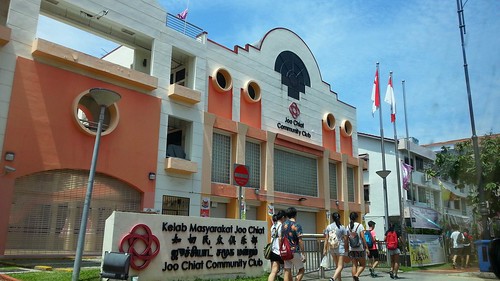
My dear friends, if you had a choice, and if money wasn’t an issue, which would you prefer to join? A country club or a community club? We all know the differences between the two, right? One important difference is, of course, the quality and range of facilities available. Typically, in addition to the usual swimming pools, tennis courts, billiard tables and so on, a country club also offers a golf course, and much much more. A community club? Well… much much less. Which is one reason why country club memberships usually cost an arm and a leg.

But the facilities are not the only reason why people are willing to pay such a high premium to join a country club. There is actually another reason. Do you know what it is? It’s called exclusivity. As you know, community clubs used to be called community centres. They cater to the recreational needs of the ordinary man and woman in the street. Which is why fees are deliberately kept low. So that as many people as possible can join. In contrast, a country club membership is expensive, not just because the facilities are good. But also to keep most people away.

Inclusivity versus exclusivity. Isn’t this the key difference between a community club and a country club? Isn’t this why people are willing to pay so much more for one over the other? Imagine, for example, if you joined a country club, which suddenly announced one day that it was lowering its fees, and opening its doors to everyone. How would you react? Would you want to remain a member? I have to confess that I would probably think twice.

But it’s not only a matter of club memberships. Our desire for exclusivity expresses itself in other ways as well. For example, could it also have something to do with the results of that recent study that has uncovered a clear class divide in Singapore? Sociologist, Vincent Chua, one of the researchers responsible for the study, was reported in the newspapers as saying, We have shifted from a society based on race to one based also on class…. Even if you give people equal opportunities, they will still gravitate to hang out with their own kind…. People like to be with people like themselves…

People like to be with people like themselves… What’s wrong with that? I like that too. Described in this way, exclusivity may sound harmless enough. Until we allow ourselves to ponder its deeper implications. Its more serious consequences. Which is precisely what our Mass readings help us to do today. As you’ve probably already noticed, on this solemn feast of the Epiphany, our readings draw a very sharp contrast between light and darkness, day and night. In the first reading, Jerusalem is told to arise, shine out. For, though night still covers the earth and darkness the peoples, Jerusalem’s light has come, the glory of the Lord is rising on you.

But what does this light, this glory of the Lord, look like? For us Christians, the glory of the Lord is seen above all in the coming of Christ. Which is nothing if not an act of merciful inclusivity on the part of God. For God is clearly in a class far far above our own. And yet, rather than excluding us, God chooses to reach out to us in Christ. To even come among us as a helpless baby, in order to make us members of that Divine Community Club that is the Holy Trinity. In the words of the psalm, God has pity on the weak and saves the lives of the poor… Not just the weak and poor of Jerusalem, but of all the nations. All those previously thought to be excluded. People, by the way, like you and me. In the words of the second reading, pagans (like us) now share the same inheritance… they are parts of the same body, and… the same promise has been made to them, in Jesus Christ…

Perhaps more than anything else, the solemn feast of the Epiphany highlights to us the incredible inclusivity of God’s merciful love. A love that then calls its recipients to respond in the same way. Notice how Jerusalem is expected to react to the hordes of people streaming towards her from every nation. She is told that, at this sight (at the sight of these strangers coming to join her country club) you will grow radiant, your heart throbbing and full, since the riches of the sea will flow to you, the wealth of the nations come to you… Jerusalem is expected to see the approach of foreigners not as threats and liabilities, but as gifts and blessings. Their coming should fill her not with fear but with joy. This is what it means for her to arise and shine out. To choose to bask in the inclusive light of the glory of the Lord.

But if inclusivity is what the light looks like, then what about the darkness? The gospel describes this in a very striking way. At the beginning of the reading, we’re told that after Jesus had been born… (after the light had come) during the reign of King Herod, some wise men came to Jerusalem from the east… It is possible, I think, to read this reference to King Herod not just as a description of the political situation, but also of the spiritual condition, of Jerusalem at the time. The reign of Herod is the exact opposite of the glory of the Lord. It’s another way of saying that night still covers the earth and darkness the peoples… What is this night? What does this darkness look like?

We see it most clearly in Herod’s response to the wise men. We’re told that when King Herod heard what they had to say, he was perturbed, and so was the whole of Jerusalem. Herod feels threatened by the birth of an infant king. And, out of his anxiety, he deviously plots to have the baby killed. If the light that Christmas brings is God’s precious gift of inclusivity, then surely, the night that Christ comes to dispel is the darkness of exclusivity. The desire of people like Herod to want to be only with people like themselves. A desire that leads not only to worry and anxiety, conflict and division, but also to violence and death.

The reign of King Herod. Isn’t this a night that continues to cover the earth today? The craving for exclusivity that leads to the cruel expulsion of people from their homes. The rejection of refugees who have nowhere else to go. The hardening of borders of every kind. Geographical and political. Social and economic. Even religious and cultural… And yet, within the current darkness of exclusivity, we Christians dare to celebrate the solemn feast of God’s inclusivity. The coming among us of a light that challenges us to arise and to shine out. To reach out to, and to hang out with, those who may be different from us in some way. Especially those who may be most in need of our help. To allow them to join our company. Just as Christ came to draw us into his.

My dear sisters and brothers, perhaps there is nothing really wrong with being members of an exclusive club. Provided that we also take care to cultivate open hearts, and to live inclusive lives. What steps are we taking to keep doing this today?

Monday, December 25, 2017

Do You Have Wifi?


Christmas Day–Mass During the Day

Video: Andrew Lua

My dear friends, have you ever come across that commercial for data roaming services that used to be screened in our local movie theatres? In it, a Singaporean tourist enters what looks like a small eatery in Hong Kong, and says to the woman at the counter, Hi, do you have wifi? She immediately turns toward the back of the restaurant and yells, Wai Fai! A big tall guy in a white chef’s coat appears, wiping sweat off his face with the towel around his neck. The tourist asks him, Wifi? … Do you have wifi password? He nods his head, and says in Cantonese, Hai, ah. Meh si, ah? (Yes. What’s the matter?) The Singaporean repeats his question. More slowly this time. Trying to put on a Cantonese accent. Do… you… have… wifi, ah? The chef thinks for a moment, smiles broadly, nods vigorously, and exclaims, Wai Fai! Wai Fai! Then, he says in Cantonese, pointing to himself, Ngor me hai Wong Wai Fai, lor? (I am Wong Wai Fai!)

I must confess, sisters and brothers, that I like this commercial very much. And not just because it makes me laugh out loud. Although that helps. I like it also because, even though the situation depicted is obviously exaggerated, it’s quite easy to identify with the tourist’s frantic search for a wifi connection. Probably anyone of us who has ever travelled abroad without a data roaming plan knows what that feels like, right? The burning desire to connect? But that’s not all. Beyond the obvious humour, there’s also some irony in the commercial too. Do you see it?

The humour comes, of course, from the tourist’s frustrated desire for cyber connectivity. And yet, frustrated though the tourist may be, doesn’t the situation also present him with an opportunity to connect in a different way? In place of the wifi hotspot that he is seeking, the tourist is presented with a chance to connect instead with Wong Wai Fai, the Hong Kong chef. Will the foreigner take advantage of this opportunity? For example, by introducing himself in return? And perhaps even by sitting down for a meal, or a drink? Or will he simply move on to the next shop? Ironically allowing his ongoing search for cyber connectivity to prevent him from connecting with the real person before him?

The yearning, frustration, and irony of making connections. Isn’t this also what we find in our Mass readings on this Christmas Day? The first reading is addressed to a people in Exile. Far away from home. A people who, for a very long time, have been frantically seeking to connect. Not just with a wifi hotspot. But with their God. And, in the reading, God finally answers their prayers by making them a very consoling promise. A promise of salvation and redemption. A promise that is partially fulfilled when the people are finally brought back to their homeland. When they eventually return from Exile. But this promise, made in the first reading, actually goes beyond the return from Exile. For the prophet speaks also of a time when the people will be able to see the Lord face to face…

For us who are Christian, the fulfilment of this promise takes place finally in the coming of Christ at Christmas. When the Word was made flesh. When, having spoken so often in the past only through prophets, God finally speaks to us through his Son. In whom we are given the chance to see and connect with the invisible God face to face. And to realise that even more than our yearning to connect with God, God too yearns to connect with us. Isn’t it true that, at Christmas, what we celebrate is the incredible opportunity to experience a real personal connection with the One whom we believe created the whole universe out of nothing. And yet, who loves and cares for us so much, as to speak to us through Christ, the only begotten Son.

But that’s not all. In addition to the deep yearning for connection, and the promise of fulfilment, like that commercial, we also find in our readings today frustration and irony. Frustration on the part of the people, as well as on the part of God. For the gospel reminds us that, although the Word was in the world that had its being through him… the world did not know him. Although he came to his own domain… his own people did not accept him. Ironically, some of the people eagerly awaiting the fulfilment of God’s promise, rejected it when it finally arrived. Some of the people who were frantically searching for connection with God, did not recognise the opportunity when it presented itself.

And, let’s face it, sisters and brothers, much as we may wish to deny it, it’s actually not all that difficult to see how this could happen. To appreciate how it might be possible to fail to connect with God, even when God appears to us face to face. For it’s likely that many people in Jesus’ day were awaiting a mighty warrior, with power to conquer the Roman army. As a result, they failed to take notice of the helpless infant. Who came first to melt hardened hearts, in order to give them power to become children of God. Isn’t this situation not unlike that of the tourist, whose search for cyber connectivity ironically blinds him to the chance of connecting with a real person?

And isn’t this a danger that we face as well. We who remain constantly connected through our mobile devices. And yet find it difficult to have a single meaningful conversation with the closest members of our own family? Do we not run the risk of missing the chance of connecting with Christ, simply because we are preoccupied with so many other things? Even things like preparing for Christmas parties and liturgies. Putting up Christmas decorations. And exchanging Christmas presents.

If this is true, then what can we do about it? Perhaps what we need to do is simply to deepen our yearning. To take the opportunity, in this holiday season, to sit quietly with that longing that we so often experience within our hearts. The need we have to connect with others. And not be too quick to let it lead us to pick up our phones, or to turn to our computer screens, or to rush off to one activity or another. But to gaze first at the baby Jesus lying in the Manger. Allowing him to lead us to those places in our hearts where we need him most. To console us, and to encourage us. To heal us, and to strengthen us. And then to draw us to reach out to those others around us, who may also be yearning to experience meaningful connections.

My dear friends, Christmas is indeed a time to joyfully celebrate connections. Connection with our deeper selves. Connection with our needy neighbours. Connection with our loving God. But for this to happen, we need first to ask for the courage to do what that Singaporean tourist in the commercial is invited to do. To move from obsessing only about cyber connectivity to opening ourselves to true personal intimacy.

Sisters and brothers, what must we do to allow the baby Jesus to lead us from wifi to Wong Wai Fai today?

Sunday, December 24, 2017

All The World's A Stage...


4th Sunday of Advent (B)

Picture: cc David Ingram

My dear friends, if you had a choice, which would you rather be?  An actor or the playwright? We know, of course, the difference between the two, right? An actor performs a particular role in a play. But it is the writer who creates that role. The writer determines what a character says and does in order to move the story forward. Even though the actor may give it a truly unique interpretation, his or her part is simply to enact the role as it is written. The writer creates the role. The actor performs it. Enfleshes it. Translates it from page to stage. Brings it to life. So, my dear friends, if you had a choice, which would you rather be? An actor or the playwright? This is the question that, I believe, our readings pose to us on this 4th and final Sunday of Advent.

An actor or the playwright? This too is the question posed to King David in the first reading. We’re told that the Lord had given him rest from all the enemies surrounding him… But, perhaps because he has been constantly fighting battles for such a long time, David seems to find the sudden inactivity difficult to bear. He proposes to build God a house, a temple. Of course, by doing this, David shows that he is not an ungrateful person. He does not forget God when things are going well for him. And yet, we may wonder why the king is so eager to immerse himself in a massive construction project, just when God has finally given him a precious opportunity to rest. The script calls for his character to take a break. But the king prefers to remain fully occupied. So which is David trying to be? An actor or the playwright?

This is also the question that God then poses to David. By pointedly reminding the king, not so much of what he has done for God, but of what God has done for him. Notice God’s repeated use of the pronoun I. I took you from the pasture… I have been with you on all your expeditions… I have cut off all your enemies… I will give you fame… I will give them rest… the Lord will make you a House… What is God doing, sisters and brothers, if not inviting the king to recognise that it is God who is the actual Playwright? It is God who has been writing the script. It is God who decides how the story goes. The king’s part is simply to be content with being an actor. To be happy playing the role that God is writing for him. For the benefit of all God’s people.

An actor or the playwright? Isn’t this also the question posed to Mary in the gospel? When the angel Gabriel appears to her with that very unsettling message, Mary actually already has a role to play. We’re told that she is betrothed to a man named Joseph, of the House of David. A role given her by the traditions of her people. A role that requires her to be a wife to her husband, and a mother to their children. And yet, the Annunciation seeks to change that. Although she will remain wife to Joseph, Mary is asked to also become Spouse of the Holy Spirit. Mother of Christ. Mother of God. And, eventually, Mother of us all. Is she willing to accept this new role? Or will she cling stubbornly to the one she has already chosen? A difficult question to answer surely. Isn’t this why we are told that she was deeply disturbed? And yet, through open conversation with the angel, Mary receives the grace to obey. I am the handmaid of the Lord, let what you have said be done to me. I am only the actor… I humbly accept the role that the Divine Playwright is offering me to play…

An actor or the playwright? Isn’t this a question that life often poses to each of us? In the many decisions that we have to make everyday? More major decisions like, what career or vocation to choose. Whether, when and whom to marry. Where to live. How many children to have… As well as more routine ones like what to eat, and what to wear. When to work, and when to rest… And don’t the answers to all these questions depend on the role we have each chosen to play? The question is who determines this role? Who is writing the script that we are performing?

In this modern society of ours, we are each taught to value individual autonomy. To strive to become the writer of our own story. To be free to decide what I to do with my own life. Which, in itself, is perhaps not a bad thing. And yet, isn’t it true that so many of us do not know what to do with this freedom, even when we have attained it? We do not know how to choose well. What to do with our time. How to spend our money. Ironically, in striving to write our own stories, without realising it, we often unwittingly end up playing roles that are imposed upon us. Causing pain and conflict and division. Roles like compulsive worker, and obsessive shopper… Climber of corporate ladders, and slave to mobile devices… Ignorer of the poor (including the neglected members of my own family), and polluter of the environment… In our anxious striving to be the carefree writers of our own respective destinies, don’t we often end up like those crowds in the gospels, over whom Jesus was moved to compassion? Harassed and dejected, like sheep without a shepherd (Mt 9:36)?

But if it is true that we are meant to be actors and not playwrights, then where do we find the script from which to act? What is the particular role that we are each called to play? The one that might lead us to true freedom, instead of another form of oppression? We find the answer in the second reading. Glory to him who is able to give you the strength to live according to the Good News I preach, and in which I proclaim Jesus Christ…

The Good News, my dear friends, is Jesus Christ. In his Birth in a stable as a helpless infant. In his Dying on the Cross as a condemned criminal. In his Rising to new life as our saviour and friend. In the person of Jesus, we find the Script that the Divine Playwright has written for each of us to enact. The Role that God has specially crafted for us to play. Each of us in his or her own unique way. Translating what we find in the dusty pages of the Bible into the messy realities of daily living. Allowing God’s Word to become flesh in and among us. And, in so doing, becoming truly free. Isn’t this what we celebrate at Christmas? The Mystery of the Incarnation? Isn’t this the precious gift that Advent prepares us to receive? By calling us to repent of our sinfulness and self-absorption. Our arrogant attempts at being playwrights. In order that we may focus all our God-given talents on playing the Role that God has written for us in Christ Jesus.

My dear friends, as you know, William Shakespeare famously wrote that all the world’s a stage, and all the men and women merely players… Although some may consider this a cause for sadness and lamentation. For us who are Christian, it is the incredible Good News for which we eagerly await in Advent. The revelation of a mystery kept secret for endless ages but now so clear that it must be broadcast… everywhere… to bring everyone to the obedience of faith.

An actor or the playwright?

Sisters and brothers, which of these are you trying to be today?