Sunday, August 19, 2018

Watching What & How We Eat


20th Sunday in Ordinary Time (B)


My dear friends, if I were to ask you, which part of your body you use to eat, what would you say? To be honest, until quite recently, I would have considered this a stupid question. Which other part of my body can I eat with if not my mouth?! Of course, I’m aware that patients in hospitals sometimes need to be fed through a tube in a nostril, or a needle in the arm. But those occasions are rare. For the most part, we all eat only with our mouths… don’t we?

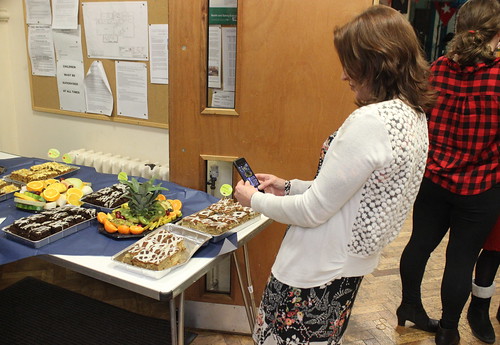
And yet, as anyone who has ever watched a cooking competition on TV, or posted a photograph of their favourite dish on social media, knows very well, before food ever passes into our mouths, we often devour it first with our eyes. Isn’t this why the home-cooks on MasterChef are judged not just on culinary technique, but also on plating skills? Not just on how their food tastes, but also on how it looks? And don’t we all know what it feels like to salivate at the mere sight of a delicious bowl of curry laksa, or chilli crab? All of which gives a whole new meaning to the words, watching what we eat!

Increasingly, perhaps now more than ever, people are realising that we eat not just with our mouths, but also with our eyes. Involving not just our sense of taste, but also our senses of sight and smell, of touch and hearing as well. But if this is true of the food that fills my belly, what about the kind that satisfies my soul? With which part of myself do I eat spiritual food? This, I believe, is the crucially important question that our Mass readings invite us to ponder today.

As he has been doing over the past two Sundays, in the gospel, Jesus continues to encourage people, encourage us, to eat the flesh of the Son of Man and drink his blood. For unless we do, we cannot have life. As a result, his listeners are filled with shock and dismay. How can this man give us his flesh to eat?, they ask. And I have to confess that there’s a part of me that feels superior to these people. A part of me that considers theirs a stupid question. For, as a Catholic who regularly receives Holy Communion, I think I know exactly what Jesus means. What else can it mean to eat the Lord’s flesh and to drink his blood, if not to join the queue at the right time at Mass, and to pop a communion wafer into my mouth, after mumbling an Amen in response to the words The Body of Christ?

And yet, if this is all it takes to eat the Lord’s flesh and to drink his blood, then isn’t it the same as saying that, unlike material food, spiritual nourishment can be eaten with one’s mouth alone? But can it? Really? Careful attention to the other Mass readings actually leads us to the opposite conclusion.

In the first reading, after building a restaurant, and preparing a gourmet menu, we’re told that Lady Wisdom then invites the foolish and the ignorant–all those who have no knowledge of the ways of God–to feast at her table. And, once again, it’s helpful for us to pose the question, With which part of themselves are the invited diners expected to eat this food? Lady Wisdom herself provides the answer at the end of the reading. Leave your folly and you will live, she says, walk in the ways of perception. 

But which part of my body must I use to obey this instruction? How do I go about forsaking foolish, worldly, self-indulgent ways? How do I walk instead in the ways of God, the way of Christ, the Source of heavenly Wisdom, who himself walked the Way of the Cross, the way of loving self-sacrifice? Can I do this with my mouth? Yes, of course. And not just by placing a communion wafer on my tongue. But also, as the psalmist reminds us, by blessing the Lord at all times. By allowing God’s praise to be always on my lips. This is how one can taste and see that the Lord is good. Even so, it’s also quite obvious that it’s not enough to walk in the ways of Wisdom simply with my mouth. I need to do it also with every other part of my body. With my arms and my legs. With my mind and my heart. And yes, with my whole life as well!

Isn’t this also what we find in the second reading, which reminds us to be very careful, not just about what we put into our mouths, but also about the sort of lives we lead And notice how the reading proceeds to present us with several sharp contrasts. Between senseless and intelligent people. Between those who are thoughtless and those who are able to recognise what is the will of the Lord. Between those who live lives of dissipation and self-indulgence, and those who are filled with the Spirit, who allow their lives to be directed by the love of God. In other words, what is the second reading encouraging us to do, sisters and brothers, if not to watch what we eat? To watch not just what we put into our mouths, but also what we allow to occupy our minds and hearts. How we lead our very lives.

All of which might prompt us to examine our celebration of the Sunday Eucharist. And, in particular, how we receive Holy Communion. For, if it is indeed true that I’m called to eat and drink spiritual food not just with my mouth, but also with my mind and heart and life, then perhaps Communion requires from me not just my reception, but also my commitment. So that when I say Amen to The Body of Christ, I’m not just expressing my belief in the Real Presence of Christ here in this church, but also everywhere else in my life. By saying Amen, I am also expressing my desire and determination to be mindful of that loving and merciful Presence wherever I go. Pointing it out to whomever I meet. Ever pondering and praising the wonders of God in my life and in our world.

Sisters and brothers, many people these days quite literally watch what they eat, by enthusiastically sharing and devouring colourful images of delicious food on social media. As we prepare to approach the Altar of the Lord in a few moments, what must we do, you and I, not just to watch what we eat, but also how we go about eating it today?


Saturday, August 11, 2018

When The Baby Won't Eat


19th Sunday in Ordinary Time (B)


Picture: cc Owen and Aki


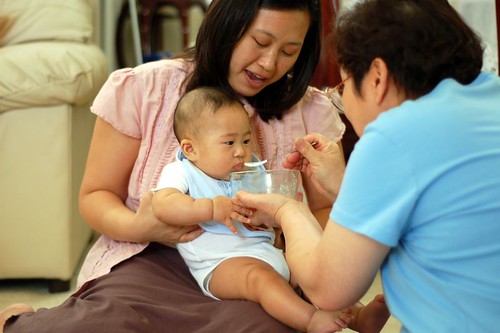
My dear friends, have you ever seen someone trying to coax a moody baby to eat? Perhaps you’ve done it yourself. It can be quite a challenge. The adult knows that the infant needs food to grow. But, for some reason, it refuses to eat. Maybe it’s sleepy, or distracted, or in a bad mood. What to do? One common tactic I’ve seen people use is to tickle the baby’s lips with a spoon to make it laugh. And when it does laugh, to quickly insert the food into its open mouth. Then there is also that classic move, where you wave a spoonful of food around as though it’s an aeroplane, accompanied by the appropriate sound effects. Whatever the method, whether it’s by touching or through make-believe, the aim is the same. To get the baby to open its mouth and eat. To convince it to accept the nourishment it needs to grow healthy and strong.

In case you’re wondering, sisters and brothers, there are no babies in our Mass readings today. But what we do find are people who refuse to eat. In the first reading, the prophet Elijah has been very busy doing God’s work. He has called down a drought on the land, and also made it rain again. He has caused a famine to break out, and also multiplied food. He has raised a dead boy to life, and also defeated and killed 450 false prophets. He has confronted a sinful king, foiling his evil plans, and calling him to repent. As a result, the king is now out to kill Elijah. And the prophet has to flee for his life. 

Yes, Elijah has indeed been very busy. It’s no wonder that, when we meet him in the first reading, the prophet is completely and utterly burnt out. I have had enough, he says. All he wants to do is to lie down and go to sleep. He even wishes he were dead. And, in a way, he is already spiritually dead. He no longer has the capacity to care about anything or anyone anymore. Have you ever felt like this? As though you’ve simply had enough? Ready to throw in the towel? And isn’t it possible for me to continue walking around, apparently busy with many things, while actually already fast asleep? Spiritually dead? Unable to truly love anyone or care about anything anymore?

But Elijah’s journey is not yet over. God still has plans for him. So that, instead of letting the prophet sleep, God sends an angel to feed him. And it’s helpful to notice how this is done. Not once, but twice, we’re told that the angel touched him and said ‘Get up and eat…’ What does it feel like to be touched by an angel? Perhaps it’s not unlike how a baby might feel when it’s lips are tickled with a spoon. For Elijah, the experience rouses him. He awakens and eats, and gains the strength to walk for forty days and forty nights to the mountain of God, where he receives a new mission from the Lord.

As you may recall from the readings of last week, in the gospel, Jesus too has been trying to persuade people to eat. He offers himself to them as the Bread of Life. The spiritual Food that they need, to give their lives true purpose and deep meaning. To eat this Bread, to feed on this Food, is to come to Jesus and to believe in him. To believe that, in him, God has loved the world so much that he sent his only Son, so that everyone who believes in him may not perish but have eternal life (Jn 3:16).

As with the angel’s touch in the first reading, in Christ, God the Father draws people, draws you and me, to himself. Coaxing us to feast on the spiritual nourishment that is God’s only begotten Son. Unfortunately, unlike Elijah, the people in the gospel are too distracted to get up and eat. Believing that they know everything about Jesus, they cannot bring themselves to accept that he has indeed come down from heaven. Stubbornly clinging to their own prejudices, they refuse to eat.

Overwork and burn-out in the first reading. Distraction and prejudice in the gospel. These are some of the reasons why people stop eating. Why they prefer to remain asleep. Why they cannot receive the nourishment God provides. The food we all need to live life to the full. The kind of life described in the second reading, which tells us to never have grudges against others, or to lose our temper. But instead to forgive each other as readily as God forgave us in Christ. Following Christ in loving as he loved us, giving himself up in our place as a fragrant offering and a sacrifice to God.

To live a loving self-sacrificing life like this is not easy. It requires spiritual energy. The energy we receive by regularly feeding on Christ. Not just by gathering to receive Holy Communion every week. But by doing it with minds and hearts that are open enough to receive God’s love. Attentive enough to recall the ways in which God showers blessings and gifts upon us, both as individuals and as a community. And unless we do this, unless we truly feed on Christ in this way, we fail to receive the nourishment we need to live as Christ lives. To love as Christ loves. As a result, all the busy-ness that we may engage in every day drains us, the way it drained Elijah.  Perhaps even making us more angry and resentful, rather than more patient and kind.

Thankfully, God refuses to let us remain asleep. God continues to insist on drawing us. On sending an angel to touch us. Often we experience this touch in the desires that we find stirring in our hearts. Desires for a different kind of life. Desires that are the flip-side of the sins we may confess when we celebrate the Sacrament of Reconciliation. Desires that are actually placed in our hearts by God. To rouse us from sleep. To draw us to Christ. To coax us to get up and to eat.

My dear sisters and brothers, just as good parents will insist on feeding a baby, even when it refuses to eat. So too does our merciful God insist on feeding us, even when we may forget our need for food. How is God touching you and drawing you to receive his love today?

Saturday, August 04, 2018

The Itch We Cannot Scratch...


18th Sunday in Ordinary Time (B)
Picture: cc sarahluv

My dear friends, have you ever had an itch that you just can’t seem to scratch? Do you know what it feels like? It can be quite frustrating. No matter how hard or how often I may drag my fingernails across that spot on my body, where I think the itch is located, I get no relief. I may even scratch so hard that my skin gets broken and infected. But the itch remains. And it may be because the sensation I’m feeling is not actually found on my skin, but somewhere else. I don’t know where. In my nerves perhaps. Or even in my mind. The itch may be neurological or psychological. So that it can’t be relieved in a superficial way. But only by going deeper. 

Strange as it may sound, sisters and brothers, I believe we find something similar in our Mass readings today. People experiencing a deep itch, and trying to scratch it in a superficial way. Both in the first reading and the gospel, people are feeling hungry. And, quite naturally, they assume that their hunger can be satisfied by filling their mouths with food, their bellies with bread. In the first reading, the whole community of Israelites complain to Moses and Aaron that they have no food. And, in the gospel, crowds of people follow Jesus across the Lake of Galilee, because he had earlier given them all the bread they wanted to eat. With just five barley loaves and two fish, he had fed five thousand.

Both in the first reading and the gospel, people are anxious to scratch an itch. And yet, all the scratching in the world, all the food on this earth, can bring them no permanent relief. For the sensation they are feeling is not something that can be removed by meat and bread alone. Theirs is not really a hunger for food, but a yearning for meaning. A deep desire for a life that has a definite direction. A life filled with true purpose. Something that has the power to gather up all the broken disconnected pieces of one’s existence, and to unify them into an inspiring story, a beautiful work of art.

How do we know this? We see it in the way in which God responds to the peoples’ complaint. Notice how, in the first reading, although God provides meat and manna to fill the Israelites’ bellies, God does this in a very particular way. God gives detailed instructions for how the food is to be gathered, distributed, and consumed. By doing this, God provides the people not just with nourishment, but also with a precious opportunity to practice obedience. To learn how to live a life that is not just centred on one’s own selfish interests, but that revolves around God’s loving and merciful will instead. I propose to test them in this way, God tells Moses, to see whether they will follow my law or not. Scripture scholars tell us that the sending of manna from heaven actually points to the precious gift of the Law, through which God provides the people with the guidance that they need to live a meaningful and purposeful life in the Promised Land.

Isn’t this also what Jesus is trying to do in the gospel? He encourages the people to work not for food that cannot last, but for food that endures to eternal life. And to do this by believing in him, the one God has sent. For Jesus himself is the true bread… which comes down from heaven. He alone is the living embodiment of the Law. Those who come to him, those who truly believe in him, those who allow their lives to be moulded according to his example, they are the ones who will never be hungry. They are the ones who will never thirst. They are the ones whose itch God will help them to scratch.

All of which may help us connect better with our Mass readings today. We who live in a place like Singapore. Blessed as we are to have such an abundant variety of tasty food to eat. Let’s face it, many of us here are rich enough, such that we have to worry less about getting enough to eat than about choosing which particular delicacies to enjoy at any given meal. And yet, isn’t it true that, both as individuals and as a society, we continue to experience a hunger for meaning and purpose and direction? Don’t many of us try to satisfy this deep yearning in superficial and less than helpful ways? Isn’t this why, for many of us, life is characterised by compulsive consumption? Not just in matters of food and drink, or handbags and watches, or cars and entertainment. But also in the way we relate to work, and even to religion. Could this also be the reason why we have to obsessively check the screens of our mobile devices every few seconds? Not so much because there is an urgent message for us to read. But to scratch an itch that simple refuses to go away.

If this is true, then perhaps it is important for us to heed the message in the second reading. Which reminds us not to go on living the aimless kind of life that pagans live. The kind of life that dissipates itself in so many different directions, because it is focused only on the satisfaction of illusory desires. On superficially scratching an itch which refuses to go away. Instead, we are called to put on a new self, to live a new life in Christ, created in God’s way, in the goodness and holiness of the truth. The truth that life is not about food and drink but righteousness and peace and joy in the Holy Spirit (Rm 14:17). Isn’t this why we take the time to gather here this evening? To allow our loving and merciful Lord to feed us with the bread from heaven. The true nourishment that fills our lives with deeper meaning.

My dear sisters and brothers, whether we realise it or not, we all have within us an itch that we cannot scratch. A yearning that we cannot satisfy. At least not on our own. No matter how hard we may try. For it has been placed in us by God. What must we do, you and I, to allow God to scratch our itch today?

Sunday, July 08, 2018

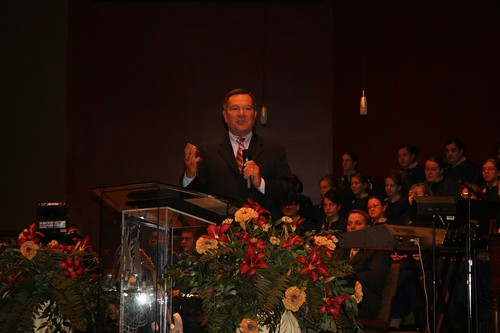
Preaching to the Choir


14th Sunday in Ordinary Time (B)

Picture: cc Garrette


My dear friends, do you know what it means when someone says to me, you’re only preaching to the choir? I’m sure you do, right? It means that I am trying to convince people who already agree with me. Or trying to convert the already converted. The implication being that I’m wasting my time. I should try to win over the unconverted instead. Those who hold opinions contrary to mine. Those who are more likely to reject my arguments, and to treat me with hostility. Which, though difficult, makes a lot of sense, don’t you think?

And yet, my dear brothers and sisters, has it ever occured to you that preaching to the choir is what priests like me do all the time? Of course, this being the earliest Mass on a Sunday, we don’t have much of a choir to speak of. But still, in a sense, aren’t all of us members of the choir? Can we not expect most, if not all, of us gathered here this morning to be already converted? Already convinced of the Good News of Christ? Why then do priests like me even bother?

Now please don’t be mistaken, my dear friends. I ask this question not because I’m suffering a vocation crisis. But because of what we find in our Mass readings today. As you may have noticed, in each of our three readings, we find people sent to preach God’s Word to those who are resistant.

I am sending you, God tells Ezekiel in the first reading, to the rebels who have turned against me… And they would not accept him… This is what the gospel says about those to whom Jesus preaches. And, finally, in the second reading, although it’s not clear what exactly St Paul means, when he writes about a thorn in the flesh, some commentators say that this points to hostility against Paul’s ministry. Since the apostle goes on to write about insults, hardships, persecutions, and the agonies that he suffers for Christ’s sake.

So it is clear that the prophets in our readings are sent to preach to those who are stubbornly unreceptive. But where, my dear friends, where are these stubbornly unreceptive people to be found? The answer may surprise us. The rebels to whom Ezekiel is sent in the first reading are none other than the Israelites themselves. God’s own chosen people. Scholars tell us that the hostility Paul writes about in the second reading very likely comes from members of his own communities. And, of course, the lack of faith that Jesus encounters in the gospel comes from his own relatives. The members of his own home town. From people gathered to worship God in the synagogue no less.

In other words, in our readings today, contrary to what we might expect, God’s messengers meet with resistance and even hostility not when they proclaim the Word to strangers, but when they are preaching to the choir! What do you make of all this, my dear friends? How does it make you feel? To some extent, it causes me to tremble interiorly. Especially because I so easily consider myself already a member of the choir. Presumably already converted. And yet these readings invite me to ask myself, what kind of a choir-member am I, really? How truly converted? How receptive and responsive to God’s Word, to God’s call? How do I even find out?

One way to find out is to see how our readings describe those who are truly receptive and responsive to God’s call. The first reading begins with these words: The Spirit came into me and made me stand up… This is one sign of the converted. Such a person is given the strength to stand up. To stand up and to speak out. To stand up, to speak out, and to bear witness to God’s message. Not just in words, but through one’s life. To stand up, to speak out, and to bear witness to God’s love, even in a hostile environment. To stand up, even when it is more convenient, more comfortable, more secure simply to remain sitting or lying down.

And let’s not be naive. To do this is not easy. It’s not easy to stand up when there are many powerful forces keeping us down. Forces both external and internal. Temptations and distractions, fears and anxieties, pressuring us to keep quiet and to simply blend in with the environment, with everyone else. To do otherwise, to go against the flow, may lead us to feel as the psalmist feels, when he says, We are filled with contempt. Indeed all too full is our soul with the scorn of the rich, with the proud man’s disdain. How then does the truly converted person receive the strength to remain standing?

We find the answer in the response to the psalm. Our eyes are on the Lord till he shows us his mercy. To keep on standing up, even when sorely tempted to lay down, I must keep my eyes focused on the Lord till he show us his mercy. Isn’t this what sets apart those who are truly converted from those who are still rebellious? And, if I am honest with myself, must I not admit that, much as I may consider myself a member of the choir, there’s actually a bit of both in me? Both the receptive and the resistant. Both the converted and the sinner. Which is why I need to keep on listening to the Lord’s Word. To keep on allowing it to penetrate my heart. Calling me to deeper conversion. Calling me to ever more generous, ever more committed, mission.

My dear sisters and brothers, if today you hear the Lord’s voice preaching to the choir, what will you do to keep from hardening your heart?

Sunday, July 01, 2018

Endangered Species


13th Sunday in Ordinary Time (B)

Picture: cc Franco Pecchio

My dear friends, do you know how many types of giraffes there are in the world today? As you may have heard, until quite recently, it was thought that all giraffes belonged to a single species. So only one kind of giraffe. But then, about two years ago, a new study discovered that there are actually, not one, but four distinct species of giraffe. Why is this discovery important? Well, it means that since, by definition, different species cannot breed with one another in the wild, then giraffes are actually far more endangered than previously thought. It’s not enough to save just one or two or even three of these species. Work must be done to save all four.

In other words, the discovery of different kinds of giraffes helps us to realise that we need to do more to preserve them all. And if this is true of giraffes, might it not be true also of the one thing that our readings invite us to ponder today? Our own life? Could it be that just as there are different kinds of giraffe, there are also different kinds, different aspects of life? And to recognise this is also to realise that we need to do more to preserve our life in all its aspects?

In the gospel, Jesus is quite clearly preserving and restoring life. But haven’t you noticed the different kinds of life the Lord is preserving and restoring? Most obviously, of course, Jesus restores the physical life of the daughter of Jairus. The kind of life indicated by the girl’s renewed ability to get up, and to walk about, and even to eat. But notice how, in the gospel, we also find the story of a bleeding woman. Although this woman is not physically dead, at least not yet, other kinds of life have been taken away from her.

For example, we’re told that she has spent all she had on doctors, without getting any… better. In other words, she is financially ruined. Dead. Worse still, her illness is very likely causing her to be barren. Unable to have children of her own. Unable to bear new life for her own family. Also, her condition renders her ritually unclean. And so, barred from participating in the community’s worship of God. Not only is she financially dead, the woman’s social life has been taken away from her. And her spiritual life suffers as well. So that, by curing her of her ailment, Jesus is not just giving her back her physical health. He is restoring her to life in its different aspects.

By inserting this woman’s story in the middle of the other one, the author of the gospel highlights to us the deeper meaning of the raising of Jairus’ daughter. The woman’s story shows us that the raising of the little girl is significant not just for those of us who may happen to be dying from a terminal illness. Or those about to succumb to old age. What the gospel reminds us is that whether we are young or old, rich or poor, healthy or sick, popular or lonely, Jesus offers all of us the fullness of life. Life rooted ultimately in right relationship with God.

Such that, even if I may lose my financial life, or my social life, or even my physical life, I can still hope in the spiritual life that Jesus preserves for us, for me, by his Dying and Rising. Isn’t this what is meant when the first reading tells us that death was not God’s doing. But that God made us imperishable, in the image of God’s own nature. Not that I will never suffer a physical death. Of course I will. Even Jairus’ daughter, after having been raised, must surely have died at some point after that. But the scriptures assure us that we will always retain our spiritual life, if only we remain in Christ.

One important implication of all this is, of course, that it is possible for me to appear very much alive–physically and financially, socially and even religiously–and yet be actually spiritually quite dead. It is possible for me to be young and fit, rich and popular, tremendously active in parish ministry, perhaps even in priestly ministry, and yet have no real knowledge or experience of God’s love. But how do I know how spiritually alive I am? Just as the ability to get up and move about and eat are indications of physical life, are there similar signs of spiritual life?

We find one such sign in the second reading, where St Paul encourages the Christians in Corinth to donate their surplus money to their needy brethren in Jerusalem. Paul reminds the Corinthians first of how much God has blessed them. Not just with material wealth, but also with spiritual gifts. And how these gifts should make them more generous. Just as Christ was generous, in laying down his life for us all. For Paul, one good indication of the spiritual health of a person, or a community, is the capacity to show mercy. To reach out and to share one’s riches, financial or otherwise, with those in need.

But what if I begin to realise that, despite being alive in other areas, I am actually spiritually sick? Perhaps even dying? How can I renew my spiritual life? The answer is very clearly shown in the gospel. The bleeding woman finds life when she reaches out to touch the Lord. But notice that, just as there are different kinds of life, there are also different kinds of touch. Many people touch Jesus in the gospel. But only the woman finds life. Even though she manages to touch only his cloak. What sets her touch apart from all the others? Jesus gives us the answer when he tells the woman, Your faith has restored you to health 

This is the kind of touch that heals and saves. The kind in which I place all my hope, and all my trust in the One whom I am touching. The touch of faith, along with the touch of mercy. These are the precious channels through which true life flows. From God to us. From us to those in need. The touch of faith, and the touch of mercy. Are these not also the kinds of touch that we are gathered here to experience and to share?

I’m reminded of these words from an old hymn we used to sing:

Lord, we touch you today. Lord, we touch you today.
You gave us your life. You gave us your love.
Lord, we touch you today.
To live is to die, and to laugh is to cry.
To live is to love with all our heart.
To live is to walk and to talk in your Word.
And to live is to sing in your Love…

My dear friends, just as there are different kinds of giraffe, so too are there different kinds of life, and different kinds of touch. What kind of life are you living and nurturing? What kind of touch are you receiving and sharing today?