Sunday, July 11, 2021

Of Roots & Resilience

15th Sunday in Ordinary Time (B)


Readings: Amos 7:12-15; Psalm 84 (85):9-14; Ephesians 1:3-10; Mark 6:7-13

Picture: cc Paul Sullivan


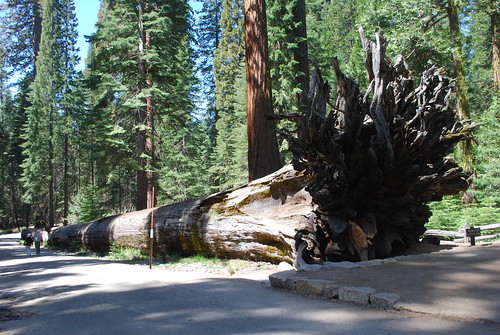
My dear friends, do you remember that tragic case from 2017, where a 40-metre tall tembusu tree in the Botanic Gardens toppled over, and killed a passerby? Why did the tree fall? It had no visible signs of weakness. According to the Coroner, the answer lay in its roots. While strong winds and heavy rains in the days before the incident did play a part, the deeper cause could be traced to the tree’s distant past, when its roots were cut to make way for a path. This cutting started a process of decay, leading eventually to the tree’s demise.


But it’s not just trees that depend for their resilience upon healthy roots. The same can be said for prophets and missionaries too. Isn’t this what we find in our readings? In the first reading, when the prophet Amos is buffeted by the strong winds of rejection, he responds not by boasting about his own virtues or qualifications, but by recounting the origins, the spiritual roots, of his prophetic vocation. It was the Lord who took me from herding the flock, and the Lord who said, “Go, prophesy to my people Israel.”


Similarly, in the gospel, how does Jesus prepare the apostles for the rigours of the mission on which he is sending them? He strengthens their roots. By encouraging them to rely more on the providence of God than on any material resource. And by telling them how to respond to rejection. (T)ake nothing for the journey except a staff…. if any place does not welcome you and people refuse to listen to you, as you walk away shake off the dust from under your feet as a sign to them…


Of course, this is all fine and good for professional, full-time missionaries, like Amos and the Twelve. What about those of us who have far more down-to-earth occupations? Those of us who, especially in these Covid-times, find ourselves frantically juggling the multiple responsibilities of work and home, while being cooped up in a single physical location.


Thankfully, the second reading comes to our rescue, by telling us about the broader meaning of vocation or calling. Contrary to popular belief, God’s call is addressed not only to professionals. Nor does it involve only obviously religious or churchy activities. No. The reading tells us that even before the world was made… (God) chose us in Christ, to be holy and spotless, and to live through love in his presence… God’s call to us is, first of all, simply to be, to live in a certain way. To remain rooted in the goodness and love, the compassion and mercy of Christ that we celebrate at this Mass. This is the vocation that gives our lives their true meaning.


And isn’t meaning what so many in our society are yearning for today? According to a recent report, there were 452 suicides here last year, the highest since 2012. Sisters and brothers, it appears that, in our country, trees are not the only things being toppled over. People are too. And if this is true, then what can we do? We who believe ourselves to be chosen by God. What can we do to help one another become more resilient, by cultivating healthier and hardier spiritual roots today?

Sunday, June 27, 2021

Beyond the Foetal Position


13th Sunday in Ordinary Time (B)

Readings: Wisdom 1:13-15,2:23-24; Psalm 29(30):2,4-6,11-13; 2 Corinthians 8:7,9,13-15; Mark 5:21-43

Picture: cc dahveed76


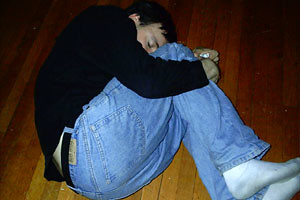
My dear friends, are you familiar with the foetal position? It’s when the body is curled up into a ball, with the arms and legs pulled into the chest, and the head brought forward. According to Wikipedia, sometimes, when (people have) suffered extreme physical or psychological trauma… they will assume this position or a similar one. It’s an instinctive posture of withdrawal and self-preservation.


And this posture can be adopted not just physically, but also psychologically, emotionally, even spiritually. To be constantly in the mode of looking inward and fending for oneself or one’s own. Focused only on one’s security and survival. But even if it may be necessary to adopt this posture from time to time, this is surely no way to live a fully human life. So how to move out of the foetal position, when it’s time to do so? I believe this is a question that our readings help us to ponder today.


In the gospel of Mark, Jesus and his disciples cross from one bank of the Sea of Galilee to another, and back again. And wherever they go, they keep meeting people touched by trauma. People afflicted by diseases, and possessed by demons. People hungry for food, not just for their bellies, but also for their minds and hearts. People needing to be consoled and healed, guided and reconciled. People who might be forgiven for focusing only on their own wellbeing.


What do the crowds, who flock to Jesus in the gospel, need most, if not a way out of the foetal position? That anxious posture of withdrawal and self-preservation. And yet, isn’t it striking to note that, even though many are pressing all round him, these people don’t seem to find what they need. It’s only the bleeding woman’s touch that brings her healing. The touch of faith. But what is it about the woman’s touch that enables her to draw power from the Lord, when others could not? Perhaps it’s the courage to believe what is written in the first reading. That even though our world seems shrouded in suffering and death, God takes no pleasure in the extinction of the living, for God created all for life, and not destruction.


And how to find the courage to keep reaching out to the Lord in faith? Perhaps we need to allow the Lord to touch us first. In the same way that Jesus touches the dead girl in the gospel, when he takes her by the hand, and calls her to rise. The same touch that Paul describes so beautifully in the second reading, when he tells his readers to remember how generous the Lord Jesus was: he was rich, but he became poor for your sake, to make you rich out of his poverty. If we are able to reach out to the Lord in faith, it’s only because he has first reached out to us with the touch of mercy. Empowering us, in our turn, to show mercy to others as well.


Isn’t this life-giving movement from trauma to faith and mercy something that we need to experience especially now, as our world cautiously negotiates the path out of various degrees of lockdown? To learn to see beyond our own immediate needs to the sufferings of others? Sisters and brothers, what must we do to let the Lord lift us out of the foetal position today?

Sunday, June 13, 2021

A More Liveable Place

11th Sunday in Ordinary Time (B)


Readings: Ezekiel 17:22-24; Psalm 91(92):2-3,13-16; 2 Corinthians 5:6-10; Mark 4:26-34

Picture: cc Harshil Shah


My dear friends, given a choice, where would you like to live? A recent survey has named Auckland as the most liveable city in the world in 2021. This is because of its success in containing the Covid-19 pandemic, while keeping its society open. So, if given a choice, will you move to Auckland?


The reason I ask is because our readings describe a place for us all to live. This place was not included in the survey. Actually, it’s not a geographical place, but a spiritual one. The psalm refers to this place as the house of the Lord. And, in the gospel, Jesus calls it the kingdom of God. What is it like to live in this place? How does one come to live there?


Pondering the readings, we find three aspects, beginning with humility. Humility realised in two ways. We may call the first way the humility of gift. In contrast to countries like our own, where foreigners are admitted based on merit or money, access to the kingdom can only be received as a gift. We see this in the first reading, where God chooses a shoot, and plants it on the high mountain. The shoot itself does nothing to deserve God’s choice.


Also, along with the humility of gift, there is a humility of growth. The first reading tells us that God is the one who stunts tall trees and makes the low ones grow. And, in the gospel, God causes seed, sown in the soil, to grow in ways that farmers themselves cannot explain. Which is not to say that our efforts are not important. Of course they are! Yet, it’s even more important to realise that, however hard we may work, we cannot make things grow. It always remains God’s prerogative to grant growth according to God’s time. What we need to cultivate is the humble willingness to start small and weak and fragile, as well as the perseverance to work hard, and the patience to wait upon God’s good pleasure.


The humility of gift and growth leads to another aspect, which is hospitality. Both the tall cedar in the first reading, and the fully grown mustard plant in the gospel have in common a wonderful ability to offer shelter to every kind of bird and every winged creature. Similarly, in the kingdom of God, a warm welcome is extended to all who require shelter, all who are in need of a home, regardless of race or class or gender…


Home. This is also the third aspect. The kingdom is not just a place in which to live, but a place to call home. So the second reading encourages us, even while we are still living in the body, to seek to make our home with the Lord. How? By always being intent on pleasing him. As a result, like St Paul, we become full of confidence, no matter how difficult the challenges we may have to face. Humility, hospitality, and home. These are more than just features of God’s kingdom. They are also steps by which God draws us to help make our world a more liveable place for all.


Sisters and brothers, especially at a time when the temptation is great to act contrary to the humility and hospitality of the kingdom, what must we do to continue making our home with the Lord today?

Sunday, June 06, 2021

Progress through Acceptance (of Acceptance)


Solemnity of The Most Holy Body & Blood of Christ

Readings: Exodus 24:3-8; Psalm 115(116):12-13,15-18; Hebrews 9:11-15; Mark 14:12-16,22-26

Picture: cc Ștefan Jurcă


My dear friends, what crosses your mind when you hear these words: dating, going steady, engagement, and marriage? Well, they all refer to a kind of relationship or bond, right? The romantic kind. But that’s not all. Arranged in the right order, these words also describe a certain progression. When a couple moves through the stages from dating all the way to marriage, their relationship is deepened and strengthened, right up to the point where they publicly declare a life-long commitment to each other. Each one promising to love and honour the other all the days of my life. 


We find a similar progression in our readings for Corpus Christi. As you may have noticed, both the first reading and the gospel describe a kind of ritual. The significance of which becomes clearer to us when we pay attention to three words: covenant, blood, and law (or command).


The word covenant tells us that both rituals have to do with a relationship. In this case, the bond between God and God’s people. And just as a marriage is sealed by an exchange of rings, so is the covenant between God and the people sealed in blood. Also like marriage, the terms of this relationship are clear. God promises to love and protect the people, who promise, in turn, to observe God’s law (God’s commands).


But that’s not all. Between the first reading and the gospel, there is also a kind of progression, which the second reading helps us to appreciate. The first covenant is sealed with the blood of mere animals, sprinkled on the people by Moses. The new covenant is sealed in no less than the blood of Christ, the Son of God, poured out for all to drink. The law received by Moses is written externally on tablets of stone. The law given by Jesus is written interiorly on hearts of flesh.


Like the journey from dating to marriage, between the first reading and the gospel there is a deepening and strengthening of relationship. Culminating in a final declaration of lasting and irrevocable commitment. But there is one crucial difference. In most marriages, people choose partners whom they have reason to believe will remain faithful. Yet God’s commitment to us is given despite our repeated infidelities and betrayals. Christ’s life is offered for us – his body broken, his blood poured out – even in the face of indifference and neglect, of rejection and ridicule. In his Dying and Rising, the Lord tirelessly reaches out a hand of friendship to us, patiently waiting for us to reciprocate. As we are doing now, by gathering to attentively recall his memory, and then dispersing to bear witness to his love.


Isn’t this at once the great consolation and heartbreak of our faith? That all it takes to progress in our relationship with God, is for us to accept God’s radical acceptance of us? And isn’t this something worth considering especially now, when many are yearning for yet can’t seem to find God? Sisters and brothers, especially in these Covid times, what will you do to keep making progress in your relationship with God today?

Saturday, May 29, 2021

Worth Fighting For...


Solemnity of The Most Holy Trinity


Readings: Deuteronomy 4:32-34,39-40; Psalm 32(33):4-6,9,18-20,22; Romans 8:14-17; Matthew 28:16-20

Video: YouTube panza larga


My dear friends, do you know what a pep-talk is? Have you ever given or received one before? Inspiring words uttered to rouse up courage before battle, especially when facing impossible odds? One of the more memorable pep-talks I’ve heard, is the one given by Samwise Gamgee to Frodo Baggins, in the Lord of the Rings movie trilogy. Sam begins by speaking of the stories of old, where the heroes had many chances of turning back but didn’t, because they were holding onto something. What are we holding onto? Frodo asks. To which Sam replies, That there is some good in this world… and it's worth fighting for!


Similarly, on this blessed feast of The Most Holy Trinity, each of our readings presents us with a rousing pep-talk. In the book of Deuteronomy, Moses gathers the Israelites on the far side of the river Jordan, to prepare them to enter and take possession of the Promised Land. Knowing that they will soon have to do battle with those who worship other gods, Moses urges the Israelites to remember the mighty works God has done for them. So as to understand… and take it to heart that the Lord is God indeed… he and no other.


At the end of Matthew’s gospel, Jesus gathers his disciples on a mountaintop in Galilee. And, before sending them out into a world that continues to worship other gods, he reminds them that, through his own Dying and Rising, all authority in heaven and on earth has been given to him. They are thus to go forth with this same authority, to engage in spiritual battle, and to usher others into the fullness of life in God, Father, Son and Spirit.


The second reading too, describes something like a pep-talk. Except that it does not consist in mere human words spoken into the ears of clueless people. Instead, Paul writes about the gentle yet powerful promptings of the Spirit, moving mysteriously within weak but trusting hearts. Reminding them – reminding us – of our true identity. That, contrary to appearances, we are not meant to be slaves of worldly powers, but daughters and sons of God. Sharers in the sufferings of Christ, and heirs to the glories of his Kingdom.


Even so, one striking feature of our readings today, is that they focus our attention less on ourselves, and more on God. They speak of the power of God’s love for us, and for all creation. They remind us that we can persevere in battle, because we are continually being held by the gentle mercies of God, who is Father, Son and Spirit. In the words of that old children’s song some of us used to sing, He’s got the whole world in his hands…


Isn’t this the kind of pep-talk we need to hear especially now? As we face a world darkened by oppressive forces and infectious viruses of one kind or another, our readings remind us not just to hold onto the belief that there is good in the world worth fighting for, but to trust that, however dark things may seem to be, it is the Holy Trinity who continues to hold onto us. What must we do to take courage from this assurance, and to keep fighting the good fight today?