Sunday, November 24, 2024

Between Power & Parking


Solemnity of Our Lord Jesus Christ,

King of the Universe (B)


Readings: Daniel 7:13-14; Psalm 92 (93):1-2, 5; Apocalypse 1:5-8; John 18:33-37

Picture: By m on Unsplash


My dear friends, what is the first thing that comes to mind when we hear the word, ruler? Given the feast we’re celebrating today, it’s natural to think of a king or queen, or a boss. Someone who calls the shots, who wields power, and exercises control. But back when I was still in primary school, the word ruler brought to mind something quite different: a slim rectangular piece of wood, or plastic, used to measure distances, and to draw straight lines… A wielder of power, and a measure of straightness. The word ruler actually means both these things. Which reminds me of an experience I sometimes have, after stepping out of a car I’ve just parked. I look down at the lines painted on the road, and realise that my car is very crooked. As the driver of the vehicle, I’m the ruler, the one in control. And yet, my parking skills have just been ruled by those lines, and found to be seriously lacking. Don’t we find something similar in our scriptures today?


In the gospel, it seems quite clear who is calling the shots, who are the ones in control. As governor, Pilate has the power to decide, either to condemn Jesus, or to set him free. And we know that the chief priests are also pulling the strings behind the scenes. Pressuring and manipulating the governor to do what they want. This is how power works in the world. This is what earthly rule looks like. In contrast, Jesus seems utterly power-less. His fate lies in the hands of others.


But isn’t the Lord also ruling in a different sense? By humbly accepting the consequences of preaching the gospel, refusing either to back down or to run away, doesn’t Jesus uncover the injustice of his persecutors? Just as the lines on the road quietly show up the inadequacies of my parking skills, so too does the Lord’s Passion and Death reveal the crookedness of the world around him. Not just of Pilate and the chief priests, but also the crowds they mobilise, as well as the respective institutions and cultures they each represent. Isn’t this why the Lord says, my kingdom is not of this kind? The rule that Jesus exercises before Pilate, is not that of worldly power and control, but of God’s righteousness and truth. By the Lord’s brave witness to the truth, the values of this world are clearly shown to be seriously lacking.


And for those who have the courage to see it, isn’t this lack still very much on display today? When so many continue to suffer the effects of injustice in various forms. Civilians targetted in violent conflicts. Migrants exploited by ruthless human-traffickers. Refugees displaced by ever more intense natural disasters. Ecosystems destroyed by corporate greed. Frail senior citizens still struggling to eke out a living. Promising young people beset with mounting mental health challenges… Faced with these and many other examples of the crookedness of our world, isn’t it easy for us either to cover our eyes in apathy, or to throw up our hands in despair? Yet our scriptures offer us an alternative response.


Both the first and second readings invite us to dare to hope for the dawning of a new day. The coming of a different time. A moment when the two meanings of rule will coincide in a single person. When Jesus, our Crucified and Risen Lord, the faithful witness, and Ruler of the kings of the earth, will finally come in power and glory. And then, like it or not, everyone will see him, and face the final consequences of one’s acceptance or rejection of his kingship.


But that’s not all. While we wait and prepare for the day that’s yet to come, the second reading also reminds us of what Christ has already done for us. What we celebrate at this and at every Mass. Not only has he washed away our sins with his blood, he has also made us a line of kings, priests to serve… God… In other words, like the One whom we profess to follow, we too are called to be rulers. Not in the worldly sense of power and control. But in the Christian sense of bearing witness to righteousness and truth. Through the lives we live, and the values we embody, we are called to keep standing and speaking on the side of the Lord, on the side of truth, on the side of the poor, the vulnerable and voiceless. So that together, and each in our own way, we may all contribute to uncovering and even counteracting the crookedness that still remains within, among, and around us.


Sisters and brothers, in a world where many are often anxiously jostling to occupy the driver’s seat, how is the Lord calling us to become more like lines on the ground, ruling less by power and control, than by righteousness and truth today?

Sunday, November 17, 2024

Beyond the Hoarding & Through the Veil


33rd Sunday in Ordinary Time (B)


Readings: Daniel 12:1-3; Psalm 15 (16):5, 8-11; Hebrews 10:11-14, 18; Mark 13:24-32

Picture: cc Matt Brown on Flickr


My dear friends, when was the last time you looked at an artist’s impression of something? How did it make you feel? We often rely on artists to help us see things that are hidden in some way. For example, it was reported on Friday that a new waterfront development has just broken ground on Sentosa. It’s scheduled for completion in 2030. Which means, right now, we can’t see what the finished product will look like, since it doesn’t exist yet. Like the hoarding around a construction site, time hides it from our eyes. Thankfully, the news report provides two artist’s impressions, which help us imagine what is to come… And it’s not just time that causes things to be hidden from us. Certain life experiences can have a similar effect. Do any examples come to mind? How about trauma? Isn’t it true that traumatic experiences can shock our hearts to such a degree that we become blind to the possibilities of hope, and need help to see again? Isn’t this what our scriptures do for us today?


In both the first reading and the gospel, we find a form of literature called apocalyptic. A kind of writing that aims to reveal or un-veil hidden things. It’s likely that each of these passages was written at least partly in response to the desecration of the Temple in Jerusalem. First by the Greeks, in the 2nd century BC, and then by the Romans in the 1st century AD. The Jews believed that the Temple was where God had chosen to make a home among them. It was a tangible reminder that God is both with us and for us. So how traumatic it must have been for them when it was desecrated. Perhaps at least as traumatic as watching one’s parish priest being assaulted at Mass, or losing a beloved child to suicide. And just as the hoarding of time prevents us from seeing what an unfinished building project will eventually look like, the experience of trauma acts like a veil, covering up any reasons we may have for hope. After all, what possible future might there be for us, if even our loving God has forsaken us?


In response, both the first reading and the gospel provide something like an artist’s impression, helping the people to imagine a hope-filled future. Three aspects in this image are worth highlighting: a turning point, a heavenly figure, and an assurance of eternity. Even though they are suffering now, even though they may still be blinded by shock and grief, the people are invited to look ahead to a different time. To a moment when the tables will be turned. When the powers of this world will be shaken, and those presently in distress will be rescued and gathered into safety. And this turning point will be brought about by a heavenly figure. In the first reading, it is the angel Michael, the great prince who mounts guard over (the) people. In the gospel, it is the Son of Man (Jesus himself) coming in the clouds with great power and glory. Both these figures will gather up all God’s chosen people, assuring them of an eternity of peace and joy…


But that’s not all. While both the first reading and the gospel paint for us a landscape of what is to come in the future, the second reading presents us with a portrait of Jesus, as he is, already now, in the present. And again we may highlight three aspects in this image. First, the reading reminds us that it wasn’t just the Temple in Jerusalem that suffered desecration, our Lord’s precious Body was desecrated too. For by his Dying and Rising Jesus offered one single sacrifice for sins for our sake. Second, we’re told that, by virtue of that one single offering, Jesus has achieved the eternal perfection of all he is sanctifying… Meaning that, unlike an unfinished project, our hope is not in something yet to come. Rather, in a mysterious but real way, what we hope for has already been accomplished. It is with us and among us. It is why we gather to celebrate the Eucharist. Third, more than just inviting us to gaze upon Jesus, the reading also prompts us to imagine how Jesus gazes upon us, as he patiently waits for more people to submit to his gentle embrace. Including those who may now be counted among his enemies. Those still resisting his call. For it is from the Lord’s merciful gaze, that we draw the strength we need to live as he lived, to truly become members of his Body here on earth.


So more than just consoling the traumatised, our scriptures also present a challenge to those who may contribute to their trauma. Including those mentioned in that verse we quoted at the start of Mass. Those whose hearts are weighed down with dissipation and drunkenness and the worries of this life (Lk 21:34). Like the psalmist, both the traumatised and those who traumatise others are called to keep the Lord ever in (their) sight. Not just here in the Eucharist, but also out there in the lives and bodies of the poor.


Sisters and brothers, unlike that building project on Sentosa, we don’t have a scheduled completion date for all this. What must we do to remain vigilant, so as to be ready to welcome the Lord whenever he comes?

Sunday, October 27, 2024

The Beating Of Our Hearts & The Grasshopper’s Cry

30th Sunday in Ordinary Time (B)


Readings: Jeremiah 31:7-9; Psalm 125 (126); Hebrews 5:1-6; Mark 10:46-52

Picture: Public domain image from Wikimedia Commons


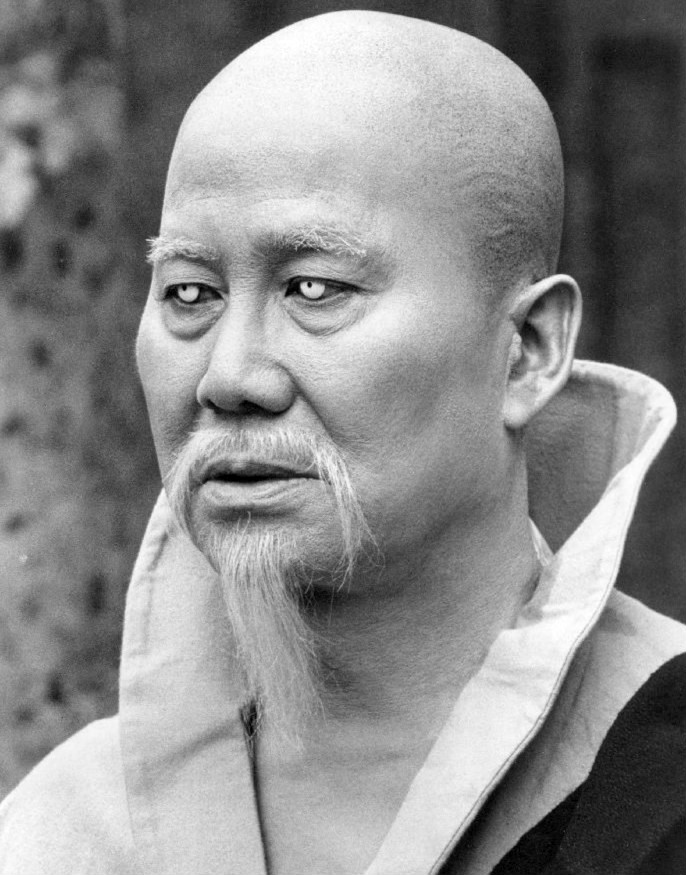
My dear friends, does anyone still remember Master Po? Perhaps some of us may think of that beloved animated movie character. The giant panda, who rises from obscurity to become a great kung fu hero. But long before Po, the Kung Fu Panda, there was Po, the Shaolin monk. Also a fictional character and an expert in kung fu. But unlike his younger namesake, the older Po was blind. In a memorable scene (preserved on YouTube), Po meets the boy Caine for the first time. After impressing Caine with his fighting skills, Po speaks to him about blindness and sight. He says, Never assume that because a man has no eyes, he cannot see. Close your eyes. What do you hear? I hear the water, Caine replies. I hear the birds. Do you hear your own heartbeat? No. Do you hear the grasshopper, which is at your feet? Surprised, Caine asks, Old man, how is it that you hear these things? To which Po replies, Young man, how is it that you do not? An apparently disabled person, who proves more able than most. Able enough to show another the way to wisdom and a fuller life. Don’t we find something similar in our scriptures today?


In the first reading, God promises to save the people of Israel, including the blind and the lame. To rescue them from the desolation and despair of Exile. In particular, God promises to perform five key actions for their sake. To bring them back and to gather them, to comfort, to lead, and to guide them. Through these five actions, God will help them find and follow the path that leads to the fullness of life in God. And the second reading helps us see that this promise made in the first reading finds its ultimate fulfilment in Jesus. He is the anointed one, whom God has given the glory of becoming high priest. To show all who are trapped by the superficial cravings of this passing world, the Way that leads to freedom and fullness of life. The same Way that Jesus has been painstakingly teaching his disciples about in the gospel.


As we listen to the reading, it’s perhaps natural for us to be captivated by the blind man’s recovery of physical sight. But it’s also important for us to remember that, before Bartimaeus of Jericho, Jesus had earlier healed another blind man at Bethsaida. And all along the way from Bethsaida to Jericho, Jesus has repeatedly described in words the exact contours of the itinerary he himself is following. The Path he is blazing for his disciples. The Way that leads to life. Not just once or twice, but three times, the Lord has spoken of how the Son of Man is destined to suffer and die, before being raised to life. But his listeners are unable to grasp what he has been saying. Even though they are physically sighted, they prove to be spiritually blind. As we may recall, two Sundays ago, we heard how the rich young man’s many possessions prevent him from responding positively to Jesus’ call. So he goes away sad. Then, just last week, immediately after Jesus’ third prediction of his Passion, we found James and John jockeying for the best positions in the Lord’s kingdom, causing the other disciples to take offence at them.


In contrast, in today’s reading, the apparently disabled Bartimaeus proves himself more able than the others who came before. Despite his blindness, he is able to perform five crucially important actions. Amid the noise of the crowd, he is able to listen up for Jesus. Then, even though he is scolded by the others, he persists in crying out for help. Son of David, Jesus, have pity on me. Or, in another translation, have mercy on me. And when the Lord finally calls him over, Bartimaeus finds the courage to do what the rich man could not. He lets go of what is very likely his only earthly possession. He throws off his cloak, jumps up on his feet, and follows Jesus along the road.


Listening up and crying out, throwing off, jumping up, and following along. These are the five actions that the blind man models for us. Five steps that demonstrate his faith. Steps that we ourselves must take, in order to follow Jesus on the Way that passes through the valley of death, and on to the fullness of life. And isn’t it significant that these steps begin with listening? Listening out for the Lord, as he calls to us both through the inner stirrings of our own hearts, as well as through the cries of those who, like Bartimaeus, have been left stranded by the side of the road. Cries of suffering people, as well as of our ailing planet. Cries that challenge us to throw off the apathy and inertia that so often disable us. Cries that spur us to jump up and follow Jesus, along the Way of merciful faith-inspired self-donation.


Never assume that because (people have) no eyes, (they) cannot see… Close your eyes… Do you hear your own heartbeat?… Do you hear the grasshopper, which is at your feet?… Sisters and brothers, from both the beggar of Jericho and the monk of Shaolin, how might we learn to better listen and respond to the call of the Lord today?

Sunday, October 20, 2024

Salvation from a Submarine


29th Sunday in Ordinary Time (B)

(World Mission Sunday)


Readings: Isaiah 53:10-11; Psalm 32 (33):4-5, 18-20, 22; Hebrews 4:14-16; Mark 10:35-45

Picture: By Sung Jin Cho on Unsplash


My dear friends, how does a submarine work? How does it manage to both float on the surface of the sea, as well as dive into its depths? As we may recall, a submarine has something called ballast tanks. When these tanks are filled with air, the submarine is less dense than the surrounding waters, and so it floats. But when the air in its tanks is released and replaced with sea water, the submarine becomes denser, and sinks. Then when compressed air is later pumped back into those tanks, the submarine rises again to the surface. This remarkable ability of a submarine, to allow its own density to be changed, mirrors what our scriptures tell us about Jesus.


The first reading speaks of a mysterious prophetic figure, the suffering servant, who is sent by God to offer his life in atonement for the sins of others. (B)y his sufferings, the servant will justify many. When we Christians listen to this passage, we think first of Jesus. Whom we believe is the only begotten Son of God, sent by the heavenly Father, to submerge himself, not just in the rich ocean of our human dignity, but also in the dark depths of our sinfulness and suffering. To do this, Jesus lets go of his own equality with God. Like a submarine releasing air from its tanks, he humbles himself even to accepting death on a cross (Ph 2:8).


And what enables the Lord to do this is his obedience to God, his own undying trust in the Father’s love for him. Even in the face of torture and crucifixion, Jesus keeps clinging to God. Putting into practice the words we prayed earlier, in the psalm: May your love be upon us, O Lord, as we place all our hope in you. Jesus places all his hope in God, who then raises him to New Life. God fills with glory the One who first emptied himself. So that, like a submarine rising majestically from the depths of the sea, Jesus is raised to become the Lord of all creation (see Ph 2:11). As the second reading tells us, in Jesus, the Son of God, we have the supreme high priest who has gone through the highest heaven.


Jesus is that fully human-fully divine Submarine, who has demonstrated his remarkable ability to dive into the depths of suffering and sin, so as to set free all those trapped there. And shouldn’t this be what we Christians think of first, when we hear and use the word mission? Not just what we have to do, but more what Jesus has done for us. The mission of love and mercy entrusted by God the Father, to Christ the Son, in the power of the Holy Spirit. The mission of which we are first of all beneficiaries. But to truly benefit from this mission, we need to participate in it. As individuals, and as a people, we need to never let go of the faith that we have professed. We need to keep boldly approaching the throne of grace, continually begging for and receiving the strength we need to follow in the Lord’s footsteps. Allowing ourselves to be emptied and submerged with Christ, so that we might also be filled and raised up to the glory of God through him.


But isn’t this what James and John claim to be willing to do in the gospel? To drink from the Lord’s cup, to be baptised with his baptism, so as to share in his glory? So why does the Lord have to continue patiently teaching them? Isn’t it because they still fall short in at least three ways? In their motivation, the source of their strength, and their desire for control. The brothers’ willingness to endure suffering is clearly motivated by selfish ambition. They also seem to think they can follow Jesus by relying only on their own resources. And, like patrons at a movie theatre, they want to choose the best seats. They wish to control the outcome. In contrast, Jesus empties himself out of love for the Father, and mercy for others. He also relies totally on the power of the Spirit. And instead of choosing his own cross, he humbly accepts the one that’s cruelly thrust upon him. Again like a submarine, the Lord hands over control of his life to God. Allowing God’s purposes to become his own. Continually seeking and putting into practice all that his heavenly Father wants him to do.


Curiously, all this brings to mind a news story I read yesterday, about a local middle-aged woman, named Warda Ismail, whose 70-year-old mother was recently diagnosed with stage-three gall bladder cancer, even as Warda herself continues to undergo treatment for breast cancer. As she steps up to care for her ailing mum and the rest of her family, Warda was quoted as saying, I try not to think about myself. I count my blessings, that I am able to do things for my mum and I'm healthy enough to help her.


Sisters and brothers, how is Christ, our divine-human Submarine, mercifully accompanying us, calling, teaching and forming us to share in his mission of mercy today?

Sunday, October 13, 2024

Looking Beyond The Mirror


28th Sunday in Ordinary Time (B)


Readings: Wisdom 7:7-11; Psalm 89 (90):12-17; Hebrews 4:12-13; Mark 10:17-30

Picture: By Jason Tadyanehondo on Unsplash


Oh Lord, it's hard to be humble,

When you're perfect in every way.

I can't wait to look in the mirror,

'Cause I get better lookin' each day.

To know me is to love me.

I must be a hell of a man.

Oh Lord, it's hard to be humble,

But I'm doin' the best that I can!


My dear friends, do these words sound familiar? They’re taken from an old country western song, about a man who’s convinced he’s perfect in every way, but who still can’t help feeling as though something is missing. Something important that, despite all his best efforts, remains stubbornly out of his reach. He calls it being humble. And his own frustrated desire for humility is what gives this hilariously funny song an unmistakeable touch of sadness… To have everything we ever wanted to have, to be everything we ever wanted to be, and to still feel as though something important is missing. Isn’t this the experience of that rich man in today’s gospel? For convenience, let’s call him P.


The reading makes it clear that P is rich not just materially, but also morally. He has kept the commandments from his earliest days. And yet, P still feels as though something important is missing. Something he calls eternal life. Which is why he asks Jesus for advice. And this frustrated desire for a fuller life is also why P goes away sad, when he realises that he’s too attached to his possessions to follow the Lord. Despite his best efforts, eternal life remains out of his reach.


But sadness does not have the final word. For although Jesus acknowledges that it is impossible for the rich to enter the kingdom of God, he also says that everything is possible for God. Which prompts us to look at the gospel with fresh eyes. To see beyond P’s weakness and sadness, and to consider the subtle yet powerful workings of God. First, to recognise that P’s own frustrated desire for a fuller life––his sense that something important is missing––is itself a sign of grace. The same grace that the psalmist prays for when she asks God to (m)ake us know the shortness of our life that we may gain wisdom of heart… In P’s restlessness and frustration lie the beginnings of the same gift that, in the first reading, King Solomon says he received from God. A gift given in response to prayer. I prayed, and understanding was given me; I entreated, and the spirit of Wisdom came to me…


Which helps us to see more clearly just where P goes wrong. For in his interaction with Jesus, P focuses too quickly on the demands that the Lord appears to be making on him. Go and sell everything you own and give the money to the poor, and… then come, follow me. This is what Jesus, the alive and active Word-of-God-Made-Flesh, identifies as the one thing that P lacks. But the reading also tells us that, before pointing out what P lacks, Jesus first looked steadily at him and loved him. In this loving and merciful gaze, is found the power that P needs to do what is required of him. But instead of receiving and basking in that gaze, rather than allowing himself to soak up from it as much spiritual strength as he needs, P focuses only on his own efforts, and his own limitations. As a result, he goes away frustrated and sad.


And yet, even if, at this point in his life, P is unable to follow Jesus, isn’t it reasonable to believe that the Lord’s piercing gaze will keep following him? That it will somehow remain imprinted on his heart, haunting his thoughts and dreams. Much like how the sun keeps shining upon us, even when we fail to notice it’s rays. Isn’t it reasonable to expect that there will come a time when the Lord’s gaze will eventually succeed in catching P’s attention? Drawing him more fully into the warmth of God’s loving embrace. And isn’t this what we ourselves prayed for earlier, in the opening prayer, when we asked that the Lord’s grace might at all times go before us and follow after and make us… carry out good works?


And isn’t this something that we sorely need, we who live in a country that takes such pride in its own improbable success against all odds? Yet, amid the perfection of our many notable achievements, isn’t it true that there are those of us who still can’t help feeling as though something important is missing? And despite our often desperate efforts at numbing or distracting ourselves from it––such as by working too hard, or buying stuff we don’t need, or scrolling endlessly on our phones––doesn’t this feeling continue to haunt us? 


Sisters and brothers, even if it truly is hard to be humble, when we’re perfect in every way, how might our good Lord be calling us to stop looking in the mirror long enough to receive and be strengthened by his loving and liberating gaze today?