Sunday, December 11, 2022

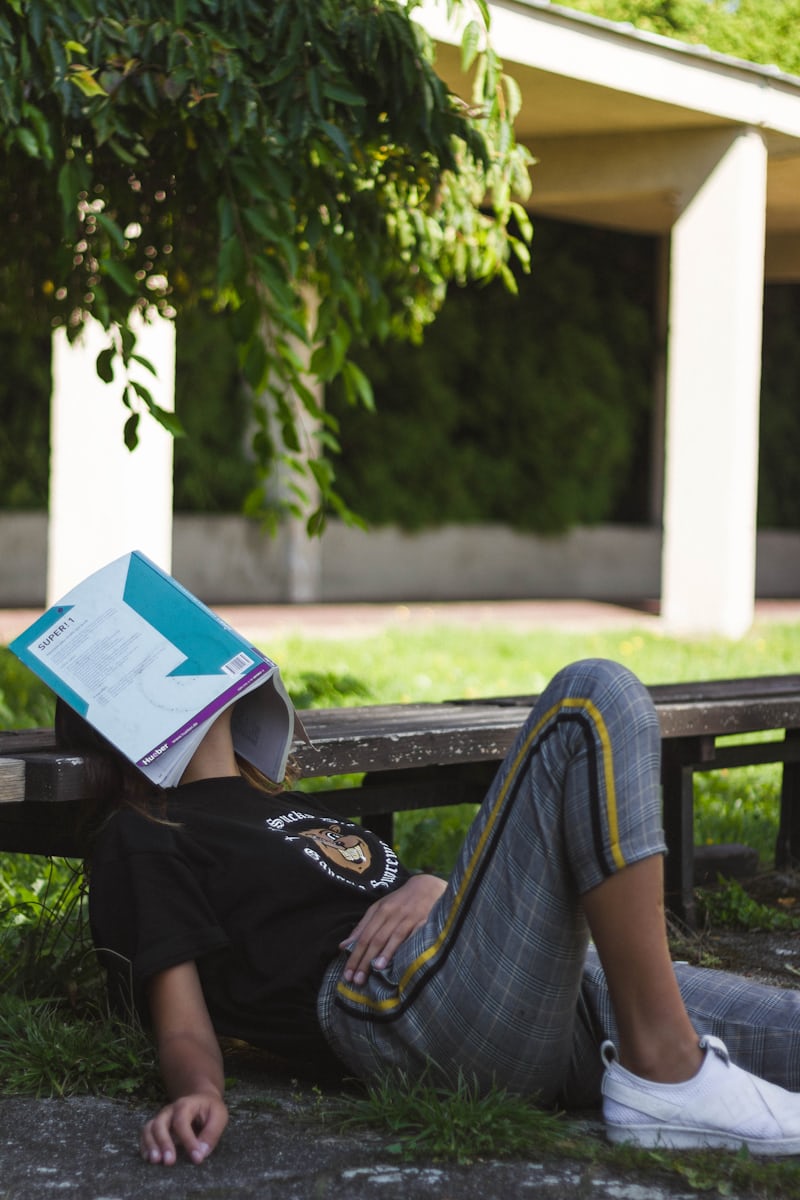
Between Sleep & Joy


3rd Sunday in Advent (A)

(Gaudete Sunday)


Readings: Isaiah 35: 1-6,10; Psalm 145 (146): 6-10; James 5: 7-10; Matthew 11: 2-11

Picture: By Tony Tran on Unsplash


My dear friends, have you ever had trouble sleeping? Anyone who has will know that sleeping is not exactly the same as eating or drinking, both of which I can usually do whenever I wish. But sleep is not within my control in quite the same way. When I tell someone, I am going to sleep, what I really mean is that I am preparing to welcome sleep when it comes. This usually involves being in a particular place, and adopting a certain posture. I go to bed, lie down, and wait for sleep to come. Bed and lying down. Place and posture.


But why talk about sleep in Advent, when we are so often told to stay awake? It’s because, in Advent, we are also told to do something else. Especially today, our liturgy is filled with calls to rejoice. And our readings show us that joy is rather like sleep, the coming of which we can only prepare for, by waiting at a particular place, and adopting a certain posture.


In the first reading, those asked to rejoice are actually in the wilderness of Exile, while the people in the second reading are enduring trials of some sort. And, in the gospel, John the Baptist is stuck in jail, for speaking out against King Herod. It’s also helpful to note that, just as I can decide whether or not to go to bed, all these people can actually choose to leave this uncomfortable spiritual place. By forgetting about the homeland from which they have been exiled, or forsaking the faith for which they are being persecuted. 


But the joy promised them is not the kind that comes from escape or avoidance. Rather than distracting themselves or running away, they are encouraged to adopt a certain spiritual posture, comprising at least 3 aspects: courage, patience, and alertness to the signs of the Lord’s coming. Strengthen all weary hands, steady all trembling knees and say to all faint hearts, ‘Courage! Do not be afraid. Look, your God is coming… to save you.’ … You… have to be patient; do not lose heart…. Go back and tell John what you hear and see…. and (blessed) is the (one) who does not lose faith in me…


Choosing to remain in a painful place of trial, while adopting a  courageous posture of faith. To do this is also to follow the example of the prophets of old. And not just the prophets, but Christ himself, who has already died and risen to life to set us free. Preparing for joy, through place and posture. Perhaps this is what Pope Francis was doing, when he recently shed tears while praying before a statue of the Immaculate Conception for the people of Ukraine.


Place and posture, prophets and prayer. This is how we Christians welcome joy. Something we do well to remember particularly in these troubled and troubling times, when the temptation is great to turn to cheaper, shallower, less enduring, and far more dangerous forms of consolation.


Sisters and brothers, if rejoicing is truly more like sleeping than eating and drinking, then how might we better welcome the joy of the Lord into our hearts and homes this Advent?

Sunday, December 04, 2022

Of Viruses & Vipers, Protection & Peace...


2nd Sunday in Advent (A)


Readings: Isaiah 11: 1-10; Psalm 71 (72): 1-2, 7-8, 12-13, 17; Romans 15: 4-9; Matthew 3:1-12

Picture: by LN on Unsplash


My dear friends, do you feel safe here? Without giving it much thought, perhaps some of us will quickly say yes. And yet, aren’t many of us, including me, still wearing our masks and sanitising our hands? Why, if not because even this sacred place is not as safe as it looks? There remains at least a hidden threat of viral infection, requiring measures to make the space safer, especially for those more vulnerable.


It’s helpful to keep this in mind, as we ponder the scriptures today. For that consoling picture of peace that Isaiah paints in the first reading is also an image of safety. Safety from threats both obvious and hidden. Safety for children and those more vulnerable. In this vision, the lamb finds it safe to live with the wolf. The young child suffers no harm when it places its hand into the viper’s lair. And a little boy is allowed to lead them. How is this wonderfully safe space created? It results from the wise rule of the coming king, whose reign is marked by discerning impartial judgment, and responsible courageous action to protect the vulnerable, and keep the dangerous in check. He does not judge by appearances… but judges the wretched with integrity… His word is a rod that strikes the ruthless, his sentences bring death to the wicked.


We see something similar in John the Baptist's interaction with the Pharisees and Sadducees. By calling them a brood of vipers, John indicates that, like poisonous snakes (and coronaviruses too), they pose a hidden threat to the vulnerable. They hide their self-promoting other-exploiting intentions under pious appearances. Yet without a true change of heart, simply going through the motions of being baptised in water will do them no good. The Lord who is coming will test them in the purifying fire of the Holy Spirit, and they will be burnt up, unless they repent.


All of which may help us better understand what the second reading is asking of us. More than just tolerating and being friendly with everyone, we are to welcome one another as Christ welcomes us. Christ, who did not condone our wrongdoing, but mercifully and courageously bore the cross-shaped consequences of calling us to repentance. So as to lead us into the Reign of God, where everyone, particularly children and the more vulnerable, finds true safety.


I’m reminded of these words spoken by the Archbishop of Canterbury, on his visit to Ukraine: There will be no peace till we stop lying. You’ve got to tell the truth, however painful. There can never be a way forward built on lies… Beyond countries torn by war, can’t the same be said of other spaces haunted by less obvious threats? Spaces both religious and secular, real and virtual, public and domestic? Just as mask-wearing and hand-sanitising help keep us safe in a pandemic, so too do truth-seeking and truth-speaking enable us to blaze a surer path from danger to safety, from conflict to peace.


Sisters and brothers, what must we do to help one another receive the courage to walk this path together more faithfully this Advent? 

Sunday, November 27, 2022

Negotiating the Junctions of New Life


1st Sunday in Advent (A)


Readings: Isaiah 2: 1-5; Psalm 121 (122): 1-2, 4-5, 6-9; Romans 13: 11-14; Matthew 24: 37-44

Pictures: By Pawel Czerwinski & Nathan Dumlao on Unsplash


My dear friends, can you predict what will happen in a situation like this? Let’s say two cars are waiting, side-by-side, at a traffic junction. What will happen when the lights turn green? In the past, we could say with some confidence that both vehicles will quickly make their way across the junction. But these days isn’t it just as likely to find at least one car staying put? And we know why, right? Speaking from embarrassing personal experience, it’s because the driver’s eyes are fixed not on the lights, but on his phone.


Strangely or not, this is the image that initially comes to mind, when one hears the gospel speak of how, at the Son of Man’s coming, of two men in the fields one is taken, one left; of two women at the millstone grinding, one is taken, one left. But notice how all four people are equally engaged in the ordinary busyness of daily life. Yet, somehow, two manage to remain alert to their master’s coming, and are ready to welcome him when he finally arrives. How do they do it?


Perhaps it’s by first taking to heart the crucially important, yet too easily forgotten, message of the second reading. Which reminds us that, whether we happen to be working in the fields or grinding at the millstone, gathered round a conference table or conversing on Zoom, we are always also simultaneously waiting at a junction, at the borderlands between darkness and light, between selfishness and love. Where to remain alert and ready is to strive continually, not just to resist one’s own self-indulgent tendencies, but also to abide by and actively promote gospel values, such as justice, mercy and peace. To let our armour be the Lord Jesus Christ.


To do this is to allow our lives in this passing world to be informed by the vision of the eternal kingdom that is to come. As a result of which, something happens to us. Our hearts and desires take on a certain shape, gradually moulded into the image of Christ. Moving us to yearn for what Christ earnestly desires, and to be repelled by what distresses him.


So that even if, despite our best efforts to change the world for the better, we may seem to make little progress, we will yet find ourselves eagerly awaiting the fulfilment of that consoling vision of peace described in the first reading. The time when our loving and compassionate God will truly wield authority over the nations and adjudicate between many peoples. When nation will not lift sword against nation, and there will be no more training for war. And with hearts filled with true Advent hope, we too will cry out with the psalmist: I rejoiced when I heard them say, ‘Let us go to God’s house.’


All of which may bring to mind junctions of a different sort. Not those so easily obstructed by distracted drivers like me, but the ones occupied by uncertain yet hopeful spouses, clinging tightly to each other, as they share in the joyful pain of bringing new life to birth.


Sisters and brothers, what must we do to help one another find and wait expectantly at such places this Advent?

Saturday, November 12, 2022

Between the PSLE & the Parousia


33rd Sunday in Ordinary Time (C)


Readings: Malachi 3: 19-20; Psalm 97 (98): 5-9; 2 Thessalonians 3: 7-12; Luke 21: 5-19

Picture: Rohit Farmer on Unsplash


My dear friends, what do you think an anxious parent will say to a child preparing for the PSLE next year? I’m not sure, since I don’t have kids of my own. But, rightly or not, drawing from my memories of what was said to me, back when I was a student facing a major exam, two things come to mind. The first is the seriousness of the matter, the dire consequences of failure versus the rewards of success. The second is the need for constant effort, to not leave things till it’s too late.


Consequences and constancy. Coincidentally or not, these are also what we find in our readings today. As usual, as the liturgical year draws to a close, we are led to consider the end of time, and how to prepare well for it. The first reading does this by describing a sharp contrast in consequences. On the one hand, for the arrogant and the evil-doers, the day of the Lord will be like a fiery furnace, burning them all up like dry grass, leaving neither root nor stalk. On the other hand, those who fear the Lord will experience this same fire as a welcome sun of righteousness, gently caressing them with healing in its rays. The message could not be clearer. Be prepared, because the consequences will be serious.


Although the second reading doesn’t directly mention the end of time, its message is no less relevant. For it highlights the need for constant effort. Paul tells the Thessalonians not to live in idleness, doing no work themselves but interfering with everyone else’s. Instead they should imitate Paul and his companions, who work night and day… so as not to be a burden to others. But if preparing for the end of time really means no more than working hard everyday, then we can probably breathe a sigh of relief since, for many of us here in Singapore, work is practically an addiction. So, if not just work, then what does constant effort really look like?


We find the answer in the gospel. Here what’s perhaps most striking is how closely the scary conditions Jesus describes mirror what we see in our world today. Nation (fighting) against nation, and kingdom against kingdom…. great earthquakes and plagues and famines here and there… And yet, the Lord makes it clear that the end is not so soon. Facing these terrible calamities, we disciples of Jesus need first to guard ourselves from being deceived. Not to blindly follow influencers of one kind or another. But to persevere in bearing witness to the Lord. Even if doing so may attract hatred and persecution, even from our own family. Constantly trying to live according to the Lord’s values, instead of those of the world. Regularly sparing at least a thought and a prayer, if not a hand of assistance, for those who suffer.


Still, as serious as the consequences may be, watching for the end of time should not be all doom and gloom. However stressful it may be to study for the PSLE, preparing for the Lord’s coming should also bring us deep joy, at the presence of the Lord. For, as our opening prayer reminds us, it is full and lasting happiness to serve with constancy the author of all that is good. Sisters and brothers, how might we help one another to receive and experience this grace today?

Sunday, October 23, 2022

Of Safety & Hiding


30th Sunday in Ordinary Time (C) 

(World Mission Sunday)


Readings: Ecclesiasticus 35: 12-14, 16-19; Psalm 33 (34): 2-3,17-19, 23; 2 Timothy 4: 6-8, 16-18; Luke 18: 9-14

Picture: cc Flickr United Nations Photo


My dear friends, what is it like to feel threatened, and have nowhere to hide? No place to feel safe and secure, sheltered and supported? Perhaps it’ll help if we pause and imagine, just for a moment, what it may be like for people living in the many troubled spots of our world today. Such as famine-stricken Somalia, or flood-inundated Pakistan, or military-oppressed Myanmar. We may think also of children living in less troubled, more affluent places, but who still don’t feel safe, at home or in school. Whether it’s because of gun-violence, or familial-abuse, or cyber-bullying, or pressure due to unrealistic parental expectations. We may also consider those who suffer from addictions of one kind or another. What does it feel like not to have a safe place in which to hide? …


In case we may wonder why we are posing such an uninviting question on this relaxing long Deepavali weekend, it’s because we find similar people in our scriptures today. People in danger, with no safe place to hide. The first reading and the psalm speak of orphans, widows, and the poor in general. People whose very existence is under threat, and whose options are few. Yet this obvious disadvantage is also a prime advantage. For having nowhere else to turn, they cry out to God, and God does not disappoint. For the Lord is close to the broken-hearted. Those who hide in him shall not be condemned. By humbly acknowledging their helplessness before God, the poor find true safety.


And isn’t this what separates the two men in Jesus’ parable? Just as the poor are threatened materially, the tax-collector is in danger spiritually, and he knows it. Conscious of his own status as a public sinner, he humbly acknowledges his helplessness, and throws himself before the mercy of God. As a result, he finds true safety. He goes home at rights with God. In contrast, it is the pious Pharisee who remains in danger. By pridefully hiding behind his superficial religious practices, he ends up hiding from the mercy of God.


Even so, we should take care not to misunderstand. Finding refuge in God doesn't mean the end of all our problems. It may, in fact, lead to the opposite. In the second reading, it is precisely because Paul chooses to follow the crucified and risen Christ in allowing his own life to be poured away as a sacrificial offering, that he finds himself in danger and all alone, without a single witness to support him. Yet, amid his trials, Paul is given the Lord’s power to proclaim the gospel for all the pagans to hear. By embracing danger for love of Christ, not only is Paul assured that the Lord will bring him safely to his heavenly kingdom, he also enables others to enjoy the same assurance of safety. Through humble service a scary place of danger becomes a fruitful point of mission.


Isn’t this the paradoxical lesson offered to us today? That true safety is found when we humbly cry out to God from the various dangerous places in our lives and in our world. But if this is true, sisters and brothers, then how shall we help each other to resist the temptation to hide from such places today?